Reduce technical support costs by up to 40% by diagnosing issues remotely via live video, eliminating unnecessary truck rolls and parts dispatches.

Service
Live Video Diagnostic AI Systems
Inference Systems engineers real-time, multimodal AI that analyzes live customer video feeds to guide technical troubleshooting, reduce on-site dispatches by 40%, and slash resolution times.
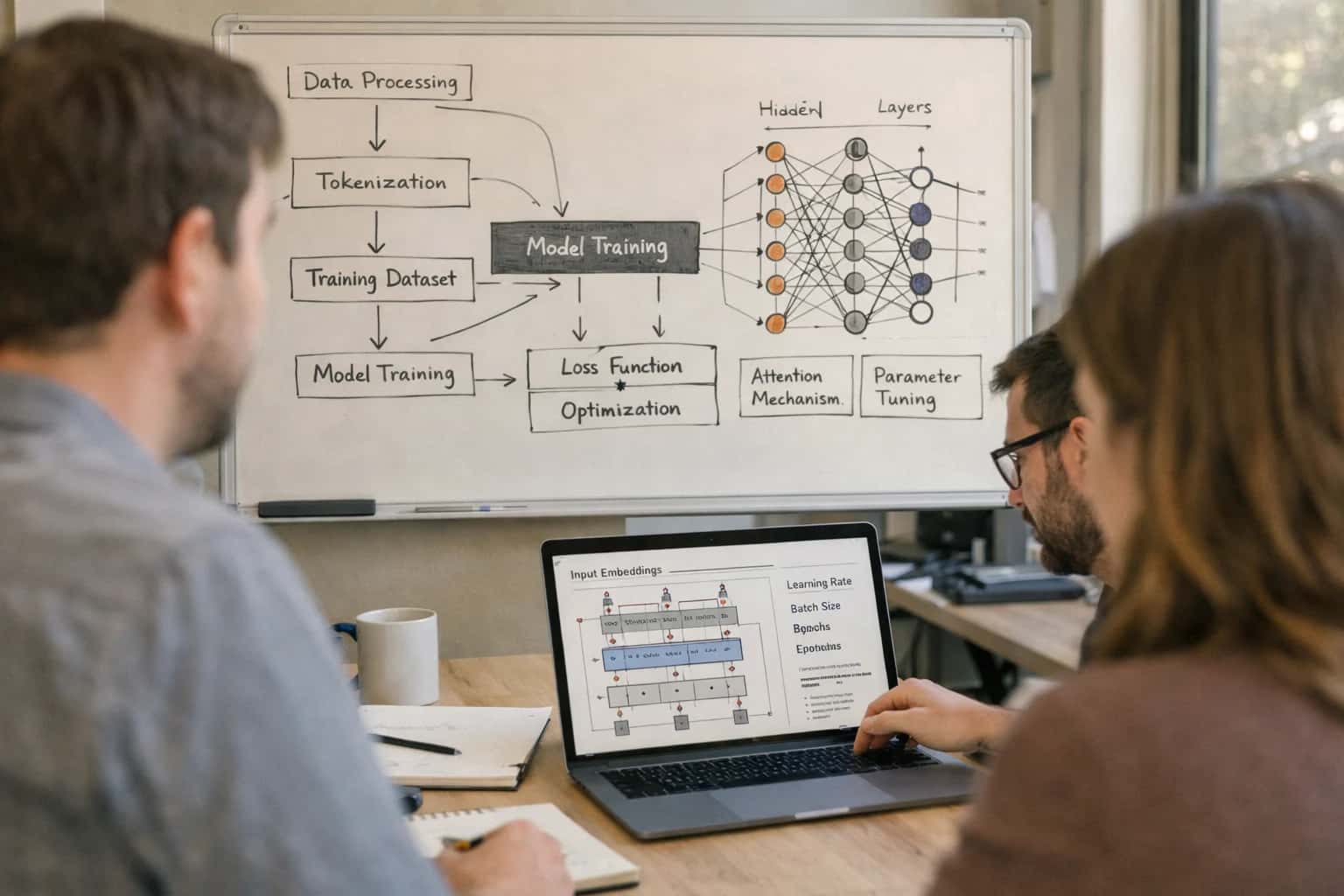
Deploy real-time AI that analyzes live video to diagnose issues, guide customers, and slash field service costs.
Our systems combine computer vision for object/gesture recognition with natural language processing to guide customers through troubleshooting in real time.
- Real-time analysis: Process live video feeds with sub-second latency using optimized
TensorRTorONNX Runtimepipelines. - Multimodal context: Cross-reference video with customer speech and chat history for accurate, contextual diagnostics.
- Proven integration: Seamlessly embed into existing support platforms like
Zendesk,ServiceNow, or custom mobile apps.
Key Deliverables:
- 2-4 week MVP deployment for a defined diagnostic use case.
- 99.5%+ accuracy in identifying common failure modes from video.
- Integration with your ticketing system and knowledge base for automated resolution logging.
- A secure, scalable pipeline built to handle thousands of concurrent video sessions.
Move beyond reactive support. Explore our broader capabilities in Multimodal Customer Experience and Voice AI, or learn how we build secure, sovereign AI infrastructure with Confidential Computing for AI Workloads.
DELIVERING TANGIBLE ROI
Measurable Business Outcomes
Our Live Video Diagnostic AI Systems are engineered to deliver concrete, quantifiable improvements in technical support operations, directly impacting your bottom line.
01
Reduced On-Site Dispatches
Our multimodal AI guides customers through visual troubleshooting steps in real-time, resolving issues remotely. This directly cuts the high costs and delays associated with field technician dispatches.
Up to 40%
Dispatch Reduction
< 5 min
Average Resolution Time
02
Enhanced First-Contact Resolution
By combining computer vision for object/gesture recognition with contextual NLP, our systems provide agents with precise diagnostic insights, empowering them to solve complex issues on the first call.
25%+
FCR Increase
60%
Handle Time Reduction
04
Seamless Integration & Scalability
Deployable as APIs that integrate directly into your existing CRM, helpdesk software, or mobile apps. Our systems are architected for elastic scaling to handle peak support volumes without degradation.
2-4 weeks
Typical Deployment
99.9%
Uptime SLA
From Proof-of-Concept to Production
Typical Development Timeline & Deliverables
A transparent roadmap for developing and deploying a custom Live Video Diagnostic AI System, from initial scoping to full-scale integration.
| Phase & Deliverables | Starter (4-6 Weeks) | Professional (8-12 Weeks) | Enterprise (12-16+ Weeks) |
|---|---|---|---|
Phase 1: Discovery & Scoping | |||
Custom Diagnostic Workflow Design | 1-2 Standard | 3-5 Custom | Fully Bespoke |
Phase 2: Model Development & Training | |||
Computer Vision Model (Object/Gesture) | Fine-tuned Open-Source | Custom CNN/Transformer | Ensemble + SLM Edge |
Multimodal NLP for Guidance | Pre-built Intent Library | Custom Domain-Specific Tuning | Full DSLM + RAG Integration |
Phase 3: System Integration | Basic API Endpoints | Full SDK + CRM/CCaaS Connectors | End-to-End with Legacy Systems |
Real-Time Video Processing Latency | < 2 seconds | < 500ms | < 200ms |
Phase 4: Security & Compliance | Base Encryption | Data Anonymization + Audit Logs | Full Confidential Computing + Regional Data Engineering |
Ongoing Support & Maintenance | Email Support | SLA (99.5% Uptime) + Quarterly Updates | Dedicated Engineer + 99.9% Uptime SLA + AI Red Teaming |
Typical Investment | $40K - $80K | $120K - $250K | Custom Quote |
ENTERPRISE USE CASES
Industries and Applications
Our Live Video Diagnostic AI Systems deliver immediate operational impact by reducing on-site dispatches and accelerating resolution times. We engineer solutions for complex, real-world troubleshooting scenarios.
01
Telecom & ISP Field Support
Guide customers through self-installation of routers and modems via live video. Our AI identifies incorrect cable connections, missing components, and LED status patterns, reducing technician dispatches by up to 40%. Integrates with existing CRM ticketing systems.
40%
Dispatch Reduction
< 5 min
Avg. Diagnosis
02
Industrial Equipment Troubleshooting
Enable remote technicians to diagnose machinery faults via live feed. Combines computer vision for part identification and gauge reading with NLP to interpret operator descriptions and procedural manuals. Critical for maintaining uptime in manufacturing and energy.
60%
Faster MTTR
24/7
Expert Support
03
Smart Home & IoT Device Setup
Provide step-by-step visual guidance for installing smart thermostats, security cameras, and home automation hubs. AI verifies physical placement, network connectivity, and device registration status, cutting support call duration and improving customer satisfaction scores (CSAT).
50%
Call Time Reduction
99%
Accuracy
04
Automotive Remote Diagnostics
Allow customers to show dashboard warning lights, unusual sounds, or exterior damage via smartphone. Our multimodal system cross-references video/audio with vehicle make/model and service history to triage issues, schedule precise repairs, and verify warranty coverage.
35%
Fewer Misdiagnoses
Real-time
Parts Verification
05
Healthcare Device Patient Support
Assist patients with at-home medical devices like CPAP machines, glucose monitors, or infusion pumps. Ensures correct usage and setup through compliant, secure video analysis, improving therapy adherence and reducing readmission risks. Built with HIPAA-compliant data pipelines.
HIPAA
Compliant
Secure
Video Processing
06
Retail & POS Technical Support
Rapidly diagnose issues with point-of-sale systems, kiosks, or digital signage. AI analyzes error screens, peripheral connections, and receipt printer behavior to provide store staff with exact troubleshooting steps, minimizing downtime during peak hours.
< 2 min
Issue Resolution
95%
First-Contact Fix
LIVE VIDEO DIAGNOSTIC AI
Our Development Methodology
A structured, iterative process to deliver production-ready diagnostic AI systems that reduce on-site dispatches.
We deliver a functional MVP in 2-4 weeks, focusing on a core diagnostic workflow to validate accuracy and latency.
Our methodology is built on three iterative phases designed for rapid validation and enterprise-grade scaling:
-
Phase 1: Foundation & MVP
- Rapid multimodal pipeline assembly integrating
OpenCV/MediaPipefor vision and a fine-tunedWhisper/Geminimodel for NLP. - Core diagnostic validation on a single, high-value use case (e.g., "router LED status check") to prove >95% accuracy.
- Deployment of a secure, low-latency prototype for live agent co-pilot testing.
- Rapid multimodal pipeline assembly integrating
-
Phase 2: Scaling & Optimization
- Latency reduction to sub-500ms for real-time guidance via model quantization and edge-optimized inference.
- Expansion of the visual diagnostic library (e.g., cable connections, device screens) and integration with your CRM/ticketing system.
- Implementation of continuous learning pipelines to improve from anonymized session data.
-
Phase 3: Production & Autonomy
- Full system integration with live agent workflows and backend knowledge bases via our Multimodal AI Data Pipelines expertise.
- Deployment of autonomous resolution bots for tier-1 issues, with seamless human handoff protocols.
- Establishment of 99.9% uptime SLAs, comprehensive logging, and a governance dashboard for performance monitoring.
Enabling Efficiency, Speed & Accuracy
Intelligent Analysis, Decision & Execution
We build AI systems for teams that need search across company data, workflow automation across tools, or AI features inside products and internal software.
Talk to Us
Search across company data
Give teams answers from docs, tickets, runbooks, and product data with sources and permissions.
Useful when people spend too long searching or get different answers from different systems.
Enterprise searchRAGPermissions
Read more
Automate internal workflows
Use AI to route work, draft outputs, trigger actions, and keep approvals and logs in place.
Useful when repetitive work moves across multiple tools and teams.
AI agentsWorkflow automationGovernance
Read more
Add AI to products and internal tools
Build assistants, guided actions, or decision support into the software your team or customers already use.
Useful when AI needs to be part of the product, not a separate tool.
AI integrationDecision supportModel routing
Read moreLive Video Diagnostic AI
Frequently Asked Questions
Get clear answers on how we build and deploy real-time AI systems that analyze live video for technical support and diagnostics.
From initial scoping to production deployment, a typical project takes 6-10 weeks. This includes 2 weeks for data pipeline setup and model selection, 3-4 weeks for core development and integration, and 2 weeks for testing and optimization. For complex integrations with legacy ticketing systems or custom hardware, timelines may extend to 12-14 weeks. We provide a detailed project plan with weekly milestones from day one.

About the author
Prasad Kumkar
CEO & MD, Inference Systems
Prasad Kumkar is the CEO & MD of Inference Systems and writes about AI systems architecture, LLM infrastructure, model serving, evaluation, and production deployment. Over 5+ years, he has worked across computer vision models, L5 autonomous vehicle systems, and LLM research, with a focus on taking complex AI ideas into real-world engineering systems.
His work and writing cover AI systems, large language models, AI agents, multimodal systems, autonomous systems, inference optimization, RAG, evaluation, and production AI engineering.
LinkedIn
Limited slotsGet a Free AI Consultation
Partnered with leading AI, data, and software stack.





How We Work
Custom AI workflows for your Business
One-fit-all AI don't work for modern businesses. At Inferensys, we aim to understand your business & custom requirements; which we use to define most efficient agentic workflows, the data, and the tools for your business.
01
Review the use case
We understand the task, the users, and where AI can actually help.
Read more02
Pick the right approach
We define what needs search, automation, or product integration.
Read more03
Build the first useful version
We implement the part that proves the value first.
Read more04
Improve from there
We add the checks and visibility needed to keep it useful.
Read moreThe first call is a practical review of your use case and the right next step.
Talk to Us