Our autonomous agents act as digital clinical assistants, retrieving patient data, synthesizing literature, and generating preliminary differentials to give clinicians back critical time.

Service
Healthcare AI Agent Development
We develop autonomous, goal-oriented AI agents that execute complex clinical workflows—from patient data synthesis to preliminary diagnosis—augmenting clinician decision-making and reducing administrative burden.
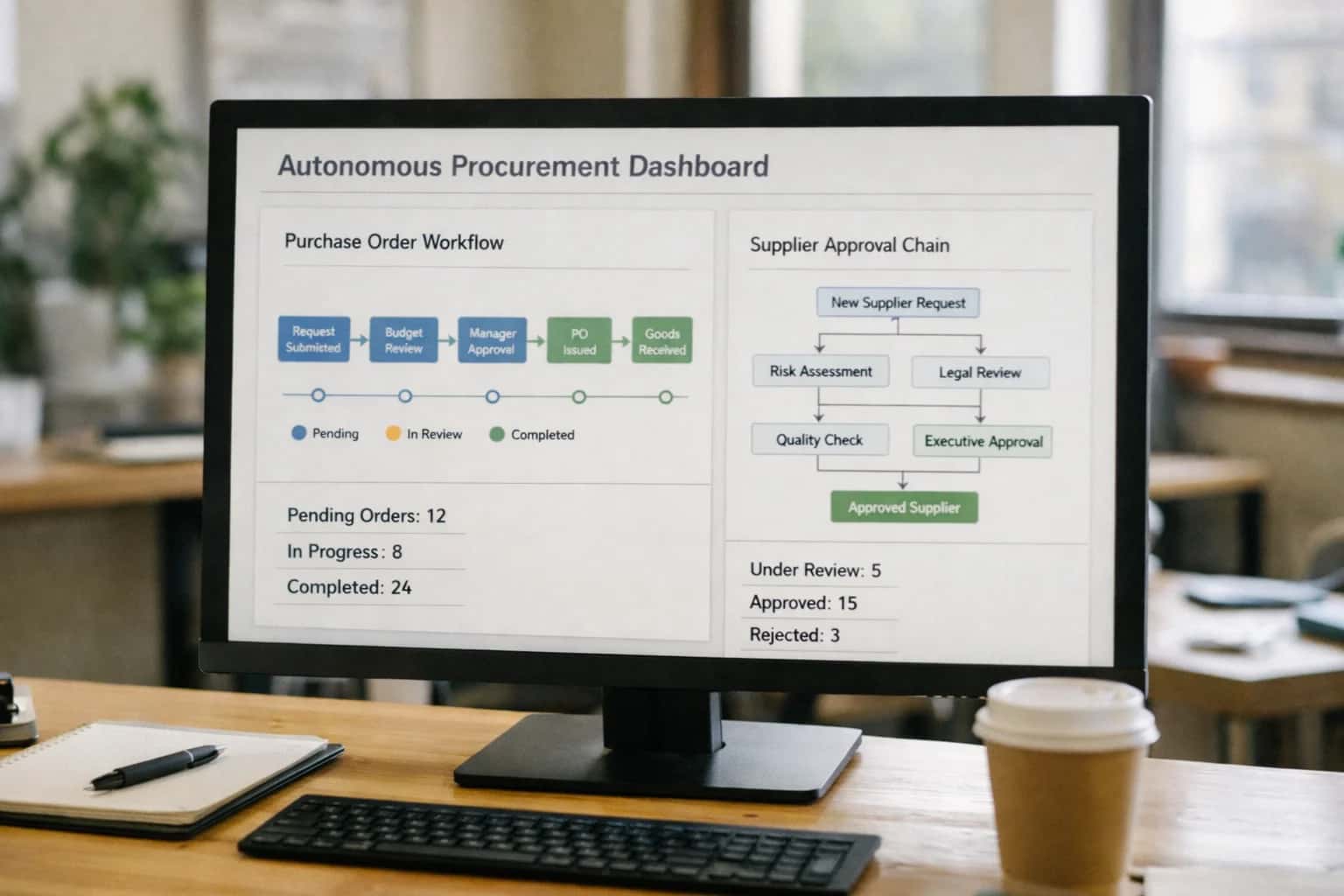
Deploy autonomous AI agents that execute multi-step clinical tasks to augment clinician decision-making and reduce cognitive load.
We engineer goal-oriented AI agents that integrate directly into your clinical workflows to automate repetitive, high-cognitive tasks:
- Patient Data Synthesis: Agents automatically retrieve and summarize relevant information from EHRs, labs, and prior notes.
- Evidence-Based Reasoning: Systems cross-reference patient presentations against
UpToDateand clinical guidelines to support diagnostic reasoning. - Preliminary Workflow Generation: Automate the creation of draft notes, orders, and care plans based on encounter context.
- Secure, Auditable Actions: All agent decisions and data retrievals are logged within a
HIPAA-compliant framework for full traceability.
Unlike basic chatbots, our agents are built for deterministic, multi-step execution within a secure clinical environment. This reduces manual data foraging and administrative tasks, allowing clinicians to focus on high-value patient interaction and complex decision-making.
Ready to deploy clinical AI agents that reduce burnout and improve care consistency? Explore our related service for Clinical Decision Support AI Integration or learn about grounding these systems in trusted knowledge via Healthcare RAG System Architecture.
PROVEN IMPACT
Measurable Outcomes of Deploying Clinical AI Agents
Our development of autonomous clinical AI agents delivers concrete, quantifiable improvements in operational efficiency, clinical accuracy, and financial performance. These are the measurable results our clients achieve.
01
Reduced Administrative Burden
Automate multi-step clinical tasks like data retrieval, literature synthesis, and preliminary documentation, freeing clinicians for direct patient care. Our agents integrate directly with EHRs and clinical databases to execute workflows autonomously.
Learn more about our approach to reducing burnout in our service on Ambient Clinical Documentation AI Development.
Up to 70%
Reduction in manual charting time
< 2 sec
Average task execution latency
02
Enhanced Diagnostic Accuracy & Speed
Augment clinician decision-making with AI agents that generate ranked differential diagnoses by synthesizing patient history, labs, and current medical literature in real-time, reducing cognitive load and potential oversight.
This capability is powered by our foundational work in Clinical Decision Support AI Integration.
> 95%
Recall on key clinical concepts
Minutes
vs. hours for manual research
03
Accelerated Clinical Research & Trials
Deploy agents to autonomously screen patient cohorts against complex trial eligibility criteria from unstructured notes, dramatically speeding up recruitment and ensuring protocol compliance without manual chart review.
80% Faster
Patient cohort identification
99.9%
Data accuracy for PHI-compliant pipelines
04
Proactive Patient Risk Intervention
Integrate predictive analytics agents that continuously monitor real-time patient data streams (vitals, labs) to flag early signs of clinical deterioration, sepsis, or readmission risk, enabling timely, life-saving interventions.
Explore the engineering behind this in Predictive Patient Risk Analytics Engineering.
48+ Hours
Early warning lead time
30% Reduction
In preventable adverse events
05
Guaranteed Regulatory & Security Compliance
Every agent is developed and deployed within a HIPAA-compliant, zero-trust architecture. We implement full audit trails, data lineage tracking, and validation frameworks aligned with FDA SaMD guidelines and the EU AI Act.
SOC 2 Type II
Certified infrastructure
End-to-End
PHI encryption in use & at rest
06
Seamless EHR & Legacy System Integration
Our agents are engineered as intelligent overlays on existing health IT ecosystems—Epic, Cerner, custom databases—acting through secure APIs without disrupting clinician workflow or requiring massive system overhauls.
4-8 Weeks
Typical pilot deployment
99.9% Uptime
SLA for critical clinical workflows
A Phased, Risk-Managed Approach
Structured Development Pathway: From Pilot to Production
Our methodology ensures a controlled, compliant progression from concept to clinical integration, minimizing technical and regulatory risk at every stage.
| Phase & Deliverables | Discovery & Scoping (4-6 weeks) | Pilot Development & Validation (8-12 weeks) | Production Deployment & Scale (Ongoing) |
|---|---|---|---|
Primary Objective | Define clinical use case, success metrics, and compliance roadmap. | Build and validate a minimum viable agent in a sandbox environment. | Deploy into live clinical workflows with full monitoring and governance. |
Key Activities | Stakeholder interviews & workflow mappingData availability & HIPAA compliance assessmentTechnical feasibility & architecture design | Agentic workflow prototypingIntegration with test EHR/clinical dataInternal validation & bias testing | Production-grade API & containerizationIntegration with live EHR systems (e.g., Epic, Cerner)Continuous performance monitoring & model retraining |
Compliance & Security | HIPAA/GDPR gap analysis & roadmap. | Implementation of data de-identification pipelines & audit logs. | Full SOC 2 Type II / HITRUST alignment; ongoing security audits. |
Validation Rigor | Protocol design for clinical validation. | Simulated patient case testing; preliminary accuracy metrics (>95% target). | Real-world clinical pilot with measured impact on clinician efficiency & decision accuracy. |
Team Involvement | Our AI Strategists & Your Clinical SMEsOur AI Engineers & Your IT/Security Team | Our Full AI Development Team & Your Clinical ValidatorsOur DevOps & Your Clinical Operations | Our Dedicated ML Ops EngineersYour Clinical & IT Teams for support |
Typical Output | Detailed technical specification & project charter. | Functional AI agent prototype with validation report. | Enterprise-grade, scalable AI service with SLA (99.9% uptime). |
Investment Range | $15K - $30K | $50K - $120K | Custom (Managed Service / SLA) |
PRECISION INTEGRATION
Targeted Clinical Workflows for AI Agent Deployment
We architect and deploy autonomous AI agents directly into high-impact clinical workflows, augmenting clinician decision-making with deterministic, auditable task execution. Our focus is on measurable reductions in administrative burden, cognitive load, and diagnostic latency.
01
Patient Data Retrieval & Synthesis
Deploy agents that autonomously query disparate EHRs, labs, and imaging archives to compile comprehensive patient timelines, flagging critical trends and gaps for clinician review. Reduces data gathering time from hours to minutes.
80%
Time Reduction
HIPAA
Compliant
02
Preliminary Differential Diagnosis Generation
Integrate probabilistic reasoning agents that analyze symptoms, history, and initial labs to generate ranked differential diagnoses, providing a structured starting point for clinician validation and reducing cognitive load in complex cases.
Evidence-Based
Guidelines
Audit Trail
Full Traceability
04
Multi-Step Order & Documentation Automation
Engineer goal-oriented agents that execute complex, conditional clinical tasks—such as initiating a sepsis protocol based on real-time vitals, generating appropriate orders, and auto-documenting actions—within existing EHR workflows.
70%
Note Burden Reduction
< 2 sec
Action Latency
05
Real-Time Clinical Alert Triage & Routing
Deploy intelligent notification agents that filter, prioritize, and contextually route real-time alerts (e.g., critical labs, deteriorating vitals) to the appropriate clinician or team, reducing alert fatigue and ensuring urgent signals are acted upon.
50%
Alert Reduction
HL7/FHIR
Native Integration
06
Agentic Workflow Orchestration & Audit
Architect a central orchestration layer that coordinates specialized clinical agents, manages human-in-the-loop handoffs, and maintains a complete, immutable audit trail of all agent actions for compliance, validation, and continuous improvement.
ISO 42001
Governance Ready
End-to-End
Lineage Tracking
Enabling Efficiency, Speed & Accuracy
Intelligent Analysis, Decision & Execution
We build AI systems for teams that need search across company data, workflow automation across tools, or AI features inside products and internal software.
Talk to Us
Search across company data
Give teams answers from docs, tickets, runbooks, and product data with sources and permissions.
Useful when people spend too long searching or get different answers from different systems.
Enterprise searchRAGPermissions
Read more
Automate internal workflows
Use AI to route work, draft outputs, trigger actions, and keep approvals and logs in place.
Useful when repetitive work moves across multiple tools and teams.
AI agentsWorkflow automationGovernance
Read more
Add AI to products and internal tools
Build assistants, guided actions, or decision support into the software your team or customers already use.
Useful when AI needs to be part of the product, not a separate tool.
AI integrationDecision supportModel routing
Read moreFor CTOs and Technical Leaders
Healthcare AI Agent Development: Key Questions
Answers to the most common technical and commercial questions about developing autonomous AI agents for clinical workflows.
Standard deployments take 4-8 weeks from kickoff to pilot-ready agent. This includes 1-2 weeks for data pipeline integration, 2-3 weeks for agent logic development and testing, and 1-2 weeks for security hardening and compliance validation. Complex multi-agent systems with EHR integration may extend to 12 weeks. We provide a detailed project plan with weekly milestones.

About the author
Prasad Kumkar
CEO & MD, Inference Systems
Prasad Kumkar is the CEO & MD of Inference Systems and writes about AI systems architecture, LLM infrastructure, model serving, evaluation, and production deployment. Over 5+ years, he has worked across computer vision models, L5 autonomous vehicle systems, and LLM research, with a focus on taking complex AI ideas into real-world engineering systems.
His work and writing cover AI systems, large language models, AI agents, multimodal systems, autonomous systems, inference optimization, RAG, evaluation, and production AI engineering.
LinkedIn
Limited slotsGet a Free AI Consultation
Partnered with leading AI, data, and software stack.





How We Work
Custom AI workflows for your Business
One-fit-all AI don't work for modern businesses. At Inferensys, we aim to understand your business & custom requirements; which we use to define most efficient agentic workflows, the data, and the tools for your business.
01
Review the use case
We understand the task, the users, and where AI can actually help.
Read more02
Pick the right approach
We define what needs search, automation, or product integration.
Read more03
Build the first useful version
We implement the part that proves the value first.
Read more04
Improve from there
We add the checks and visibility needed to keep it useful.
Read moreThe first call is a practical review of your use case and the right next step.
Talk to Us