
Inferensys

Service

AI-Powered Carbon Accounting Platform Development

We engineer end-to-end AI systems that automate Scope 1, 2, and 3 emissions calculation, using machine learning to ingest utility bills, procurement data, and spend analytics for real-time, accurate carbon footprint tracking.
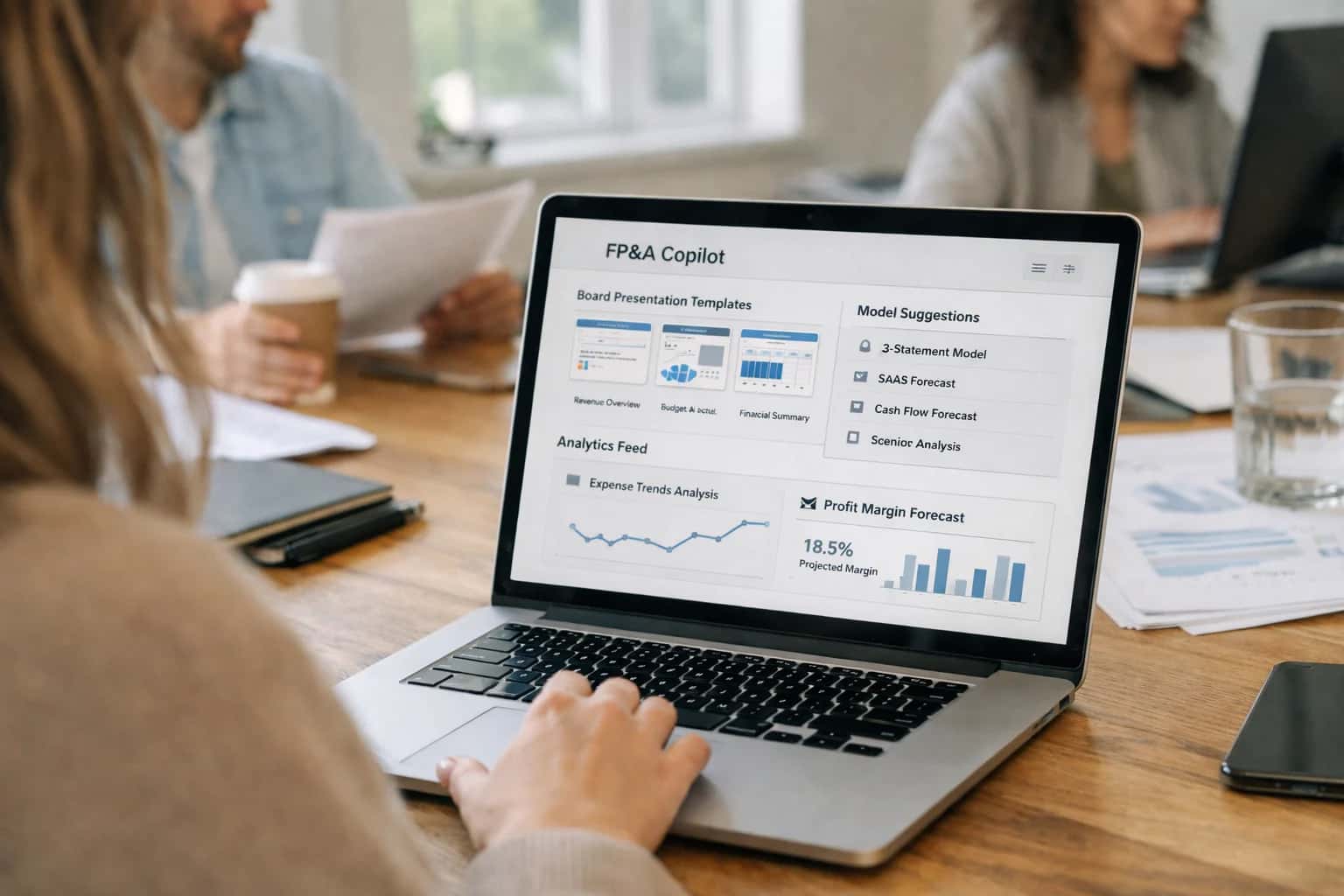
Finance professional using AI FP&A copilot on laptop, board presentation visible on screen, home office work session.
THE PROBLEM

The Manual Carbon Accounting Bottleneck

Manual data collection and spreadsheet-based calculations create unsustainable overhead and audit risk.

Traditional carbon accounting is a high-cost, low-accuracy process. Teams waste months manually aggregating data from hundreds of sources: utility bills, travel logs, procurement systems, and supplier spreadsheets. This leads to:

  • Estimated, not measured, emissions data prone to error.
  • Inability to track Scope 3, which often constitutes 70%+ of a corporate footprint.
  • Audit nightmares with poor data lineage and manual verification processes.

Manual processes cannot scale under accelerating global mandates like CSRD and SEC climate rules, creating direct financial and reputational liability.

Inference Systems engineers automated, AI-powered platforms that eliminate this bottleneck. We build systems that:

  • Ingest data automatically from ERP, SCM, and utility APIs.
  • Apply ML models for accurate Scope 1, 2, and 3 calculation using protocols like GHG Protocol.
  • Deliver real-time dashboards and audit-ready reports, reducing manual effort by 80%.

This transforms sustainability from a compliance cost center into a strategic, data-driven operation. Explore our related service for Generative AI for Sustainability Report Authoring to automate disclosure drafting.

For enterprises needing to secure this sensitive environmental data, our expertise in Confidential Computing for AI Workloads ensures calculations occur in hardware-secured enclaves, protecting proprietary operational data.

ENTERPRISE VALUE

Business Outcomes of an AI Carbon Accounting Platform

Move beyond manual spreadsheets and generic software. Our engineered AI platforms deliver measurable financial, operational, and compliance advantages by automating the most complex emissions calculations.

From Discovery to Deployment

Typical 12-Week Development Timeline

A phased roadmap for developing a production-ready AI-powered carbon accounting platform with Inference Systems. This timeline outlines key deliverables, technical milestones, and integration points for automated Scope 1, 2, and 3 emissions calculation.

Phase & Key ActivitiesWeeks 1-3Weeks 4-8Weeks 9-12

Phase Name

Discovery & Architecture

Core Development & Integration

Testing, Deployment & Handoff

Primary Deliverables

Technical specification document Data source integration plan Security & compliance architecture

Core emissions calculation engine Data ingestion pipelines (ERP, utility, procurement) POC dashboard with initial metrics

Staging environment deployment Penetration testing & security audit Production deployment & knowledge transfer

Key Technical Milestones

Finalize model selection for spend-based & activity-based calculation Design vector database schema for document intelligence (e.g., utility bills) Define API contracts for third-party data providers

Deploy initial ML models for automated data classification Integrate with 2+ core data sources (e.g., SAP, Oracle) Implement baseline RAG system for regulatory document querying

Achieve >95% accuracy in automated emissions factor matching Complete load testing for 1M+ data points Finalize 99.9% uptime SLA and monitoring dashboard

AI/ML Component Focus

Data strategy & pipeline design Model evaluation for time-series forecasting

Development of custom models for Scope 3 category allocation Integration of computer vision for invoice/PDF parsing

Model performance validation & fine-tuning Bias auditing for supplier scoring algorithms

Compliance & Reporting

Gap analysis against CSRD, SEC, TCFD Data lineage mapping design

Implementation of audit trail logging Automated data validation checks

Generation of first compliance-ready data export Internal control testing documentation

Team Involvement

Joint workshops with your technical & sustainability teams

Weekly sprint reviews & integration checkpoints Bi-weekly demos of developed features

User acceptance testing (UAT) with key stakeholders Comprehensive operational runbooks delivered

Outcome / Goal

Blueprint for a scalable, compliant platform

Functional minimum viable product (MVP) with core automation

Fully operational platform ready for internal rollout and auditor review

PROVEN FRAMEWORK

Our Development Methodology

We engineer robust, scalable, and compliant AI platforms for carbon accounting. Our methodology is built on enterprise-grade security, regulatory-first design, and rapid deployment to deliver measurable business outcomes.

01

Regulatory-First Architecture

We design from the ground up for CSRD, SEC, and SFDR compliance. Our systems enforce data lineage, audit trails, and algorithmic fairness by design, ensuring your platform meets current and emerging global standards.

ISO 42001
Compliance Framework
NIST AI RMF
Risk Alignment
Expert Answers for Technical Leaders

FAQs on AI Carbon Accounting Platform Development

Common questions from CTOs and Product Managers evaluating custom AI solutions for automated emissions tracking and regulatory compliance.

For a standard deployment covering Scope 1 & 2 emissions with basic Scope 3 estimation, we deliver a production-ready Minimum Viable Product (MVP) in 6-8 weeks. Complex, enterprise-grade platforms with full Scope 3 supplier integration, multi-modal data pipelines, and custom reporting dashboards typically take 12-16 weeks. Our phased approach ensures you have a functional core for internal validation within the first month. Learn more about our structured delivery process in our guide to AI development methodologies.

Prasad Kumkar

About the author

Prasad Kumkar

CEO & MD, Inference Systems

Prasad Kumkar is the CEO & MD of Inference Systems and writes about AI systems architecture, LLM infrastructure, model serving, evaluation, and production deployment. Over 5+ years, he has worked across computer vision models, L5 autonomous vehicle systems, and LLM research, with a focus on taking complex AI ideas into real-world engineering systems.

His work and writing cover AI systems, large language models, AI agents, multimodal systems, autonomous systems, inference optimization, RAG, evaluation, and production AI engineering.



