When an AI system fails—due to model drift, an adversarial attack, or a bias incident—your response must be immediate, precise, and defensible. Ad-hoc reactions create regulatory exposure and erode stakeholder trust. We build your technical first-responder capability.

Service
AI Incident Response Planning
Development of specialized incident response playbooks and technical runbooks for AI-specific failures, including model drift, adversarial attacks, bias incidents, and regulatory breaches.
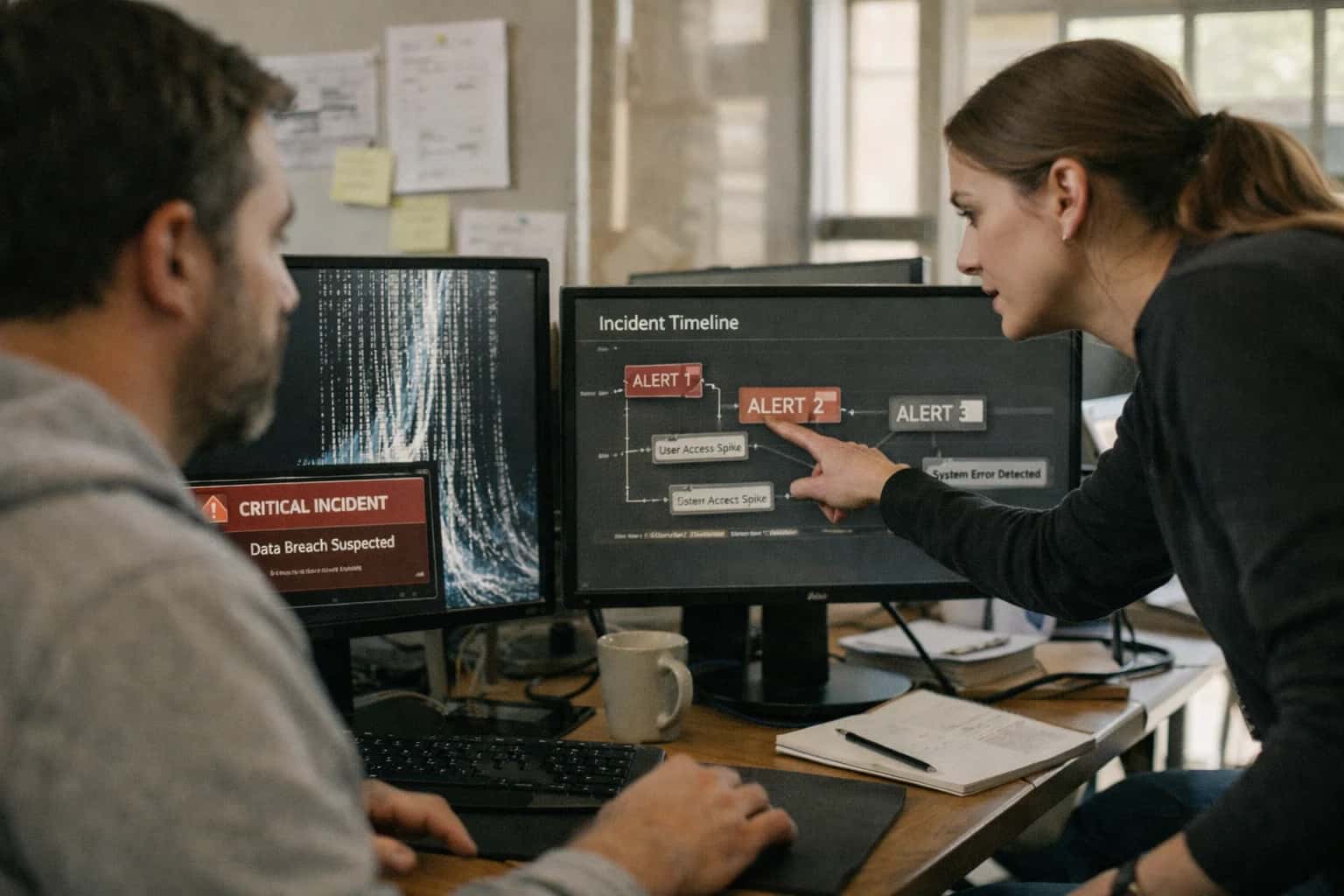
Proactive technical playbooks for AI-specific failures, from model drift to regulatory breaches.
We engineer specialized incident response playbooks that turn crisis into a controlled, documented procedure, ensuring compliance and preserving system integrity.
- Technical Runbook Development: Step-by-step procedures for containment, eradication, and recovery from AI-specific failures, integrated with your
SOCandMLOpspipelines. - Regulatory Breach Protocols: Pre-defined communication templates and evidence-gathering workflows aligned with NIST AI RMF and EU AI Act reporting requirements.
- Continuous Threat Modeling: Proactive identification of failure modes using frameworks like MITRE ATLAS, ensuring playbooks evolve with emerging threats.
- Post-Incident Forensics: Tools and processes to analyze root cause, update models, and feed lessons back into your Enterprise AI Governance Dashboard.
Move from reactive panic to governed response. Ensure your teams are equipped not just to fix the AI, but to document the why and how for auditors. This discipline is core to mature AI Governance and Compliance Frameworks.
MEASURABLE RESULTS
Tangible Outcomes of Structured AI Incident Response
Our AI Incident Response Planning service delivers concrete, technical outcomes that reduce risk, ensure compliance, and maintain operational continuity. We move beyond theoretical frameworks to implement actionable playbooks that produce verifiable results.
01
Reduced Mean Time to Resolution (MTTR)
Pre-defined technical runbooks for specific failure modes (model drift, adversarial attacks) enable engineering teams to diagnose and remediate incidents in hours, not days. This minimizes system downtime and business impact.
> 60%
Faster MTTR
< 4 hours
Critical Response SLA
02
Regulatory Compliance Evidence
Automated, immutable logging of all incident response actions creates a defensible audit trail for regulators (EU AI Act, NIST AI RMF). Demonstrate due diligence and structured governance during audits.
100%
Action Logging
Ready for Audit
Compliance Posture
03
Contained Financial & Reputational Risk
Rapid containment protocols for bias incidents or data breaches limit exposure. Quantifiable reduction in potential fines, litigation costs, and brand damage associated with unmanaged AI failures.
Proactive
Risk Mitigation
Documented
Due Diligence
04
Enhanced Cross-Functional Coordination
Clear role definition (SRE, Legal, Compliance) and communication protocols eliminate confusion during crises. Technical runbooks integrate seamlessly with your existing ITIL or DevSecOps workflows.
Defined RACI
Clear Ownership
Integrated
with Existing Ops
05
Post-Incident Model Resilience
Structured root cause analysis feeds directly into model retraining pipelines and architecture improvements. Each incident strengthens system defenses, turning failures into long-term robustness gains.
Closed-Loop
Improvement Cycle
Reduced
Recurrence Likelihood
Structured Response for AI-Specific Incidents
Deliverables and Engagement Timeline
Our AI Incident Response Planning service delivers a complete technical and procedural framework, moving from assessment to operational readiness. This table outlines the key deliverables and typical timeline for each engagement tier.
| Deliverable / Phase | Rapid Assessment | Comprehensive Planning | Managed IR Program |
|---|---|---|---|
Initial Risk & Maturity Assessment | |||
AI-Specific Incident Classification Taxonomy | |||
Technical Runbooks for Top 5 AI Failure Modes | 3 runbooks | 8-10 runbooks | 15+ runbooks |
Regulatory Breach Playbook (EU AI Act, etc.) | |||
Integrated Drift & Bias Detection Alerting | |||
Tabletop Exercise & Team Training | 1 session | 2 sessions | Quarterly sessions |
Integration with AI Governance Dashboard | |||
Continuous Playbook Updates (12 months) | |||
Dedicated On-Call Technical Support | 24/7 Priority | 24/7 Dedicated SME | |
Typical Engagement Timeline | < 2 weeks | 4-6 weeks | Ongoing Program |
HIGH-RISK SECTORS
Industries Requiring Specialized AI Incident Response
AI failures carry unique, sector-specific consequences. Our incident response planning is tailored to the distinct technical, regulatory, and operational risks faced by industries where AI is mission-critical.
01
Financial Services & FinTech
Real-time response for algorithmic trading failures, fraud detection model drift, and regulatory breaches (e.g., Reg BI, AML). We develop playbooks for immediate model rollback, transaction freezing, and mandated reporting to agencies like the SEC and FINRA.
Key Differentiator: Integration with existing SOX and SOC 2 controls.
< 5 min
Mean Time to Isolate
FINRA/SEC
Reporting Frameworks
02
Healthcare & Life Sciences
Specialized runbooks for clinical decision support errors, diagnostic imaging model bias incidents, and HIPAA/GDPR data breaches from AI processing. Ensures patient safety, maintains care continuity, and manages communications with regulatory bodies (FDA, EMA).
Key Differentiator: Experience with FDA SaMD (Software as a Medical Device) incident protocols.
HIPAA/GDPR
Breach Protocols
FDA 21 CFR Part 11
Audit Trail Compliance
03
Defense & National Security
Air-gapped, sovereign incident response for autonomous systems, intelligence analysis models, and secure communications AI. Playbooks address adversarial attacks (data poisoning, model evasion), integrity failures, and controlled degradation in contested environments.
Key Differentiator: Designs compliant with NIST SP 800-171, CMMC, and ITAR requirements.
Air-Gapped
Response Environment
CMMC L3+
Control Alignment
04
Automotive & Autonomous Systems
Safety-critical response for perception model failures, planning algorithm errors, and V2X communication breaches in autonomous vehicles (AVs) and ADAS. Procedures align with ISO 21448 (SOTIF) and ISO/SAE 21434 cybersecurity standards for immediate operational design domain (ODD) limitation.
Key Differentiator: Coordination with NHTSA recall and reporting processes.
ISO 21448
SOTIF Alignment
< 100ms
Failover Latency Target
05
Legal & Compliance Tech
Containment and remediation for AI failures in contract analysis, e-discovery, and predictive litigation. Protects attorney-client privilege, manages disclosure obligations, and contains erroneous legal advice generation from RAG systems or DSLMs.
Key Differentiator: Playbooks integrate with legal hold processes and state bar ethical guidelines.
Privilege Preserved
Data Handling
FRCP/EDRM
Discovery Framework
06
Public Sector & Government
Incident management for AI used in benefit allocation, public safety forecasting, and citizen services. Addresses algorithmic fairness incidents, transparency failures under open government laws, and voter/citizen data breaches with public communication protocols.
Key Differentiator: Compliance with OMB AI Memos, State-level AI Acts, and public records request handling.
OMB M-24-10
Policy Alignment
Public Records
Response Integration
Enabling Efficiency, Speed & Accuracy
Intelligent Analysis, Decision & Execution
We build AI systems for teams that need search across company data, workflow automation across tools, or AI features inside products and internal software.
Talk to Us
Search across company data
Give teams answers from docs, tickets, runbooks, and product data with sources and permissions.
Useful when people spend too long searching or get different answers from different systems.
Enterprise searchRAGPermissions
Read more
Automate internal workflows
Use AI to route work, draft outputs, trigger actions, and keep approvals and logs in place.
Useful when repetitive work moves across multiple tools and teams.
AI agentsWorkflow automationGovernance
Read more
Add AI to products and internal tools
Build assistants, guided actions, or decision support into the software your team or customers already use.
Useful when AI needs to be part of the product, not a separate tool.
AI integrationDecision supportModel routing
Read moreTechnical Readiness
AI Incident Response Planning FAQs
Get specific answers on how we build technical runbooks and playbooks for AI-specific failures, from adversarial attacks to regulatory breaches.
Our playbooks are technical runbooks, not policy documents. Each includes:
- Model-specific containment procedures (e.g., API shutdown, model version rollback, traffic rerouting).
- Forensic data capture scripts for logging inputs, outputs, and model states.
- Pre-built communication templates for internal teams and regulators.
- Step-by-step remediation workflows for common incidents: data drift, adversarial prompt injection, bias amplification, and data leakage.
- Integration points with your existing ITIL/ITSM and security orchestration (SOAR) platforms.

About the author
Prasad Kumkar
CEO & MD, Inference Systems
Prasad Kumkar is the CEO & MD of Inference Systems and writes about AI systems architecture, LLM infrastructure, model serving, evaluation, and production deployment. Over 5+ years, he has worked across computer vision models, L5 autonomous vehicle systems, and LLM research, with a focus on taking complex AI ideas into real-world engineering systems.
His work and writing cover AI systems, large language models, AI agents, multimodal systems, autonomous systems, inference optimization, RAG, evaluation, and production AI engineering.
LinkedIn
Limited slotsGet a Free AI Consultation
Partnered with leading AI, data, and software stack.





How We Work
Custom AI workflows for your Business
One-fit-all AI don't work for modern businesses. At Inferensys, we aim to understand your business & custom requirements; which we use to define most efficient agentic workflows, the data, and the tools for your business.
01
Review the use case
We understand the task, the users, and where AI can actually help.
Read more02
Pick the right approach
We define what needs search, automation, or product integration.
Read more03
Build the first useful version
We implement the part that proves the value first.
Read more04
Improve from there
We add the checks and visibility needed to keep it useful.
Read moreThe first call is a practical review of your use case and the right next step.
Talk to Us