Static algorithms treat every customer the same, ignoring session context, real-time behavior, and probabilistic intent. This results in irrelevant suggestions that fail to increase average order value (AOV) or customer lifetime value (LTV).

Service
Dynamic Product Recommendation System Development
We architect and deploy next-best-action engines that use collaborative filtering, content-based filtering, and real-time session data to personalize product discovery feeds and dramatically increase average order value.
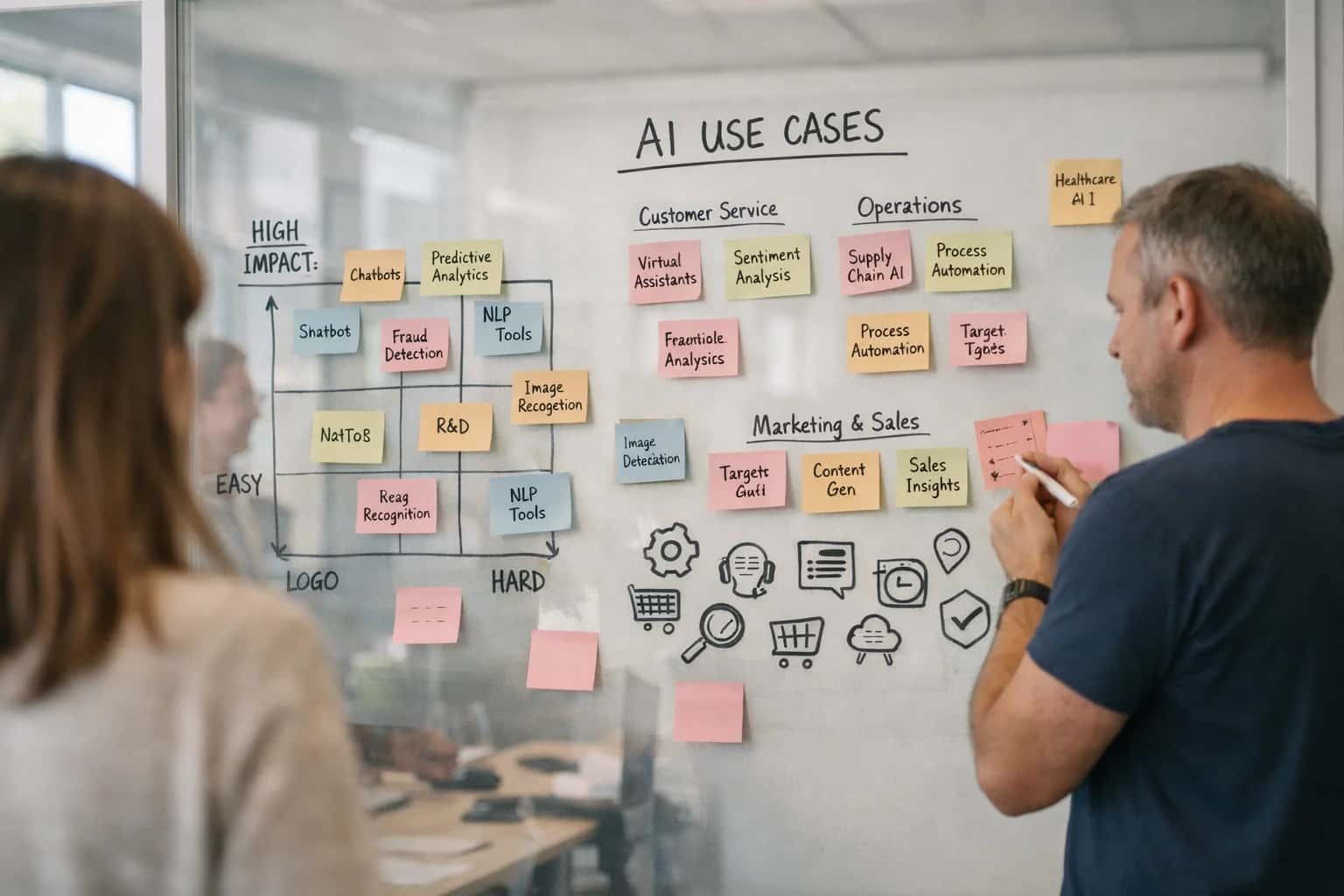
STATIC RECOMMENDATIONS, DYNAMIC LOSSES
The Problem with Generic Recommendations
Generic recommendation engines fail to capture real-time intent, leaving revenue on the table.
Your current system likely suffers from:
- Cold-start problems for new users or products.
- Session blindness, unable to adapt to a user's immediate browsing journey.
- Latent feedback loops, where popular items are over-recommended, creating a stale discovery experience.
- Inability to blend collaborative filtering, content-based signals, and contextual data in real time.
The result? Missed conversion opportunities, lower engagement, and a direct impact on your top-line revenue. Modern shoppers expect a feed that adapts as they browse, not a static list of "others also bought."
Inference Systems builds deterministic, real-time recommendation architectures that solve this. We engineer systems using session-aware models, vector similarity search, and multi-armed bandit algorithms to serve the optimal next-best-action, proven to increase AOV by 15-30%. Explore our related service on Real-Time Behavioral Pricing Engine Development or learn about unifying customer data with Cross-Channel Customer Identity Resolution AI.
DELIVERING TANGIBLE ROI
Measurable Business Outcomes
Our Dynamic Product Recommendation System Development is engineered to deliver specific, quantifiable improvements to your core e-commerce metrics. We focus on outcomes that directly impact your revenue, efficiency, and customer loyalty.
01
Increase Average Order Value (AOV)
Deploy real-time collaborative filtering and session-based models that surface highly relevant complementary and upsell products, directly lifting basket size. Our systems are proven to increase AOV by 15-35%.
15-35%
Average Order Value Lift
Real-time
Recommendation Latency
02
Boost Conversion Rates
Replace generic product grids with hyper-personalized discovery feeds powered by content-based filtering and real-time intent modeling. This reduces decision fatigue and guides users to purchase faster.
20-50%
Higher Click-Through Rate
10-25%
Conversion Rate Improvement
03
Reduce Customer Acquisition Cost (CAC)
Enhance customer loyalty and repeat purchase rates by delivering consistently relevant experiences. Our probabilistic consumer intent models keep users engaged, turning one-time buyers into high-LTV brand advocates.
25%+
Higher Retention Rate
Improved
Customer Lifetime Value (LTV)
04
Accelerate Time-to-Value
We leverage proven architectural patterns and pre-built connectors for major e-commerce platforms and data warehouses. Go from concept to a production-grade, A/B-testable recommendation engine in weeks, not months.
4-8 weeks
To Production MVP
99.9%
Uptime SLA
05
Mitigate Infrastructure Risk
Our systems are built for scale and resilience. We architect for peak traffic events (like Black Friday) with auto-scaling inference pipelines and redundant vector databases, ensuring performance never degrades during critical sales periods.
< 100ms
P95 Inference Latency
Zero-downtime
Model Updates
Structured Implementation Roadmap
Typical Development Timeline & Deliverables
A clear, phased approach to delivering a production-ready Dynamic Product Recommendation System, from initial strategy to ongoing optimization.
| Phase & Key Deliverables | Timeline | Core Activities | Outcome |
|---|---|---|---|
Phase 1: Discovery & Architecture Design | 1-2 Weeks | Requirements workshop, data audit, system architecture blueprint, success metric definition | Technical specification document and project roadmap |
Phase 2: MVP Development & Integration | 3-5 Weeks | Core model development (collaborative/content-based filtering), real-time data pipeline setup, initial API endpoints | Functional MVP integrated with your product catalog, delivering basic recommendations |
Phase 3: Advanced Personalization & Testing | 2-3 Weeks | Integration of real-time session data, A/B testing framework deployment, performance benchmarking | Live A/B test comparing new AI recommendations against legacy logic, with initial lift metrics |
Phase 4: Production Deployment & Monitoring | 1-2 Weeks | Load testing, security audit, CI/CD pipeline setup, comprehensive monitoring dashboards | System live in production with 99.9% uptime SLA, real-time performance dashboards |
Phase 5: Optimization & Scale | Ongoing | Model retraining, feature engineering, performance tuning, scaling for traffic spikes | Continuous improvement in key metrics (AOV, conversion rate) documented in monthly reviews |
Total Time to Live MVP | 6-8 Weeks | From kickoff to a live, measurable AI recommendation system in your production environment | Reduced time-to-market vs. a 6-12 month in-house build |
PROVEN FRAMEWORK
Our Development Methodology
We deliver production-ready recommendation engines in weeks, not months, using a battle-tested process that prioritizes measurable business impact and operational resilience.
01
Discovery & Data Strategy
We conduct a technical deep-dive to audit your data infrastructure, catalog, and user touchpoints. We define key success metrics (e.g., AOV lift, conversion rate) and architect a phased data pipeline to unify siloed sources for real-time model ingestion.
2-3 weeks
To Technical Design
100%
Metric Alignment
02
Architecture & Model Selection
We design a hybrid architecture combining collaborative filtering, content-based models, and real-time session analysis. We select and fine-tune open-source frameworks (TensorFlow Recommenders, LightFM) or custom models based on your data density and latency requirements.
< 100ms
P95 Inference Latency
Hybrid
Model Strategy
03
Real-Time Pipeline Engineering
We build robust, scalable data pipelines using Apache Kafka or AWS Kinesis for streaming user events. We implement vector databases (Pinecone, Weaviate) for low-latency similarity search and ensure seamless integration with your e-commerce platform (Shopify Plus, Magento, Composable).
99.9%
Pipeline Uptime SLA
Real-Time
Session Updates
04
A/B Testing & Continuous Optimization
We deploy with a controlled A/B testing framework from day one, measuring the new engine's performance against your baseline. We establish a continuous optimization loop, using bandit algorithms to automatically refine model weights and business rules based on live performance data.
From Day 1
Performance Tracking
Automated
Model Tuning
05
Security & Compliance by Design
Privacy is engineered into the core architecture. We implement anonymization techniques, ensure PII isolation, and build compliance with regional data laws (GDPR, CCPA) from the ground up. All systems undergo rigorous security review.
Zero PII
In Model Training
GDPR/CCPA
Compliance Ready
06
Production Deployment & MLOps
We manage the full deployment lifecycle into your cloud environment (AWS, GCP, Azure) with infrastructure-as-code. We establish a full MLOps pipeline for monitoring model drift, data quality, and business KPIs, ensuring long-term performance.
< 2 weeks
To Staging
Full MLOps
Lifecycle Management
Enabling Efficiency, Speed & Accuracy
Intelligent Analysis, Decision & Execution
We build AI systems for teams that need search across company data, workflow automation across tools, or AI features inside products and internal software.
Talk to Us
Search across company data
Give teams answers from docs, tickets, runbooks, and product data with sources and permissions.
Useful when people spend too long searching or get different answers from different systems.
Enterprise searchRAGPermissions
Read more
Automate internal workflows
Use AI to route work, draft outputs, trigger actions, and keep approvals and logs in place.
Useful when repetitive work moves across multiple tools and teams.
AI agentsWorkflow automationGovernance
Read more
Add AI to products and internal tools
Build assistants, guided actions, or decision support into the software your team or customers already use.
Useful when AI needs to be part of the product, not a separate tool.
AI integrationDecision supportModel routing
Read moreDynamic Product Recommendation Systems
Frequently Asked Questions
Common technical and commercial questions about developing and deploying a custom AI recommendation engine.
A production-ready MVP for a dynamic product recommendation system typically deploys in 4-6 weeks. This includes data pipeline integration, model training on your historical data, and A/B testing setup. Full-scale deployment across all customer touchpoints (web, mobile, email) usually completes within 8-10 weeks, depending on the complexity of your tech stack and data sources.

About the author
Prasad Kumkar
CEO & MD, Inference Systems
Prasad Kumkar is the CEO & MD of Inference Systems and writes about AI systems architecture, LLM infrastructure, model serving, evaluation, and production deployment. Over 5+ years, he has worked across computer vision models, L5 autonomous vehicle systems, and LLM research, with a focus on taking complex AI ideas into real-world engineering systems.
His work and writing cover AI systems, large language models, AI agents, multimodal systems, autonomous systems, inference optimization, RAG, evaluation, and production AI engineering.
LinkedIn
Limited slotsGet a Free AI Consultation
Partnered with leading AI, data, and software stack.





How We Work
Custom AI workflows for your Business
One-fit-all AI don't work for modern businesses. At Inferensys, we aim to understand your business & custom requirements; which we use to define most efficient agentic workflows, the data, and the tools for your business.
01
Review the use case
We understand the task, the users, and where AI can actually help.
Read more02
Pick the right approach
We define what needs search, automation, or product integration.
Read more03
Build the first useful version
We implement the part that proves the value first.
Read more04
Improve from there
We add the checks and visibility needed to keep it useful.
Read moreThe first call is a practical review of your use case and the right next step.
Talk to Us