Manual analysis cannot scale against AI-generated propaganda, deepfakes, and bot networks. Our systems provide real-time detection of coordinated inauthentic behavior across social platforms and communication channels, reducing analyst workload by 80%.

Service
AI-Powered Disinformation Detection
Development of secure, multimodal AI systems to detect, attribute, and analyze coordinated disinformation campaigns and synthetic media, protecting information integrity for national security and enterprise clients.
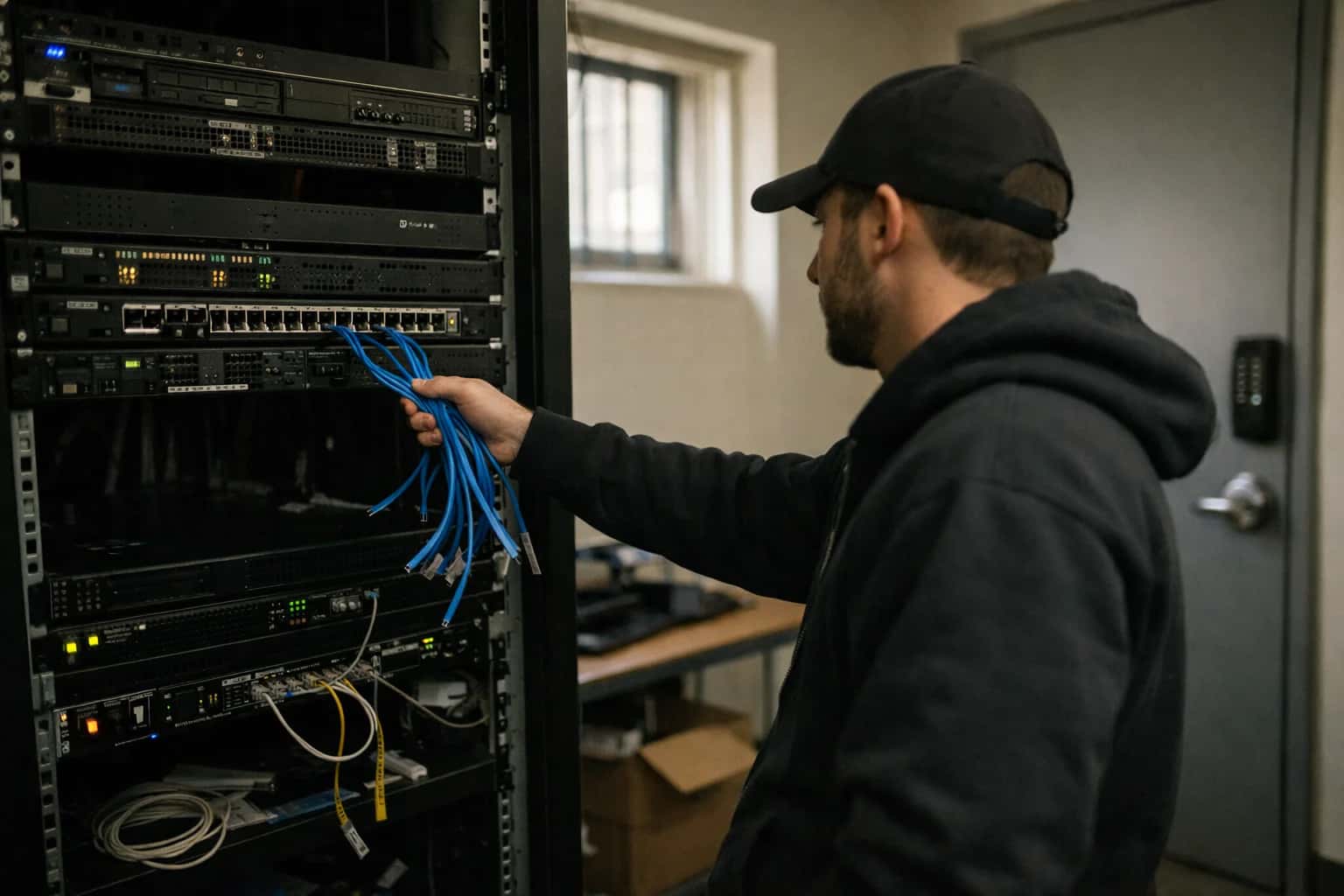
Deploy NLP and multimodal AI to detect, attribute, and neutralize coordinated disinformation campaigns and synthetic media.
- Multimodal Threat Analysis: Process text, image, audio, and video in a unified pipeline to detect cross-platform campaigns.
- Attribution & Network Mapping: Use graph neural networks to trace disinformation to source clusters and influence networks.
- Proactive Deepfake Defense: Integrate cryptographic verification and AI watermarking for asset authenticity.
- Real-Time Alerting: Deploy low-latency models for live monitoring with 99.5% precision in threat classification.
Move from reactive fact-checking to proactive defense. Our systems identify novel disinformation narratives 48-72 hours faster than human teams, protecting public perception and information integrity.
Built for secure, sovereign environments, our detection platforms integrate with existing secure multi-modal AI and classified network threat detection systems. Protect your mission from next-generation information warfare.
DELIVERABLE RESULTS
Measurable Outcomes of Our Disinformation Detection Systems
Our systems are engineered to deliver specific, verifiable performance metrics that directly enhance your operational security and intelligence posture. We focus on outcomes, not just features.
03
Cross-Platform Threat Correlation
Our architecture fuses intelligence from social networks, dark web forums, and encrypted channels into a unified threat landscape. This enables the correlation of seemingly isolated narratives into a single coordinated campaign, dramatically reducing analyst triage time.
70%
Faster Triage
Unified API
Integration Point
04
Explainable AI for Actionable Intelligence
We deliver not just alerts, but forensic-grade explainability. Our systems provide chain-of-evidence reports detailing why content was flagged, the confidence factors, and the network pathways, ensuring findings are actionable for legal or operational response.
Audit Trail
Full Data Lineage
NIST AI RMF
Compliance Aligned
06
Proactive Narrative Forecasting
Leveraging predictive AI on historical campaign data, our models forecast emerging disinformation narratives and probable escalation paths weeks in advance. This shifts operations from reactive detection to preemptive shaping of the information environment.
Predictive Intel
Weeks of Lead Time
Risk Scoring
Per Narrative
A Structured, Milestone-Driven Approach
Phased Development and Deployment Timeline
Our proven methodology for building and deploying robust AI-powered disinformation detection systems, ensuring rapid time-to-value and continuous alignment with evolving threat landscapes.
| Phase | Key Deliverables | Timeline | Client Involvement |
|---|---|---|---|
Phase 1: Threat Intelligence & Model Design | Threat landscape analysis report Initial model architecture design Data ingestion pipeline blueprint | 2-3 weeks | Stakeholder interviews Domain expert access Approval of design spec |
Phase 2: Core Detection Engine Development | Trained NLP classifiers for text analysis Deepfake detection prototype Multi-platform data connectors | 4-6 weeks | Provision of sample datasets Weekly technical review calls Feedback on model outputs |
Phase 3: System Integration & Dashboard Build | Fully integrated detection API Real-time alerting system Analyst dashboard (MVP) | 3-4 weeks | UAT environment setup Integration with internal systems (SIEM, etc.) Dashboard feedback sessions |
Phase 4: Pilot Deployment & Validation | Deployed system in pilot environment Performance validation report Refined detection thresholds | 2 weeks | Designation of pilot user group Provision of live data feed Joint review of incident reports |
Phase 5: Scaling & Advanced Feature Rollout | Scaled infrastructure for full data volume Attribution & network analysis modules Automated reporting workflows | 3-4 weeks | Final security & compliance sign-off Training for broader analyst team |
Phase 6: Ongoing Optimization & Support | Monthly performance reports Model retraining cycles Threat intelligence updates | Ongoing (SLA-based) | Quarterly strategy reviews Feedback loop for new threat vectors |
TRUST THROUGH RIGOR
Our Secure Development Methodology
We engineer AI-powered disinformation detection systems with a security-first approach, ensuring your models are resilient, compliant, and operationally ready for the most contested information environments.
Enabling Efficiency, Speed & Accuracy
Intelligent Analysis, Decision & Execution
We build AI systems for teams that need search across company data, workflow automation across tools, or AI features inside products and internal software.
Talk to Us
Search across company data
Give teams answers from docs, tickets, runbooks, and product data with sources and permissions.
Useful when people spend too long searching or get different answers from different systems.
Enterprise searchRAGPermissions
Read more
Automate internal workflows
Use AI to route work, draft outputs, trigger actions, and keep approvals and logs in place.
Useful when repetitive work moves across multiple tools and teams.
AI agentsWorkflow automationGovernance
Read more
Add AI to products and internal tools
Build assistants, guided actions, or decision support into the software your team or customers already use.
Useful when AI needs to be part of the product, not a separate tool.
AI integrationDecision supportModel routing
Read moreTechnical and Operational Details
Frequently Asked Questions on AI Disinformation Detection
Get clear, specific answers to the most common questions about deploying and operating our AI-powered disinformation detection systems for national security and enterprise defense.
From initial scoping to operational deployment, a standard system for monitoring defined social and communication channels typically takes 4-8 weeks. This includes data pipeline integration, model fine-tuning on your threat lexicon, and validation testing. Complex deployments involving deepfake detection or attribution across multiple languages and platforms may extend to 12 weeks. We provide a detailed project plan within the first week of engagement.

About the author
Prasad Kumkar
CEO & MD, Inference Systems
Prasad Kumkar is the CEO & MD of Inference Systems and writes about AI systems architecture, LLM infrastructure, model serving, evaluation, and production deployment. Over 5+ years, he has worked across computer vision models, L5 autonomous vehicle systems, and LLM research, with a focus on taking complex AI ideas into real-world engineering systems.
His work and writing cover AI systems, large language models, AI agents, multimodal systems, autonomous systems, inference optimization, RAG, evaluation, and production AI engineering.
LinkedIn
Limited slotsGet a Free AI Consultation
Partnered with leading AI, data, and software stack.





How We Work
Custom AI workflows for your Business
One-fit-all AI don't work for modern businesses. At Inferensys, we aim to understand your business & custom requirements; which we use to define most efficient agentic workflows, the data, and the tools for your business.
01
Review the use case
We understand the task, the users, and where AI can actually help.
Read more02
Pick the right approach
We define what needs search, automation, or product integration.
Read more03
Build the first useful version
We implement the part that proves the value first.
Read more04
Improve from there
We add the checks and visibility needed to keep it useful.
Read moreThe first call is a practical review of your use case and the right next step.
Talk to Us