
Inferensys

Service

AI-Enabled Cyber Physical System Security

Hardening AI-integrated military platforms—ships, aircraft, vehicles—against sophisticated cyber-physical attacks. We deliver resilient anomaly detection for OT networks, secure firmware updates, and hardened AI-driven control systems.
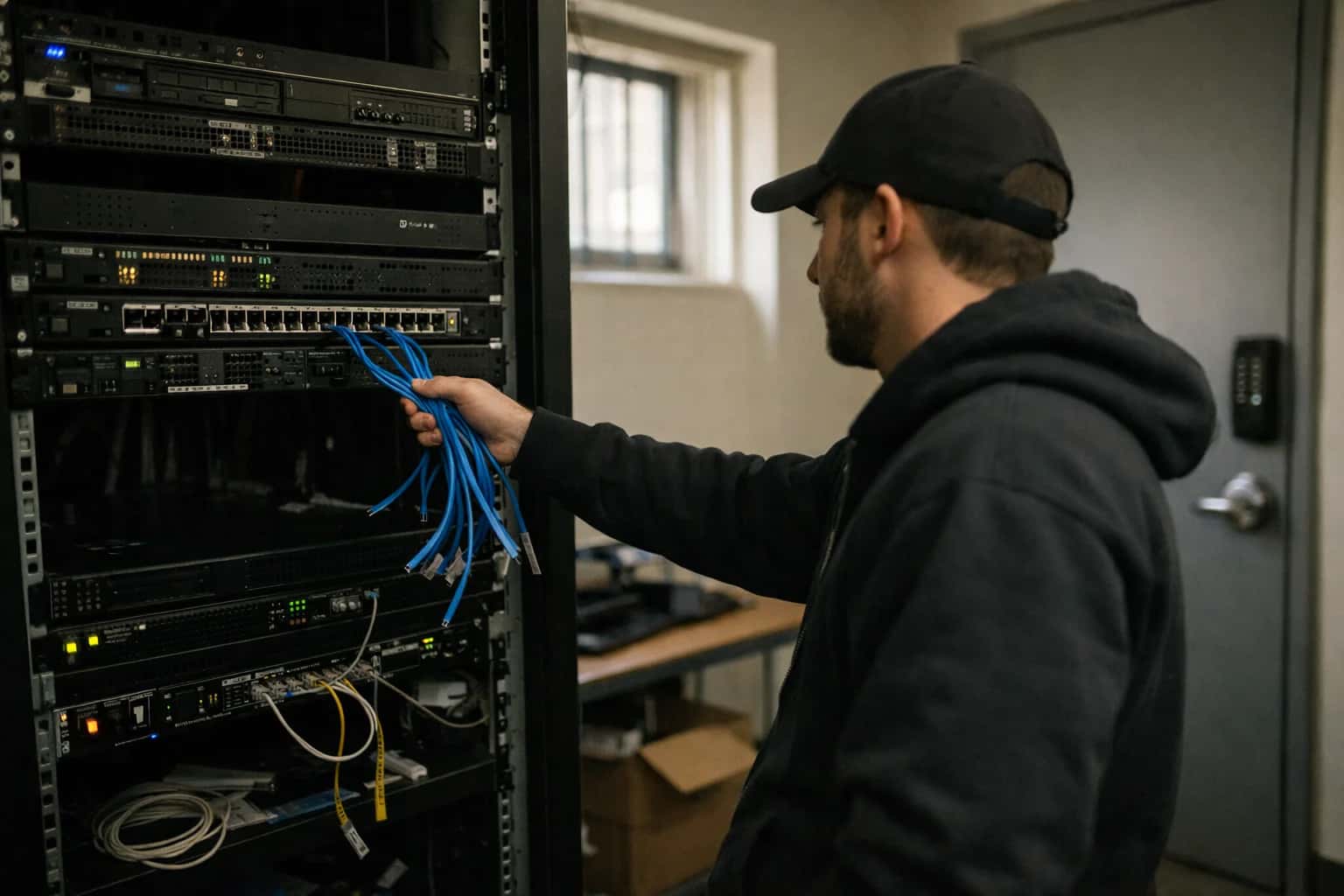
Isolated secure server room with network cables physically disconnected, minimal lighting, security-focused environment.
CYBER-PHYSICAL SECURITY

The Vulnerability of AI-Integrated Military Platforms

Secure AI-driven control systems in ships, aircraft, and vehicles against novel cyber-physical attack vectors.

AI integration creates new attack surfaces in operational technology (OT) networks. We harden these systems end-to-end:

  • Anomaly detection for CAN bus, MIL-STD-1553, and proprietary control protocols.
  • Secure firmware updates with cryptographic signing and rollback protection.
  • Resilient AI inference on edge hardware, resistant to sensor spoofing and data poisoning.

Move from reactive patching to proactive resilience. Our security frameworks are built on MITRE ATLAS and NIST SP 800-82 guidelines for industrial control systems.

We deliver air-gapped testing environments to simulate adversarial attacks without risk. Partner with us to implement:

  • Continuous monitoring for AI model drift and integrity in deployed systems.
  • Hardware-rooted trust using Trusted Execution Environments (TEEs) for critical AI workloads.
  • Cross-domain solutions that unify IT and OT security postures under a single AI-driven command.
SECURITY AND RESILIENCE

Operational and Strategic Benefits

Our AI-enabled cyber-physical security solutions deliver measurable improvements in platform resilience, operational continuity, and threat response times for military systems.

02

Secure Over-the-Air (OTA) Updates

Implement cryptographically verified, zero-trust firmware update pipelines for deployed platforms. Updates are signed, validated via hardware TEEs, and rolled back automatically upon integrity check failure, ensuring resilience against supply chain attacks.

100%
Integrity Verification
Air-Gapped
Option Available
04

Unified Security Orchestration

Integrate cyber and physical security alerts into a single AI-powered command dashboard. Correlate IT network intrusions with physical sensor anomalies (e.g., unauthorized access hatches) for accelerated, coordinated incident response.

60% Faster
Mean Time to Respond
Single Pane
of Glass
05

Continuous Compliance Posture

Automate adherence to defense-specific standards like NIST SP 800-53, NIST AI RMF, and ISO/IEC 27001 for cyber-physical systems. AI continuously audits configurations and generates evidence for accreditation bodies.

Automated
Audit Trails
Real-Time
Compliance Scoring
06

Reduced Total Cost of Ownership

Shift from reactive, schedule-based maintenance to AI-predictive upkeep. Extend mean time between failures (MTBF) for critical components by 40% and reduce unplanned downtime, directly lowering lifecycle sustainment costs.

40%+
MTBF Improvement
Lower TCO
Lifecycle
Tailored Security for Every Mission Scale

Structured Engagement Tiers

Choose the right level of partnership for securing your AI-integrated platforms. Each tier includes our core methodology of threat modeling, anomaly detection engineering, and secure update protocols, with scaling support and customization.

Security CapabilityTacticalStrategicSovereign

OT Network Anomaly Detection

AI Control System Resilience Testing

Basic

Advanced

Full Adversarial Red Teaming

Secure Firmware Over-the-Air (FOTA) Update Pipeline

Hardware Root-of-Trust Integration

Optional

Real-time Threat Intelligence Feeds

On-Site Security Assessment & Integration

1 Week

Custom Duration

Dedicated Security Engineering Team

Email Support

Named Engineer

Embedded Team

Uptime & Response SLA

99.5%

99.9%

Compliance Documentation (NIST, ISO 27001)

Starting Project Scope

Single System Assessment

Fleet-Wide Deployment

Program of Record Integration

A PROVEN FRAMEWORK

Our Methodology: From Assessment to Operational Resilience

We deliver end-to-end security for AI-integrated military platforms through a structured, four-phase methodology designed to identify vulnerabilities, harden systems, and ensure continuous operational resilience against evolving cyber-physical threats.

01

Threat Modeling & Security Assessment

We conduct comprehensive threat modeling using frameworks like MITRE ATT&CK for ICS to map attack surfaces across your AI-driven control systems, OT networks, and physical interfaces. This establishes a security baseline and prioritizes risks.

100%
Attack Surface Mapped
< 72 hrs
Initial Report
02

Architecture Hardening & Secure Integration

Our engineers design and implement secure-by-default architectures. We integrate hardware-based Trusted Execution Environments (TEEs), enforce zero-trust principles for OT/IT convergence, and develop secure, cryptographically signed firmware update pipelines.

Air-Gapped
Design Options
FIPS 140-3
Crypto Standards
03

Anomaly Detection & AI Model Fortification

We deploy unsupervised ML models trained on your operational telemetry to establish behavioral baselines and detect subtle anomalies indicative of intrusion or system manipulation. We also conduct adversarial testing using the MITRE ATLAS framework to harden your AI models against evasion and poisoning.

> 99%
Detection Rate
< 1 sec
Mean Time to Detect
04

Operational Resilience & Continuous Monitoring

We establish a continuous security posture with real-time monitoring, automated incident playbooks, and periodic red teaming exercises. Our MLOps pipelines ensure your detection models are retrained on new threat data, maintaining resilience as your platform and the threat landscape evolve.

24/7/365
SOC Support
99.9%
Uptime SLA
Expert Answers for Defense Leaders

Frequently Asked Questions on Cyber-Physical AI Security

Common questions from CTOs and engineering leads on securing AI-integrated military platforms against sophisticated cyber-physical attacks.

We follow a structured, four-phase engagement model tailored for defense applications. Phase 1 is a threat modeling and architecture review (1-2 weeks) where we map your OT network, AI control points, and potential attack vectors using frameworks like MITRE ATT&CK for ICS. Phase 2 involves implementing real-time anomaly detection for operational technology networks, typically deploying hardened sensors within 2-3 weeks. Phase 3 focuses on resilience engineering for AI-driven control systems, including adversarial testing and fail-safe protocol integration. Phase 4 is continuous monitoring and support, with 24/7 SLAs available. All work is conducted in accredited facilities or via secure, air-gapped development environments.

Prasad Kumkar

About the author

Prasad Kumkar

CEO & MD, Inference Systems

Prasad Kumkar is the CEO & MD of Inference Systems and writes about AI systems architecture, LLM infrastructure, model serving, evaluation, and production deployment. Over 5+ years, he has worked across computer vision models, L5 autonomous vehicle systems, and LLM research, with a focus on taking complex AI ideas into real-world engineering systems.

His work and writing cover AI systems, large language models, AI agents, multimodal systems, autonomous systems, inference optimization, RAG, evaluation, and production AI engineering.



