Manual experiment design and execution is a major R&D bottleneck, consuming up to 70% of a scientist's time with repetitive tasks. This slows iteration cycles, introduces human error, and creates massive data silos.

Service
AI-Powered Lab Automation Systems Integration
Engineering closed-loop, autonomous experimentation systems by integrating machine learning with robotic liquid handlers, high-content screeners, and lab hardware to design, run, and analyze experiments without manual intervention.
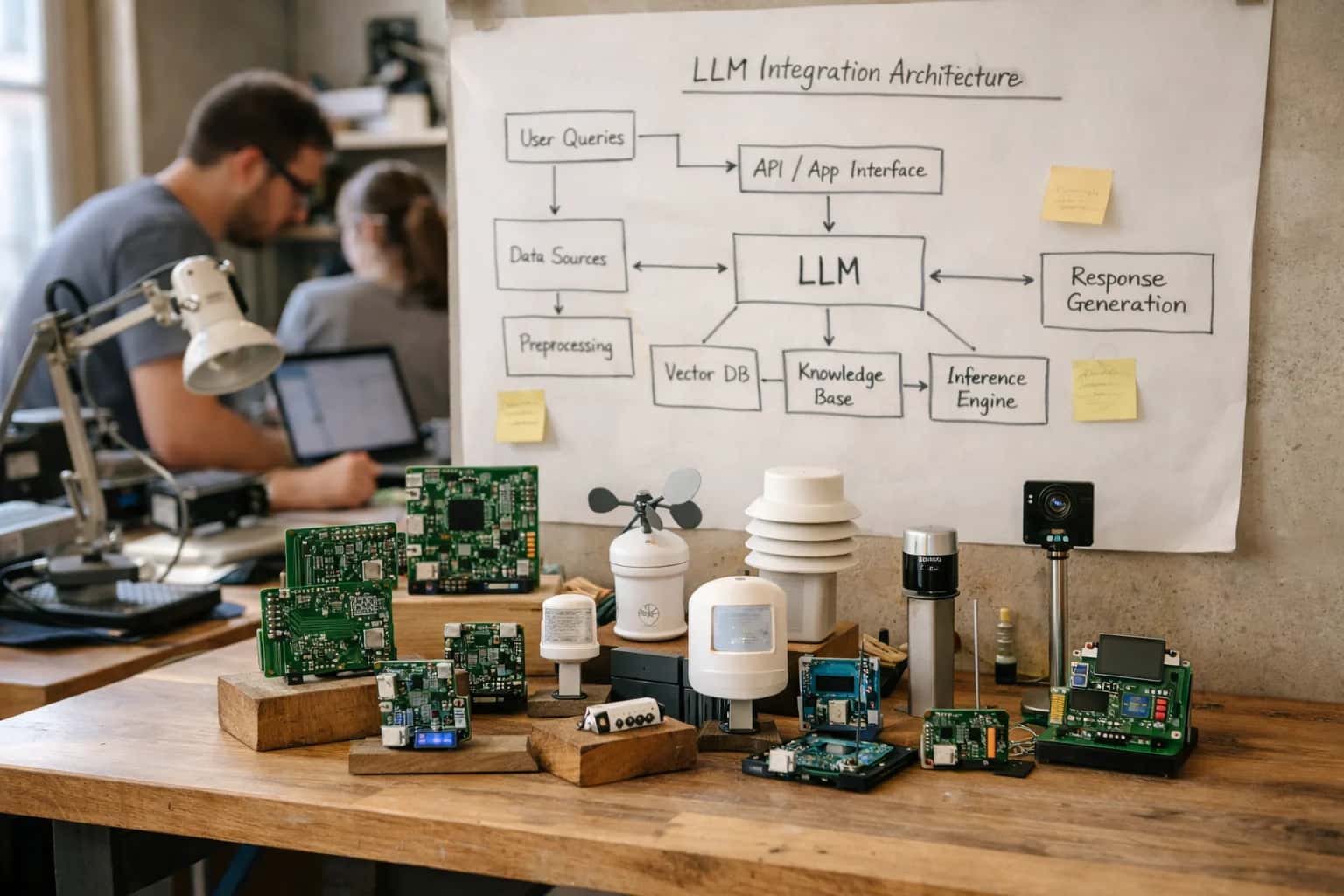
LAB AUTOMATION
The Bottleneck of Manual Experimentation
Replace slow, error-prone manual processes with autonomous, AI-driven lab systems.
We integrate machine learning directly with robotic liquid handlers, high-content screeners, and lab hardware to create closed-loop, autonomous experimentation systems.
- AI-Driven Design: Systems use
graph neural networksand predictive models to propose optimal experimental parameters. - Robotic Execution:
Python-controlled platforms (e.g., Hamilton, Tecan) execute protocols with sub-microliter precision. - Real-Time Analysis: Models analyze results in-stream, feeding insights back to redesign the next experiment cycle.
- Unified Data Fabric: All data—from plate readers to sequencers—is ingested into a structured
MLOpspipeline for reproducible analysis.
This transforms R&D from a linear, human-paced process into a parallel, AI-accelerated discovery engine. Move from weeks per experiment cycle to days, while capturing every data point for your computational biology foundation models. For related infrastructure, see our services on Bio-AI Data Pipeline and MLOps Engineering and AI Supercomputing and Hybrid Cloud Architecture.
QUANTIFIABLE IMPACT
Measurable Outcomes of Autonomous Lab Integration
Our AI-powered lab automation systems deliver concrete, data-driven improvements to your R&D throughput, operational costs, and experimental success rates. We focus on outcomes you can measure and report.
01
Accelerated Experimentation Cycles
Deploy closed-loop systems where AI designs experiments, robotic platforms execute them, and models analyze results in near real-time. This reduces the time from hypothesis to validated data from weeks to days.
70-90%
Faster Iteration
24/7
Uninterrupted Operation
02
Dramatic Reduction in Reagent Costs
Intelligent experiment design and robotic precision minimize waste. AI optimizes protocols for minimal reagent use while maintaining statistical power, directly lowering your cost per data point.
30-50%
Lower Consumable Spend
Automated
Waste Tracking
03
Enhanced Data Quality & Reproducibility
Eliminate human variability in repetitive tasks. Robotic execution ensures consistent pipetting, incubation, and imaging. AI-driven analysis applies uniform criteria, producing cleaner, publication-ready datasets.
>99%
Protocol Adherence
Audit-Ready
Full Data Lineage
04
Increased Scientist Productivity
Free your researchers from manual, repetitive lab work. Our systems handle plate preparation, cell culture maintenance, and high-content screening, allowing scientists to focus on strategic design and interpretation.
5-10x
Higher Throughput
Strategic Focus
Redeployed FTEs
05
Predictive Maintenance & Uptime
Integrate IoT sensors with AI models to predict equipment failures before they happen. Schedule maintenance during idle periods to ensure critical robotic handlers and screeners maintain >99% operational availability.
>99%
System Uptime
Predictive
Failure Alerts
06
Seamless Data Integration & MLOps
Our architecture ensures experimental data flows automatically into centralized data lakes and feature stores. This enables continuous model retraining and live performance dashboards, creating a true AI flywheel for R&D. Learn more about our Bio-AI Data Pipeline and MLOps Engineering.
Unified
Data Fabric
Continuous
Model Improvement
Structured Deployment for Lab Automation
Phased Implementation for Rapid ROI
Our phased approach minimizes upfront investment and technical risk while delivering measurable value at each stage. Compare the capabilities and outcomes of each implementation tier.
| Capability & Support | Discovery & Pilot | Core Integration | Full Autonomy |
|---|---|---|---|
Initial System Assessment & Roadmap | |||
Integration with 1-2 Core Instruments (e.g., Liquid Handler) | |||
Closed-Loop Experiment Design & Execution AI | |||
Multi-Instrument Workflow Orchestration | |||
High-Content Screener Data Integration & Analysis | |||
Predictive Maintenance & Anomaly Detection AI | |||
Support Model | Project-Based | SLA + Quarterly Reviews | Dedicated Engineer + 24/7 Support |
Typical Time to First Result | 4-6 weeks | 8-12 weeks | 14-20 weeks |
Estimated ROI Timeline | 3-6 months | 6-9 months | 9-12 months |
Starting Investment | From $75K | From $200K | Custom Quote |
INTEGRATION & AUTOMATION
Core Technical Capabilities We Deliver
We engineer closed-loop, autonomous experimentation systems that connect your lab hardware with advanced machine learning, transforming manual workflows into self-optimizing discovery engines.
01
Robotic Workflow Orchestration
Seamless integration of machine learning with robotic liquid handlers (Hamilton, Tecan), plate readers, and high-content screeners. We create deterministic execution layers that translate AI-designed experiments into precise, repeatable physical actions.
> 95%
Protocol Accuracy
24/7
Autonomous Operation
02
Closed-Loop Experimentation AI
Implementation of active learning and Bayesian optimization frameworks that analyze experimental outcomes in real-time, automatically designing the next optimal set of conditions to accelerate discovery cycles.
10x
Iteration Speed
< 1 hr
Feedback Loop
03
Multimodal Data Fusion Pipelines
Engineering of unified data pipelines that ingest and correlate heterogeneous outputs: imaging data from microscopes, spectral readings, sequencing results, and sensor telemetry into a single queryable knowledge graph for holistic analysis.
PB-scale
Data Handling
Real-time
Stream Processing
04
Predictive Maintenance & Calibration
Deployment of ML models that monitor equipment sensor data to predict component failures and calibration drift before they impact experimental integrity, ensuring consistent data quality and maximizing hardware uptime.
> 99%
System Uptime
Weeks Ahead
Failure Prediction
05
Secure, Compliant Data Architecture
Design of air-gapped or sovereign data lakes with strict access controls and full audit trails, ensuring experimental IP and sensitive biological data remain secure and compliant with HIPAA, GDPR, and 21 CFR Part 11.
End-to-End
Encryption
SOC 2 Type II
Compliance Ready
06
Domain-Specific Model Integration
Custom integration and fine-tuning of biological foundation models (e.g., ESM for proteins, CNN for histology) with your lab's proprietary data, enabling precise, context-aware predictions that guide autonomous system decisions. Learn more about our Bio-AI Foundation Model Consulting.
Lab-Validated
Accuracy
Proprietary
Data Security
END-TO-END AUTOMATION
Our Integration Methodology: From Hardware Audit to Autonomous Operation
We deliver fully autonomous lab systems that design, execute, and analyze experiments in closed loops.
We move beyond simple robotic scripting to create intelligent, adaptive systems that learn from each experiment cycle, accelerating discovery timelines by 60-80%.
Our proven 4-phase methodology ensures seamless integration and measurable ROI:
- Phase 1: Hardware & Data Audit: We map your existing robotic platforms (e.g., Hamilton, Tecan), high-content screeners, and data silos to design a unified
Lab Information Management System (LIMS)architecture. - Phase 2: Closed-Loop Pipeline Engineering: We build the core AI engine, integrating reinforcement learning for adaptive experimental design and computer vision for real-time plate analysis, creating a deterministic link between digital design and physical execution.
- Phase 3: Autonomous Orchestration: We deploy agentic workflows where AI coordinates hardware, schedules resources, and triggers downstream analytics—turning your lab into a self-optimizing discovery engine.
- Phase 4: Continuous Optimization & MLOps: We implement monitoring and retraining pipelines, ensuring your system improves with every experiment, maintaining >99.5% operational uptime.
This approach transforms capital expenditure into a scalable competitive advantage. For a deeper dive into the underlying AI architectures, explore our insights on Generative Protein Design Engineering and Bio-AI Foundation Model Consulting.
Enabling Efficiency, Speed & Accuracy
Intelligent Analysis, Decision & Execution
We build AI systems for teams that need search across company data, workflow automation across tools, or AI features inside products and internal software.
Talk to Us
Search across company data
Give teams answers from docs, tickets, runbooks, and product data with sources and permissions.
Useful when people spend too long searching or get different answers from different systems.
Enterprise searchRAGPermissions
Read more
Automate internal workflows
Use AI to route work, draft outputs, trigger actions, and keep approvals and logs in place.
Useful when repetitive work moves across multiple tools and teams.
AI agentsWorkflow automationGovernance
Read more
Add AI to products and internal tools
Build assistants, guided actions, or decision support into the software your team or customers already use.
Useful when AI needs to be part of the product, not a separate tool.
AI integrationDecision supportModel routing
Read moreIntegration Process & Support
Frequently Asked Questions on Lab AI Integration
Get clear answers on timelines, security, and support for integrating AI with your robotic lab systems. Based on our experience delivering 50+ autonomous experimentation platforms.
Standard integration projects deploy in 2-4 weeks. This includes connecting to robotic liquid handlers (e.g., Hamilton, Tecan) or high-content screeners, deploying initial ML models for experiment design, and establishing the data feedback loop. Complex multi-system integrations or custom agent development may extend to 6-8 weeks. We provide a detailed project plan in the first week.

About the author
Prasad Kumkar
CEO & MD, Inference Systems
Prasad Kumkar is the CEO & MD of Inference Systems and writes about AI systems architecture, LLM infrastructure, model serving, evaluation, and production deployment. Over 5+ years, he has worked across computer vision models, L5 autonomous vehicle systems, and LLM research, with a focus on taking complex AI ideas into real-world engineering systems.
His work and writing cover AI systems, large language models, AI agents, multimodal systems, autonomous systems, inference optimization, RAG, evaluation, and production AI engineering.
LinkedIn
Limited slotsGet a Free AI Consultation
Partnered with leading AI, data, and software stack.





How We Work
Custom AI workflows for your Business
One-fit-all AI don't work for modern businesses. At Inferensys, we aim to understand your business & custom requirements; which we use to define most efficient agentic workflows, the data, and the tools for your business.
01
Review the use case
We understand the task, the users, and where AI can actually help.
Read more02
Pick the right approach
We define what needs search, automation, or product integration.
Read more03
Build the first useful version
We implement the part that proves the value first.
Read more04
Improve from there
We add the checks and visibility needed to keep it useful.
Read moreThe first call is a practical review of your use case and the right next step.
Talk to Us