Your digital twin's value multiplies when it becomes a platform. We build robust, developer-friendly APIs and SDKs that unlock your twin's data and logic for internal teams and third-party applications. This transforms a static model into a dynamic hub for innovation.

Service
Digital Twin API and SDK Development
We build robust, developer-friendly APIs and SDKs that allow your internal teams and third-party applications to securely query, control, and extend the functionality of your enterprise digital twin platform.
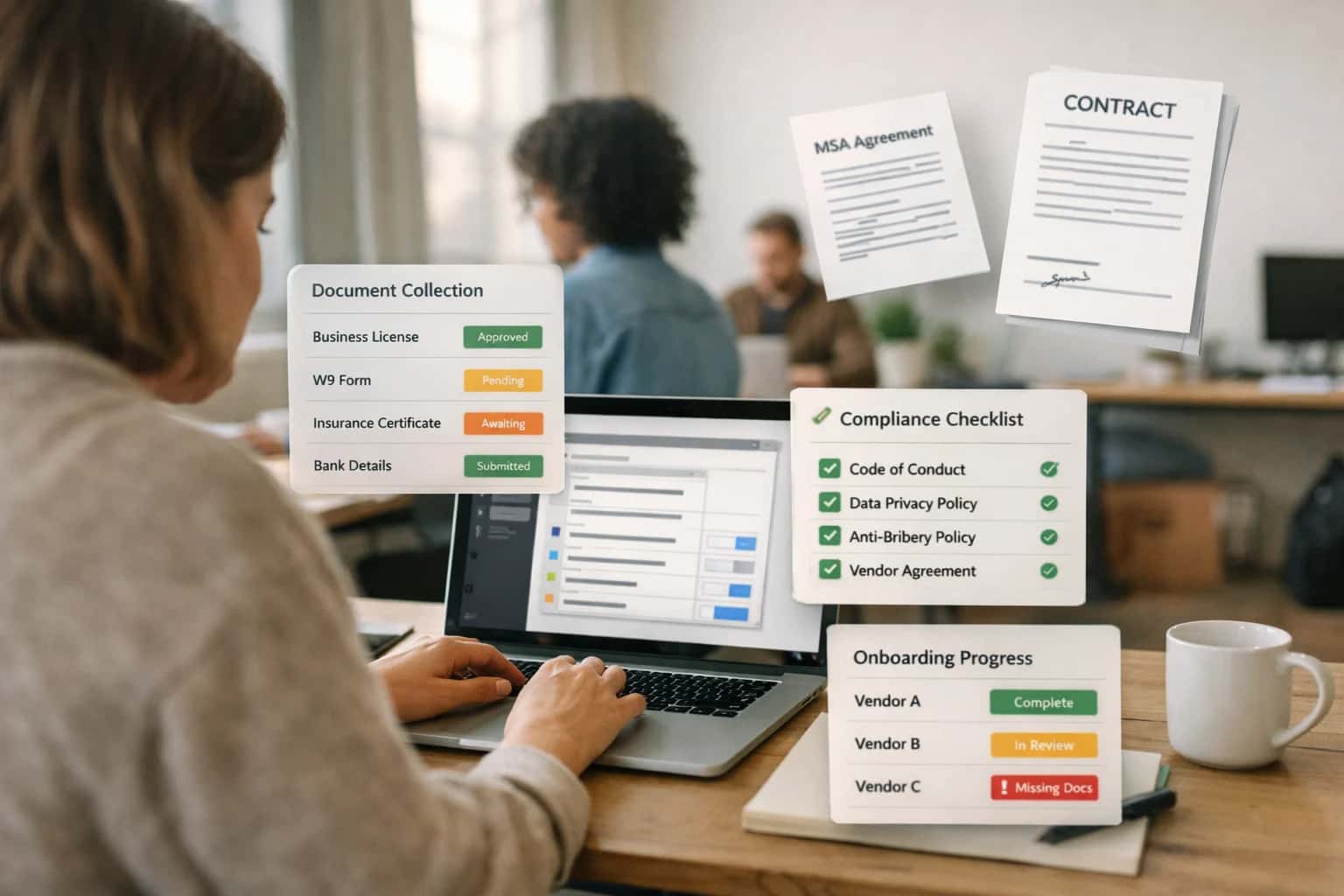
Build a connected ecosystem, not a siloed simulation.
Enable secure, programmatic access to live sensor data, simulation states, and predictive insights, turning your digital twin into a core business intelligence engine.
- Standardized Integration: Expose twin functionality via RESTful APIs, GraphQL endpoints, and WebSocket streams for real-time data.
- Developer Acceleration: Provide comprehensive SDKs in Python, JavaScript, and Java with clear documentation, reducing integration time from months to weeks.
- Secure Access Control: Implement OAuth 2.0, API key management, and role-based permissions to ensure data sovereignty and compliance.
- Extensible Architecture: Design modular APIs that allow partners to build custom applications, dashboards, and automation on top of your twin platform.
TANGIBLE ROI
Business Outcomes of a Robust Digital Twin API
A well-architected Digital Twin API and SDK is more than a technical interface; it's a strategic lever that accelerates development, unlocks new revenue streams, and future-proofs your digital infrastructure. Here are the measurable outcomes our clients achieve.
01
Accelerated Time-to-Market
Developer-friendly SDKs and comprehensive API documentation reduce integration time from months to weeks. Empower your internal teams and third-party developers to build on your digital twin platform faster, turning data into applications 70% quicker.
70%
Faster App Development
< 4 weeks
Initial Integration
02
Monetization & Ecosystem Growth
Secure, scalable APIs enable you to productize your digital twin data and simulation capabilities. Create new B2B revenue channels by allowing partners to license API access or build complementary applications on your platform.
New B2B
Revenue Streams
Partner-Led
Ecosystem Expansion
03
Enhanced Operational Resilience
APIs built with zero-trust principles and hardware-backed security (like TEEs) ensure secure, auditable access to critical operational data. Maintain data sovereignty and comply with regulations like the EU AI Act while enabling safe external innovation. Learn more about our approach in Confidential Computing for AI Workloads.
Zero-Trust
Access Model
Hardware-Backed
Data Security
04
Future-Proofed Architecture
Modular, versioned APIs decouple your core digital twin engine from consuming applications. This allows for seamless upgrades to new simulation models, AI agents, or data sources without breaking downstream integrations, protecting your long-term investment.
Backward-Compatible
Versioning
Modular
Service Design
05
Unified Data & Action Layer
A single, coherent API abstracts the complexity of fused data streams from IoT sensors, CAD models, and legacy SCADA systems. This provides a consistent interface for querying state, issuing commands, and subscribing to real-time events across your entire physical asset portfolio. This complements our Digital Twin Data Fusion Services.
Single Source
of Truth
Real-Time
Command & Control
06
Scalable Developer Adoption
Comprehensive SDKs in Python, JavaScript, and Go, paired with interactive API explorers and sandbox environments, lower the barrier to entry. Drive widespread internal adoption and foster a community of developers innovating on your platform.
Multi-Language
SDK Support
Interactive
Documentation
From Prototype to Production
Typical Development Timeline & Deliverables
A clear roadmap for building a secure, scalable Digital Twin API and SDK, from initial architecture to full production deployment.
| Phase & Key Deliverables | Starter (4-6 Weeks) | Professional (8-12 Weeks) | Enterprise (12-16+ Weeks) |
|---|---|---|---|
Core REST & GraphQL API Development | |||
Python & JavaScript/TypeScript SDKs | |||
Authentication & Role-Based Access Control | Basic API Keys | OAuth 2.0 / JWT | SAML 2.0 / Custom IAM |
Real-Time Data Streaming (WebSockets) | |||
Advanced Query Builder & Semantic Search | |||
Comprehensive API Documentation & Interactive Playground | OpenAPI Spec | Hosted Developer Portal | Custom Branded Portal with Analytics |
Integration with Legacy Systems (ERP, MES, SCADA) | 1-2 Connectors | 3-5 Custom Connectors | Full-Scale Data Fusion Pipeline |
Performance & Load Testing | Basic Benchmarking | Automated CI/CD Testing | Full Chaos Engineering & Penetration Testing |
Security Audit & Compliance | Code Review | Third-Party Security Audit | ISO 27001 / SOC 2 Alignment |
Deployment & DevOps Support | Containerized Deployment Guide | Managed Kubernetes Helm Charts | Full CI/CD Pipeline & 24/7 SRE Support |
Ongoing Support & SLA | Email Support | Priority Slack Channel & 99.5% Uptime | Dedicated Engineer & 99.9% Uptime SLA |
DEVELOPER-FIRST ENGINEERING
Core Capabilities of Our API & SDK Development
We build robust, secure, and scalable APIs and SDKs that empower your internal teams and third-party partners to unlock the full value of your digital twin platform. Focus on your core product while we deliver the tools for ecosystem growth.
01
Secure, Scalable API Gateways
Enterprise-grade RESTful and GraphQL APIs with OAuth 2.0, API key management, and rate limiting. Built for high-concurrency access to digital twin data streams and simulation controls, ensuring platform stability under load.
99.9%
Uptime SLA
< 100ms
P95 Latency
02
Multi-Language SDKs
Production-ready SDKs for Python, JavaScript/TypeScript, Java, and C#. Includes comprehensive documentation, code samples, and CLI tools to accelerate integration for your development teams and external partners.
4+
Core Languages
2 weeks
Typical Integration
03
Real-Time Data Streaming
WebSocket and Server-Sent Event (SSE) endpoints for low-latency subscription to live digital twin state changes, sensor telemetry, and simulation events. Enables reactive applications and dashboards.
< 50ms
Event Latency
1M+
Concurrent Connections
04
Granular Access Control
Fine-grained, attribute-based access control (ABAC) integrated directly into the API layer. Define policies for users, applications, and specific digital twin assets to enforce security and data governance.
SOC 2
Compliance Ready
Role & Asset
Dual Control
06
Comprehensive Observability
Built-in API analytics, logging, and distributed tracing (OpenTelemetry). Gain insights into usage patterns, performance bottlenecks, and system health to inform product and platform decisions.
E2E Tracing
Full Visibility
Custom Metrics
Exportable
Enabling Efficiency, Speed & Accuracy
Intelligent Analysis, Decision & Execution
We build AI systems for teams that need search across company data, workflow automation across tools, or AI features inside products and internal software.
Talk to Us
Search across company data
Give teams answers from docs, tickets, runbooks, and product data with sources and permissions.
Useful when people spend too long searching or get different answers from different systems.
Enterprise searchRAGPermissions
Read more
Automate internal workflows
Use AI to route work, draft outputs, trigger actions, and keep approvals and logs in place.
Useful when repetitive work moves across multiple tools and teams.
AI agentsWorkflow automationGovernance
Read more
Add AI to products and internal tools
Build assistants, guided actions, or decision support into the software your team or customers already use.
Useful when AI needs to be part of the product, not a separate tool.
AI integrationDecision supportModel routing
Read moreTechnical Clarity for Engineering Leaders
Digital Twin API and SDK Development: Frequently Asked Questions
Get specific answers to the most common technical and commercial questions about building robust APIs and SDKs for your enterprise digital twin platform.
For a standard enterprise deployment with core CRUD operations, real-time data streaming, and basic access control, development typically takes 3-5 weeks. Complex integrations with legacy SCADA/PLC systems, advanced query languages, or multi-tenant architectures can extend this to 8-12 weeks. We follow an agile, milestone-driven process with bi-weekly demos to ensure alignment and accelerate time-to-market.

About the author
Prasad Kumkar
CEO & MD, Inference Systems
Prasad Kumkar is the CEO & MD of Inference Systems and writes about AI systems architecture, LLM infrastructure, model serving, evaluation, and production deployment. Over 5+ years, he has worked across computer vision models, L5 autonomous vehicle systems, and LLM research, with a focus on taking complex AI ideas into real-world engineering systems.
His work and writing cover AI systems, large language models, AI agents, multimodal systems, autonomous systems, inference optimization, RAG, evaluation, and production AI engineering.
LinkedIn
Limited slotsGet a Free AI Consultation
Partnered with leading AI, data, and software stack.





How We Work
Custom AI workflows for your Business
One-fit-all AI don't work for modern businesses. At Inferensys, we aim to understand your business & custom requirements; which we use to define most efficient agentic workflows, the data, and the tools for your business.
01
Review the use case
We understand the task, the users, and where AI can actually help.
Read more02
Pick the right approach
We define what needs search, automation, or product integration.
Read more03
Build the first useful version
We implement the part that proves the value first.
Read more04
Improve from there
We add the checks and visibility needed to keep it useful.
Read moreThe first call is a practical review of your use case and the right next step.
Talk to Us