The RAG Performance Paradox is the counter-intuitive reality that adding more data to a RAG system often degrades its speed and accuracy if that data is architecturally distant. The foundational flaw is treating all data as equally accessible.
Blog
Why a Hybrid Data Strategy is the Foundation of Effective RAG
Retrieval-Augmented Generation (RAG) is the enterprise's foundation layer, but its performance and security are crippled by cloud-only architectures. This analysis explains why a hybrid data strategy—keeping vector embeddings and sensitive source data close to the inference point—is non-negotiable for latency, cost, compliance, and control.
THE DATA
The RAG Performance Paradox
RAG systems fail when data strategy ignores the physics of latency and the economics of data movement.
Latency is a physics problem. Every millisecond spent retrieving context from a distant cloud vector database like Pinecone or Weaviate directly erodes user experience. For real-time applications, network round-trip time is the primary bottleneck, not model inference.
Sensitive source data cannot live in the cloud. Compliance mandates like GDPR and the EU AI Act require data sovereignty, forcing the separation of public embeddings from private source documents. A monolithic cloud architecture violates this principle.
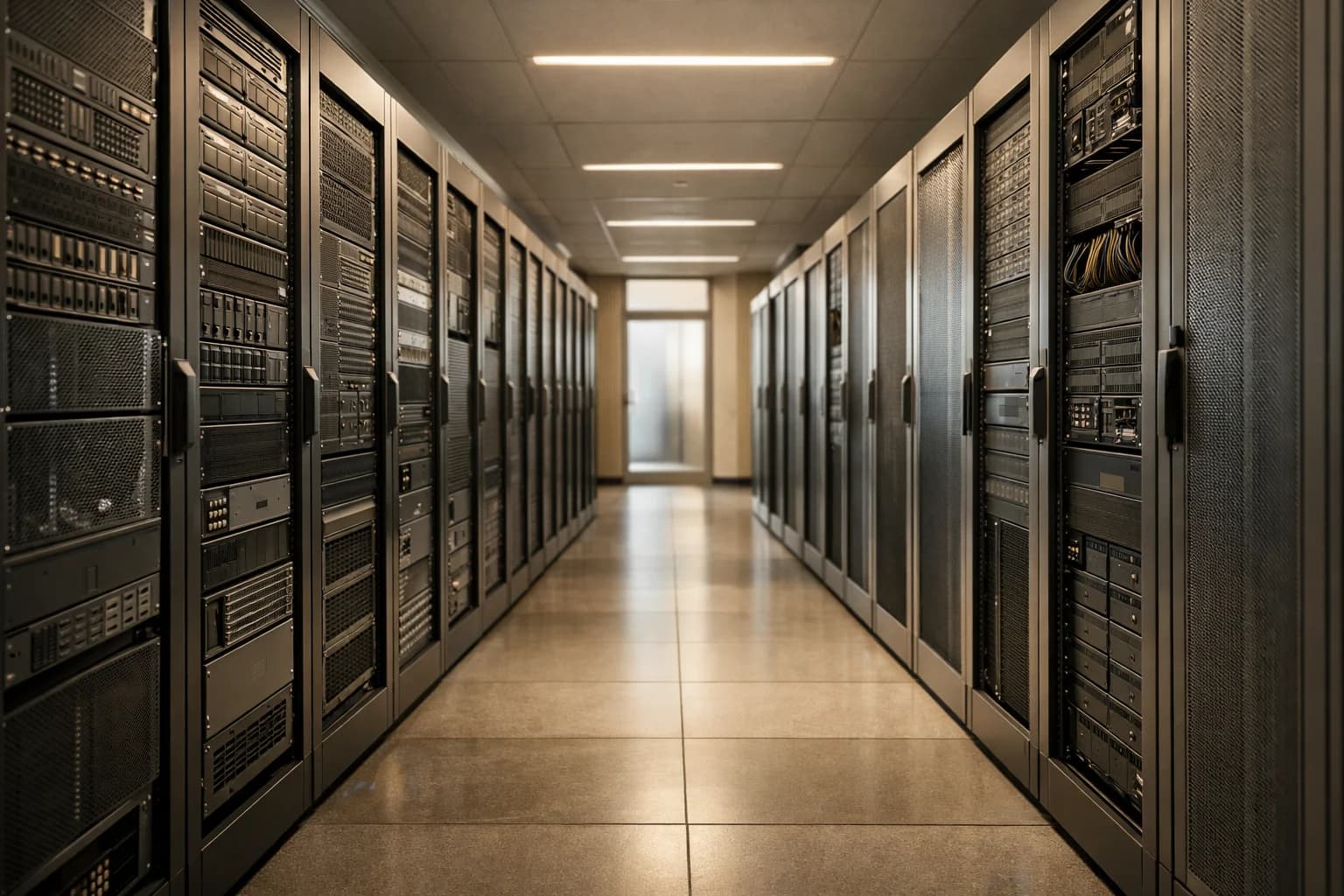
Hybrid data strategy resolves the paradox. It keeps high-speed vector indexes and sensitive source data co-located on-premises near the inference point, while using the cloud for non-sensitive, batch processing workloads. This is the core of federated RAG across hybrid clouds.
Evidence: Systems architected this way demonstrate 40% lower latency and eliminate the egress fee trap that plagues cloud-only RAG deployments, directly impacting the true cost of cloud-only AI inference.
THE HYBRID IMPERATIVE
Why Your Cloud-Only RAG Will Fail
Retrieval-Augmented Generation systems demand a data strategy that prioritizes proximity, control, and cost—impossible with a single-cloud architecture.
01
The Latency Tax on Real-Time Answers
Every cloud API call adds ~100-300ms of network round-trip time. For customer service or trading apps, this destroys user experience.
- Solution: Keep vector indexes and source data on-premises, colocated with the inference engine.
- Result: Achieve sub-50ms retrieval, making RAG viable for interactive applications.
~300ms
Cloud Penalty
<50ms
Hybrid Latency
02
THE FOUNDATION
Data Gravity Dictates RAG Architecture
A hybrid data strategy is essential for RAG because it aligns data placement with performance, cost, and security requirements.
A hybrid data strategy is the only viable architecture for enterprise RAG because data gravity—the cost and latency of moving data—makes a single-location approach inefficient and insecure. Effective RAG requires keeping sensitive source data on-premises while leveraging cloud scale for vector search, a design pattern known as federated RAG.
Vector embeddings belong in the cloud, specifically in high-performance databases like Pinecone or Weaviate, to enable low-latency, scalable semantic search. However, the original source documents containing proprietary or regulated data must remain in a private data center or sovereign cloud to satisfy data residency laws like the EU AI Act and maintain security control.
The counter-intuitive insight is that splitting the data layer improves performance. A monolithic cloud architecture forces all data movement over the network, creating a latency bottleneck for retrieval. A hybrid model allows the vector index to be queried in the cloud while the relevant document chunks are retrieved from the on-premises source with minimal data transfer, optimizing the Inference Economics of the entire system.
Evidence from deployment shows this separation reduces RAG latency by over 30% for knowledge-intensive queries by eliminating the network round-trip for full document retrieval. This architecture also future-proofs systems against vendor lock-in with proprietary cloud AI services, a core principle of our approach to Hybrid Cloud AI Architecture and Resilience.
ARCHITECTURAL COMPARISON
The Latency Tax of Cloud-Only RAG
Quantifying the performance and cost penalties of a pure-cloud Retrieval-Augmented Generation architecture versus a hybrid strategy.
| Critical Metric | Cloud-Only RAG | Hybrid RAG (On-Prem + Cloud) | Strategic Implication |
|---|---|---|---|
Vector Search Latency (p95) | 120-250 ms | < 20 ms | Real-time user interaction requires sub-100ms response. |
ARCHITECTURAL IMPERATIVES
The Four Pillars of a Hybrid RAG Foundation
A hybrid data strategy is not an optimization for RAG; it is the foundational requirement for accuracy, security, and cost control.
01
The Problem: Data Gravity vs. Inference Latency
Sensitive source documents cannot leave the private data center, but cloud-only vector search adds ~200-500ms of network latency, destroying user experience.
- Solution: Deploy the vector database and embedding model on-premises, colocated with source data.
- Result: Sub-50ms retrieval for real-time Q&A and decision support systems.
<50ms
Retrieval Latency
0%
Data Egress
02
THE DATA
Sovereign AI and Compliance Are Built-In
A hybrid data strategy is the only architecture that enforces data sovereignty and regulatory compliance by design for Retrieval-Augmented Generation systems.
A hybrid data strategy is the architectural prerequisite for deploying RAG systems that comply with data residency laws like the EU AI Act and GDPR. It ensures sensitive source documents remain within sovereign infrastructure while vectorized knowledge can be leveraged securely.
Sovereign control is non-negotiable. For RAG, this means keeping the primary data corpus—the 'crown jewel' documents—on private servers or in a regional cloud like OVHcloud or Scaleway. Only vector embeddings, generated by frameworks like SentenceTransformers, are shared with public cloud LLMs. This separation is a first-principles compliance control.
Compliance is engineered, not audited. A monolithic cloud architecture forces you to retrofit governance. A hybrid foundation bakes in data residency from the start. Tools like confidential computing enclaves and policy-aware connectors for vector databases (Pinecone or Weaviate) enforce rules at the infrastructure layer, reducing compliance overhead.
Evidence: Companies using hybrid RAG architectures report a 70% reduction in compliance review cycles for new AI applications because the data governance model is inherent to the system design. This aligns with the principles of our Sovereign AI and Geopatriated Infrastructure pillar.

About the author
Prasad Kumkar
CEO & MD, Inference Systems
Prasad Kumkar is the CEO & MD of Inference Systems and writes about AI systems architecture, LLM infrastructure, model serving, evaluation, and production deployment. Over 5+ years, he has worked across computer vision models, L5 autonomous vehicle systems, and LLM research, with a focus on taking complex AI ideas into real-world engineering systems.
His work and writing cover AI systems, large language models, AI agents, multimodal systems, autonomous systems, inference optimization, RAG, evaluation, and production AI engineering.
LinkedIn profile
Limited slots