Fine-tuning on a proprietary platform like AWS SageMaker, Google Vertex AI, or Azure Machine Learning creates a non-portable asset. Your model's weights are optimized for that vendor's specific hardware and software stack, making migration technically complex and economically prohibitive.

Blog
The Cost of AI Lock-In: When Your Model is Hostage to a Provider
Fine-tuning a model on AWS Bedrock or Azure OpenAI Service doesn't just consume credits—it forfeits strategic control. This analysis breaks down the hidden costs of AI vendor lock-in, from escalating inference pricing to lost innovation velocity, and outlines the hybrid cloud architecture that prevents it.
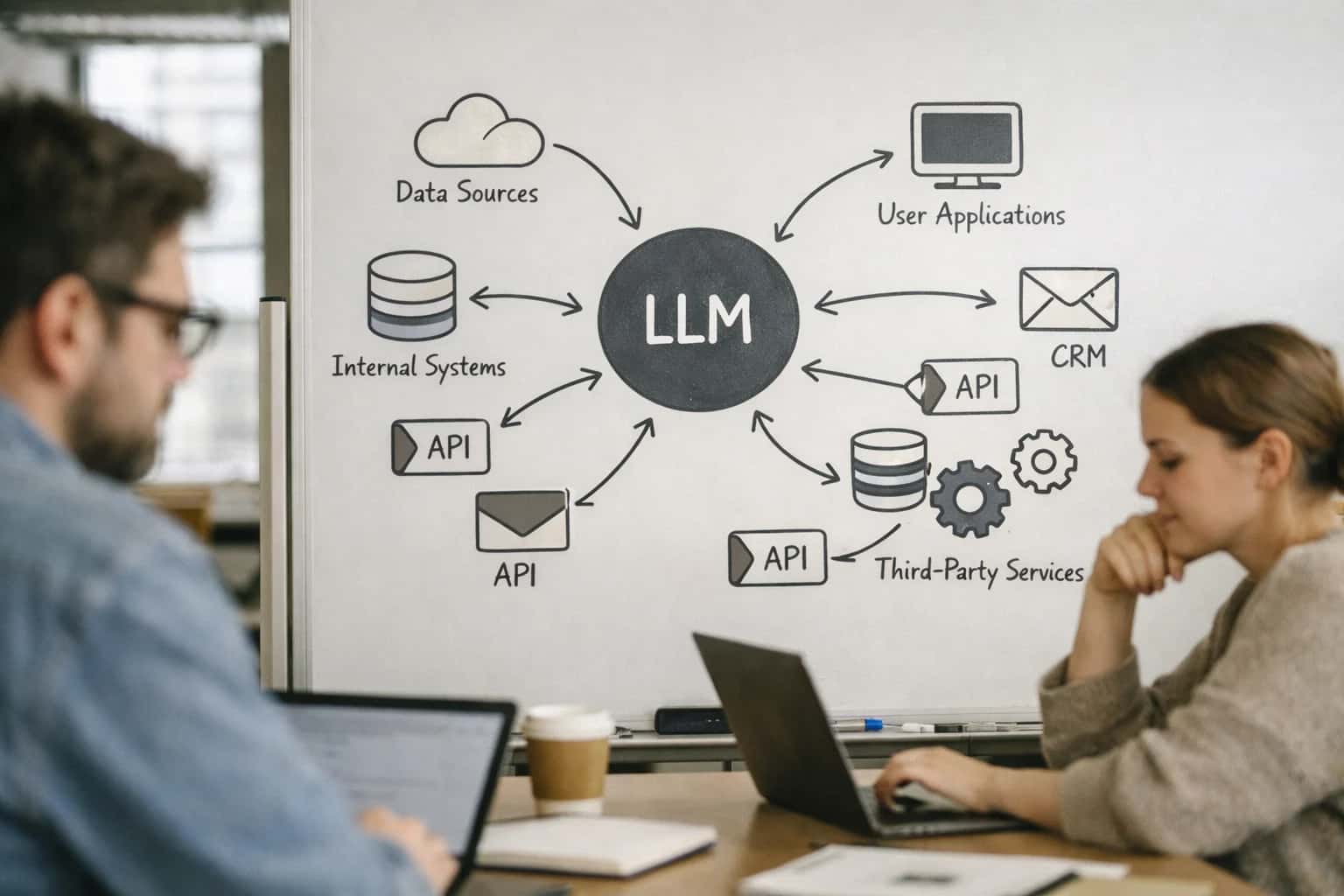
THE LOCK-IN
Your Fine-Tuned Model is a Strategic Liability
Proprietary fine-tuning on a cloud provider's platform creates an inescapable dependency that compromises cost control and strategic agility.
The leverage shifts to the provider after you invest in training. Your operational costs are subject to their pricing changes for inference, and your ability to adopt new hardware like NVIDIA's latest GPUs is gated by their roadmap. This is the core of AI vendor lock-in.
Counter-intuitively, open-source models are not the escape hatch. A model fine-tuned with PyTorch on a cloud VM is still trapped by egress fees and data pipeline dependencies. True portability requires a hybrid cloud foundation that separates the training framework from the serving infrastructure.
Evidence: Retraining a 70B parameter model on a new cloud region can incur over $500,000 in compute and data transfer fees, a de facto ransom for architectural freedom.
STRATEGIC COSTS
Key Takeaways: The High Price of AI Lock-In
Vendor lock-in with a single AI provider creates hidden costs that extend far beyond monthly bills, impacting your strategic flexibility, compliance posture, and long-term resilience.
01
The Problem: The Financial Trap of Proprietary APIs
Models fine-tuned or served via a provider's proprietary APIs (e.g., AWS Bedrock, Google Vertex AI) become non-portable assets. Migrating them incurs massive retraining costs and ~6-18 months of re-engineering effort. This lack of exit strategy gives the provider immense pricing leverage.
- Escape Cost: Retraining a large model can cost $500K - $5M+.
- Hidden Tax: Annual price increases of 15-30% become unavoidable.
- Opportunity Cost: Locked out of innovations and price wars from competing providers.
15-30%
Annual Price Leverage
$500K+
Escape Cost
02
The Solution: Hybrid Cloud AI Architecture
Adopt a bimodal strategy that separates training from inference. Use the cloud for bursty, high-compute training but anchor predictable, sensitive inference workloads on-premises or in a sovereign cloud. This approach, central to our Hybrid Cloud AI Architecture and Resilience pillar, provides the control needed to avoid lock-in.
- Inference Economics: Anchor ~70% of inference costs as fixed, predictable CAPEX.
- Strategic Optionality: Maintain the ability to shift workloads between clouds and on-prem based on cost, performance, and compliance needs.
- Data Sovereignty: Keep 'crown jewel' data on private infrastructure, a necessity for compliance with laws like the EU AI Act.
70%
Fixed Cost Inference
0ms
On-Prem Latency
03
The Problem: Compliance Becomes a Liability
A monolithic cloud strategy surrenders control over data residency and model governance. When data laws change or geopolitical tensions rise, you cannot easily relocate workloads. Your AI roadmap becomes dependent on a third party's compliance certifications and physical data center locations.
- Regulatory Risk: Non-compliance with data residency laws can result in fines of up to 4% of global revenue.
- Geopolitical Risk: Workloads in a single jurisdiction are exposed to political instability or trade restrictions.
- Audit Complexity: Opaque provider practices make it difficult to prove chain-of-custody for sensitive data.
4%
GDPR Fine Risk
High
Geopolitical Exposure
04
The Solution: Sovereign AI and Geopatriated Infrastructure
Implement a sovereign AI stack using regional cloud providers and on-premises control planes. This aligns with our Sovereign AI and Geopatriated Infrastructure pillar, ensuring data and models operate under your specific legal and infrastructural control.
- Geopatriation: Mitigate risk by shifting workloads from global giants to regional providers.
- Control Plane Sovereignty: Keep the AI orchestration layer (agent control, model ops) within your perimeter.
- Compliance-by-Design: Build with policy-aware connectors and data residency as a first-class architectural principle.
0 Egress
Sovereign Data
Full
Legal Control
05
The Problem: Crippling Egress and Latency Costs
Cloud-only AI architectures incur massive, recurring data transfer fees and introduce network latency that breaks real-time applications. Egress fees for moving training data or model weights can exceed the original compute cost, while ~100-500ms network latency makes cloud inference unsuitable for finance, manufacturing, or interactive customer service.
- Data Gravity Tax: Moving a 100TB model dataset between clouds can cost $10,000+ in egress alone.
- Experience Debt: Latency degrades user experience and decision-making speed, directly impacting revenue.
- Scalability Illusion: Infinite cloud scale is countered by exponentially growing data transfer costs.
$10K+
Per-Dataset Egress
100-500ms
Added Latency
06
The Solution: Composable, Edge-Aware Inference
Design for inference economics by deploying models where the data lives. Use edge AI for latency-sensitive applications and on-premises clusters for high-volume inference. This composable approach, treating cloud, edge, and on-prem as interchangeable components, is the future of scalable AI.
- Edge AI: Run models on-site for sub-10ms decisioning in robotics or autonomous systems.
- Federated RAG: Keep vector embeddings and source data local, a best practice for Retrieval-Augmented Generation (RAG) systems.
- Unified Control: Orchestrate hybrid inference through a single control plane, managing cost and performance SLAs across all environments.
<10ms
Edge Latency
-90%
Egress Cost
THE FINANCIAL TRAP
The Three-Pronged Economic Trap of AI Lock-In
Vendor lock-in with a single AI provider creates a predictable cycle of escalating costs and diminishing control.
AI lock-in is a financial trap where your model becomes a hostage to a provider, leading to escalating costs, lost negotiating power, and strategic paralysis. This occurs when you commit to proprietary services like AWS Bedrock, Google Vertex AI, or Azure OpenAI Service for fine-tuning, serving, or data pipelines.
First Point: Escalating Inference Costs. Your primary cost driver shifts from training to inference, and the provider controls the pricing lever. As usage scales, you face unpredictable bills with no competitive pressure to lower them, unlike the transparent, fixed-cost economics of on-premises NVIDIA GPU clusters.
Second Point: Prohibitive Exit Fees. The cost to leave becomes astronomical. Moving fine-tuned models or terabytes of vector embeddings from Pinecone or Weaviate back on-premises triggers massive egress fees, making migration a non-starter and cementing the provider's leverage.
Evidence: The 40% Premium. Companies locked into a single cloud's AI stack pay a 20-40% premium over a hybrid or multi-cloud strategy within three years, according to Gartner. This premium funds the very proprietary APIs that prevent your escape.
Strategic Paralysis. Your AI roadmap becomes dependent on a third party's feature releases and pricing changes. This sacrifices the architectural flexibility required for innovations like sovereign AI workloads or low-latency edge inference, core components of a resilient hybrid cloud AI architecture.
The Counter-Intuitive Insight. The greatest cost isn't the monthly bill; it's the lost optionality. A hybrid foundation, blending on-premises control with cloud scale, is the only way to maintain negotiating power and avoid this trap, a principle central to managing inference economics.
INFERENCE ECONOMICS
The Real TCO: Cloud-Only vs. Hybrid AI Architecture
A direct comparison of the total cost of ownership and strategic control between a single-cloud AI deployment and a hybrid architecture.
| Cost & Control Factor | Cloud-Only (e.g., AWS/Azure/GCP) | Hybrid AI Architecture |
|---|---|---|
Model Portability & Exit Cost | Vendor-locked; $500k+ migration cost | Model-agnostic; < $50k migration cost |
Inference Latency (P95) | 150-300ms (network round-trip) | < 20ms (on-prem/edge inference) |
Data Egress Fees (per 1TB) | $80 - $120 | $0 (on-prem) to $20 (strategic cloud) |
Sovereign Data & EU AI Act Compliance | ||
Predictable Inference Cost (per 1M tokens) | $5 - $15 (variable) | $2 - $5 (fixed on-prem baseline) |
Disaster Recovery & Uptime SLA | 99.9% (single region) | 99.99%+ (multi-site active-active) |
Architectural Flexibility for New Models | Limited to provider's roadmap | Full stack agnosticism (e.g., use any GPU, any framework) |
Strategic Negotiation Leverage | Low (single provider dependency) | High (ability to arbitrage and shift workloads) |
THE COST OF AI LOCK-IN
Beyond Dollars: The Strategic Costs of Hostage Models
Vendor lock-in with a single AI provider isn't just a pricing problem; it's a strategic vulnerability that cedes control of your roadmap, data, and competitive edge.
01
The Innovation Tax: Your Roadmap Held Hostage
When your models are fine-tuned on proprietary cloud services like AWS Bedrock or Google Vertex AI, you cannot adopt new model architectures or foundational models from other providers without a costly, complex migration. Your AI innovation cycle is tied to your vendor's release schedule.
- Strategic Consequence: Inability to leverage breakthroughs from open-source models like Llama 3 or Mistral for ~12-18 months.
- Financial Consequence: Retraining and migration projects can cost 20-40% of the original implementation, creating a powerful disincentive to switch.
12-18mo
Innovation Lag
20-40%
Migration Tax
02
The Sovereignty Deficit: Compliance as an Afterthought
A single-cloud AI strategy makes compliance with data residency laws like the EU AI Act or sector-specific regulations a negotiation with your provider, not an architectural decision. You lose the ability to keep 'crown jewel' data on sovereign infrastructure.
- Strategic Consequence: Inability to deploy Sovereign AI stacks for government or defense contracts that mandate on-premises control.
- Operational Consequence: Data egress for audit or regulatory purposes incurs massive, unpredictable egress fees, making transparency prohibitively expensive.
$0.09/GB
Avg. Egress Cost
High
Compliance Risk
03
The Resilience Gap: A Single Point of Failure
Centralizing critical AI inference and agentic workflows in one cloud region creates an unacceptable business continuity risk. An outage at your provider halts your AI-powered operations entirely.
- Strategic Consequence: No viable disaster recovery or active-active failover for latency-sensitive applications like real-time fraud detection or autonomous logistics.
- Financial Consequence: Downtime for core AI services can cost >$300k per hour for Fortune 500 companies, not including reputational damage.
>99.9%
SLA Required
>$300k/hr
Downtime Cost
04
The Inference Economics Trap: Uncontrollable TCO
Cloud-only inference costs scale linearly with usage, offering no long-term cost predictability. You cannot anchor your Total Cost of Ownership (TCO) with fixed-cost, on-premises infrastructure for high-volume, predictable workloads.
- Strategic Consequence: Inference Economics become a variable, uncontrollable operational expense, crippling ROI calculations for scaled deployments.
- Architectural Consequence: Inability to implement a bimodal strategy (train in cloud, infer on-prem/edge) optimized for latency and cost, as discussed in our pillar on Hybrid Cloud AI Architecture and Resilience.
~500ms
Added Latency
Linear
Cost Scaling
05
The Negotiation Handicap: Zero Leverage on Pricing
Without a credible hybrid cloud exit strategy or the ability to run workloads elsewhere, you have no leverage in contract negotiations. Price increases for proprietary AI APIs and compute are effectively mandates.
- Strategic Consequence: Annual infrastructure costs can inflate 15-25% with little recourse, directly impacting product margins.
- Vendor Consequence: You are dependent on a third party's roadmap, prioritizing their general-purpose features over your specific vertical AI needs.
15-25%
Annual Cost Hike
Zero
Negotiation Power
06
The Architectural Debt Spiral: The 'Strangler Fig' Becomes Impossible
Early cloud-only AI projects create deep technical debt tied to proprietary services. As your needs evolve, refactoring for a hybrid or multi-cloud architecture becomes a prohibitively complex 'big bang' rewrite, not an incremental Strangler Fig pattern migration.
- Strategic Consequence: Teams remain stuck in pilot purgatory, unable to productionize AI due to the fear of compounding this debt.
- Talent Consequence: Engineers develop skills specific to one cloud's ecosystem, reducing internal flexibility and increasing hiring costs, a core challenge addressed in our work on Legacy System Modernization.
3-5x
Refactor Cost
High
Skill Lock-in
THE ARCHITECTURE
The Hybrid Cloud Escape Hatch: Architecting for Optionality
A hybrid cloud architecture is the only viable strategy to prevent AI vendor lock-in and maintain strategic control over your models and data.
Hybrid cloud architecture prevents vendor lock-in by decoupling your AI workloads from any single provider's proprietary services. This design ensures your models and data pipelines are portable, protecting you from price hikes, service deprecations, and forced migrations.
Strategic optionality is a non-functional requirement. Architecting for hybrid from the start means your training pipelines can run on AWS SageMaker or Google Cloud Vertex AI, while inference can be served from your own Kubernetes clusters or a regional cloud like OVHcloud. This eliminates the hostage scenario where a model fine-tuned on a proprietary service cannot be moved.
The escape hatch is built on open standards. Your model serving layer must use frameworks like KServe or Triton Inference Server, not a cloud's managed endpoint. Your data pipelines must rely on Apache Airflow or Prefect, not a vendor-specific orchestrator. This is the technical foundation of sovereignty.
Evidence: Companies that retrain large language models face egress fees exceeding $100k per migration when moving terabytes of data and model weights out of a monolithic cloud. A hybrid strategy with on-premises or multi-cloud data lakes avoids this punitive cost. For a deeper dive on these financial traps, see our analysis on The Hidden Cost of Public Cloud-Only LLM Training.
This approach directly enables Sovereign AI. By keeping 'crown jewel' data and critical inference engines on infrastructure you control, you comply with laws like the EU AI Act and mitigate geopolitical risk. This is the core principle behind building a Sovereign AI and Geopatriated Infrastructure.
FREQUENTLY ASKED QUESTIONS
AI Lock-In FAQ: Answering the Critical Questions
Common questions about the strategic and financial costs of AI vendor lock-in, where your models and data become hostage to a single provider's ecosystem.
AI vendor lock-in occurs when your models, data, and workflows become dependent on a single provider's proprietary tools and infrastructure. This creates strategic and financial dependency, making migration prohibitively expensive. It often stems from using proprietary cloud services like AWS Bedrock, Google Vertex AI, or Azure OpenAI Service for fine-tuning and serving, where egress fees and API dependencies create exit barriers.
Enabling Efficiency, Speed & Accuracy
Intelligent Analysis, Decision & Execution
We build AI systems for teams that need search across company data, workflow automation across tools, or AI features inside products and internal software.
Talk to Us
Search across company data
Give teams answers from docs, tickets, runbooks, and product data with sources and permissions.
Useful when people spend too long searching or get different answers from different systems.
Enterprise searchRAGPermissions
Read more
Automate internal workflows
Use AI to route work, draft outputs, trigger actions, and keep approvals and logs in place.
Useful when repetitive work moves across multiple tools and teams.
AI agentsWorkflow automationGovernance
Read more
Add AI to products and internal tools
Build assistants, guided actions, or decision support into the software your team or customers already use.
Useful when AI needs to be part of the product, not a separate tool.
AI integrationDecision supportModel routing
Read moreTHE COST
Stop Building on Quicksand: Audit Your AI Lock-In Risk
Vendor lock-in with a single AI provider creates a financial and strategic trap that limits your negotiating power and makes your roadmap dependent on a third party.
AI vendor lock-in occurs when your models, data pipelines, and orchestration become dependent on a single provider's proprietary services, making migration or multi-cloud strategies prohibitively expensive and complex.
The primary cost is strategic leverage. When your fine-tuned models are trapped in services like AWS Bedrock or Google Vertex AI, you lose the ability to negotiate pricing or adopt superior alternative technologies without a full, costly rebuild.
Lock-in manifests as technical debt. Proprietary APIs for vector search, model serving, and training create an architectural moat. Replacing a cloud-native vector database like Pinecone with an open-source alternative like Weaviate requires significant pipeline refactoring.
Counter-intuitively, higher-level services create deeper lock-in. Using a fully-managed service abstracts away complexity but binds you to the provider's roadmap. Building on foundational IaaS with open-source frameworks like PyTorch or Ray preserves optionality.
Evidence: Egress fees to move a 500GB fine-tuned model and its associated embeddings from one cloud to another can exceed $50,000, not including engineering costs. This creates a powerful disincentive to ever leave. For a deeper analysis of these hidden costs, see our breakdown of The Hidden Cost of Egress Fees in AI Model Pipelines.
The audit is straightforward. Map every AI component to its provider and assess its portability score. Can your RAG pipeline's retrieval logic run on-premises? Is your model format exportable? This exercise is the first step toward a resilient Hybrid Cloud AI Architecture.

About the author
Prasad Kumkar
CEO & MD, Inference Systems
Prasad Kumkar is the CEO & MD of Inference Systems and writes about AI systems architecture, LLM infrastructure, model serving, evaluation, and production deployment. Over 5+ years, he has worked across computer vision models, L5 autonomous vehicle systems, and LLM research, with a focus on taking complex AI ideas into real-world engineering systems.
His work and writing cover AI systems, large language models, AI agents, multimodal systems, autonomous systems, inference optimization, RAG, evaluation, and production AI engineering.
LinkedIn
Limited slotsGet a Free AI Consultation
Partnered with leading AI, data, and software stack.





How We Work
Custom AI workflows for your Business
One-fit-all AI don't work for modern businesses. At Inferensys, we aim to understand your business & custom requirements; which we use to define most efficient agentic workflows, the data, and the tools for your business.
01
Review the use case
We understand the task, the users, and where AI can actually help.
Read more02
Pick the right approach
We define what needs search, automation, or product integration.
Read more03
Build the first useful version
We implement the part that proves the value first.
Read more04
Improve from there
We add the checks and visibility needed to keep it useful.
Read moreThe first call is a practical review of your use case and the right next step.
Talk to Us