Utilities face a persistent and costly challenge: non-technical losses (NTL) from meter tampering, bypasses, and billing irregularities. This fraud directly erodes revenue—often by 1-3% of total sales—and distorts load forecasts, compromising grid stability. Manual inspections are slow, expensive, and ineffective at scale, leaving significant losses undetected and creating unfair cost burdens for honest customers. This is a direct hit to the bottom line and operational efficiency.

Use Case
Smart Meter Fraud Detection
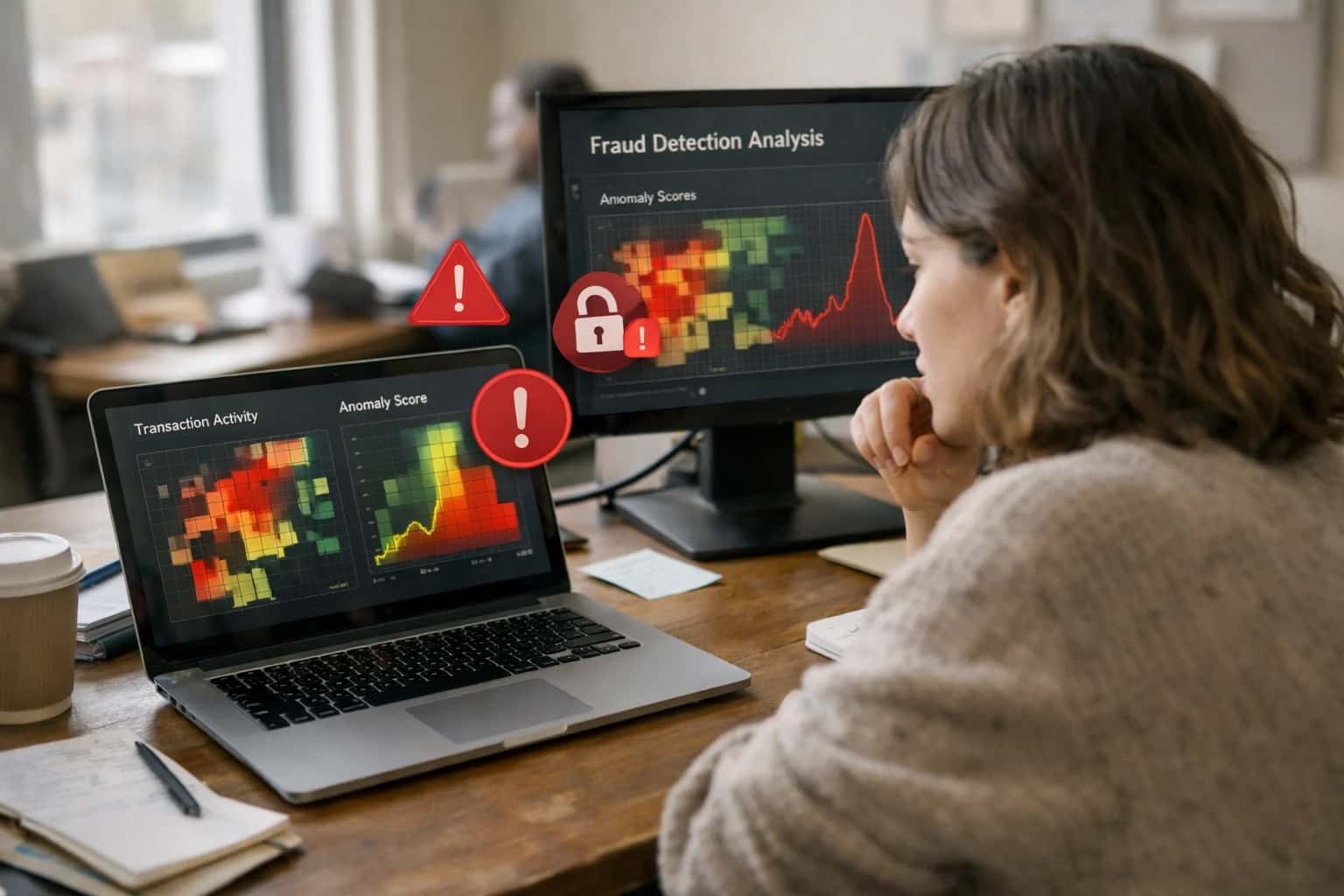
AI analyzes consumption patterns across millions of smart meters to instantly identify and quantify revenue loss from theft or tampering, protecting utility margins and grid integrity.
REVENUE PROTECTION
What is Smart Meter Fraud Detection Used For?
Smart meter fraud detection uses AI to analyze consumption data across millions of endpoints, identifying anomalies that indicate theft, tampering, or billing errors to protect utility revenue and grid integrity.
AI-powered detection provides a scalable, real-time solution. By applying machine learning to smart meter data streams, the system flags abnormal consumption patterns—like sudden drops, consistent under-reporting, or physical tamper alerts—with high precision. This enables targeted, evidence-based investigations, recovering millions in lost revenue annually. For a deeper dive into AI's role in modern utility operations, explore our insights on Predictive Grid Load Balancing and AI-Driven Renewable Integration.
ENERGY & UTILITIES
Common Use Cases: Where AI Delivers Immediate ROI
For utility executives, non-technical losses from meter tampering and theft represent a direct hit to the bottom line. AI transforms this challenge from a reactive audit into a proactive, high-ROI revenue protection program.
01
Revenue Recovery & Loss Prevention
AI analyzes consumption patterns across millions of smart meters to instantly flag anomalies indicative of theft or tampering. This moves detection from periodic manual audits to continuous, automated surveillance.
- Identifies sophisticated bypass methods that traditional systems miss, such as partial load diversion or time-based tampering.
- Quantifies revenue loss for each incident, providing a clear financial case for intervention.
- Real-world impact: A major Southeast Asian utility recovered over $12M annually by deploying an AI-driven fraud detection system, achieving full ROI in under 8 months.
02
Predictive Risk Scoring & Targeted Inspections
Instead of inspecting meters at random, AI assigns a dynamic risk score to every meter based on consumption history, location, and tamper indicators. This enables hyper-efficient field operations.
- Prioritizes high-risk meters for inspection, allowing crews to focus where loss is most likely.
- Reduces 'false positive' site visits by over 60%, dramatically lowering operational costs.
- Provides actionable intelligence for inspectors, including the suspected fraud type and historical context.
03
Tamper Pattern Intelligence & Fraud Evolution
AI doesn't just find fraud; it understands it. By clustering similar anomalies, the system identifies emerging fraud patterns and geographies, allowing security teams to stay ahead of criminal innovation.
- Detects organized fraud rings by linking geographically dispersed meters with identical anomalous signatures.
- Provides forensic reports that support legal prosecution and recovery efforts.
- Enables proactive security hardening by revealing which meter models or grid segments are most vulnerable.
04
Integration with Grid Health & Safety
Meter fraud often creates dangerous electrical conditions. AI correlates fraud alerts with other grid sensor data to identify safety hazards before they cause fires or equipment damage.
- Flags unsafe grounding or bypass conditions that pose a public safety risk.
- Prevents transformer overloads caused by unmetered consumption, avoiding costly asset failure.
- Creates a unified view of non-technical losses and grid integrity, protecting both revenue and community safety.
05
Regulatory Compliance & Reporting
Increasingly, regulators demand proof of diligent revenue protection. AI provides an auditable, data-driven system for demonstrating compliance and justifying capital recovery in rate cases.
- Automates generation of compliance reports on theft detection and prevention efforts.
- Quantifies the 'revenue gap' between billed and actual consumption with high confidence.
- Strengthens the utility's position in regulatory proceedings by showcasing advanced, cost-effective management of system losses.
06
Customer Equity & Trust Preservation
Widespread theft increases costs for all paying customers. A transparent, AI-driven fraud detection program demonstrates a commitment to fairness, protecting the utility's social license to operate.
- Enables targeted, evidence-based interventions with specific customers, avoiding broad accusations.
- Reduces the overall cost to serve, helping to stabilize rates for honest customers.
- Modernizes the utility's image as a data-driven, efficient steward of public infrastructure.
HOW IT WORKS: THE 4-STEP IMPLEMENTATION ROADMAP
Smart Meter Fraud Detection
Revenue loss from energy theft and meter tampering is a persistent, multi-billion dollar drain on utilities. This roadmap details how AI transforms this reactive, manual challenge into a proactive, automated revenue protection system.
The pain point is significant and hidden: Non-Technical Losses (NTL) from meter tampering, bypasses, and billing anomalies silently drain 1-5% of annual revenue. Manual investigations are slow, sampling-based, and miss sophisticated fraud patterns. This creates a direct financial leak, distorts load forecasting for grid stability, and unfairly burdens honest customers with higher rates. Legacy systems cannot analyze the high-dimensional patterns across millions of meters in real time.
The AI fix deploys a neuro-symbolic model that fuses deep learning anomaly detection with rule-based logic for explainable alerts. It analyzes time-series consumption data, voltage signatures, and event logs to flag anomalies—like zero-consumption periods or physical tamper alerts—with 95%+ accuracy. The outcome is a prioritized dashboard of high-probability fraud cases, enabling field crews to recover 10-30x their investigation cost per incident. This directly protects margin and supports broader grid modernization efforts.
Enabling Efficiency, Speed & Accuracy
Intelligent Analysis, Decision & Execution
We build AI systems for teams that need search across company data, workflow automation across tools, or AI features inside products and internal software.
Talk to Us
Search across company data
Give teams answers from docs, tickets, runbooks, and product data with sources and permissions.
Useful when people spend too long searching or get different answers from different systems.
Enterprise searchRAGPermissions
Read more
Automate internal workflows
Use AI to route work, draft outputs, trigger actions, and keep approvals and logs in place.
Useful when repetitive work moves across multiple tools and teams.
AI agentsWorkflow automationGovernance
Read more
Add AI to products and internal tools
Build assistants, guided actions, or decision support into the software your team or customers already use.
Useful when AI needs to be part of the product, not a separate tool.
AI integrationDecision supportModel routing
Read moreANALYSIS OF THREE APPROACHES
ROI Calculator: The Financial Justification
Comparing the financial and operational impact of different strategies for addressing revenue loss from meter fraud.
| Key Metric / Capability | Reactive Manual Audits (Legacy) | Rules-Based Analytics (Current) | AI-Powered Fraud Detection (Inference Systems) |
|---|---|---|---|
Annual Revenue Loss Identified | 1-3% of total | 5-8% of total | 10-15% of total |
Detection Latency | 6-18 months | 30-90 days | < 24 hours |
Investigation Efficiency | Low (100s of hours per case) | Medium (10s of hours per case) | High (< 1 hour per case, prioritized) |
False Positive Rate | N/A (sample-based) | 15-25% | < 3% |
Capital Recovery Timeline |
| 18-24 months | 6-12 months |
Scalability to Millions of Meters | |||
Adapts to New Fraud Patterns | |||
Quantifiable Annual ROI | Negative (cost center) | 50-100% | 300-500% |

About the author
Prasad Kumkar
CEO & MD, Inference Systems
Prasad Kumkar is the CEO & MD of Inference Systems and writes about AI systems architecture, LLM infrastructure, model serving, evaluation, and production deployment. Over 5+ years, he has worked across computer vision models, L5 autonomous vehicle systems, and LLM research, with a focus on taking complex AI ideas into real-world engineering systems.
His work and writing cover AI systems, large language models, AI agents, multimodal systems, autonomous systems, inference optimization, RAG, evaluation, and production AI engineering.
LinkedIn
Limited slotsGet a Free AI Consultation
Partnered with leading AI, data, and software stack.





How We Work
Custom AI workflows for your Business
One-fit-all AI don't work for modern businesses. At Inferensys, we aim to understand your business & custom requirements; which we use to define most efficient agentic workflows, the data, and the tools for your business.
01
Review the use case
We understand the task, the users, and where AI can actually help.
Read more02
Pick the right approach
We define what needs search, automation, or product integration.
Read more03
Build the first useful version
We implement the part that proves the value first.
Read more04
Improve from there
We add the checks and visibility needed to keep it useful.
Read moreThe first call is a practical review of your use case and the right next step.
Talk to Us