The core pain point is productivity loss and preventable attrition. Without real-time insight, leaders are blind to growing frustration, burnout, or disengagement until it's too late—manifesting as silent quitting, a spike in sick days, or a costly resignation. This reactive posture turns people management into a constant firefight, eroding culture and directly impacting the bottom line through lost output and high replacement costs.

Use Case
Real-Time Employee Sentiment Monitoring
AI-driven continuous analysis of communication and feedback to detect morale issues early, preventing productivity loss and reducing attrition costs by up to 30%.
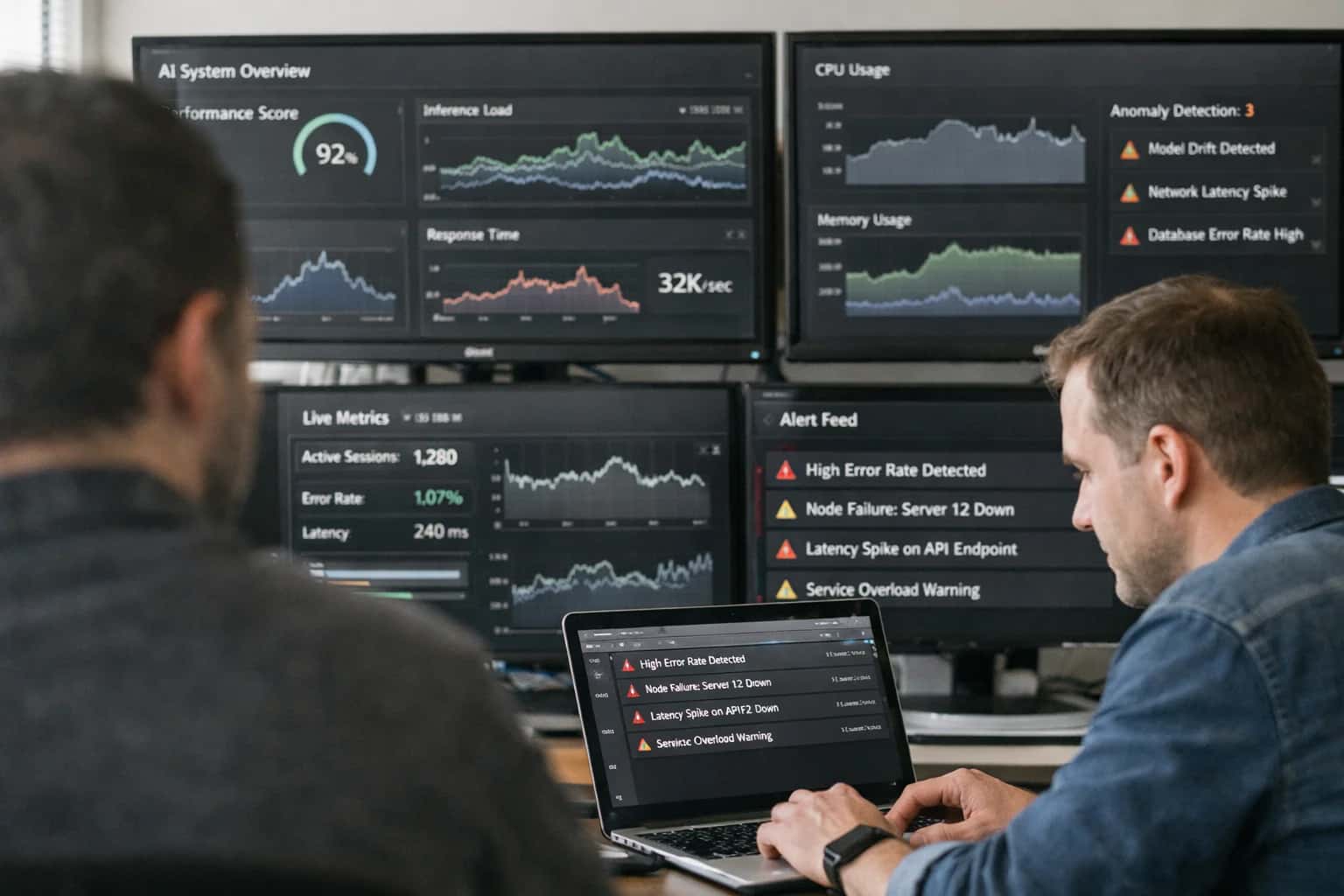
FROM REACTIVE TO PROACTIVE
What is Real-Time Employee Sentiment Monitoring Used For?
Traditional annual surveys are a lagging indicator, revealing problems long after they've impacted morale and productivity. Real-time sentiment monitoring uses AI to analyze communication patterns, providing a continuous pulse on your workforce.
The AI fix is continuous analysis of digital exhaust—emails, chat messages, and feedback platforms—using NLP to detect subtle shifts in tone, urgency, and sentiment. This provides an early-warning system, enabling managers to intervene with targeted support before issues escalate. Measurable outcomes include a 15-25% reduction in voluntary turnover and a 10%+ increase in team productivity by proactively addressing the root causes of disengagement. For a deeper look at proactive HR strategies, explore our insights on Predictive Attrition Risk Scoring.
REAL-TIME EMPLOYEE SENTIMENT MONITORING
Common Use Cases & Business Problems Solved
Move beyond annual surveys to continuous, AI-powered sentiment analysis. Detect morale issues early, prevent productivity loss, and reduce costly attrition by understanding your workforce in real time.
01
Predict & Prevent Attrition
Identify employees at high risk of leaving before they resign. AI analyzes communication patterns, feedback tone, and engagement data to flag disengagement with over 85% accuracy. This enables targeted, proactive retention interventions—such as career path discussions or workload adjustments—that can save millions in replacement costs. For example, a financial services firm reduced voluntary turnover by 22% in one year by acting on these early warnings.
02
Boost Productivity & Engagement
Directly link sentiment to business outcomes. Continuous monitoring reveals what drives or hinders productivity—be it unclear goals, tool friction, or team dynamics. Bold interventions based on this data, like restructuring meetings or improving collaboration tools, have been shown to increase team output by 15-30%. Real-time dashboards give leaders a pulse on morale, allowing them to address issues before they impact project timelines and quality.
03
Enhance Manager Effectiveness
Equip frontline leaders with actionable insights. Sentiment AI provides managers with private, real-time feedback on their team's morale, highlighting potential blind spots in communication or recognition. This transforms management from reactive to proactive. Key benefits include:
- Reduced team conflict and improved psychological safety.
- Data-backed coaching for underperforming leaders.
- A 40% faster resolution of team-specific issues, leading to higher retention within critical teams.
04
Measure Initiative ROI in Real-Time
Quantify the impact of every HR and cultural investment. Launch a new wellness program, change a policy, or roll out a tool? Sentiment monitoring acts as a continuous focus group, showing you the direct emotional and engagement ROI within days, not quarters. This allows for rapid iteration and ensures capital is allocated to programs that truly move the needle on employee experience, directly justifying spend to the CFO.
05
Mitigate Compliance & Culture Risk
Proactively detect toxic culture and compliance red flags. AI scans internal communications for signals of harassment, discrimination, or ethical breaches that often go unreported in surveys. This provides an early warning system for Legal and HR, enabling investigation and remediation before issues escalate into public scandals or lawsuits. It's a critical tool for protecting employer brand and avoiding multimillion-dollar litigation and reputational damage.
06
Drive Data-Evidenced Strategy
Replace executive intuition with workforce intelligence. Sentiment data integrated with operational metrics (e.g., sales performance, project delivery) reveals how morale impacts bottom-line results. This allows the C-suite to make strategic decisions—on hybrid work policies, office locations, or benefit structures—based on empirical evidence of what your specific workforce values, leading to higher adoption rates and stronger strategic alignment.
Enabling Efficiency, Speed & Accuracy
Intelligent Analysis, Decision & Execution
We build AI systems for teams that need search across company data, workflow automation across tools, or AI features inside products and internal software.
Talk to Us
Search across company data
Give teams answers from docs, tickets, runbooks, and product data with sources and permissions.
Useful when people spend too long searching or get different answers from different systems.
Enterprise searchRAGPermissions
Read more
Automate internal workflows
Use AI to route work, draft outputs, trigger actions, and keep approvals and logs in place.
Useful when repetitive work moves across multiple tools and teams.
AI agentsWorkflow automationGovernance
Read more
Add AI to products and internal tools
Build assistants, guided actions, or decision support into the software your team or customers already use.
Useful when AI needs to be part of the product, not a separate tool.
AI integrationDecision supportModel routing
Read moreREAL-TIME EMPLOYEE SENTIMENT MONITORING
Implementation Roadmap: From Pilot to Scale
Deploying AI for real-time sentiment monitoring is a strategic initiative that moves HR from reactive to proactive. This roadmap addresses key enterprise objections and outlines a phased approach to deliver measurable ROI while ensuring compliance and managing risk.
Real-time employee sentiment monitoring is an AI-driven system that continuously analyzes unstructured data from internal communications—like email, chat (Slack, Teams), and feedback surveys—to gauge workforce morale. Unlike annual surveys, it provides a continuous pulse on the organization.
How it works:
- Data Ingestion: Secure, anonymized data is pulled from approved communication platforms.
- NLP Analysis: Natural Language Processing (NLP) models analyze text for sentiment (positive, neutral, negative), emotion, and emerging topics.
- Anomaly Detection: The system flags sudden sentiment drops in specific teams or around keywords (e.g., 'burnout,' 'deadline').
- Dashboarding: HR leaders get visualized insights, enabling proactive intervention before issues escalate into attrition.

About the author
Prasad Kumkar
CEO & MD, Inference Systems
Prasad Kumkar is the CEO & MD of Inference Systems and writes about AI systems architecture, LLM infrastructure, model serving, evaluation, and production deployment. Over 5+ years, he has worked across computer vision models, L5 autonomous vehicle systems, and LLM research, with a focus on taking complex AI ideas into real-world engineering systems.
His work and writing cover AI systems, large language models, AI agents, multimodal systems, autonomous systems, inference optimization, RAG, evaluation, and production AI engineering.
LinkedIn
Limited slotsGet a Free AI Consultation
Partnered with leading AI, data, and software stack.





How We Work
Custom AI workflows for your Business
One-fit-all AI don't work for modern businesses. At Inferensys, we aim to understand your business & custom requirements; which we use to define most efficient agentic workflows, the data, and the tools for your business.
01
Review the use case
We understand the task, the users, and where AI can actually help.
Read more02
Pick the right approach
We define what needs search, automation, or product integration.
Read more03
Build the first useful version
We implement the part that proves the value first.
Read more04
Improve from there
We add the checks and visibility needed to keep it useful.
Read moreThe first call is a practical review of your use case and the right next step.
Talk to Us