The core pain point is data fragmentation. A CIO cannot see the connection between a tenant's rising energy complaints, a building's aging HVAC system, and the resulting 5% rent premium erosion. Risk is assessed quarterly, not in real-time, and underperforming assets are identified too late. This reactive stance leads to missed NOI targets, preventable capital expenditures, and an inability to pivot strategy ahead of market shifts. The business cost is measured in lost competitive advantage and suboptimal capital allocation.

Use Case
Portfolio Risk and Performance Dashboard
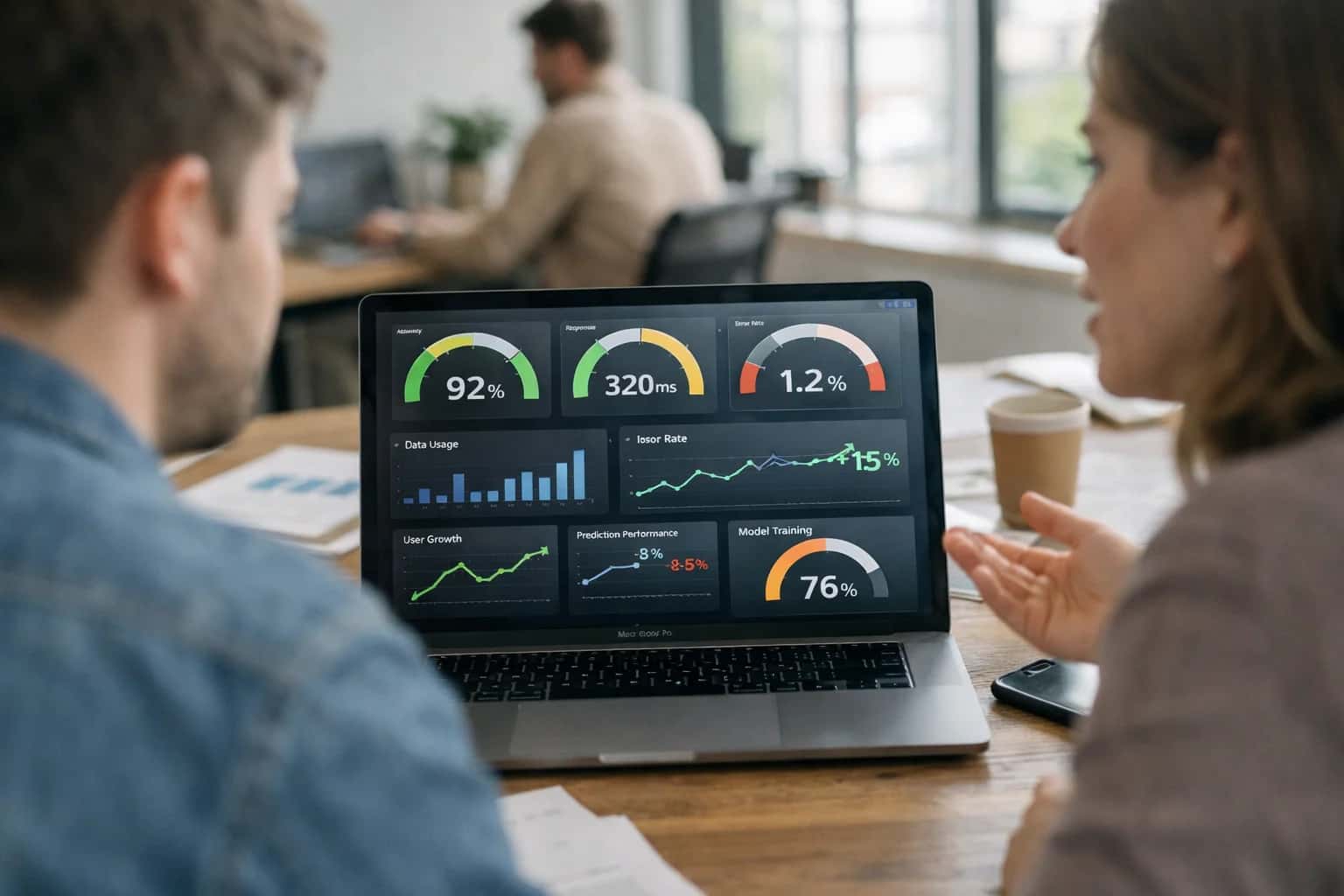
An AI-powered dashboard that unifies financial metrics with operational IoT data to flag underperforming assets, highlight acquisition targets, and optimize Net Operating Income (NOI) in real time.
THE PAIN POINT
What is a Portfolio Risk and Performance Dashboard Used For?
For real estate portfolio managers, fragmented data is the silent killer of returns. Financial metrics, IoT sensor streams, and market comps live in separate systems, forcing executives to make billion-dollar decisions based on incomplete, lagging information.
The AI-powered dashboard is the solution. It unifies financial, operational, and market data into a single source of truth, applying predictive analytics to flag risks and highlight opportunities. Executives gain a real-time view of portfolio health, enabling proactive interventions—like preemptively upgrading a building's envelope based on predictive utility cost models—that protect NOI. The measurable outcome is a 10-15% improvement in capital efficiency and the ability to reallocate resources to higher-yielding assets, transforming portfolio management from a reporting function into a strategic profit center. For deeper insights, explore our guide on AI-Driven Capital Planning and Forecasting or see how Digital Twins for Portfolio Simulation enable scenario testing.
PROPTECH & REAL ESTATE
Common AI Use Cases for Portfolio Dashboards
Transform raw data into strategic foresight. These AI-powered dashboard capabilities empower portfolio managers to move from reactive reporting to proactive, value-driven decision-making.
01
Predictive Risk Scoring & Early Warning
Move beyond lagging indicators. AI models analyze financial metrics, IoT sensor data, and market signals to generate a dynamic risk score for each asset. This flags underperformance 30-90 days before traditional metrics, allowing for preemptive interventions like lease renegotiations or targeted CapEx.
- Real Example: A REIT used anomaly detection on utility and footfall data to identify a retail tenant at high risk of default, enabling early restructuring talks that preserved the lease.
- ROI Driver: Reduces bad debt write-offs and stabilizes Net Operating Income (NOI) by proactively managing tenant and asset health.
02
Automated Performance Benchmarking
Instantly benchmark any asset against a custom peer group defined by geography, asset class, and vintage. AI continuously ingests market comps and internal performance data to surface outliers in occupancy, rental rates, or operational efficiency.
- Key Benefit: Eliminates weeks of manual spreadsheet work. CIOs gain an objective, data-driven view of which properties are truly outperforming or dragging on the portfolio.
- Business Impact: Enables rapid, evidence-based decisions on asset hold/sell strategies and identifies acquisition targets with embedded upside.
03
Scenario Modeling with Digital Twins
Test strategic decisions in a risk-free virtual environment. By creating a digital twin of your portfolio, AI can simulate the impact of interest rate changes, CapEx projects, or market downturns on valuation and cash flow.
- Use Case: Model the 10-year ROI of a solar panel installation across 50 properties, factoring in energy savings, tenant retention premiums, and regulatory incentives.
- CIO Justification: De-risks major capital allocations and provides board-level clarity on strategic initiatives, turning speculative projects into quantified investments.
04
Sentiment-Driven Tenant Health Monitoring
Passive data tells half the story. AI aggregates and analyzes tenant sentiment from service request logs, communication tone, and amenity usage patterns to create a holistic 'tenant health score.'
- How it Works: Natural Language Processing (NLP) scans maintenance tickets and emails for frustration cues, while occupancy sensors indicate engagement with building amenities.
- ROI Quantification: Proactive retention campaigns informed by this data can reduce tenant churn by 15-20%, directly protecting a portfolio's most valuable asset: stable rental income.
05
AI-Powered Capital Planning Forecast
Transform CapEx from a reactive cost center to a strategic lever. Machine learning models predict the remaining useful life of critical building systems (roofs, HVAC, elevators) based on maintenance history, usage, and environmental data.
- Output: A rolling 5-7 year capital forecast that dynamically updates, optimizing reserve fund levels and improving lender confidence.
- Efficiency Gain: Reduces manual assessment time by over 70% and prevents unexpected, budget-busting system failures.
06
Integrated Sustainability & ESG Dashboard
Consolidate disparate sustainability data into a single source of truth. AI automatically tracks energy consumption, carbon emissions, water usage, and waste metrics across the portfolio, benchmarking against ESG goals and regulatory requirements like CSRD.
- Business Value: Identifies the highest-return sustainability projects (e.g., a building where HVAC optimization cuts costs 25%) and generates audit-ready reports.
- Competitive Edge: Enhances asset valuation by providing verified ESG performance data to increasingly conscious investors and lenders.
FROM DATA SILOS TO DECISIONS
AI Implementation Roadmap for Portfolio Risk Dashboards
A unified dashboard is the goal, but the path to achieving it is fraught with fragmented data and manual processes. Here is the strategic roadmap to transform portfolio management.
Portfolio managers are often blind to emerging risks and hidden opportunities. Critical data is trapped in silos—financials in one system, IoT sensor feeds in another, and market comps in a third. This fragmentation forces reliance on static, outdated reports and gut-feel decisions, leaving millions in value unrealized and exposing the portfolio to preventable volatility. The pain point is not a lack of data, but a lack of unified, actionable intelligence.
The solution is a phased AI implementation that ingests and correlates disparate data streams into a single source of truth. By deploying models for predictive maintenance, dynamic valuation, and tenant sentiment analysis, the dashboard delivers forward-looking KPIs and automated alerts. The outcome is a 20-30% reduction in time spent on manual reporting and the ability to proactively reallocate capital, directly boosting Net Operating Income (NOI) and portfolio resilience. For a deeper look at the underlying valuation engine, see our page on AI-Powered Property Valuation.
Enabling Efficiency, Speed & Accuracy
Intelligent Analysis, Decision & Execution
We build AI systems for teams that need search across company data, workflow automation across tools, or AI features inside products and internal software.
Talk to Us
Search across company data
Give teams answers from docs, tickets, runbooks, and product data with sources and permissions.
Useful when people spend too long searching or get different answers from different systems.
Enterprise searchRAGPermissions
Read more
Automate internal workflows
Use AI to route work, draft outputs, trigger actions, and keep approvals and logs in place.
Useful when repetitive work moves across multiple tools and teams.
AI agentsWorkflow automationGovernance
Read more
Add AI to products and internal tools
Build assistants, guided actions, or decision support into the software your team or customers already use.
Useful when AI needs to be part of the product, not a separate tool.
AI integrationDecision supportModel routing
Read morePORTFOLIO RISK AND PERFORMANCE DASHBOARD
Frequently Asked Questions for Enterprise Leaders
Deploying a unified AI dashboard for real estate portfolio management raises critical questions about compliance, ROI, and implementation. This FAQ addresses the top concerns of CIOs and portfolio managers.
Traditional risk models rely on lagging financial indicators. An AI-powered dashboard integrates real-time operational IoT data (like HVAC performance, occupancy sensors, and security feeds) with financial metrics to create a holistic risk profile. It uses predictive analytics to flag assets with elevated operational risk (e.g., a pattern of equipment alerts correlating with tenant complaints) that could impact Net Operating Income (NOI) before it appears on a P&L. This allows for proactive intervention, turning risk management from a quarterly review into a continuous, data-driven process. For a deeper dive into predictive operational analytics, see our guide on Predictive Building Maintenance Systems.

About the author
Prasad Kumkar
CEO & MD, Inference Systems
Prasad Kumkar is the CEO & MD of Inference Systems and writes about AI systems architecture, LLM infrastructure, model serving, evaluation, and production deployment. Over 5+ years, he has worked across computer vision models, L5 autonomous vehicle systems, and LLM research, with a focus on taking complex AI ideas into real-world engineering systems.
His work and writing cover AI systems, large language models, AI agents, multimodal systems, autonomous systems, inference optimization, RAG, evaluation, and production AI engineering.
LinkedIn
Limited slotsGet a Free AI Consultation
Partnered with leading AI, data, and software stack.





How We Work
Custom AI workflows for your Business
One-fit-all AI don't work for modern businesses. At Inferensys, we aim to understand your business & custom requirements; which we use to define most efficient agentic workflows, the data, and the tools for your business.
01
Review the use case
We understand the task, the users, and where AI can actually help.
Read more02
Pick the right approach
We define what needs search, automation, or product integration.
Read more03
Build the first useful version
We implement the part that proves the value first.
Read more04
Improve from there
We add the checks and visibility needed to keep it useful.
Read moreThe first call is a practical review of your use case and the right next step.
Talk to Us