
Prompts
Query Routing and Strategy Selection Prompts
Query Routing and Strategy Selection Prompts
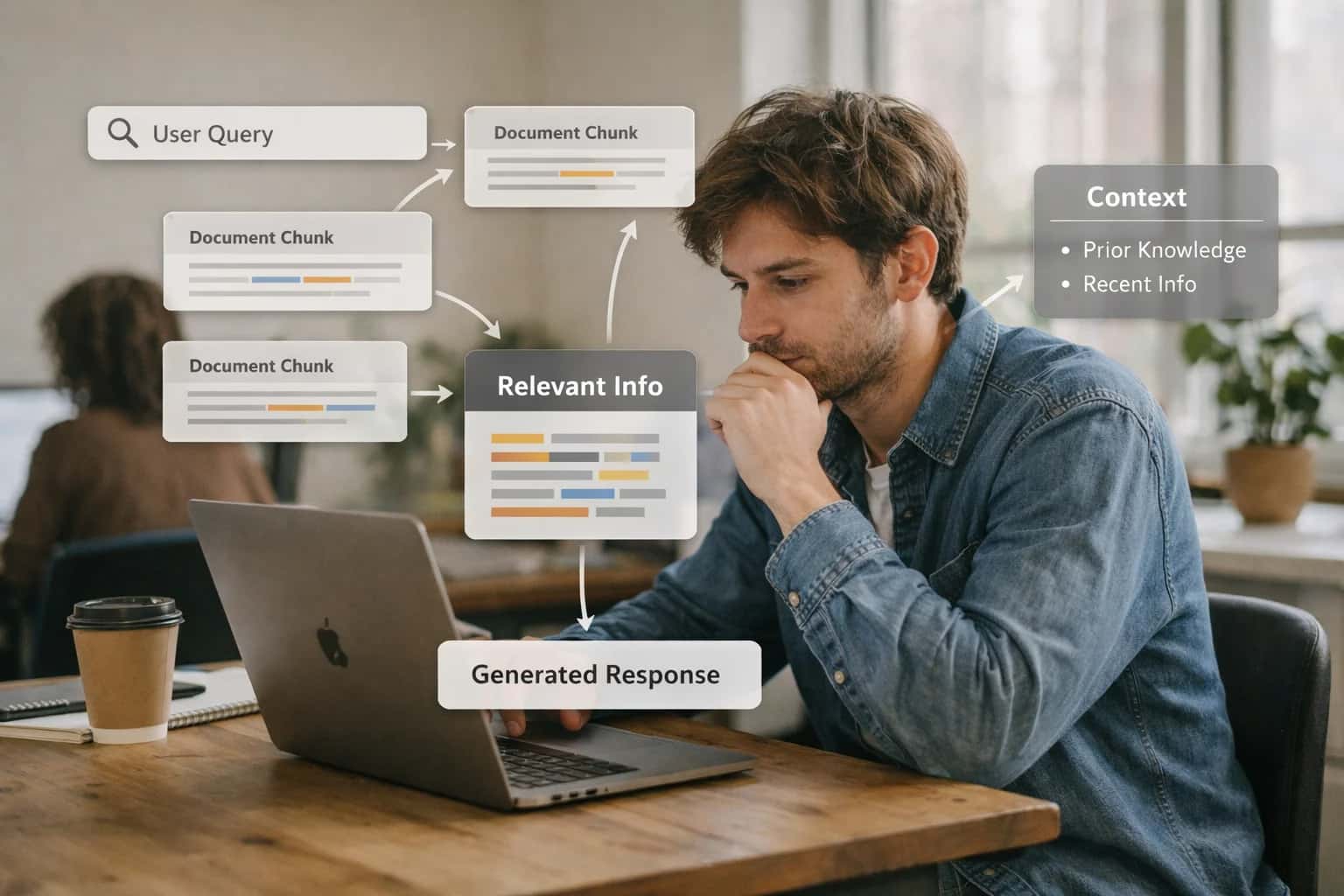
Prompt playbooks for classifying a user query and selecting which retrieval strategy, index, or query formulation approach to apply. Useful for orchestration engineers building retrieval dispatch layers because different query types demand different rewriting, expansion, and backend strategies.
Query Type Classification Prompt for Retrieval Strategy Selection
For orchestration engineers building retrieval dispatch layers. Classifies a user query into types (factual, procedural, comparative, summarization) and selects the corresponding retrieval strategy. Includes eval checks for classification accuracy and strategy appropriateness.
Vector vs Keyword vs Hybrid Query Decision Prompt
For search infrastructure teams managing multiple retrieval backends. Analyzes query characteristics to decide whether dense vector, sparse keyword, or hybrid retrieval is optimal. Includes latency and relevance trade-off evaluation criteria.
Multi-Index Dispatch Prompt for RAG Orchestration
For RAG architects routing queries across partitioned or specialized indexes. Produces an index selection decision with confidence scoring and fallback ordering. Includes eval checks for correct index targeting and cross-index result merging.
Query Complexity Scoring Prompt for Strategy Routing
For retrieval pipeline engineers. Scores query complexity on dimensions like multi-hop requirements, entity density, and constraint count to route to simple vs. advanced retrieval strategies. Includes threshold calibration guidance.
Query Decomposition vs Single-Shot Retrieval Decision Prompt
For agent builders and RAG developers. Determines whether a query requires decomposition into sub-questions or can be answered with a single retrieval round. Includes eval checks for unnecessary decomposition avoidance.
Metadata Filter Requirement Detection Prompt
For platform engineers building hybrid search systems. Detects whether a natural language query implies structured metadata constraints (dates, sources, categories) and flags filter generation need. Includes false-positive and missed-filter evaluation.
Temporal Query Routing Prompt for Time-Sensitive Indexes
For RAG developers working with time-partitioned corpora. Detects temporal requirements in queries and routes to appropriate time-scoped indexes or freshness tiers. Includes relative time normalization and recency threshold checks.
Permission-Aware Index Selection Prompt
For enterprise RAG teams managing access-controlled indexes. Routes queries to indexes the user is authorized to access based on role, clearance, or tenant scope. Includes eval checks for over-permission and under-permission failures.
Entity-Dense Query Routing Prompt for Graph vs Vector Index
For teams operating both knowledge graph and vector indexes. Detects entity-heavy queries requiring relationship traversal and routes to graph retrieval vs. semantic vector search. Includes entity extraction accuracy evaluation.
Factual vs Opinion Query Routing Prompt
For RAG system designers handling mixed-content corpora. Classifies queries as seeking objective facts or subjective opinions and routes to verified-source indexes vs. broader content indexes. Includes source authority alignment checks.
Comparison Query Detection and Routing Prompt
For search engineers handling product, vendor, or concept comparison queries. Detects comparative intent and routes to structured comparison retrieval strategies vs. standard QA. Includes eval checks for missed comparison detection.
Query Ambiguity Score Prompt for Retrieval Strategy Fallback
For search relevance engineers. Scores query ambiguity and triggers disambiguation workflows or conservative retrieval strategies when confidence is low. Includes threshold tuning guidance and fallback chain evaluation.
Zero-Result Prevention Routing Prompt
For production RAG operators. Detects queries likely to return zero results and preemptively routes to relaxed, expanded, or alternative retrieval strategies. Includes false-positive prevention and unnecessary relaxation avoidance checks.
Multi-Turn Context Routing Prompt for Conversational RAG
For conversational AI engineers. Analyzes session context and current turn to decide whether retrieval should use resolved query, original query, or context-expanded query. Includes anaphora and ellipsis resolution evaluation.
Query Domain Classifier Prompt for Vertical Search
For enterprise RAG teams with domain-specific indexes. Classifies queries into domain categories (legal, medical, engineering) and routes to specialized retrieval pipelines. Includes domain boundary and overlap handling evaluation.
Retrieval Precision vs Recall Strategy Prompt
For search engineers tuning retrieval trade-offs. Analyzes query characteristics and user context to decide whether high-precision or high-recall retrieval is appropriate. Includes eval checks for inappropriate strategy selection.
SQL vs Natural Language Retrieval Routing Prompt
For teams operating both structured databases and unstructured document stores. Detects queries requiring structured data lookup and routes to SQL generation vs. semantic search. Includes schema-awareness and join-complexity evaluation.
Cost-Aware Retrieval Strategy Selection Prompt
For infrastructure teams managing retrieval budgets. Routes queries to cheaper retrieval strategies when appropriate, reserving expensive multi-strategy or re-ranking pipelines for complex queries. Includes cost-latency-quality trade-off evaluation.
Query Risk Classification Prompt for Retrieval Guardrails
For security and compliance engineers. Classifies queries by risk level (PII exposure, adversarial, regulated topic) and routes to appropriate retrieval guardrails or restricted indexes. Includes false-positive risk flagging evaluation.
Retrieval Fallback Chain Design Prompt
For production RAG operators designing degradation paths. Generates ordered fallback strategy chains based on query type, starting with optimal retrieval and degrading gracefully through alternatives. Includes fallback trigger and stop-condition evaluation.
Agent Retrieval Tool Selection Prompt
For agent builders with multiple retrieval tools (search APIs, databases, file systems). Selects the appropriate retrieval tool based on query characteristics and tool capabilities. Includes tool capability matching and argument generation evaluation.
Query Freshness Requirement Detection Prompt
For RAG developers working with time-sensitive and archival content. Detects whether a query requires recent, real-time, or historical data and routes to appropriate freshness-tier indexes. Includes temporal intent misclassification checks.
Multi-Hop Retrieval Necessity Detection Prompt
For advanced RAG and agent developers. Determines whether a query requires chained retrieval steps and triggers multi-hop planning vs. single-pass retrieval. Includes unnecessary multi-hop avoidance and missed dependency detection.
Partnered with leading AI, data, and software stack.





How We Work
Custom AI workflows for your Business
One-fit-all AI don't work for modern businesses. At Inferensys, we aim to understand your business & custom requirements; which we use to define most efficient agentic workflows, the data, and the tools for your business.
01
Review the use case
We understand the task, the users, and where AI can actually help.
Read more02
Pick the right approach
We define what needs search, automation, or product integration.
Read more03
Build the first useful version
We implement the part that proves the value first.
Read more04
Improve from there
We add the checks and visibility needed to keep it useful.
Read moreThe first call is a practical review of your use case and the right next step.
Talk to Us