This prompt is for RAG architects and infrastructure engineers who need to fan out a single user question into multiple independent query variants, each optimized for a different retrieval backend. The job-to-be-done is producing a batch of queries that can execute in parallel across dense vector, sparse keyword, and graph indexes, with metadata tags that let your routing layer dispatch each variant to the correct backend without additional parsing. You should use this prompt when your retrieval pipeline includes at least two heterogeneous indexes, when query latency matters enough to avoid sequential rewriting chains, and when you need each variant to carry its own backend routing instructions. Do not use this prompt for simple single-index RAG setups, for conversational follow-up resolution where session context is the primary challenge, or for query decomposition where sub-questions have sequential dependencies rather than parallel independence.

Prompt
Parallel Query Generation Prompt for Multi-Stage Retrieval Pipelines
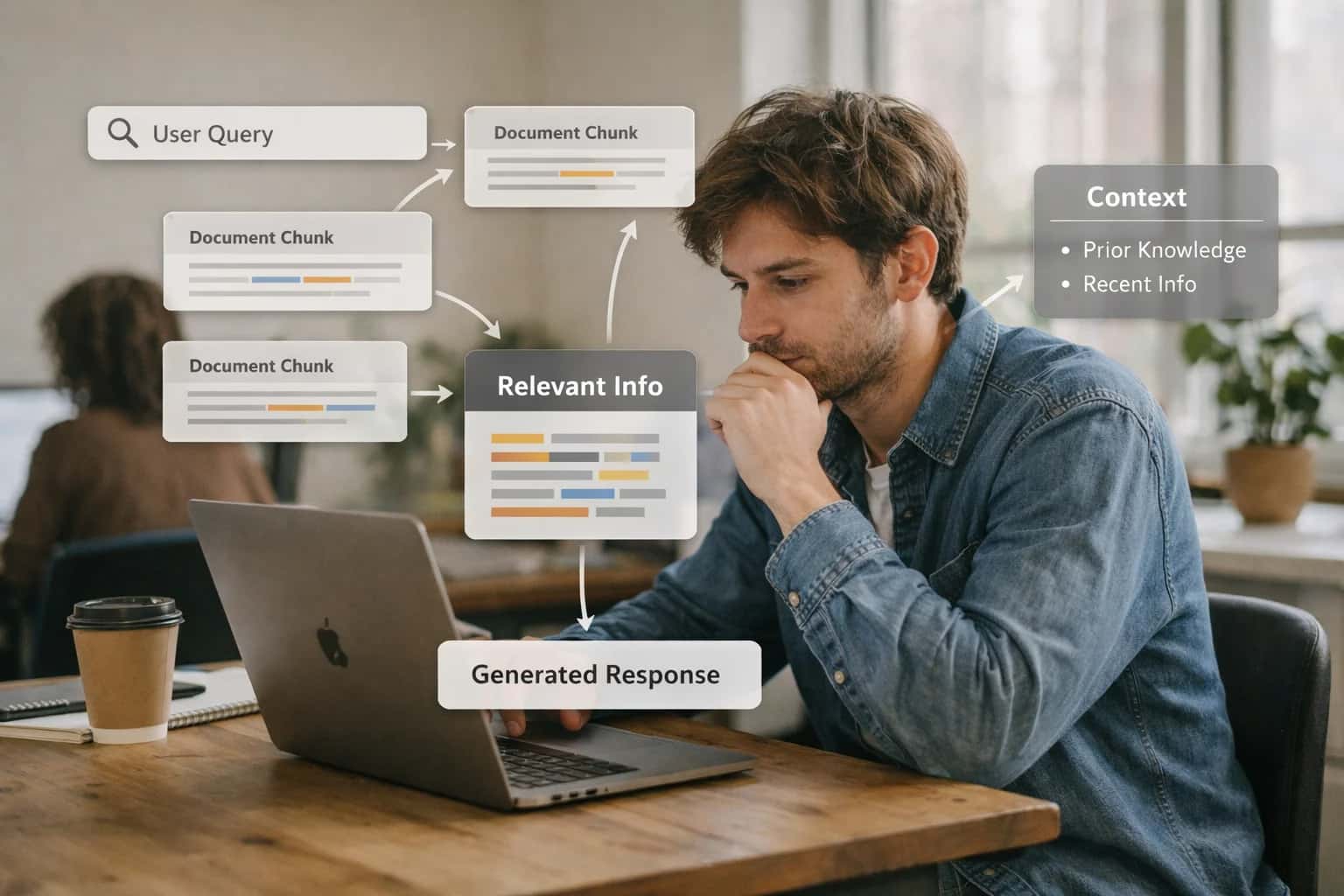
When to Use This Prompt
Define the job, ideal user, and constraints for parallel query generation in multi-stage retrieval pipelines.
The prompt expects a user question, a list of available backend types with their capabilities, and an output schema that enforces one query variant per backend with explicit routing metadata. Each generated variant must be self-contained and independently executable—variant A for dense retrieval should not depend on results from variant B for sparse retrieval. The prompt template includes placeholders for backend capability descriptions, output format constraints, and evaluation criteria that check for variant independence and coverage completeness. Before integrating this into production, you must validate that every variant maps to a real backend in your infrastructure, that no two variants are semantically identical, and that the routing tags match your actual dispatch logic. Missing or misrouted variants are the most common failure mode.
The primary risk is generating variants that look different but retrieve overlapping result sets, which wastes compute and dilutes the value of parallel execution. Mitigate this by adding eval checks that measure semantic distance between variants and flag pairs below a similarity threshold. A secondary risk is producing variants for backends that don't exist or are unavailable, which causes silent failures in your routing layer. Always validate backend tags against a live registry before execution. If your pipeline includes regulated content or high-stakes decisions, add a human review step that samples variant sets and confirms they cover the user's intent without introducing hallucinated constraints. Start by wiring this prompt into a staging pipeline with logging on variant diversity, backend coverage, and result set overlap before promoting to production.
Use Case Fit
Where this prompt works and where it does not. Use these cards to decide if parallel query generation is the right pattern for your retrieval pipeline before you invest in implementation.
Good Fit: Heterogeneous Index Architectures
Use when: your retrieval pipeline spans multiple backend types (dense vectors, sparse keywords, graph) that require different query formulations. Why: a single query cannot optimize for embedding similarity, lexical matching, and graph traversal simultaneously. Parallel variants let each backend receive a purpose-built query.
Bad Fit: Single-Backend Retrieval
Avoid when: you only have one retrieval backend and no plans to add others. Why: generating multiple query variants for a single index adds latency and compute cost without the diversity benefit that comes from heterogeneous backends. Use a single rewriter prompt instead.
Required Input: Backend Capability Map
What to watch: the prompt needs explicit knowledge of each backend's query format, strengths, and limitations. Guardrail: provide a structured capability map as part of the prompt context, including schema requirements, token limits, and supported operators for each target index.
Operational Risk: Query Independence Failures
What to watch: generated variants may be near-duplicates rather than independently useful queries, wasting parallel execution resources. Guardrail: add an eval step that measures pairwise semantic similarity between variants and rejects batches where any two queries exceed a similarity threshold.
Operational Risk: Backend Routing Errors
What to watch: metadata tags that route queries to backends may be incorrect, sending a dense-optimized query to a sparse index or vice versa. Guardrail: validate routing tags against the capability map before execution. Reject any variant whose tag does not match a known, available backend.
Operational Risk: Coverage Gaps
What to watch: the generated batch may miss an important query perspective, leaving a backend underutilized or a retrieval path unexplored. Guardrail: implement a coverage check that verifies each required backend type has at least one assigned variant before the batch is dispatched.
Copy-Ready Prompt Template
A reusable prompt for generating parallel, backend-specific query variants from a single user question, ready for multi-stage retrieval pipelines.
This prompt template is the core instruction set for a fan-out retrieval architecture. It takes a single user question and produces a batch of independent query variants, each optimized for a different retrieval backend (dense vector, sparse keyword, graph). The template uses square-bracket placeholders for all dynamic inputs, making it safe to wire directly into an application harness. The output is a structured JSON object containing an array of query variants, each tagged with a target backend, a confidence weight, and a rationale for the formulation. This allows a downstream orchestrator to dispatch each variant to the correct index in parallel and merge the results.
textYou are a retrieval query planner for a multi-stage RAG pipeline. Your task is to analyze the user's question and generate a batch of independent query variants, each optimized for a specific retrieval backend. The backends available are: [BACKEND_LIST]. ## User Question [USER_QUESTION] ## Conversation Context (if any) [CONVERSATION_HISTORY] ## User Profile and Permissions [USER_PROFILE] ## Output Schema Return a valid JSON object with the following structure: { "original_query": "string", "query_variants": [ { "variant_id": "string", "backend": "dense_vector" | "sparse_keyword" | "graph", "query_text": "string", "confidence_weight": 0.0-1.0, "rationale": "string" } ] } ## Constraints [CONSTRAINTS] ## Examples [EXAMPLES]
To adapt this template, replace each placeholder with concrete values from your application context. [BACKEND_LIST] should be a comma-separated list of available backends (e.g., 'dense_vector, sparse_keyword, graph'). [USER_QUESTION] is the raw user input. [CONVERSATION_HISTORY] can be an empty string or a formatted transcript of prior turns to resolve anaphora. [USER_PROFILE] should include role, permissions, and any access scope restrictions that affect what documents the user is allowed to see. [CONSTRAINTS] is where you inject operational rules, such as 'Do not generate more than 5 variants' or 'Exclude any query that references PII.' [EXAMPLES] should contain 1-3 few-shot demonstrations of the expected input-output pattern, including edge cases like ambiguous queries or questions that require multi-hop reasoning. After generating the variants, always validate the JSON structure against your schema before dispatching to backends. For high-stakes domains, add a human review step before the variants are executed against production indexes.
Prompt Variables
Required inputs for the Parallel Query Generation Prompt. Each placeholder must be populated before the prompt is assembled and sent to the model. Validation notes describe how to programmatically verify the input before execution.
| Placeholder | Purpose | Example | Validation Notes |
|---|---|---|---|
[USER_QUESTION] | The raw user query that needs parallel query variants generated for multi-backend retrieval. | What are the latest security patches for Kubernetes 1.29 and how do I apply them on EKS? | Non-empty string. Must pass length > 3 and length < 2000 check. Reject if only whitespace or special characters. |
[AVAILABLE_BACKENDS] | List of retrieval backends available in the pipeline, each with type and capability description. | [{"id": "dense_v1", "type": "dense_vector", "index": "prod-docs-emb"}, {"id": "sparse_v1", "type": "sparse_keyword", "index": "prod-docs-bm25"}] | Valid JSON array. Each entry must have id and type fields. Type must be one of: dense_vector, sparse_keyword, graph, hybrid. Reject if array is empty. |
[VARIANT_COUNT] | Number of parallel query variants to generate. Controls fan-out width. | 4 | Integer between 2 and 10. Default to 4 if not specified. Warn if count exceeds available backends. |
[OUTPUT_SCHEMA] | Expected JSON schema for each generated query variant, including fields for backend routing and metadata. | {"variant_id": "string", "backend_id": "string", "query_text": "string", "query_type": "string", "weight": "float"} | Valid JSON Schema object. Must include variant_id, backend_id, and query_text as required fields. Parse and validate schema before prompt assembly. |
[DOMAIN_CONTEXT] | Optional domain or corpus description to ground query terminology and entity references. | Internal platform engineering knowledge base covering Kubernetes, AWS EKS, and security advisories. | String or null. If provided, must be under 500 tokens. If null, prompt should instruct model to use general domain knowledge. No validation required for null. |
[CONVERSATION_HISTORY] | Optional prior turns for context-aware query generation. Used when the user question is a follow-up. | [{"role": "user", "content": "How do I upgrade my EKS cluster?"}, {"role": "assistant", "content": "Which version are you targeting?"}] | Valid JSON array of message objects with role and content fields, or null. If provided, limit to last 5 turns. Validate role values are user, assistant, or system. |
[CONSTRAINTS] | Hard constraints on query generation behavior, such as requiring all variants to be independent or prohibiting backend duplication. | Ensure all variants are semantically independent. Do not assign more than one variant to the same backend_id. Prefer dense_vector backends for conceptual questions. | String or null. If provided, parse for known constraint keys: independence, backend_uniqueness, type_preference. Log unrecognized constraints as warnings but do not reject. |
Implementation Harness Notes
How to wire the parallel query generation prompt into a production retrieval pipeline with validation, routing, and observability.
This prompt is designed to be called as a fan-out service within a multi-stage retrieval pipeline. The application layer should receive a single user query, inject it into the prompt template along with the available backend capabilities and output schema, and then parse the structured response into a set of independent query objects. Each generated query variant must include a target_backend tag (dense, sparse, graph, hybrid) and a query_string payload so the downstream dispatcher can route it to the correct index without additional parsing. The prompt is stateless by design: do not include conversation history or session context unless the user query explicitly depends on prior turns, and even then, prefer resolving anaphora in the application layer before calling this prompt.
Validation and retry logic should be implemented in the harness, not in the prompt. After receiving the model response, validate that: (1) the output is valid JSON matching the expected schema, (2) every variant has a non-empty query_string and a recognized target_backend value, (3) no two variants are near-duplicates (use a simple token-overlap threshold or embedding cosine similarity check), and (4) the total number of variants falls within the configured min/max bounds. If validation fails, retry with the same prompt but append the validation errors to the [CONSTRAINTS] field as explicit correction instructions. After two retries, fall back to a simpler single-variant generation or escalate to a human reviewer if the retrieval pipeline is customer-facing. Log every generation attempt, validation result, and retry decision to your observability stack with the query_id and prompt_version attached.
Model selection matters for this prompt. The task requires structured output generation with high schema adherence, so prefer models with strong JSON mode or function-calling support (GPT-4o, Claude 3.5 Sonnet, or equivalent). Avoid models under ~7B parameters unless you have validated their schema-following reliability on your specific backend taxonomy. For high-throughput pipelines, consider caching the prompt prefix (the system instruction and backend capability descriptions) to reduce latency and cost. The user query and any dynamic constraints should be the only variable suffix. Do not use this prompt for real-time user-facing chat without a caching layer; the generation latency for multiple variants can exceed acceptable response times. Instead, run this as an async pre-retrieval step or use a faster model for the initial variant generation and a stronger model for validation.
Integration points downstream of this prompt should expect a list of query objects and execute them in parallel against the specified backends. Each backend client should receive only the query_string and any backend-specific parameters extracted from the variant metadata. After retrieval, a fusion step must deduplicate and merge results across backends. The variant_id field in each generated query object should be preserved through the retrieval and fusion stages so you can trace which variant produced which results. This traceability is critical for debugging retrieval failures: if a fused result set is poor, you can identify whether the problem was in query generation, backend retrieval, or result merging. Wire the variant_id into your observability traces alongside the query_id and backend label.
When to avoid this prompt: if your retrieval pipeline uses only a single backend type, use a dedicated query rewriting prompt optimized for that backend instead. If the user query is a simple keyword lookup with no semantic ambiguity, skip generation entirely and pass the raw query directly to the sparse index. If latency is the primary constraint and you cannot run parallel backend queries, use a query routing prompt to select the single best backend rather than generating variants for all of them. Finally, if your retrieval system lacks the operational maturity to monitor variant quality, backend latency, and fusion effectiveness, start with a simpler single-query pipeline and add parallel generation only when you have the observability to tune it.
Expected Output Contract
Defines the structure, types, and validation rules for the JSON object returned by the parallel query generation prompt. Use this contract to parse, validate, and route the generated query variants to the correct retrieval backends.
| Field or Element | Type or Format | Required | Validation Rule |
|---|---|---|---|
query_variants | Array of objects | Array length must be >= 2 and <= 5. Reject if empty or contains a single variant. | |
query_variants[].variant_id | String, slug format | Must match pattern ^[a-z0-9-]+$. Must be unique within the array. Example: 'dense-semantic-v1'. | |
query_variants[].query_text | String | Length must be > 10 and < 500 characters. Must not be identical to any other variant's query_text in the same batch. | |
query_variants[].target_backend | Enum: 'dense_vector', 'sparse_keyword', 'graph_traversal', 'hybrid' | Value must be one of the specified enum members. At least two distinct backends must be represented across the array. | |
query_variants[].metadata_filters | Object or null | If present, must be a valid JSON object with string keys and string/number/boolean values. Null is allowed when no filters are extracted. | |
query_variants[].confidence_weight | Number | Must be a float between 0.0 and 1.0 inclusive. The sum of all confidence_weights in the array should be approximately 1.0 (tolerance ±0.1). | |
query_variants[].rationale | String | Length must be > 20 and < 300 characters. Must explain why this formulation suits the target_backend. Reject if it references another variant's ID. | |
generation_metadata | Object | Must contain 'generation_timestamp' (ISO 8601 string) and 'query_count' (integer matching the length of query_variants). |
Common Failure Modes
Parallel query generation fails in predictable ways when deployed in multi-stage retrieval pipelines. These are the most common production failure modes and the guardrails that prevent them.
Query Variant Collapse
What to watch: The model generates near-identical variants across backends instead of producing distinct formulations optimized for dense, sparse, and graph retrieval. This defeats the purpose of parallel fan-out and wastes compute on redundant index calls. Guardrail: Add explicit diversity constraints in the prompt requiring lexical, structural, and semantic differences between variants. Validate output with pairwise similarity checks using embedding distance or Jaccard overlap before dispatching to backends.
Backend-Type Mismatch
What to watch: A variant tagged for sparse keyword retrieval contains abstract conceptual language better suited for dense embedding, or a graph-traversal variant lacks entity grounding and hop constraints. The routing metadata is correct but the query formulation is wrong for the target backend. Guardrail: Include backend-specific formulation rules in the prompt and validate each variant against a schema that checks for required structural elements per backend type before execution.
Metadata Tag Drift
What to watch: The model assigns incorrect backend routing tags or omits required metadata fields, causing queries to route to the wrong index or fail at dispatch. A dense-optimized query gets sent to the keyword index, producing garbage results. Guardrail: Use a strict output schema with enumerated backend types and validate tag values against an allowlist. Reject or repair any variant with missing or invalid routing metadata before the dispatch layer consumes it.
Coverage Gaps from Over-Specialization
What to watch: Each variant optimizes aggressively for its target backend but collectively the set misses important query dimensions—synonyms, temporal constraints, or entity variations that no single variant captures. The ensemble underperforms because the variants are individually strong but collectively incomplete. Guardrail: Add a coverage check step that verifies the variant set collectively preserves all key concepts, constraints, and entity references from the original query. Generate a missing-dimension variant if gaps are detected.
Query Drift Under Ambiguity
What to watch: An ambiguous user query causes the model to resolve ambiguity differently across variants, producing conflicting interpretations that pull in unrelated results from different backends. The merged result set becomes incoherent. Guardrail: Detect ambiguity before variant generation. If confidence in the primary interpretation is low, generate clarification variants tagged for ambiguity resolution rather than committing to a single interpretation across all backends.
Latency Blowout from Unbounded Variant Count
What to watch: The model generates too many variants for simple queries, or the variant count grows unpredictably with query complexity, causing parallel fan-out to exceed backend capacity or timeout budgets. Guardrail: Set an explicit maximum variant count in the prompt and enforce it with a post-generation truncation rule. Use a variant budget proportional to query complexity, with a hard cap aligned to your retrieval SLA.
Evaluation Rubric
Use this rubric to test the quality of parallel query variants before integrating them into a production retrieval pipeline. Each criterion targets a specific failure mode observed in multi-backend query generation.
| Criterion | Pass Standard | Failure Signal | Test Method |
|---|---|---|---|
Variant Independence | Each query variant targets a distinct retrieval strategy (dense, sparse, graph) without overlapping intent | Two or more variants are near-duplicate strings or target the same backend with identical phrasing | Compute pairwise cosine similarity of variant embeddings; flag pairs above 0.95 similarity |
Backend-Specific Formulation | Dense variant uses natural language phrasing; sparse variant uses keyword-centric phrasing; graph variant specifies entities and relationships | Dense variant contains boolean operators or keyword stubs; sparse variant is a full sentence; graph variant lacks entity grounding | Validate each variant against a regex pattern for its expected backend shape; check for forbidden tokens per backend type |
Metadata Tag Completeness | Every variant includes a | Missing | Parse output JSON; assert |
Source Intent Preservation | All variants collectively preserve the core information need from [USER_QUESTION] without introducing contradictory constraints | A variant adds a temporal constraint not present in the original question; a variant drops a required entity | Extract key entities and constraints from [USER_QUESTION]; verify each appears in at least one variant or is intentionally relaxed with a |
Coverage Completeness | The set of variants covers all distinct aspects of a multi-part [USER_QUESTION] | A sub-question or entity from the original query has zero corresponding variants | Decompose [USER_QUESTION] into atomic information needs; assert each need maps to at least one variant by keyword overlap |
Weight Calibration | Variant weights sum to approximately 1.0 and reflect backend suitability for the query type | All weights are equal (0.25 each for 4 variants) regardless of query type; weights sum to >1.5 or <0.5 | Sum all |
No Hallucinated Constraints | Variants do not add entities, dates, or filters absent from [USER_QUESTION] unless flagged as | A variant adds a specific year or product name not mentioned in the input | Diff extracted entities per variant against entities in [USER_QUESTION]; flag any novel entity not marked with |
Schema Compliance | Output is valid JSON matching the [OUTPUT_SCHEMA] with all required fields present | Missing | Validate output against [OUTPUT_SCHEMA] using a JSON Schema validator; reject on any schema violation |
Enabling Efficiency, Speed & Accuracy
Intelligent Analysis, Decision & Execution
We build AI systems for teams that need search across company data, workflow automation across tools, or AI features inside products and internal software.
Talk to Us
Search across company data
Give teams answers from docs, tickets, runbooks, and product data with sources and permissions.
Useful when people spend too long searching or get different answers from different systems.

Automate internal workflows
Use AI to route work, draft outputs, trigger actions, and keep approvals and logs in place.
Useful when repetitive work moves across multiple tools and teams.

Add AI to products and internal tools
Build assistants, guided actions, or decision support into the software your team or customers already use.
Useful when AI needs to be part of the product, not a separate tool.
Adapt This Prompt
How to adapt
Use the base prompt with a single model call and manual inspection of the generated variants. Remove the strict [OUTPUT_SCHEMA] requirement and ask for a simple numbered list of query variants with backend tags. Focus on getting the right kinds of variants before enforcing format.
codeGenerate [NUM_VARIANTS] parallel query variants for the user question: [USER_QUESTION] For each variant, specify which backend it targets: dense, sparse, or graph.
Watch for
- Variants that are near-duplicates rather than truly independent
- Missing backend tags that make routing impossible
- Overly broad instructions that produce generic rewrites instead of backend-optimized queries

About the author
Prasad Kumkar
CEO & MD, Inference Systems
Prasad Kumkar is the CEO & MD of Inference Systems and writes about AI systems architecture, LLM infrastructure, model serving, evaluation, and production deployment. Over 5+ years, he has worked across computer vision models, L5 autonomous vehicle systems, and LLM research, with a focus on taking complex AI ideas into real-world engineering systems.
His work and writing cover AI systems, large language models, AI agents, multimodal systems, autonomous systems, inference optimization, RAG, evaluation, and production AI engineering.
Partnered with leading AI, data, and software stack.





How We Work
Custom AI workflows for your Business
One-fit-all AI don't work for modern businesses. At Inferensys, we aim to understand your business & custom requirements; which we use to define most efficient agentic workflows, the data, and the tools for your business.
01
Review the use case
We understand the task, the users, and where AI can actually help.
Read more02
Pick the right approach
We define what needs search, automation, or product integration.
Read more03
Build the first useful version
We implement the part that proves the value first.
Read more04
Improve from there
We add the checks and visibility needed to keep it useful.
Read moreThe first call is a practical review of your use case and the right next step.
Talk to Us