Use this prompt when you have modified a system or user prompt that produces structured data (JSON, XML, YAML) and you need to verify that the new output schema is compatible with the existing contract expected by downstream services. This is a pre-deployment gate, not a post-deployment fix. It assumes you have access to the old prompt's output schema and a representative sample of the new prompt's output. The primary job-to-be-done is preventing silent integration failures where a prompt change introduces a breaking schema modification that downstream parsers, databases, or API consumers cannot handle.

Prompt
API Response Contract Compatibility Check Prompt
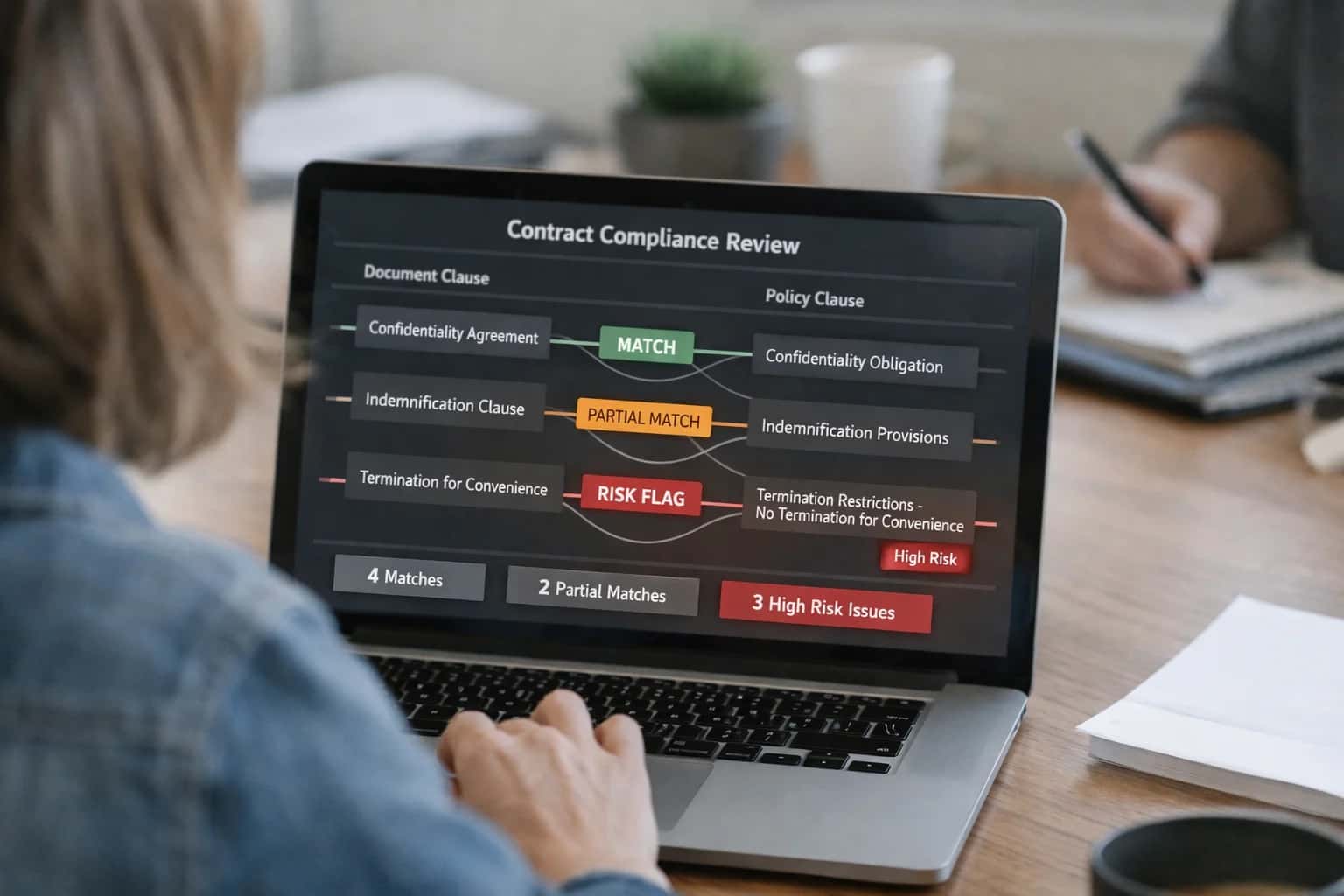
A practical prompt playbook for integration engineers verifying that a prompt change does not break structured outputs consumed by downstream APIs or services. Produces a field-level compatibility matrix with breaking, additive, and deprecated change flags.
PROMPT PLAYBOOK
When to Use This Prompt
A pre-deployment gate for verifying that a modified prompt's structured output schema remains compatible with downstream API contracts.
The ideal user is an integration engineer, platform engineer, or prompt author preparing a release. You should have the previous prompt's expected schema (as a JSON Schema, TypeScript interface, or structured specification), a sample of at least 10-20 outputs from the new prompt version, and a clear understanding of which downstream systems consume the output. Do not use this prompt for evaluating free-text quality, for prompts that do not produce machine-readable structured output, or when you lack a reference schema to compare against. It is also not a substitute for full regression testing against golden datasets—it specifically targets the contract compatibility dimension.
Before running this prompt, ensure you have captured the old schema and a representative output sample from the new prompt. The prompt will produce a field-level compatibility matrix with breaking, additive, and deprecated change flags. After receiving the analysis, you should validate the findings against your own schema validation harness and decide whether the detected changes are intentional and safe. If breaking changes are flagged, either revert the prompt modification, update downstream consumers, or version the API contract before deployment.
PRACTICAL GUARDRAILS
Use Case Fit
Where the API Response Contract Compatibility Check Prompt delivers reliable value and where it introduces unacceptable risk. Use these cards to decide if this prompt belongs in your change-management pipeline.
01
Good Fit: Structured Output Pipelines
Use when: your prompt produces JSON, XML, or typed objects consumed by downstream APIs, SDKs, or databases. The compatibility check catches field renames, type changes, and required-field additions before they break deserialization in production. Guardrail: run this check as a CI gate on every prompt pull request that touches output-format instructions.
02
Good Fit: Multi-Team Contract Ownership
Use when: the prompt output schema is owned by one team but consumed by several others who may not review every change. The compatibility matrix gives downstream consumers a clear signal about what broke without reading raw prompt diffs. Guardrail: publish the compatibility report alongside the prompt changelog so service owners can plan their own migrations.
03
Bad Fit: Free-Text or Unstructured Outputs
Avoid when: the prompt generates prose, summaries, or conversational replies with no machine-readable contract. Field-level compatibility checks produce noise when there is no schema to validate against. Guardrail: use semantic drift analysis or LLM-judge comparison for unstructured outputs instead of contract checking.
04
Bad Fit: Rapid Prototyping Phase
Avoid when: the output schema is still evolving daily and no downstream system depends on a stable contract. Running compatibility checks too early adds friction without reducing real risk. Guardrail: introduce contract checking only after the first API consumer integrates against the output, not during initial exploration.
05
Required Inputs
You must provide: the previous prompt version, the proposed new prompt version, the expected output schema (JSON Schema, XML Schema, or type definitions), and a representative set of test inputs that exercise all output fields. Guardrail: missing test inputs that cover optional or nullable fields will produce false-negative compatibility reports that miss real breakage.
06
Operational Risk: Silent Contract Drift
Risk: the prompt change introduces a field that is always present in tests but becomes inconsistent under production input distributions, causing intermittent deserialization failures downstream. Guardrail: pair the compatibility check with production-scale output validation that monitors field-presence rates and type-conformance over real traffic before declaring the change safe.
PROMPT PLAYBOOK
Copy-Ready Prompt Template
A field-level compatibility matrix prompt that flags breaking, additive, deprecated, and compatible changes between two API response schemas.
This prompt template is designed to be dropped directly into your evaluation or CI/CD harness. It takes two JSON schemas—an old version and a new version—and produces a structured compatibility matrix. The core job is to prevent silent contract breakage: a downstream consumer that parses the old schema must not fail when receiving the new output. The prompt forces the model to reason about required fields, type changes, enum modifications, and structural renames, not just surface-level diffs.
codeYou are a schema compatibility auditor. Your task is to compare two JSON output schemas and produce a field-level compatibility matrix. ## INPUT Old Schema: ```json [OLD_SCHEMA]
New Schema:
json[NEW_SCHEMA]
DEFINITIONS
- breaking: A change where a downstream consumer relying on the old schema would fail to parse, deserialize, or process the new output. Includes: removing a required field, changing a field type, narrowing an enum, renaming a field without an alias, or changing a field from required to absent.
- additive: A new optional field added to the schema that does not affect existing consumers. Includes: adding an optional field, adding a new enum value, or adding a new property to an existing object.
- deprecated: A field that exists in the new schema but is marked for removal or no longer populated. The field is still present but should not be relied upon.
- compatible: A change that does not break existing consumers. Includes: adding a description, changing a default value, or reordering fields.
OUTPUT SCHEMA
Return a JSON object with the following structure:
json{ "summary": { "total_fields_analyzed": <integer>, "breaking_changes": <integer>, "additive_changes": <integer>, "deprecated_fields": <integer>, "compatible_changes": <integer>, "overall_risk": "high" | "medium" | "low", "deployment_blocker": <boolean> }, "matrix": [ { "field_path": "<string, e.g., 'user.address.city'>", "change_type": "breaking" | "additive" | "deprecated" | "compatible", "old_definition": "<string summarizing old schema for this field>", "new_definition": "<string summarizing new schema for this field>", "impact_description": "<string explaining what breaks or changes>", "migration_action": "<string: required action before deployment>" } ], "actions_required_before_deployment": [ "<string: concrete step>" ] }
CONSTRAINTS
- Analyze every field recursively, including nested objects and arrays.
- If a field is renamed, flag it as breaking and note the old and new names.
- If a required field becomes optional, flag it as compatible but note the behavioral change.
- If an enum loses values, flag it as breaking.
- If the root type changes (e.g., object to array), flag it as breaking with maximum severity.
- Do not invent fields not present in either schema.
- Set
deployment_blockerto true if any breaking change exists.
To adapt this prompt, replace [OLD_SCHEMA] and [NEW_SCHEMA] with the actual JSON schemas you are comparing. If your schemas are large, consider extracting only the output-relevant portions—internal fields that consumers never see can be excluded to reduce noise. For OpenAPI or GraphQL schemas, preprocess them into the JSON Schema subset that your model outputs actually conform to. The prompt works best when both schemas use the same naming conventions; if your team renamed fields en masse, add a [FIELD_MAPPING] section to supply known aliases and reduce false-positive breaking flags.
After running this prompt, validate the output JSON against the declared output schema before trusting the matrix. A common failure mode is the model missing nested fields inside arrays of objects—add a post-processing check that counts the total number of leaf fields in both input schemas and compares it to total_fields_analyzed. If the counts diverge by more than 5%, re-run with explicit instructions to recurse into array items. For high-risk API contracts, always have a human review the breaking-change list before approving deployment, especially when the model flags a field as compatible but your integration tests suggest otherwise.
IMPLEMENTATION TABLE
Prompt Variables
Required inputs for the API Response Contract Compatibility Check Prompt. Each placeholder must be populated before the prompt can produce a reliable field-level compatibility matrix.
| Placeholder | Purpose | Example | Validation Notes |
|---|---|---|---|
[OLD_PROMPT_TEMPLATE] | The baseline prompt version currently deployed in production | You are an API response generator. Return a JSON object with fields: id (string), status (enum: active|inactive), metadata (object). | Must be the complete prompt text including system instructions, output format rules, and any few-shot examples. Empty or truncated input produces a false-empty diff. |
[NEW_PROMPT_TEMPLATE] | The proposed prompt version under change review | You are an API response generator. Return a JSON object with fields: id (string), status (enum: active|inactive|suspended), metadata (object), created_at (ISO 8601 string). | Must be the complete proposed prompt text. Diff against [OLD_PROMPT_TEMPLATE] is the core comparison. Mismatched length or structure may indicate accidental truncation. |
[OUTPUT_SCHEMA] | The expected structured output contract as a JSON Schema, TypeScript interface, or field specification | { "type": "object", "properties": { "id": { "type": "string" }, "status": { "enum": ["active", "inactive"] } }, "required": ["id", "status"] } | Must be a valid schema definition. Parse check before prompt execution. If null, the prompt will infer the schema from instructions, which reduces accuracy. |
[DOWNSTREAM_CONSUMERS] | List of downstream systems, APIs, or services that parse the structured output | ["mobile-app-v2", "billing-service", "admin-dashboard"] | Each entry should be a concrete system identifier. Used to flag which consumers are affected by each breaking change. Empty list allowed if no downstream consumers are known. |
[MODEL_IDENTIFIER] | The model or model family the prompt targets | gpt-4o-2024-08-06 | Used to contextualize compatibility notes (e.g., model-specific enum handling). Must match a known model identifier. Null allowed if model-agnostic analysis is intended. |
[CHANGE_DESCRIPTION] | Human-written summary of the intended prompt change and its rationale | Added suspended status to support account holds. Added created_at for audit trail. No fields removed. | Provides intent context for classifying changes as intentional vs accidental. Empty string degrades the prompt's ability to distinguish deliberate additions from drift. |
[TEST_PAYLOADS] | Sample outputs from the old prompt used as ground-truth references | [{"id": "123", "status": "active", "metadata": {}}] | Must be valid JSON matching [OUTPUT_SCHEMA]. Used to verify deserialization compatibility. At least 3 diverse payloads recommended. Fewer than 3 reduces confidence in edge-case detection. |
[COMPATIBILITY_RULES] | Custom rules defining what constitutes a breaking, additive, or deprecated change for this system | {"breaking": ["removed_required_field", "changed_enum_value"], "additive": ["new_optional_field"], "deprecated": ["field_marked_deprecated"]} | Must be a valid JSON object with breaking, additive, and deprecated arrays. If null, default rules apply: required-field removal is breaking; new optional fields are additive; field removal is deprecated. |
PROMPT PLAYBOOK
Implementation Harness Notes
How to wire the API Response Contract Compatibility Check prompt into a CI/CD pipeline or release management workflow with validation, retries, and gating logic.
This prompt is designed to operate as a pre-release gate in a CI/CD pipeline, not as a one-off manual check. The harness should invoke the prompt whenever a structured-output prompt template is modified, comparing the new version's output contract against a committed golden schema or the previous version's contract. The prompt expects two structured output definitions as input: a baseline contract and a candidate contract. These can be JSON Schema documents, TypeScript interfaces, or structured markdown tables describing field names, types, required status, and enum values. The harness is responsible for extracting these contracts from the prompt version history or from actual model outputs deserialized against a known schema.
Pipeline integration pattern: On every pull request that modifies a prompt file in the repository, a CI job extracts the expected output schema from the new prompt version by running a representative set of inputs through the model and collecting the structured outputs. A second job deserializes these outputs against the baseline schema and the candidate schema, then feeds both schemas into the compatibility check prompt. The prompt returns a field-level compatibility matrix with breaking, additive, and deprecated change flags. The harness parses this JSON response and fails the CI check if any breaking change is detected unless an explicit [ALLOWED_BREAKING_CHANGES] list is provided in the PR description. For additive changes, the harness emits a warning but allows the pipeline to proceed. For deprecated fields, the harness checks whether a deprecation notice exists in the changelog and blocks if missing.
Validation and retry logic: The harness must validate the prompt's JSON output against a strict schema before acting on it. If the output fails to parse or is missing required fields like changes, breaking_changes, or compatibility_verdict, the harness retries once with a repair prompt that includes the raw output and the validation error. If the retry also fails, the harness fails the check with a human-review-required status. For high-risk API surfaces, the harness should also run a deserialization test: take the candidate prompt's actual outputs from a golden input set and attempt to deserialize them using the downstream service's client library. A compatibility matrix that claims no breaking changes but produces deserialization failures is a critical signal that the prompt's self-reported compatibility is unreliable.
Model choice and latency considerations: This prompt benefits from a model with strong structured reasoning and JSON output discipline. Use a model that supports strict JSON mode or structured outputs. Latency is not critical since this runs in CI, but cost can accumulate if run on every commit. Cache the baseline schema analysis and only re-run when the candidate schema changes. For teams running this across many prompt files, batch the compatibility checks and use a model router that falls back to a cheaper model for simple additive-change detections. Always log the full prompt input, raw output, parsed compatibility matrix, and pipeline decision to an audit trail for post-release analysis. If the prompt is used in a regulated context, require a human sign-off on any change that the prompt flags as potentially breaking, even if the harness allows it through on a technicality.
IMPLEMENTATION TABLE
Expected Output Contract
Field-level specification for the compatibility report generated by the API Response Contract Compatibility Check Prompt. Use this contract to validate the model's output before downstream consumption.
| Field or Element | Type or Format | Required | Validation Rule |
|---|---|---|---|
compatibility_summary | object | Must contain overall_verdict (string enum: 'compatible', 'breaking', 'additive'), breaking_changes_count (integer >= 0), additive_changes_count (integer >= 0), deprecated_changes_count (integer >= 0). Schema check required. | |
overall_verdict | string | Must be one of: 'compatible', 'breaking', 'additive'. If any field has change_type 'breaking', overall_verdict must be 'breaking'. If no breaking but any additive, overall_verdict must be 'additive'. Parse check required. | |
field_changes | array | Must be a non-empty array. Each element must be an object. Array length must equal the number of fields in [NEW_SCHEMA] plus any removed fields from [OLD_SCHEMA]. Schema check required. | |
field_changes[].field_path | string | Must be a valid JSONPath or dot-notation string matching a field in [OLD_SCHEMA] or [NEW_SCHEMA]. Regex: ^[a-zA-Z_][a-zA-Z0-9_.]*$. Parse check required. | |
field_changes[].change_type | string | Must be one of: 'breaking', 'additive', 'deprecated', 'unchanged'. If field exists in [OLD_SCHEMA] but not [NEW_SCHEMA], change_type must be 'breaking'. If field exists in [NEW_SCHEMA] but not [OLD_SCHEMA], change_type must be 'additive'. Parse check required. | |
field_changes[].old_type | string or null | Must be a valid JSON Schema type string or null if field did not exist in [OLD_SCHEMA]. Null allowed only when change_type is 'additive'. Parse check required. | |
field_changes[].new_type | string or null | Must be a valid JSON Schema type string or null if field does not exist in [NEW_SCHEMA]. Null allowed only when change_type is 'breaking' and field was removed. Parse check required. | |
field_changes[].breaking_reason | string or null | Required when change_type is 'breaking'. Must describe why the change breaks downstream consumers (e.g., 'type changed from string to integer', 'required field removed'). Null allowed for non-breaking changes. Content check required. |
PRACTICAL GUARDRAILS
Common Failure Modes
When verifying API response contract compatibility, these failure modes surface most often in production. Each card identifies a specific breakage pattern and the guardrail that catches it before downstream consumers fail.
01
Silent Type Widening
What to watch: The model changes a field from integer to float or string to null-able without an explicit schema change. Downstream deserialization fails with cryptic type errors. Guardrail: Run strict deserialization tests against the exact consumer schema after every prompt change. Reject any output that doesn't survive a round-trip parse with the target DTO or Pydantic model.
02
Enum Value Drift
What to watch: The model introduces new enum values not present in the consumer's allowed set, or renames existing values with slight variations (e.g., "high" becomes "High"). Downstream switch statements and validation logic break silently. Guardrail: Validate every enum field against a closed allowlist immediately after generation. Flag unknown values as breaking changes and block promotion.
03
Required Field Omission
What to watch: A prompt change causes the model to stop emitting a previously required field, or to emit it only conditionally. Consumers expecting the field crash on KeyError or null-pointer exceptions. Guardrail: Maintain a golden schema of required fields and run presence checks on every output. Treat any missing required field as a hard failure in the compatibility matrix.
04
Nested Structure Collapse
What to watch: The model flattens a nested object into a top-level field or converts an array of objects into a single object when the prompt context shifts. Downstream code expecting the original shape fails on iteration or attribute access. Guardrail: Compare the JSON structural signature (depth, array vs. object at each key path) between versions. Flag any structural divergence as a breaking change requiring explicit migration.
05
Semantic Key Renaming
What to watch: The model renames a field to a semantically similar but syntactically different key (e.g., "created_at" becomes "timestamp"). String-based field access in consumers breaks without warning. Guardrail: Compute a key-set diff between the baseline and new output. Any key present in the baseline but absent in the new output is a breaking change unless explicitly deprecated with a migration window.
06
Null Injection Under Context Pressure
What to watch: When the prompt context is long or the input is adversarial, the model starts emitting null for fields that were previously always populated. Downstream non-nullable fields crash or produce incorrect business logic. Guardrail: Run the compatibility check against a stress-test input set with maximum context length and edge-case inputs. Reject any output where previously non-null fields become null without a schema migration.
IMPLEMENTATION TABLE
Evaluation Rubric
Criteria for testing the quality and reliability of the API Response Contract Compatibility Check output before integrating it into a CI/CD release gate.
| Criterion | Pass Standard | Failure Signal | Test Method |
|---|---|---|---|
Schema Completeness | Every field from both [OLD_SCHEMA] and [NEW_SCHEMA] appears in the compatibility matrix with no omissions. | A field present in either input schema is missing from the report output. | Parse the output JSON. Extract all field paths from the matrix. Assert set equality against field paths extracted from [OLD_SCHEMA] and [NEW_SCHEMA]. |
Change Classification Accuracy | Each field is classified correctly as 'breaking', 'additive', 'deprecated', or 'unchanged' according to semantic schema diffing rules. | A required field removal is labeled 'additive', or a new optional field is labeled 'breaking'. | Generate a controlled test case with one known change of each type. Assert the label for each field matches the expected ground-truth classification. |
Output Schema Validity | The output is valid JSON that strictly conforms to the [OUTPUT_SCHEMA] defined in the prompt contract. | JSON parsing fails, or required top-level fields like 'changes', 'summary', or 'compatibility_score' are missing or have incorrect types. | Deserialize the output with a strict JSON schema validator. Assert no validation errors are returned. |
Breaking Change Flag Consistency | The top-level 'contains_breaking_changes' boolean is true if and only if at least one field is classified as 'breaking'. | The boolean is false but a 'breaking' field exists, or the boolean is true but no 'breaking' fields are present. | Parse the output. Extract the boolean flag and the list of field classifications. Assert logical consistency between the flag and the presence of 'breaking' labels. |
Deserialization Test Harness Pass | A downstream deserialization test using the [NEW_SCHEMA] against a sample payload generated from the [OLD_SCHEMA] correctly identifies all breaking fields flagged in the report. | The test harness fails on a field not flagged as breaking, or succeeds on a field flagged as breaking. | Run the provided deserialization harness code from the output against a test fixture. Assert the harness pass/fail results match the reported breaking changes exactly. |
Migration Guidance Relevance | The 'migration_notes' field contains actionable, specific guidance for each breaking change, not generic advice. | Migration notes are empty, contain only generic text like 'update your code', or reference fields not present in the report. | Check that the number of distinct migration guidance items matches the number of breaking changes. Assert each item references a specific field path from the matrix. |
Confidence Score Calibration | The 'confidence_score' is between 0.0 and 1.0 and is lower when the schemas are complex or ambiguous, higher for straightforward diffs. | Confidence is 1.0 for a clearly ambiguous change, or 0.0 for a trivial field addition. | Run the prompt against a simple schema pair and a complex, nested schema pair. Assert confidence_simple > confidence_complex. |
Hallucinated Field Absence | No field paths appear in the output that do not exist in either [OLD_SCHEMA] or [NEW_SCHEMA]. | A field like 'user.middle_name' appears in the report but not in either input schema. | Extract all field paths from the output matrix. Compute the set difference against the union of field paths from both input schemas. Assert the difference set is empty. |
Enabling Efficiency, Speed & Accuracy
Intelligent Analysis, Decision & Execution
We build AI systems for teams that need search across company data, workflow automation across tools, or AI features inside products and internal software.
Talk to Us
Search across company data
Give teams answers from docs, tickets, runbooks, and product data with sources and permissions.
Useful when people spend too long searching or get different answers from different systems.
Enterprise searchRAGPermissions
Read more
Automate internal workflows
Use AI to route work, draft outputs, trigger actions, and keep approvals and logs in place.
Useful when repetitive work moves across multiple tools and teams.
AI agentsWorkflow automationGovernance
Read more
Add AI to products and internal tools
Build assistants, guided actions, or decision support into the software your team or customers already use.
Useful when AI needs to be part of the product, not a separate tool.
AI integrationDecision supportModel routing
Read moreADAPTATION OPTIONS
Adapt This Prompt
How to adapt
Start with the base prompt and a lightweight JSON schema validator. Focus on detecting breaking field changes (removed required fields, type changes) before additive or deprecation flags. Use a single representative API response pair as your golden input.
Simplify the output to a flat list of changes instead of the full compatibility matrix:
codeCompare [OLD_SCHEMA] and [NEW_SCHEMA]. List only breaking changes. For each, state the field path and the change type.
Watch for
- Missing enum value additions flagged as breaking when they are additive
- Nullable-to-required misclassification
- Overly broad instructions that produce narrative instead of structured diffs

About the author
Prasad Kumkar
CEO & MD, Inference Systems
Prasad Kumkar is the CEO & MD of Inference Systems and writes about AI systems architecture, LLM infrastructure, model serving, evaluation, and production deployment. Over 5+ years, he has worked across computer vision models, L5 autonomous vehicle systems, and LLM research, with a focus on taking complex AI ideas into real-world engineering systems.
His work and writing cover AI systems, large language models, AI agents, multimodal systems, autonomous systems, inference optimization, RAG, evaluation, and production AI engineering.
LinkedIn
Limited slotsGet a Free AI Consultation
Partnered with leading AI, data, and software stack.





How We Work
Custom AI workflows for your Business
One-fit-all AI don't work for modern businesses. At Inferensys, we aim to understand your business & custom requirements; which we use to define most efficient agentic workflows, the data, and the tools for your business.
01
Review the use case
We understand the task, the users, and where AI can actually help.
Read more02
Pick the right approach
We define what needs search, automation, or product integration.
Read more03
Build the first useful version
We implement the part that proves the value first.
Read more04
Improve from there
We add the checks and visibility needed to keep it useful.
Read moreThe first call is a practical review of your use case and the right next step.
Talk to Us