This prompt is designed for platform engineers and AI SREs who need to detect when production model outputs begin drifting away from their expected schema. Format drift is a leading indicator of prompt degradation, model version behavioral changes, or context-window corruption. Use this prompt when you have a defined expected output schema and a batch of recent production outputs that need compliance scoring. The prompt produces a structured drift report with an overall drift score, field-level violation counts, and a regression alert when drift exceeds acceptable thresholds. This is not a prompt for initial schema design or output repair. It assumes outputs already exist and need to be audited against a reference contract.

Prompt
Output Format Drift Detection Prompt Template
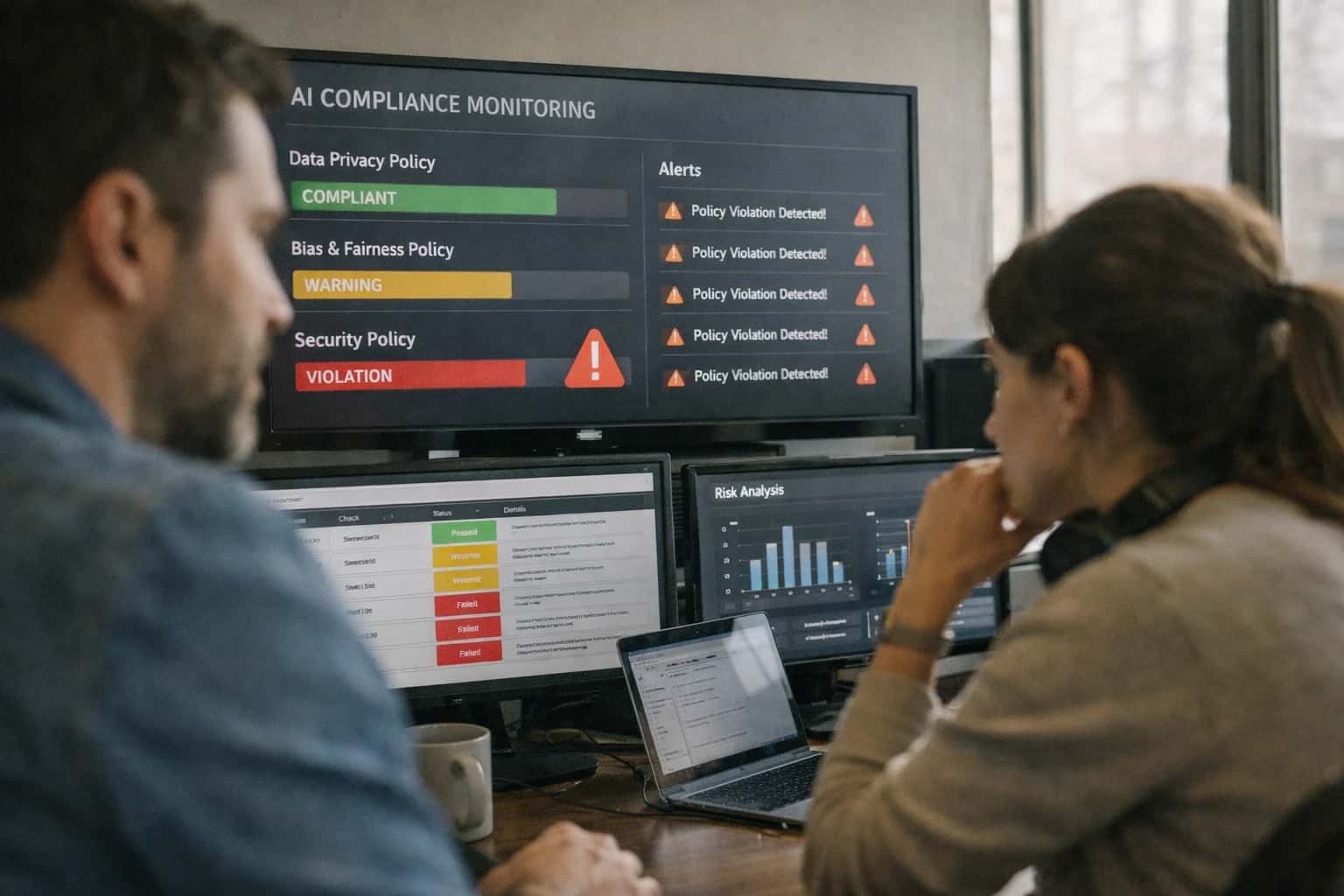
A practical prompt playbook for using Output Format Drift Detection Prompt Template in production AI workflows to monitor schema compliance degradation, track field-level violations, and generate format regression alerts.
PROMPT PLAYBOOK
When to Use This Prompt
Understand the job-to-be-done, the ideal user, and the boundaries for the Output Format Drift Detection prompt.
The ideal user is an engineer responsible for production AI quality who already has access to a sample of recent model responses and a formal schema definition (JSON Schema, Pydantic model, or a strict type specification). The prompt requires two concrete inputs: a reference [EXPECTED_SCHEMA] that defines the correct output contract, and a [PRODUCTION_OUTPUT_SAMPLE] containing the actual model responses to audit. Without both, the prompt cannot produce a meaningful drift report. The prompt is most effective when run as a scheduled batch job—daily or per-deployment—comparing outputs against a known-good schema version. It is not a substitute for real-time validation in your application layer; rather, it is a monitoring tool that catches degradation your inline validators might miss due to lenient parsing or partial schema enforcement.
Do not use this prompt when you need to repair malformed outputs, design a new schema, or debug a single bad response. For output repair, use a dedicated repair prompt that takes the malformed output and the expected schema as inputs. For schema design, use a structured output design prompt that iterates on field definitions and constraints. For single-response debugging, a trace review prompt that inspects the full request context—system prompt, tools, retrieval results—will be more diagnostic than a batch drift report. This prompt is also not suitable for evaluating semantic quality, factual accuracy, or tone; it only checks structural compliance. Pair it with an LLM Judge or eval rubric prompt when you need to assess both format and content quality in the same monitoring pipeline.
PRACTICAL GUARDRAILS
Use Case Fit
Where this prompt works and where it does not.
01
Good Fit: Structured Production Monitoring
Use when: You have a known output schema and a stream of production responses to validate against it. Guardrail: Feed the prompt a reference schema and versioned output samples to produce field-level drift scores.
02
Bad Fit: Unstructured Free-Text Evaluation
Avoid when: Outputs have no defined schema or the expected format is purely conversational. Guardrail: Use an LLM judge with a rubric for unstructured quality; reserve this prompt for strict schema contracts.
03
Required Input: Versioned Reference Schema
Risk: Without a precise expected schema, the prompt cannot distinguish intentional evolution from drift. Guardrail: Always provide the exact JSON Schema, Pydantic model, or type definition that outputs must conform to.
04
Required Input: Production Trace Samples
Risk: Evaluating a single response produces noisy drift signals. Guardrail: Supply a batch of recent production outputs with trace IDs and timestamps for statistically meaningful drift detection.
05
Operational Risk: False Positives from Valid Schema Changes
Risk: Intentional schema additions can be flagged as drift, causing unnecessary alerts. Guardrail: Include a schema changelog or version compatibility rules so the prompt distinguishes breaking changes from additive ones.
06
Operational Risk: Silent Drift in Nested Fields
Risk: Top-level schema compliance can mask drift in deeply nested optional fields. Guardrail: Configure the prompt to recurse into nested objects and arrays, reporting violations at every depth level.
PROMPT PLAYBOOK
Copy-Ready Prompt Template
Paste this prompt into your monitoring pipeline to detect schema violations and format regressions in production LLM outputs.
This prompt template is designed to be integrated into your continuous monitoring pipeline. It compares a production LLM output against a reference schema and a previous stable version to detect format drift. The prompt produces a structured drift report that includes a drift score, field-level violation details, and a regression alert flag. Use this when you need automated, trace-level detection of schema compliance degradation before it impacts downstream consumers.
textYou are an output format drift detector for a production AI system. Your task is to compare the provided [CURRENT_OUTPUT] against the [EXPECTED_SCHEMA] and, if available, the [BASELINE_OUTPUT] from a previous stable version. You must produce a structured drift report. ## Inputs - Expected Schema: [EXPECTED_SCHEMA] - Current Output: [CURRENT_OUTPUT] - Baseline Output (optional): [BASELINE_OUTPUT] - Drift Sensitivity: [DRIFT_SENSITIVITY] (e.g., 'strict', 'moderate', 'lenient') ## Instructions 1. Parse the [CURRENT_OUTPUT] and validate its structure against the [EXPECTED_SCHEMA]. 2. Identify any missing required fields, extra fields, type mismatches, or enum violations. 3. If [BASELINE_OUTPUT] is provided, compare the structure of [CURRENT_OUTPUT] to [BASELINE_OUTPUT] and flag any structural regressions (e.g., a field that was present in the baseline is now missing or has changed type). 4. Calculate a drift score from 0.0 (no drift) to 1.0 (complete structural failure) based on the number and severity of violations. 5. Set a boolean regression alert to true if any structural regression is detected against the baseline. ## Output Format Return a single valid JSON object with the following schema: { "drift_score": <float 0.0-1.0>, "regression_alert": <boolean>, "schema_violations": [ { "field_path": "<string>", "violation_type": "<missing_required | extra_field | type_mismatch | enum_violation>", "expected": "<string>", "actual": "<string>", "severity": "<critical | warning>" } ], "baseline_regressions": [ { "field_path": "<string>", "baseline_type": "<string>", "current_type": "<string>" } ], "summary": "<A concise, human-readable summary of the drift analysis.>" } ## Constraints - Do not modify or repair the [CURRENT_OUTPUT]; only analyze it. - If [BASELINE_OUTPUT] is not provided, omit the 'baseline_regressions' array and set 'regression_alert' to false. - Treat any deviation from the [EXPECTED_SCHEMA] as a violation, with severity based on [DRIFT_SENSITIVITY].
To adapt this template for your environment, replace the square-bracket placeholders with data from your monitoring pipeline. The [EXPECTED_SCHEMA] should be a JSON Schema or a detailed natural language description of the required output format. The [CURRENT_OUTPUT] is the raw string from your LLM's latest response. The optional [BASELINE_OUTPUT] should be a previously validated, correct output from an earlier prompt version or model. Wire this prompt into a post-processing step that runs after every production response, and log the resulting drift report as a structured trace span. For high-stakes applications, pair this automated check with a human review step when the drift score exceeds a threshold like 0.3 or when a regression alert is triggered.
IMPLEMENTATION TABLE
Prompt Variables
Every placeholder this prompt requires, why it matters, and how to validate it before execution.
| Placeholder | Purpose | Example | Validation Notes |
|---|---|---|---|
[EXPECTED_OUTPUT_SCHEMA] | Defines the canonical JSON Schema, XML Schema, or type definition that production outputs must conform to. This is the reference standard for drift comparison. | {"type": "object", "properties": {"summary": {"type": "string"}, "score": {"type": "number"}}, "required": ["summary", "score"]} | Must parse as valid JSON Schema or equivalent type definition. Reject if empty or malformed. Schema version should be pinned to a release tag. |
[PRODUCTION_OUTPUT_SAMPLE] | A representative batch of recent production outputs to evaluate for format compliance. This is the data under test. | [{"summary": "Q3 results show growth", "score": 0.92}, {"summary": "Revenue declined", "score": -0.15}] | Must be a valid JSON array of objects. Each object should be a complete model response payload. Reject if empty or contains only error responses. |
[PREVIOUS_VERSION_OUTPUT_SAMPLE] | A baseline batch of outputs from a prior prompt or model version for comparative drift analysis. Used to distinguish new regressions from pre-existing issues. | [{"summary": "Q2 results stable", "score": 0.45}] | Must be a valid JSON array. Can be null if this is the first baseline measurement. If provided, schema should match [PRODUCTION_OUTPUT_SAMPLE] structure. |
[DRIFT_SENSITIVITY_THRESHOLD] | A numeric threshold between 0.0 and 1.0 that defines the minimum field-level violation rate required to trigger a drift alert. Controls alert noise versus sensitivity. | 0.05 | Must be a float between 0.0 and 1.0. Values below 0.01 may generate excessive noise. Values above 0.2 may miss meaningful regressions. Validate against historical false-positive rates. |
[ALERT_SEVERITY_MAPPING] | A mapping of drift score ranges to alert severity levels for routing to incident response. Defines what constitutes critical, warning, or informational drift. | {"critical": 0.2, "warning": 0.1, "info": 0.05} | Must be a valid JSON object with numeric thresholds. Thresholds must be monotonically increasing. Reject if critical threshold is lower than warning threshold. |
[EVALUATION_WINDOW_HOURS] | The time window in hours over which production outputs are sampled for drift evaluation. Controls recency and sample size. | 24 | Must be a positive integer. Values under 1 may produce insufficient sample sizes. Values over 168 may mask recent regressions. Validate against production throughput to ensure statistical significance. |
[FIELD_OVERRIDE_RULES] | Optional per-field rules that adjust sensitivity or ignore known acceptable deviations. Prevents alert fatigue from intentional format changes. | {"optional_fields": ["metadata.trace_id"], "type_coercion_allowed": ["score"]} | Must be a valid JSON object. Can be null. If provided, field paths must match actual schema paths. Reject if override targets a required field in [EXPECTED_OUTPUT_SCHEMA]. |
PROMPT PLAYBOOK
Implementation Harness Notes
How to wire the output format drift detection prompt into a production monitoring pipeline with validation, retries, and alerting.
The Output Format Drift Detection prompt is designed to run as a scheduled evaluation job, not as a synchronous part of the user-facing request path. It compares a sample of recent production outputs against a reference schema and a baseline of previously accepted outputs. The harness must pull these inputs from your observability store, invoke the prompt, validate the structured drift report it returns, and route any detected regressions to the appropriate alerting channel. Because this prompt performs a statistical comparison, you should run it on a rolling window (e.g., the last 1,000 responses) rather than on individual outputs, and you should configure the window size and sampling strategy based on your traffic volume and SLO sensitivity.
The implementation loop follows a strict sequence: fetch a batch of recent outputs and the reference schema from your trace store or logging backend, assemble the prompt with the [EXPECTED_SCHEMA], [BASELINE_OUTPUTS], and [CURRENT_OUTPUTS] placeholders populated, invoke the model with a low temperature (0.0–0.1) to maximize deterministic scoring, validate the returned JSON against a drift report schema that includes drift_score, field_level_violations, and regression_alert fields, retry once if validation fails with a more explicit schema reminder, and route the validated report to your alerting system if regression_alert.triggered is true. Each step must be logged with the prompt version, model version, window parameters, and the raw drift report for auditability. If the prompt fails validation twice, escalate to a human reviewer with the raw outputs attached rather than silently dropping the evaluation.
The most common production failure mode is schema validation of the prompt's own output. The model may return a drift report with extra commentary, missing fields, or malformed JSON when the input batch is large or contains unusual edge cases. Mitigate this by using a strict JSON mode or structured output API if your model provider supports it, and by implementing a post-processing validator that checks for required keys (drift_score, field_level_violations, regression_alert, comparison_window, evaluation_timestamp) before the report enters your alerting pipeline. A second failure mode is false-positive drift alerts caused by intentional schema evolution—if your product team deliberately added a new optional field, the prompt will flag it as a format addition. Wire the harness to accept a [SCHEMA_CHANGE_WINDOW] parameter that suppresses alerts for known, approved schema changes during a migration period. Finally, never use this prompt's output to automatically block or reject user-facing responses; its role is observability and alerting, not enforcement.
IMPLEMENTATION TABLE
Expected Output Contract
Validate the drift report structure before acting on the alert. Each field must conform to the type, requirement, and validation rule specified. Reject or flag any output that does not satisfy this contract.
| Field or Element | Type or Format | Required | Validation Rule |
|---|---|---|---|
drift_score | number (0.0-1.0) | Parse check: must be a float between 0.0 and 1.0 inclusive. Reject if missing or out of range. | |
drift_detected | boolean | Schema check: must be true or false. Must be consistent with drift_score > [DRIFT_THRESHOLD]. | |
comparison_baseline | string | Format check: must match pattern 'v[MAJOR].[MINOR]' (e.g., 'v1.3'). Reject if malformed. | |
comparison_target | string | Format check: must match pattern 'v[MAJOR].[MINOR]'. Must differ from comparison_baseline. | |
violations | array of objects | Schema check: must be an array. If empty, drift_detected must be false. Each object must contain field_name, expected_type, observed_type, and severity. | |
violations[].field_name | string | Non-empty string. Must correspond to a field defined in [EXPECTED_SCHEMA]. | |
violations[].expected_type | string | Must be one of the types defined in [EXPECTED_SCHEMA] for the corresponding field_name. | |
violations[].observed_type | string | Must differ from expected_type. Reject if identical to expected_type for the same field_name. | |
violations[].severity | enum: 'critical', 'warning', 'info' | Enum check: must be one of the three allowed values. 'critical' reserved for required-field type mismatches. | |
affected_sample_count | integer | Parse check: must be a non-negative integer. Must be >= 1 if drift_detected is true. | |
total_sample_count | integer | Parse check: must be a positive integer. Must be >= affected_sample_count. | |
evaluation_window_start | ISO 8601 datetime | Parse check: must be valid ISO 8601. Must be earlier than evaluation_window_end. | |
evaluation_window_end | ISO 8601 datetime | Parse check: must be valid ISO 8601. Must be later than evaluation_window_start. | |
recommended_action | enum: 'alert', 'review', 'none' | Enum check: must be one of the three allowed values. Must be 'alert' if drift_score >= [ALERT_THRESHOLD]. |
PRACTICAL GUARDRAILS
Common Failure Modes
Output format drift detection fails silently when schemas evolve, models change, or edge cases accumulate. These are the most common production failure patterns and how to catch them before they corrupt downstream systems.
01
Silent Schema Relaxation
What to watch: The model gradually drops optional fields, widens enum values, or changes field types without triggering hard parse errors. Downstream consumers break on missing keys or unexpected types. Guardrail: Compare output against a strict JSON Schema with additionalProperties: false and required field enforcement. Log every schema violation as a structured drift event with field-level attribution.
02
Version-Comparison Blindness
What to watch: Drift detection that only checks the current output against the schema misses regressions introduced by model upgrades or prompt changes. A new model version may produce valid-but-different outputs that break downstream assumptions. Guardrail: Always compare outputs from the current and previous prompt/model version against the same reference schema. Track field-level change frequency as a drift score, not just binary pass/fail.
03
Nested Structure Collapse
What to watch: The model flattens nested objects into strings, converts arrays to single values, or merges sibling fields when context windows are tight or instructions are ambiguous. These structural regressions pass basic type checks but destroy downstream parsing. Guardrail: Validate depth, nesting paths, and array cardinality explicitly. Add structural assertions that check typeof at each nesting level, not just top-level field presence.
04
Enum and Controlled Vocabulary Drift
What to watch: The model invents new enum values, capitalizes inconsistently, or substitutes synonyms for controlled terms. Routing logic, database inserts, and analytics dashboards break on unrecognized values. Guardrail: Maintain an allowlist of permitted enum values per field. Flag any output value not in the allowlist as a drift event. Track new-value frequency to detect vocabulary expansion before it causes failures.
05
Truncation-Induced Format Corruption
What to watch: When outputs approach token limits, the model truncates mid-JSON, drops closing brackets, or omits required fields. Partial outputs may pass lenient parsers and enter pipelines as corrupted records. Guardrail: Always validate JSON parseability and structural completeness before accepting any output. Implement a truncation_detected flag when output ends without proper closing delimiters. Retry with reduced input size or increased max_tokens.
06
Field Semantics Shift Without Schema Change
What to watch: The model changes what a field means—confidence switches from 0-1 to 0-100, status values flip polarity, or summary changes from extractive to generative—while the schema type remains valid. Downstream logic silently produces wrong results. Guardrail: Add semantic assertions that check value distributions, ranges, and content patterns against historical baselines. Alert when confidence values suddenly cluster outside expected ranges or summary length distributions shift significantly.
IMPLEMENTATION TABLE
Evaluation Rubric
Criteria for testing that the drift detection prompt produces correct, actionable reports before production deployment. Use these checks in a pre-release eval harness.
| Criterion | Pass Standard | Failure Signal | Test Method |
|---|---|---|---|
Drift score calculation | Score matches manual calculation within ±0.05 tolerance | Score deviates from expected value by more than 0.05 | Compare prompt output against pre-computed drift score from 10 known schema pairs |
Field-level violation tracking | Every field in [EXPECTED_SCHEMA] appears in violation report with correct status | Missing fields, extra fields, or incorrect violation flags in output | Assert output.violations keys exactly match [EXPECTED_SCHEMA] field list; validate each flag against ground truth |
Format regression alert generation | Alert triggered when drift score exceeds [DRIFT_THRESHOLD] and alert.severity matches defined mapping | No alert when drift exceeds threshold, or alert with wrong severity level | Test with 5 score values spanning threshold boundaries; verify alert presence and severity enum value |
Version-to-version comparison accuracy | Output correctly identifies which fields changed between [BASELINE_VERSION] and [CURRENT_VERSION] | Changed fields not flagged, or unchanged fields incorrectly marked as changed | Provide two schema versions with known diffs; assert changed_fields list matches expected set exactly |
Schema reference integrity | All field paths in output reference valid paths in [EXPECTED_SCHEMA] | Field path strings that do not resolve in the reference schema | Parse every field path string; validate traversal against [EXPECTED_SCHEMA] structure |
Output schema compliance | Output validates against [OUTPUT_SCHEMA] with zero errors | JSON parse failure, missing required fields, or type mismatches | Run output through schema validator; fail on any validation error |
Edge case: empty output sample | Report returns drift_score of 1.0 and all fields flagged as missing when [CURRENT_OUTPUT_SAMPLE] is empty string | Null pointer, crash, or drift_score of 0.0 for empty input | Submit empty string as [CURRENT_OUTPUT_SAMPLE]; assert drift_score equals 1.0 and all fields show violation |
Edge case: identical schemas | Report returns drift_score of 0.0 and zero violations when [BASELINE_VERSION] and [CURRENT_VERSION] are identical | Non-zero drift score or false violation flags for identical schemas | Submit two identical schema versions; assert drift_score equals 0.0 and violations array is empty |
Enabling Efficiency, Speed & Accuracy
Intelligent Analysis, Decision & Execution
We build AI systems for teams that need search across company data, workflow automation across tools, or AI features inside products and internal software.
Talk to Us
Search across company data
Give teams answers from docs, tickets, runbooks, and product data with sources and permissions.
Useful when people spend too long searching or get different answers from different systems.
Enterprise searchRAGPermissions
Read more
Automate internal workflows
Use AI to route work, draft outputs, trigger actions, and keep approvals and logs in place.
Useful when repetitive work moves across multiple tools and teams.
AI agentsWorkflow automationGovernance
Read more
Add AI to products and internal tools
Build assistants, guided actions, or decision support into the software your team or customers already use.
Useful when AI needs to be part of the product, not a separate tool.
AI integrationDecision supportModel routing
Read moreADAPTATION OPTIONS
Adapt This Prompt
How to adapt
Start with the base prompt and a simplified expected schema. Use a single model call to compare [CURRENT_OUTPUT] against [EXPECTED_SCHEMA] without version history. Focus on field presence and type mismatches rather than statistical drift.
codeCompare this output to the expected schema. Output: [CURRENT_OUTPUT] Expected Schema: [EXPECTED_SCHEMA] Return JSON with fields: compliant (bool), violations (list of field paths), severity (low/medium/high)
Watch for
- Missing version-to-version comparison logic
- No historical baseline for drift scoring
- Overly strict type checking that flags intentional schema evolution
- Single-sample analysis without trend detection

About the author
Prasad Kumkar
CEO & MD, Inference Systems
Prasad Kumkar is the CEO & MD of Inference Systems and writes about AI systems architecture, LLM infrastructure, model serving, evaluation, and production deployment. Over 5+ years, he has worked across computer vision models, L5 autonomous vehicle systems, and LLM research, with a focus on taking complex AI ideas into real-world engineering systems.
His work and writing cover AI systems, large language models, AI agents, multimodal systems, autonomous systems, inference optimization, RAG, evaluation, and production AI engineering.
LinkedIn
Limited slotsGet a Free AI Consultation
Partnered with leading AI, data, and software stack.





How We Work
Custom AI workflows for your Business
One-fit-all AI don't work for modern businesses. At Inferensys, we aim to understand your business & custom requirements; which we use to define most efficient agentic workflows, the data, and the tools for your business.
01
Review the use case
We understand the task, the users, and where AI can actually help.
Read more02
Pick the right approach
We define what needs search, automation, or product integration.
Read more03
Build the first useful version
We implement the part that proves the value first.
Read more04
Improve from there
We add the checks and visibility needed to keep it useful.
Read moreThe first call is a practical review of your use case and the right next step.
Talk to Us