Governance engineers and platform teams use this prompt to generate a structured, timestamped log entry every time an agent makes a decision. The log captures the agent's task, reasoning chain, evidence sources, the decision itself, and a confidence score. This prompt is designed for multi-agent systems where every action must be explainable to auditors, compliance reviewers, and incident responders. Use it when you need a verifiable decision trail that can be stored in append-only logs, fed into monitoring dashboards, or assembled into audit evidence packages.

Prompt
Agent Decision Log Entry Prompt Template
A practical prompt playbook for generating structured, auditable decision logs from autonomous agent actions in production AI workflows.
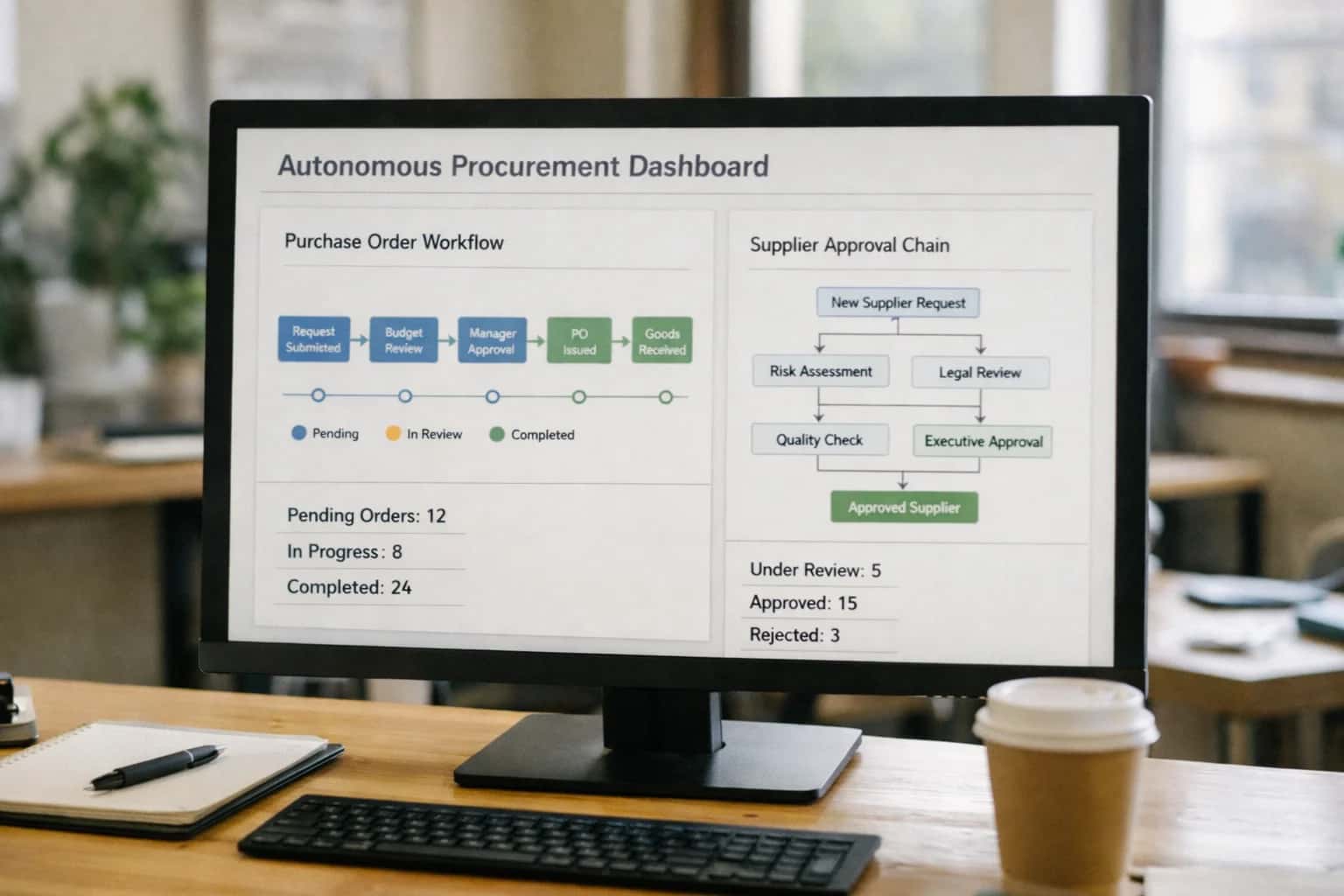
PROMPT PLAYBOOK
When to Use This Prompt
Defines the job-to-be-done, ideal user, and boundaries for the Agent Decision Log Entry Prompt Template.
The ideal user is an AI platform engineer or governance lead who owns the auditability contract for an agent system. You should have a defined schema for log entries, a storage target (such as a database with append-only semantics or a log stream), and a clear policy for which agent actions require a decision log. Before using this prompt, ensure you have the agent's full context available: the task description, the reasoning or chain-of-thought output, the evidence or tool outputs the agent consulted, and the final decision payload. The prompt works best when invoked as a post-action step in an agent execution loop, not as a real-time user-facing explanation.
Do not use this prompt for real-time user-facing explanations or for summarizing entire agent sessions; those require separate playbooks for explainability and session reconstruction. This prompt is also not a replacement for structured logging at the application layer—it complements application logs by producing a human-auditable narrative record. Avoid using it for low-risk, read-only agent actions where the cost of logging exceeds the compliance value. If your agent operates in a regulated domain, pair this prompt with the Agent Compliance Evidence Package Prompt and require human review for any log entry with a confidence score below your defined threshold.
PRACTICAL GUARDRAILS
Use Case Fit
Where this prompt works, where it fails, and what you must provide before deploying it in a production agent audit pipeline.
01
Good Fit: Structured Agent Workflows
Use when: you have agents that follow a defined task loop (plan, reason, act, observe) and produce verbose output. Why: the prompt excels at extracting reasoning steps, evidence, and decisions from structured agent traces. Guardrail: ensure the agent's raw output includes explicit reasoning markers before applying this template.
02
Bad Fit: Black-Box Model Responses
Avoid when: the model response contains only a final answer with no intermediate reasoning or tool call context. Why: the prompt cannot fabricate a decision trail from thin air; it requires source material to extract. Guardrail: pair this with an agent architecture that logs reasoning traces, not just final outputs.
03
Required Inputs
Must provide: raw agent output (reasoning trace), task description, agent role identifier, and a timestamp. Optional but recommended: tool call logs, evidence snippets, and confidence scores. Guardrail: validate that all required fields are present before calling the prompt; missing context produces incomplete log entries.
04
Operational Risk: Silent Data Loss
What to watch: the prompt may omit critical decision context if the agent's raw output is truncated or poorly structured. Guardrail: implement a post-generation completeness check that verifies all required log fields (task, reasoning, evidence, decision, confidence) are non-empty.
05
Operational Risk: Hallucinated Decisions
What to watch: the model may invent a plausible-sounding decision or evidence reference that does not exist in the source trace. Guardrail: run a grounding check that verifies each claim in the log entry against the raw agent output before the log is committed to an append-only store.
06
Scale Consideration: High-Volume Pipelines
Use when: you need structured logs for every agent action in a production system. Avoid when: you only need occasional manual debugging. Guardrail: batch log generation and use prompt caching for the system instruction to control costs; sample rather than log every trivial agent step.
PROMPT PLAYBOOK
Copy-Ready Prompt Template
A copy-ready template for generating a structured, auditable agent decision log entry from raw execution context.
This template is designed to be the single source of truth for recording an agent's action in a multi-agent system. It forces the model to capture not just the final decision, but the task context, the evidence considered, the reasoning path, and a calibrated confidence score. The output is a structured JSON object that can be directly ingested into an append-only audit log, making it a foundational component for governance, debugging, and compliance workflows. Before using this prompt, ensure you have a clear definition of the agent's role and the specific task it was assigned, as these are critical inputs.
textYou are an audit logging agent. Your sole function is to produce a structured, timestamped decision log entry in strict JSON format. Do not perform the task described in the [TASK_DESCRIPTION]; only log the decision-making process that occurred. Generate a JSON object using the following schema: { "log_entry": { "agent_id": "[AGENT_ID]", "agent_role": "[AGENT_ROLE]", "task_id": "[TASK_ID]", "timestamp": "[TIMESTAMP]", "task_summary": "A one-sentence summary of the assigned task.", "input_context": { "user_request": "[USER_REQUEST]", "relevant_documents": ["[DOCUMENT_1_ID]", "[DOCUMENT_2_ID]"], "previous_agent_outputs": "[PREVIOUS_AGENT_OUTPUTS]" }, "reasoning_trace": [ "Step 1: Initial assessment of the task and available context.", "Step 2: Evaluation of key evidence or constraints.", "Step 3: Formation of a conclusion or decision." ], "decision": { "action_taken": "[ACTION_TAKEN]", "action_parameters": {}, "justification": "A concise justification linking the decision to the evidence and reasoning." }, "confidence": { "score": 0.0, "rationale": "Explanation for the confidence score, noting any key uncertainties or missing information." }, "escalation_flag": false, "escalation_reason": null } } Populate the template using the following inputs: - Agent ID: [AGENT_ID] - Agent Role: [AGENT_ROLE] - Task ID: [TASK_ID] - Timestamp: [TIMESTAMP] - Task Description: [TASK_DESCRIPTION] - User Request: [USER_REQUEST] - Relevant Document IDs: [DOCUMENT_IDS] - Previous Agent Outputs: [PREVIOUS_AGENT_OUTPUTS] - Action Taken: [ACTION_TAKEN] - Action Parameters: [ACTION_PARAMETERS] Constraints: - The `reasoning_trace` must contain at least three distinct, logical steps. - The `confidence.score` must be a float between 0.0 and 1.0. - If the `confidence.score` is below [CONFIDENCE_THRESHOLD], set `escalation_flag` to true and provide a clear `escalation_reason`. - The `decision.justification` must explicitly reference at least one piece of evidence from `input_context`. - Output ONLY the valid JSON object. No other text.
To adapt this template, start by replacing the square-bracket placeholders with your application's runtime variables. The most critical adaptation is the CONFIDENCE_THRESHOLD, which should be tuned based on the risk tolerance of the specific agent's domain. For high-stakes actions like financial transactions or clinical decisions, set this threshold high (e.g., 0.9) and ensure the escalation_flag triggers a human-in-the-loop review. For lower-stakes informational tasks, a lower threshold may be acceptable. The reasoning_trace field is the most common point of failure; implement a post-generation validation check to ensure it contains distinct steps and not just a single paraphrased sentence.
After integrating this prompt, your next step is to build a validation harness. This harness should parse the JSON output and run a series of checks: schema compliance, presence of all required fields, a confidence score within the 0.0-1.0 range, and a logical consistency check between the confidence.score and the escalation_flag. For high-risk deployments, log a warning if the reasoning_trace is too short or if the decision.justification does not contain a reference to an item in the input_context. Avoid the temptation to use this log as a replacement for a human-readable summary; instead, pair it with a separate summarization prompt for audit or support workflows.
IMPLEMENTATION TABLE
Prompt Variables
Required inputs for the Agent Decision Log Entry Prompt Template. Each placeholder must be populated before the prompt is sent. Missing or malformed inputs are the most common cause of incomplete audit trails.
| Placeholder | Purpose | Example | Validation Notes |
|---|---|---|---|
[AGENT_ID] | Unique identifier for the agent making the decision | billing-dispute-agent-v2 | Must match a registered agent ID in the agent registry. Reject if null or empty. |
[TASK_ID] | Correlation ID linking this decision to a parent workflow or user request | wf-2025-04-10-003 | Must be a non-empty string. Validate against workflow execution store if available; log warning if not found. |
[TIMESTAMP] | ISO-8601 timestamp of when the decision was made | 2025-04-10T14:32:17Z | Must parse as valid ISO-8601. Reject future timestamps beyond clock skew tolerance of 5 minutes. |
[DECISION_TYPE] | Category of decision from a controlled vocabulary | escalation | tool_call | final_answer | clarification_request | Must match one of the allowed enum values. Reject unknown types to prevent log pollution. |
[USER_REQUEST_SUMMARY] | Condensed summary of the user request or triggering event that led to this decision | User disputed a $47.50 charge from March 28 and requested a refund. | Must be non-empty and under 500 characters. Longer summaries indicate missing upstream truncation. |
[EVIDENCE_USED] | Array of evidence objects with source, content excerpt, and retrieval timestamp | [{"source": "txn-db/order-8821", "excerpt": "Status: delivered 2025-03-29", "retrieved_at": "2025-04-10T14:32:15Z"}] | Must be a valid JSON array. Each element must have source, excerpt, and retrieved_at fields. Reject if evidence array is empty for non-trivial decisions. |
[REASONING_TRACE] | Step-by-step reasoning that led to the decision, extracted from the agent's chain-of-thought |
| Must be a non-empty string or ordered list. Validate that each step references evidence or policy. Flag if reasoning contains unsupported assertions. |
[CONFIDENCE_SCORE] | Agent's self-assessed confidence in the decision, on a 0.0 to 1.0 scale | 0.92 | Must be a float between 0.0 and 1.0 inclusive. Flag for human review if below the configured threshold, typically 0.70 for automated actions. |
PROMPT PLAYBOOK
Implementation Harness Notes
How to wire the Agent Decision Log Entry prompt into an auditable, production-grade agent workflow.
This prompt is not a standalone utility; it is a structured logging contract that must be called at every decision point in an agent's execution loop. The implementation harness should intercept the agent's reasoning state immediately before a tool call, action, or final response is committed. The prompt expects a snapshot of the agent's current task, the evidence it considered, the options it weighed, and the decision it intends to make. This snapshot is then formatted into a structured, timestamped log entry that can be appended to an append-only store, written to a database, or streamed to an observability platform. The harness must ensure that the log entry is generated before the action is executed, not after, to preserve an accurate record of the agent's intent.
To wire this into an application, wrap the agent's decision step in a function that assembles the required inputs—[AGENT_ID], [TASK_CONTEXT], [EVIDENCE_SOURCES], [DECISION_OPTIONS], [SELECTED_ACTION], and [CONFIDENCE_SCORE]—and passes them to the prompt template. The model's response should be validated against a strict JSON schema that includes required fields like log_id, timestamp, decision_rationale, and evidence_map. If validation fails, retry once with the validation error injected as a [CONSTRAINT] before escalating to a human reviewer. For high-risk domains, the harness should enforce a synchronous write to an immutable log store (e.g., a blockchain-anchored database or a write-once ledger) and return the log's cryptographic hash as part of the agent's execution context for downstream traceability.
Model choice matters here: use a model with strong instruction-following and JSON mode support, such as GPT-4o or Claude 3.5 Sonnet, to minimize format drift. Set temperature=0 to maximize determinism in the log structure. The harness should also log the raw prompt, the model's response, and the validation result to a separate debugging stream for prompt observability. Avoid the temptation to batch multiple decision logs into a single prompt call; each decision point should produce its own atomic log entry to prevent partial failures from corrupting a batch. Finally, implement a periodic audit job that samples log entries and runs the Agent Hallucination Detection Audit Prompt and Agent Factual Grounding Audit Prompt from the same pillar to verify that logged reasoning matches the evidence the agent actually had at the time of the decision.
IMPLEMENTATION TABLE
Expected Output Contract
Each field the prompt must produce, with its required type, whether it is mandatory, and the validation rule to apply before accepting the log entry into the audit trail.
| Field or Element | Type or Format | Required | Validation Rule |
|---|---|---|---|
log_id | UUID v4 string | Must parse as valid UUID v4. Reject if missing or malformed. | |
timestamp | ISO 8601 UTC string | Must parse as valid ISO 8601 datetime with UTC offset. Reject if in the future or unparseable. | |
agent_id | string matching [AGENT_IDENTIFIER] | Must be non-empty and match the agent identifier pattern defined in the system registry. Reject if unknown agent. | |
task_summary | string, max 500 chars | Must be non-empty and contain a verb phrase describing the assigned task. Flag for human review if under 20 characters. | |
reasoning_trace | array of objects with step, evidence, and inference fields | Array must contain at least one step. Each step must have non-empty step and inference fields. Reject if evidence is null and no explicit note of missing evidence is present. | |
decision_made | string or null | Must be non-null if the agent completed the task. Null allowed only when task_status is deferred or escalated. Reject if null and task_status is completed. | |
confidence_score | float between 0.0 and 1.0 | Must be a number between 0.0 and 1.0 inclusive. Flag for review if confidence is above 0.95 without explicit justification in reasoning_trace. | |
evidence_sources | array of objects with source_id, type, and excerpt fields | Array must contain at least one source if decision_made is not null. Each source_id must be non-empty. Reject if source_id references a source not present in the provided context. |
PRACTICAL GUARDRAILS
Common Failure Modes
What breaks first in agent decision log generation and how to guard against it before audit season.
01
Missing Context Fields
What to watch: The model omits required fields like evidence_sources, confidence_score, or timestamp when the agent's internal reasoning was implicit or tool output was empty. This creates incomplete audit trails that fail compliance checks. Guardrail: Use a strict JSON schema validator post-generation. If required fields are null or missing, reprompt with the specific missing fields listed in the error message and a hard constraint to provide a value or explicit NOT_AVAILABLE marker.
02
Hallucinated Evidence References
What to watch: The log entry cites tool outputs, document sections, or data sources that were never actually retrieved or invoked. The model fabricates plausible-sounding references to fill gaps in the decision trail. Guardrail: Cross-reference every cited evidence_source against the actual tool call history and retrieved context from the agent's execution trace. Flag any reference without a matching tool invocation or content hash for human review.
03
Confidence Score Inflation
What to watch: The model assigns high confidence (0.9+) to decisions based on weak, ambiguous, or conflicting evidence. This misleads downstream reviewers and suppresses warranted escalations. Guardrail: Require the model to enumerate specific supporting and contradicting evidence before assigning a confidence score. Implement a calibration check that flags scores above 0.8 when fewer than two independent evidence sources are cited.
04
Temporal Inconsistency
What to watch: The log entry's timestamp does not align with the actual execution order of tool calls and agent steps. Decisions appear to reference evidence that was retrieved after the decision was made. Guardrail: Extract timestamps from the execution trace rather than relying on the model to generate them. Use a monotonic clock or sequence number in the log schema and validate that decision_timestamp > last_evidence_retrieval_timestamp.
05
Reasoning-Action Mismatch
What to watch: The stated reasoning in the log entry describes a different decision process than what the agent's tool calls and intermediate steps actually show. The log rationalizes rather than records. Guardrail: Run a separate evaluation prompt that compares the log's reasoning field against the raw agent trace and flags contradictions. Require the log to quote or reference specific intermediate outputs rather than summarizing from memory.
06
Sensitive Data Leakage in Logs
What to watch: The decision log inadvertently includes PII, API keys, or confidential business data from tool arguments, user input, or retrieved documents. This creates a compliance liability in the audit trail itself. Guardrail: Apply a PII redaction scanner to the generated log entry before persistence. For tool call arguments, log only parameter names and types, not values, unless the parameter is explicitly marked as safe for audit retention.
IMPLEMENTATION TABLE
Evaluation Rubric
Use this rubric to evaluate the quality of an Agent Decision Log Entry before shipping it to production. Each criterion targets a specific failure mode common in auditable agent systems. Run these checks programmatically or via LLM-as-judge before the log is committed to an append-only store.
| Criterion | Pass Standard | Failure Signal | Test Method |
|---|---|---|---|
Completeness of Required Fields | All mandatory fields (timestamp, agent_id, task, decision, confidence) are present and non-null | Missing or null value in any required field; log entry is structurally incomplete | Schema validation against a JSON Schema definition; reject on missing required fields |
Evidence Grounding | Every factual claim in the reasoning section is backed by a reference to a source in the evidence_used array | A claim in the reasoning field has no corresponding entry in evidence_used; hallucinated or unsupported justification | LLM-as-judge check: extract all factual assertions from reasoning, verify each has a matching source_id in evidence_used |
Confidence Score Calibration | Confidence score is an integer between 0 and 100 and aligns with the presence of ambiguity markers in reasoning | Confidence is 100 but reasoning contains phrases like 'possibly', 'unclear', or 'assuming'; or score is outside 0-100 range | Parse check for integer range; semantic check for alignment between score and uncertainty language in reasoning |
Timestamp Validity | Timestamp is in ISO 8601 format and is not in the future relative to system time at log creation | Timestamp is malformed, missing timezone, or set to a future date beyond a 60-second clock skew tolerance | Parse check with strict ISO 8601 regex; compare parsed time against current system clock |
Decision-Action Consistency | The decision field describes an action that is consistent with the agent's authorized capabilities in [AGENT_ROLE_DEFINITION] | Decision proposes an action outside the agent's role boundary; unauthorized tool call or capability overreach | Cross-reference decision action against a predefined allowlist of permitted actions for the agent role |
Handoff Context Completeness | If the decision involves escalation or handoff, the handoff_context field contains task_state, pending_actions, and unresolved_ambiguities | Handoff is indicated but handoff_context is empty, missing sub-fields, or contains only a vague summary | Conditional schema check: if decision_type is 'handoff' or 'escalation', validate presence and non-emptiness of all three sub-fields |
Immutability Chain Integrity | The log entry includes a previous_hash field that matches the hash of the most recent prior entry in the agent's log sequence | previous_hash is null for a non-initial entry, or does not match the computed hash of the prior log entry | Cryptographic hash verification: compute SHA-256 of the prior log entry JSON and compare to previous_hash |
Personally Identifiable Information Redaction | No PII patterns (emails, phone numbers, SSNs, credit card numbers) appear in the log entry unless explicitly whitelisted for audit purposes | Regex match for common PII patterns found in any string field of the log entry | Automated regex scan across all string fields; flag and reject if any PII pattern is detected outside an approved allowlist |
Enabling Efficiency, Speed & Accuracy
Intelligent Analysis, Decision & Execution
We build AI systems for teams that need search across company data, workflow automation across tools, or AI features inside products and internal software.
Talk to Us
Search across company data
Give teams answers from docs, tickets, runbooks, and product data with sources and permissions.
Useful when people spend too long searching or get different answers from different systems.
Enterprise searchRAGPermissions
Read more
Automate internal workflows
Use AI to route work, draft outputs, trigger actions, and keep approvals and logs in place.
Useful when repetitive work moves across multiple tools and teams.
AI agentsWorkflow automationGovernance
Read more
Add AI to products and internal tools
Build assistants, guided actions, or decision support into the software your team or customers already use.
Useful when AI needs to be part of the product, not a separate tool.
AI integrationDecision supportModel routing
Read moreADAPTATION OPTIONS
Adapt This Prompt
How to adapt
Start with the base template and a simple JSON schema. Use a single model call without retries. Focus on getting the reasoning and decision fields populated correctly. Skip cryptographic hashing and append-only storage. Use a lightweight validator that checks for required fields only.
code[SYSTEM] You are an agent decision logger. Record what the agent decided and why. [TASK] Log the following agent action as structured JSON. Agent: [AGENT_ID] Task: [TASK_DESCRIPTION] Reasoning: [AGENT_REASONING] Evidence: [EVIDENCE_USED] Decision: [DECISION] Confidence: [CONFIDENCE_SCORE] [OUTPUT_SCHEMA] { "agent_id": "string", "timestamp": "ISO 8601", "task": "string", "reasoning": "string", "evidence": ["string"], "decision": "string", "confidence": "number 0-1" }
Watch for
- Missing timestamp generation logic
- Confidence scores without justification
- Evidence array left empty when sources exist
- No distinction between agent reasoning and post-hoc explanation

About the author
Prasad Kumkar
CEO & MD, Inference Systems
Prasad Kumkar is the CEO & MD of Inference Systems and writes about AI systems architecture, LLM infrastructure, model serving, evaluation, and production deployment. Over 5+ years, he has worked across computer vision models, L5 autonomous vehicle systems, and LLM research, with a focus on taking complex AI ideas into real-world engineering systems.
His work and writing cover AI systems, large language models, AI agents, multimodal systems, autonomous systems, inference optimization, RAG, evaluation, and production AI engineering.
LinkedIn
Limited slotsGet a Free AI Consultation
Partnered with leading AI, data, and software stack.





How We Work
Custom AI workflows for your Business
One-fit-all AI don't work for modern businesses. At Inferensys, we aim to understand your business & custom requirements; which we use to define most efficient agentic workflows, the data, and the tools for your business.
01
Review the use case
We understand the task, the users, and where AI can actually help.
Read more02
Pick the right approach
We define what needs search, automation, or product integration.
Read more03
Build the first useful version
We implement the part that proves the value first.
Read more04
Improve from there
We add the checks and visibility needed to keep it useful.
Read moreThe first call is a practical review of your use case and the right next step.
Talk to Us