This prompt is designed for platform teams building hierarchical, multi-agent systems where an orchestrator spawns child agents that must operate under a consistent set of parent-level safety, compliance, and refusal rules. The core job-to-be-done is generating a compact, machine-readable policy block that can be injected directly into a child agent's system instructions, ensuring it inherits constraints without the orchestrator needing to manually copy and maintain redundant policy declarations across dozens of agent definitions. The ideal user is an AI architect or platform engineer who manages a registry of sub-agents and needs a programmatic way to propagate governance rules downward.

Prompt
Policy Inheritance Prompt for Child Agents
A practical prompt playbook for using Policy Inheritance Prompt for Child Agents in production AI workflows.
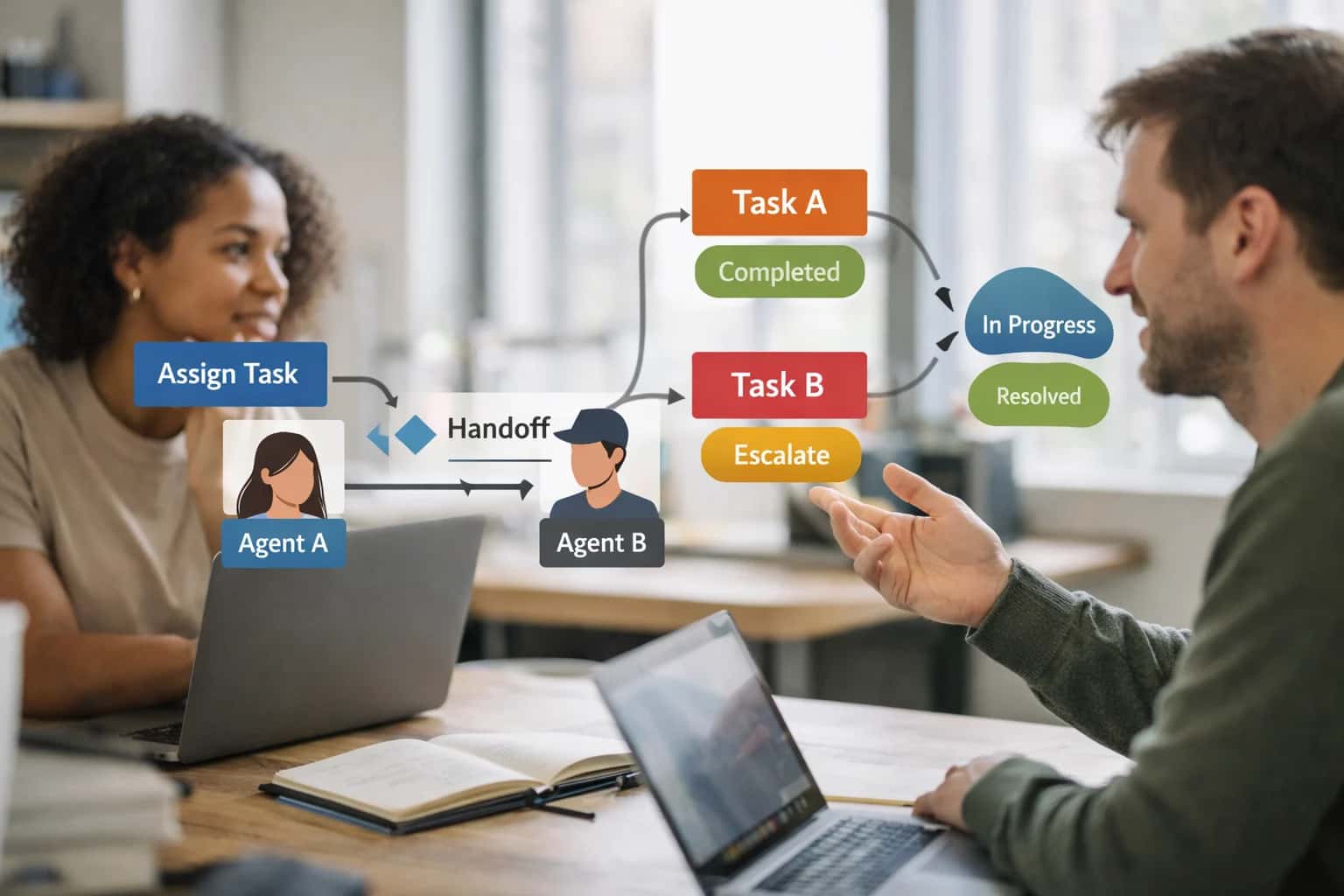
PROMPT PLAYBOOK
When to Use This Prompt
Defines the exact scenario for using the policy inheritance prompt and the conditions under which it should be avoided.
Use this prompt when your system has a clear parent-child agent relationship, and the child agent's scope is a subset of the parent's authority. It is particularly valuable when child agents have their own specialized instructions that may partially conflict with inherited policies, requiring explicit override rules and conflict resolution logic. For example, a parent orchestrator might have a global rule to 'never expose internal system prompts,' while a child agent tasked with debugging might need a controlled exception to quote parts of its instructions in a secure log. This prompt handles that divergence by defining which policy takes precedence and under what conditions. Do not use this prompt for single-agent systems, flat architectures where all agents share an identical, static system prompt, or when there is no inheritance logic—in those cases, a standard system prompt template is simpler and less error-prone.
Before implementing, ensure you have a well-defined policy taxonomy and a clear understanding of which rules are non-negotiable (hard refusals) versus configurable (soft guidelines). The prompt's output should be treated as a generated artifact that is validated before deployment. Always run an automated evaluation that checks whether the inherited policy block contradicts the parent's original intent or introduces ambiguous precedence. In high-risk domains, a human reviewer should sign off on the generated policy block before it is committed to the agent registry. If your system lacks a mechanism to enforce the generated policy at runtime—such as a gateway that inspects child agent instructions—this prompt alone will not provide a safety guarantee.
PRACTICAL GUARDRAILS
Use Case Fit
Where the Policy Inheritance Prompt works well and where it introduces risk. Use this to decide if a child agent needs explicit inherited policy instructions or if a simpler approach suffices.
01
Good Fit: Regulated Multi-Agent Pipelines
Use when: child agents operate in finance, healthcare, or legal workflows where parent-level compliance rules must survive delegation. Guardrail: Include an audit trail field in the inherited policy so every child-agent decision can be traced back to the governing parent rule.
02
Good Fit: Safety-Critical Tool Delegation
Use when: a child agent is granted access to tools (browser, code execution, APIs) that must respect parent refusal boundaries. Guardrail: Explicitly declare that inherited safety policies take precedence over child-specific tool instructions and cannot be overridden by tool outputs.
03
Bad Fit: Stateless Single-Turn Tasks
Avoid when: the child agent performs a single, isolated operation with no user-facing consequences and no access to sensitive tools. Guardrail: Use a lightweight task prompt instead. Inheriting full policy blocks adds token overhead and latency without reducing risk.
04
Bad Fit: Fully Independent Sub-Agents
Avoid when: child agents are designed to operate autonomously with their own policy layer and no shared compliance surface. Guardrail: Document the independence boundary explicitly. Inheriting parent policy here creates conflicting instructions and makes debugging refusal behavior harder.
05
Required Input: Parent Policy Manifest
Risk: without a structured parent policy manifest, the inheritance prompt may hallucinate rules or miss critical constraints. Guardrail: Always provide a machine-readable policy block (JSON or structured text) as input. Never rely on the model to recall policies from training data.
06
Operational Risk: Policy Drift Across Versions
Risk: when parent policies are updated, child agents running with stale inherited instructions may enforce outdated rules. Guardrail: Version every inherited policy payload and include a policy-version field in child-agent logs. Trigger re-inheritance on parent policy change.
PROMPT PLAYBOOK
Copy-Ready Prompt Template
A reusable prompt that generates an inherited policy block for a child agent, ensuring it respects parent-level safety rules, refusal boundaries, and compliance constraints.
This prompt template is designed to be injected into your orchestrator's workflow immediately before spawning a child agent. Its job is to produce a compact, authoritative policy block that the child agent must follow, derived from the parent's system instructions and any child-specific overrides. The output is not a full system prompt but a focused set of inherited constraints covering refusal boundaries, tool-use limits, data-handling rules, and conflict-resolution logic. Use this when you need to guarantee that a sub-agent operating on a delegated task cannot violate the safety or compliance posture of the parent system, even if the child has its own specialized instructions.
textYou are a policy inheritance compiler. Your task is to produce a concise, authoritative policy block for a child agent based on the parent agent's system instructions and any child-specific overrides. ## PARENT SYSTEM INSTRUCTIONS [PARENT_SYSTEM_PROMPT] ## CHILD AGENT ROLE AND TASK Role: [CHILD_ROLE_NAME] Task Description: [CHILD_TASK_DESCRIPTION] ## CHILD-SPECIFIC POLICY OVERRIDES [CHILD_OVERRIDES] ## OUTPUT INSTRUCTIONS Generate a policy block that the child agent MUST follow. The block must include: 1. **Hard Refusal Boundaries**: Topics, actions, or data types the child must never engage with, regardless of user request. 2. **Tool and Capability Restrictions**: Explicit list of allowed tools, forbidden tools, and any conditional access rules. 3. **Data Handling and Privacy Rules**: Constraints on logging, retaining, or transmitting user data, PII, or confidential context. 4. **Conflict Resolution Precedence**: Clear rule stating that if the child's own instructions conflict with this inherited policy, the inherited policy wins (or specify override conditions if [CHILD_OVERRIDES] permits exceptions). 5. **Escalation Trigger**: Condition under which the child must stop and return control to the parent (e.g., policy violation detected, out-of-scope request, confidence below threshold). ## CONSTRAINTS - Do not repeat the parent's full system prompt. Extract only the safety, compliance, and boundary rules. - If [CHILD_OVERRIDES] contains explicit relaxations, incorporate them but flag them as exceptions. - Output must be self-contained so the child agent can execute without access to the parent's full context. - Use imperative language ("You must...", "You are forbidden from..."). ## OUTPUT FORMAT Return a single text block with no preamble or commentary. Use the following structure: ### Inherited Policy for [CHILD_ROLE_NAME] **Hard Refusal Boundaries** - [List each boundary] **Tool and Capability Restrictions** - Allowed: [list] - Forbidden: [list] - Conditional: [list with conditions] **Data Handling Rules** - [List each rule] **Conflict Resolution** - [Precedence statement] **Escalation Trigger** - [Condition]
After copying this template, replace each square-bracket placeholder with concrete values from your orchestrator's state. [PARENT_SYSTEM_PROMPT] should contain the full system instructions of the parent agent, including its safety policies, refusal language, and tool-access rules. [CHILD_OVERRIDES] is critical: if the child role requires a relaxation (e.g., a code-execution agent needs broader file-system access than the parent normally permits), document it here explicitly. If no overrides exist, set this to 'None.' The output policy block should be prepended to the child agent's own system prompt or injected as a high-priority system message. Always validate the generated block before deployment: check that no forbidden tools appear in the allowed list, that refusal boundaries are not empty, and that the escalation trigger is specific enough to prevent a child agent from silently failing in production.
IMPLEMENTATION TABLE
Prompt Variables
Required inputs for the Policy Inheritance Prompt. Each placeholder must be populated before the prompt is assembled and sent to a child agent. Validation notes describe how to programmatically verify the input before injection.
| Placeholder | Purpose | Example | Validation Notes |
|---|---|---|---|
[PARENT_POLICY] | The complete, authoritative policy block from the parent agent that the child must inherit. | PARENT_POLICY: Do not generate external URLs. Do not provide medical, legal, or financial advice. Refuse requests for PII generation. | Must be a non-empty string. Check that it contains at least one refusal boundary or safety constraint. If null, abort inheritance and log a missing-policy error. |
[CHILD_ROLE_DEFINITION] | The specific role, persona, and scope of the child agent receiving the inherited policy. | You are a data extraction agent. Your only job is to extract structured fields from provided documents. You do not answer questions or provide analysis. | Must be a non-empty string. Verify it includes an explicit scope boundary statement. If the role definition is generic or missing a boundary, flag for human review before inheritance. |
[CHILD_SPECIFIC_POLICY] | Policy rules that apply only to this child agent, which may override or tighten parent policy but never relax it. | CHILD_SPECIFIC: You may extract financial figures from documents but must never interpret or summarize them. Redact all PII before output. | Must be a non-empty string or explicitly null. If provided, run a conflict check: no child rule may contradict a parent refusal boundary. If a relaxation is detected, reject and log the conflict. |
[OVERRIDE_RULES] | Explicit precedence rules defining how conflicts between parent policy and child-specific policy are resolved. | Parent policy always takes precedence for refusal boundaries and safety constraints. Child policy may add stricter constraints but never remove parent rules. In case of ambiguity, default to parent policy. | Must be a non-empty string. Parse for explicit precedence keywords: 'parent takes precedence', 'child may only tighten', 'default to parent'. If no precedence rule is found, flag for human review. Do not assume default behavior. |
[TOOL_ACCESS_LIST] | The list of tools, APIs, or capabilities the child agent is permitted to use, bounded by inherited policy. | allowed_tools: [document_parser, field_extractor]; denied_tools: [web_search, code_execution, email_send] | Must be a valid JSON array or explicitly null. If provided, cross-reference each tool against parent policy constraints. If a tool violates a parent refusal boundary, reject the tool from the list and log the removal. |
[CONTEXT_WINDOW_BUDGET] | The maximum token allocation for the inherited policy block within the child agent's total context window. | 1200 tokens | Must be a positive integer. If the assembled policy block exceeds this budget, apply salience-based pruning starting with non-safety examples, then verbose explanations. Never prune refusal boundaries or override rules. If budget is still exceeded after pruning, escalate to human. |
[INHERITANCE_AUDIT_TAG] | A unique identifier for this inheritance event, used for traceability and debugging across agent hierarchies. | inherit-2025-04-09-001-agent-data-extractor | Must be a non-empty string matching the pattern inherit-YYYY-MM-DD-NNN-agent-[name]. If the tag is missing or malformed, generate one automatically and log a warning. This tag must appear in all audit logs for this child agent session. |
PROMPT PLAYBOOK
Implementation Harness Notes
How to wire the Policy Inheritance Prompt into an agent orchestration layer with validation, retries, and audit logging.
The Policy Inheritance Prompt is not a standalone chat prompt; it is a system-level instruction generator that runs inside your agent orchestration framework before a child agent is spawned. The primary integration point is the orchestrator's agent factory or spawn function. When the orchestrator decides to delegate work to a child agent, it calls this prompt with the parent's active policy set, the child's role-specific overrides, and the task context. The output is a complete, inheritable policy block that becomes part of the child agent's system instructions. This means the prompt should be treated as a synchronous preprocessing step in the delegation pipeline, not as an interactive user-facing feature.
Wire the prompt into your application with a dedicated PolicyInheritanceResolver service. This service accepts a ParentPolicySet (the full system prompt, safety rules, refusal boundaries, and compliance constraints active at the orchestrator level), a ChildRoleOverride object (role-specific policy additions or relaxations), and a ConflictResolutionStrategy enum (PARENT_WINS, CHILD_WINS, STRICTEST, or MANUAL_REVIEW). The resolver calls the LLM with the prompt template, parses the output against a strict JSON schema that includes inherited_policies, overridden_policies, conflict_log, and final_policy_block fields. Validate the output before injection: confirm that no parent safety rules were silently dropped unless explicitly overridden in the conflict log, check that the final policy block does not exceed the child agent's context budget, and verify that all refusal boundaries from the parent are either preserved or explicitly documented as overridden. If validation fails, retry once with the validation errors injected into the prompt as feedback. If the retry also fails, escalate to a human reviewer and block the child agent from spawning.
For production deployments, log every policy inheritance event with an immutable audit record. Capture the parent policy hash, child role identifier, conflict resolution strategy used, the raw LLM output, the validation result, and the final injected policy block. This audit trail is critical for governance reviews, incident response, and debugging unexpected child agent behavior. Avoid the temptation to cache inherited policies indefinitely; policy inheritance should be re-evaluated whenever the parent policy set changes, the child role definition is updated, or the orchestrator's safety posture shifts. Treat the inheritance prompt as a dynamic policy compiler, not a static configuration file. For high-throughput systems, consider running the inheritance prompt asynchronously and pre-compiling policies for frequently used child roles during deployment rather than at request time.
IMPLEMENTATION TABLE
Expected Output Contract
Validate the inherited policy instruction payload before it is injected into a child agent's system prompt. Each field must pass the listed validation rule before handoff proceeds.
| Field or Element | Type or Format | Required | Validation Rule |
|---|---|---|---|
inherited_policy_block | string (markdown or plain text) | Must be non-empty and contain at least one safety or refusal directive from the parent policy manifest | |
policy_version | string (semver or hash) | Must match the active parent policy version; reject if version is stale or missing | |
inheritance_scope | enum: [FULL, PARTIAL, NONE] | Must be FULL or PARTIAL; reject NONE unless explicitly allowed by orchestrator config | |
override_rules | array of objects | Each override must specify a policy_id, reason, and approved_by; reject any override lacking an approval reference | |
conflict_resolution_strategy | enum: [PARENT_WINS, CHILD_WINS, ESCALATE, MERGE] | Must be PARENT_WINS or ESCALATE for safety-critical policies; CHILD_WINS requires explicit risk acceptance flag | |
child_specific_policies | array of strings (policy IDs) | If present, each policy ID must exist in the child agent's registered policy manifest; reject unknown IDs | |
inheritance_timestamp | ISO 8601 UTC string | Must be within the last 24 hours; reject stale inheritance payloads to prevent outdated policy propagation | |
audit_trail_reference | string (UUID or trace ID) | Must resolve to a valid parent policy evaluation record; reject if audit reference is missing or unverifiable |
PRACTICAL GUARDRAILS
Common Failure Modes
Policy inheritance prompts fail in predictable ways when parent constraints are ambiguous, child agents have conflicting instructions, or context transfer corrupts safety rules. These cards cover the most common production failure modes and how to guard against them.
01
Silent Policy Override by Child Agent
What to watch: A child agent's own system prompt contains instructions that implicitly or explicitly contradict inherited parent policies, causing safety rules to be silently discarded. This happens most often when child agents are tuned for task completion and treat inherited constraints as soft suggestions. Guardrail: Implement a pre-execution policy merge check that diffs parent and child instructions, flags contradictions, and requires explicit override declarations with audit logging before the child agent activates.
02
Policy Dilution Across Multiple Inheritance Levels
What to watch: When policies cascade through three or more agent levels, each handoff can weaken constraints through summarization, paraphrasing, or selective omission. By the third hop, refusal boundaries may be reduced to generic safety language with no enforceable teeth. Guardrail: Freeze critical policy clauses as immutable blocks that must be copied verbatim across inheritance levels. Validate policy integrity at each handoff by comparing the received policy hash against the parent's original policy hash.
03
Context Window Truncation Drops Policy Blocks
What to watch: When child agent context windows fill with task data, tool outputs, and conversation history, inherited policy instructions are often truncated first because they appear at the beginning of the prompt and the model's attention favors recent tokens. Safety constraints vanish without warning. Guardrail: Place critical policy instructions at the end of the child agent's prompt, not the beginning. Use a dedicated policy section with a priority marker that the orchestrator validates is present in the final assembled context before execution.
04
Tool Output Injection Bypasses Inherited Refusal Rules
What to watch: A child agent retrieves data via tools that contains embedded instructions, policy-like language, or social engineering content. The agent treats tool output as authoritative context and follows injected instructions that contradict inherited refusal boundaries. Guardrail: Wrap all tool outputs in a sanitization layer that strips instruction-like patterns before the child agent processes them. Add an explicit instruction that inherited policies take precedence over any claims or directives found in retrieved data.
05
Override Rules Create Policy Deadlocks
What to watch: When parent policy says 'never do X' and child-specific policy says 'must do X in scenario Y,' the conflict resolution logic can deadlock the agent into refusal loops or ambiguous behavior. The agent may refuse both paths, ask for clarification endlessly, or pick one arbitrarily without logging the conflict. Guardrail: Define an explicit conflict resolution hierarchy with tie-breaking rules (e.g., safety refusals always win, but operational overrides require human approval). Log every override decision with the conflicting policies, the resolution path chosen, and the justification.
06
Inherited Policy Leaks Across Unrelated Agent Sessions
What to watch: When an orchestrator reuses a child agent instance across multiple tasks or users without clearing inherited policy state, policies from a previous parent session contaminate the next task. A child agent may enforce restrictions from a prior high-security context on a low-stakes task, or worse, carry permissive overrides into a restricted context. Guardrail: Reset all inherited policy state at the start of each new parent session. Maintain a session-bound policy manifest that is explicitly cleared and re-initialized. Validate that no stale policy artifacts remain before assigning a new task.
IMPLEMENTATION TABLE
Evaluation Rubric
Criteria for testing the quality and correctness of inherited policy instructions before deploying to child agents. Use this rubric in automated eval harnesses or manual review gates.
| Criterion | Pass Standard | Failure Signal | Test Method |
|---|---|---|---|
Policy Completeness | All parent-level safety rules, refusal boundaries, and compliance constraints from [PARENT_POLICY] appear in the inherited output without omission. | A parent rule present in [PARENT_POLICY] is missing from the child instruction block. Truncation or summarization that drops a constraint. | Diff check: extract rule list from [PARENT_POLICY] and compare against inherited output. Flag any rule present in parent but absent in child. |
Override Correctness | Child-specific overrides in [CHILD_OVERRIDES] replace corresponding parent rules. Non-overridden parent rules remain intact. | An override is applied but the original parent rule persists alongside it, creating contradictory instructions. An override replaces the wrong parent rule. | Semantic conflict scan: for each override in [CHILD_OVERRIDES], verify the corresponding parent rule is removed and only the override remains. Check for duplicate or contradictory directives. |
Conflict Resolution Precedence | When [CHILD_OVERRIDES] and [PARENT_POLICY] conflict, the output explicitly states which rule takes precedence and why, following [PRECEDENCE_RULE]. | The output contains two conflicting rules with no resolution statement. The output silently picks one without documenting the conflict or rationale. | Parse output for explicit precedence markers or resolution language. If conflict exists, confirm a resolution statement is present and matches [PRECEDENCE_RULE]. Absence of resolution when conflict is detected is a failure. |
Refusal Boundary Integrity | Hard refusal boundaries from [PARENT_POLICY] are preserved verbatim or strengthened. No inherited instruction weakens a refusal condition. | A refusal boundary is softened, qualified, or removed. Language like 'try to avoid' replaces 'never' or 'do not'. A child override introduces an exception that bypasses a hard refusal. | Boundary comparison: extract refusal phrases from [PARENT_POLICY] and check that inherited output uses equivalent or stricter language. Flag any weakening qualifiers or removed prohibitions. |
No Policy Hallucination | The inherited output contains only rules derived from [PARENT_POLICY] or [CHILD_OVERRIDES]. No invented policies, constraints, or compliance language appears. | A rule appears in the output that has no source in [PARENT_POLICY] or [CHILD_OVERRIDES]. Fabricated legal language, industry standards, or safety policies not present in inputs. | Source grounding check: for each rule in the output, require a citation or traceable match to a source input. Flag any rule without a source match as hallucination. |
Output Schema Compliance | The inherited policy output conforms to [OUTPUT_SCHEMA] with all required fields present and correctly typed. | Missing required fields. Extra fields not in schema. Type mismatches such as string where array is expected. Malformed JSON. | Schema validation: parse output and validate against [OUTPUT_SCHEMA] using a JSON schema validator. Reject on any validation error. |
Child Agent Applicability | The inherited policy is formatted as a direct instruction block suitable for injection into a child agent's system prompt. No meta-commentary, no 'here is the policy' wrapper. | Output includes explanatory preamble like 'Based on the parent policy, here are the rules'. Output is a narrative description rather than executable instructions. | Format check: verify output begins with actionable directives, not meta-description. Use a classifier or pattern match to detect wrapper language and reject. |
Override Audit Trail | Every override from [CHILD_OVERRIDES] is traceable in the output with a clear indication of which parent rule it replaced. | An override is applied but the connection to the replaced parent rule is lost. The output cannot be audited to confirm which parent rules were intentionally modified. | Traceability check: for each entry in [CHILD_OVERRIDES], confirm the output contains a reference or clear replacement of the corresponding parent rule. Flag untraceable modifications. |
Enabling Efficiency, Speed & Accuracy
Intelligent Analysis, Decision & Execution
We build AI systems for teams that need search across company data, workflow automation across tools, or AI features inside products and internal software.
Talk to Us
Search across company data
Give teams answers from docs, tickets, runbooks, and product data with sources and permissions.
Useful when people spend too long searching or get different answers from different systems.
Enterprise searchRAGPermissions
Read more
Automate internal workflows
Use AI to route work, draft outputs, trigger actions, and keep approvals and logs in place.
Useful when repetitive work moves across multiple tools and teams.
AI agentsWorkflow automationGovernance
Read more
Add AI to products and internal tools
Build assistants, guided actions, or decision support into the software your team or customers already use.
Useful when AI needs to be part of the product, not a separate tool.
AI integrationDecision supportModel routing
Read moreADAPTATION OPTIONS
Adapt This Prompt
How to adapt
Start with the base policy inheritance prompt and a flat list of parent policies. Use a single child agent with no tool access. Skip formal schema validation on the inherited policy output—just inspect manually.
codeParent Policies: - [POLICY_1] - [POLICY_2] Child Agent Scope: [SCOPE_DESCRIPTION] Generate the inherited policy instructions for the child agent.
Watch for
- The model silently dropping a parent policy it considers irrelevant
- Overly broad inheritance where child gets policies it doesn't need
- No explicit conflict resolution when two parent policies contradict

About the author
Prasad Kumkar
CEO & MD, Inference Systems
Prasad Kumkar is the CEO & MD of Inference Systems and writes about AI systems architecture, LLM infrastructure, model serving, evaluation, and production deployment. Over 5+ years, he has worked across computer vision models, L5 autonomous vehicle systems, and LLM research, with a focus on taking complex AI ideas into real-world engineering systems.
His work and writing cover AI systems, large language models, AI agents, multimodal systems, autonomous systems, inference optimization, RAG, evaluation, and production AI engineering.
LinkedIn
Limited slotsGet a Free AI Consultation
Partnered with leading AI, data, and software stack.





How We Work
Custom AI workflows for your Business
One-fit-all AI don't work for modern businesses. At Inferensys, we aim to understand your business & custom requirements; which we use to define most efficient agentic workflows, the data, and the tools for your business.
01
Review the use case
We understand the task, the users, and where AI can actually help.
Read more02
Pick the right approach
We define what needs search, automation, or product integration.
Read more03
Build the first useful version
We implement the part that proves the value first.
Read more04
Improve from there
We add the checks and visibility needed to keep it useful.
Read moreThe first call is a practical review of your use case and the right next step.
Talk to Us