This prompt is designed for security operations teams that need to transfer active anomaly investigations between shifts, tiers, or specialized teams. It takes raw investigation notes, alert payloads, and analyst commentary and produces a structured handoff document that an incoming analyst can read and act on without restarting the investigation. Use this prompt when you have a partially completed investigation and need to preserve state, findings, open questions, and evidence inventory in a consistent format.

Prompt
Anomaly Investigation Handoff Prompt Template
A practical prompt playbook for using Anomaly Investigation Handoff Prompt Template in production AI workflows.
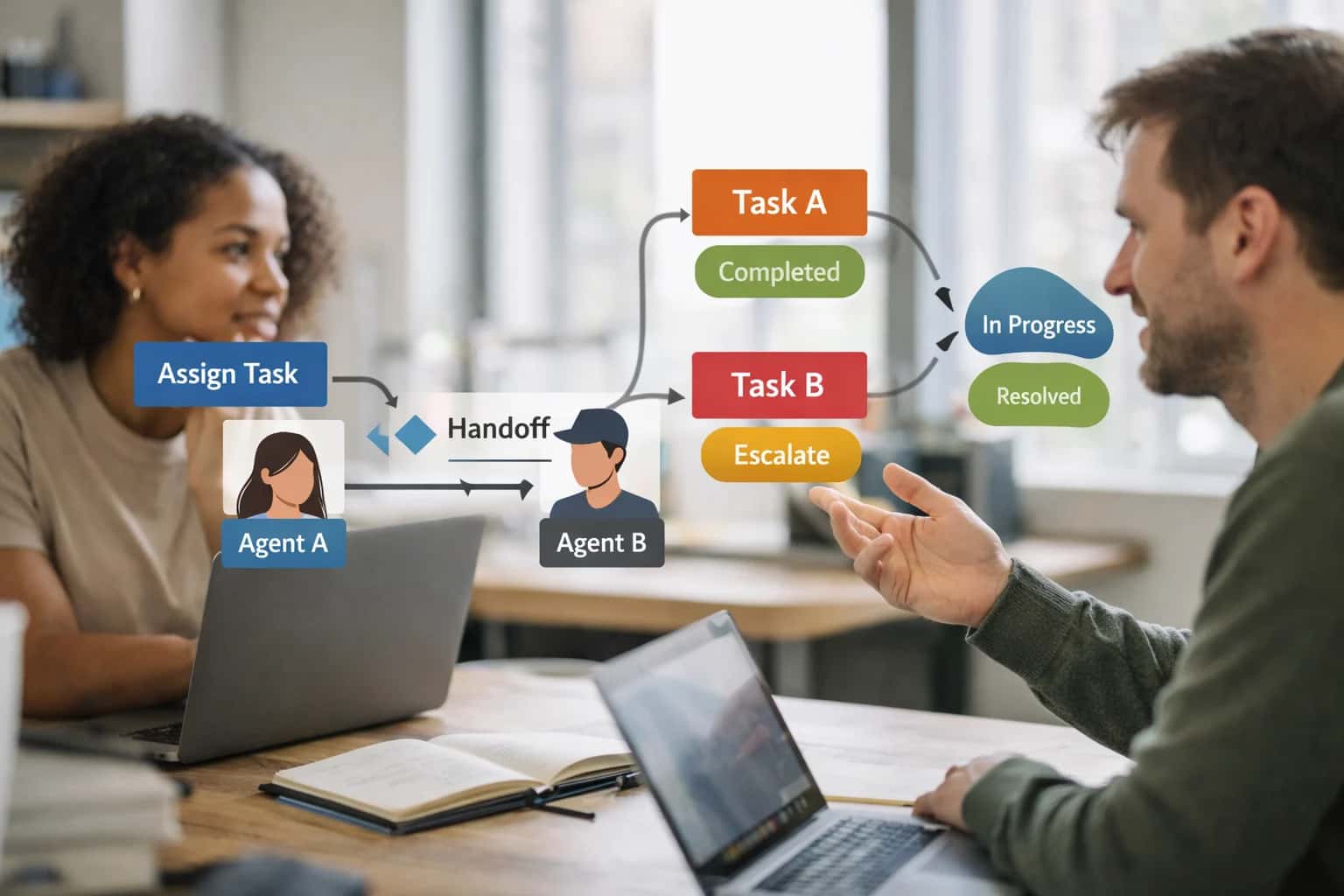
PROMPT PLAYBOOK
When to Use This Prompt
Defines the job-to-be-done, ideal user, required context, and limitations for the Anomaly Investigation Handoff Prompt Template.
The ideal user is a Tier 1 or Tier 2 SOC analyst who has spent time investigating an anomaly but must hand off the case before reaching a conclusion. The prompt assumes you already have investigation data collected—alert IDs, log excerpts, tool outputs, timeline notes, and hypotheses considered. It does not perform detection, triage, or root cause analysis. It synthesizes what is known and identifies what is missing. Required inputs include the raw investigation notes, any alert payloads or case IDs, a list of tools or data sources already queried, and the current disposition of the investigation.
Do not use this prompt when the investigation is complete and ready for closure—use a case summary prompt instead. Do not use it when no investigation work has been performed; the prompt requires partial findings to synthesize. Do not rely on this prompt to make escalation decisions or compute risk scores; it documents investigation state, not risk thresholds. In regulated environments, ensure the handoff document is reviewed by a senior analyst before the incoming analyst acts on its contents, particularly when the investigation involves potential data exfiltration, insider threat, or compliance-reportable events.
After generating the handoff, validate that all required sections are populated, evidence references are traceable to source systems, and open questions are specific enough to guide next steps. Wire the output into your case management system or SOAR platform so the incoming analyst receives the handoff in their queue with full context. If the prompt produces a handoff with critical gaps flagged, treat that as a signal to pause the handoff and collect missing evidence before transfer.
PRACTICAL GUARDRAILS
Use Case Fit
Where this prompt works, where it fails, and what you must provide before using it in production.
01
Good Fit
Use when: shift changes, cross-team escalations, or tier-2 handoffs in security operations. Guardrail: the prompt expects partial investigation state and produces a structured document that prevents restarting from zero.
02
Bad Fit
Avoid when: no investigation has started, the alert is a false positive, or the handoff is purely administrative. Guardrail: require a minimum investigation state before invoking the prompt; otherwise route to triage instead.
03
Required Inputs
What you must provide: alert details, investigation state, findings so far, open questions, evidence inventory, and next-step candidates. Guardrail: validate that all required fields are present before generation; return a structured missing-information request if not.
04
Operational Risk
What to watch: incomplete handoffs cause incoming analysts to miss critical context or repeat work. Guardrail: include a completeness checklist in the output and flag any missing sections so the receiver knows what wasn't covered.
05
Automation Boundary
What to watch: the prompt generates a document but does not route, assign, or notify. Guardrail: wire the output into your case management or alerting system; never rely on manual copy-paste for production handoffs.
06
Evidence Grounding
What to watch: findings without source references create audit gaps and erode trust. Guardrail: require every finding to cite specific log entries, tool outputs, or evidence artifacts; reject or flag unsupported claims in the output validation step.
PROMPT PLAYBOOK
Copy-Ready Prompt Template
A copy-ready prompt for generating structured anomaly investigation handoff documents that incoming analysts can use without restarting the investigation.
This prompt template produces a structured handoff document for security operations shift changes and cross-team escalations. It captures investigation state, findings, open questions, next steps, and an evidence inventory with completeness checks. Replace every square-bracket placeholder with real data before execution. The template assumes you have investigation notes, alert context, and evidence references available as input.
textYou are a senior security analyst preparing a structured investigation handoff for an incoming analyst. Your goal is to ensure the receiving analyst can continue the investigation without restarting or losing context. ## INPUT Investigation notes and evidence: [INVESTIGATION_NOTES] Alert or case context: [ALERT_CONTEXT] Evidence references (log excerpts, tool outputs, screenshots, timelines): [EVIDENCE_INVENTORY] ## OUTPUT_SCHEMA Produce a JSON object with the following fields. Do not include any text outside the JSON. { "handoff_id": "string, unique identifier for this handoff", "timestamp": "ISO 8601 timestamp of handoff creation", "incident_summary": "string, 2-4 sentence executive summary of what is known", "investigation_state": { "phase": "string, one of: initial_triage | evidence_collection | hypothesis_testing | containment | remediation | post_incident", "confidence_level": "string, one of: low | medium | high", "hours_invested": "number, total analyst hours spent so far" }, "findings": [ { "finding_id": "string", "description": "string, what was found", "confidence": "string, one of: confirmed | likely | possible | ruled_out", "evidence_refs": ["array of evidence IDs from evidence inventory"], "timestamp": "ISO 8601 when finding was established" } ], "open_questions": [ { "question_id": "string", "question": "string, the unanswered question", "priority": "string, one of: critical | high | medium | low", "blocked_by": "string or null, what is preventing an answer", "suggested_approach": "string, how the incoming analyst might resolve this" } ], "next_steps": [ { "step_id": "string", "action": "string, concrete next action", "priority": "string, one of: critical | high | medium | low", "depends_on": ["array of step_ids or question_ids that must be resolved first"], "estimated_effort_minutes": "number" } ], "evidence_inventory": [ { "evidence_id": "string", "type": "string, one of: log | screenshot | tool_output | timeline | interview | alert | external_report", "source": "string, system or person that produced this evidence", "description": "string, what this evidence contains", "access_instructions": "string, how the incoming analyst can retrieve or view this evidence", "chain_of_custody": "string or null, if evidence integrity matters" } ], "contacts": [ { "role": "string, e.g., escalation_point | system_owner | legal | comms", "name": "string", "contact_method": "string", "availability": "string, e.g., on_call | business_hours | notified" } ], "completeness_checks": { "all_findings_have_evidence": "boolean", "all_critical_questions_addressed": "boolean", "evidence_inventory_complete": "boolean", "timeline_gaps_identified": "boolean", "missing_context_notes": "string or null, anything the incoming analyst should know is missing" }, "handoff_notes": "string, freeform notes from the outgoing analyst to the incoming analyst" } ## CONSTRAINTS - If any finding is marked "confirmed," at least one evidence reference must be provided. - If investigation_state.confidence_level is "low," the handoff_notes field must explain why and what would increase confidence. - Do not fabricate findings. If the input does not support a field, use null or an empty array as appropriate. - Prioritize open_questions and next_steps by urgency: critical items must appear first. - For each open_question marked "critical," provide a suggested_approach. ## RISK_LEVEL [HIGH_RISK: This handoff may inform incident response decisions. The incoming analyst must verify all findings before acting. If confidence is low, escalate to a senior analyst before containment actions.]
Adaptation guidance: Replace [INVESTIGATION_NOTES] with the outgoing analyst's raw notes, [ALERT_CONTEXT] with the triggering alert or case ticket, and [EVIDENCE_INVENTORY] with a list of evidence items and their access paths. If your organization uses a different investigation phase model, update the phase enum values. For regulated environments, add a regulatory_classification field to the output schema and require a legal_review_required boolean. If the handoff feeds into a case management system, map the JSON fields to your system's API contract. For high-risk incidents, route the completed handoff through a human review step before the incoming analyst accepts it.
IMPLEMENTATION TABLE
Prompt Variables
Every placeholder the Anomaly Investigation Handoff Prompt Template expects, why it matters, and how to validate it before sending.
| Placeholder | Purpose | Example | Validation Notes |
|---|---|---|---|
[INVESTIGATION_STATE] | Current status of the investigation, including what has been confirmed, ruled out, and is still open. | Confirmed: lateral movement from host A to host B. Ruled out: initial access via phishing. Open: data exfiltration path. | Must be a non-empty string. Check that it contains at least one confirmed finding and one open question. If null, the handoff is premature; escalate to the analyst to populate before generating the document. |
[EVIDENCE_INVENTORY] | Structured list of collected evidence items with source, timestamp, and relevance. | [{source: 'EDR telemetry', timestamp: '2025-03-15T14:22:00Z', relevance: 'Shows process creation chain for initial compromise'}] | Must be a valid JSON array. Each item must have non-null 'source' and 'timestamp' fields. Validate schema before prompt assembly. If empty, flag as incomplete investigation state. |
[OPEN_QUESTIONS] | Prioritized list of unresolved investigative questions that the incoming analyst must pursue. |
| Must be a non-empty array of strings. Each question must end with a question mark. If no open questions exist, the investigation may be ready for closure, not handoff; verify with a human before routing. |
[NEXT_STEPS] | Ordered, actionable tasks for the incoming analyst to execute immediately upon receiving the handoff. |
| Must be a non-empty array of strings. Each step must start with an imperative verb. Validate that steps are concrete and executable, not vague suggestions like 'investigate further'. |
[ESCALATION_REASON] | The specific trigger or threshold breach that caused this investigation to be handed off. | Shift change: primary analyst rotating off. Severity 1 threshold crossed: confirmed lateral movement to crown-jewel asset. | Must be a non-empty string. Check against a predefined list of valid escalation reasons (shift change, severity threshold, skill gap, policy escalation). Reject unknown reasons. |
[TIMELINE_OF_EVENTS] | Chronological sequence of key events discovered during the investigation. | [{time: '2025-03-15T13:05:00Z', event: 'Suspicious PowerShell execution on host A'}, {time: '2025-03-15T13:22:00Z', event: 'SMB connection to host B'}] | Must be a valid JSON array of objects with 'time' (ISO 8601) and 'event' (string) fields. Validate temporal ordering; flag if timestamps are out of sequence or in the future. |
[CONTACT_INFO] | Contact details for the outgoing analyst and any stakeholders who can provide context. | Outgoing analyst: jane.doe@corp.com, Slack: @janedoe. Incident commander: john.smith@corp.com. | Must be a non-empty string. Validate that it contains at least one email address or verified user ID. If null, the handoff is not actionable; block generation and request contact information. |
[SYSTEMS_AFFECTED] | Inventory of hosts, accounts, applications, and data stores confirmed or suspected to be impacted. | Confirmed: host-A (10.0.1.5), host-B (10.0.2.9), svc-backup account. Suspected: finance-db (10.0.3.1). | Must be a non-empty string or structured array. Validate that each asset has an identifier resolvable in the asset management system. Flag any asset not found in the CMDB for manual review. |
PROMPT PLAYBOOK
Implementation Harness Notes
How to wire the Anomaly Investigation Handoff prompt into a security operations application or workflow.
This prompt is designed to be the final step in an analyst's workflow, not a standalone chatbot. It should be triggered by an explicit 'handoff' or 'shift change' action within a Security Orchestration, Automation, and Response (SOAR) platform or a custom investigation case management system. The application layer is responsible for gathering the structured and unstructured data required by the prompt's placeholders, such as [CASE_TIMELINE], [EVIDENCE_INVENTORY], and [OPEN_QUESTIONS]. The model's job is to synthesize this pre-fetched context into a coherent, standardized document; it should not be used to query live systems or make investigative decisions.
To wire this into an application, build a function that assembles the prompt's input variables from the current investigation state. For example, [EVIDENCE_INVENTORY] should be a pre-formatted list of log snippets, alert payloads, and file hashes with their source systems. After the model generates the handoff document, a post-processing validation step is critical. Implement a schema check to ensure the output contains all required sections: 'Investigation State', 'Findings So Far', 'Open Questions', 'Next Steps', and 'Evidence Inventory'. If the model's output fails this structural validation, use a repair prompt or a retry loop with a stricter [OUTPUT_SCHEMA] constraint. Log every generated handoff with a unique investigation ID, the prompt version, and the raw model output for auditability.
Model choice involves a trade-off between speed and reasoning depth. A fast model like GPT-4o or Claude 3.5 Sonnet is suitable for straightforward handoffs, but for complex, multi-stage investigations with nuanced findings, a reasoning model like o1 or Claude 3.5 Opus may produce more coherent 'Next Steps' and better identify contradictions in the 'Open Questions' section. Crucially, this prompt must not be connected to any tool that can modify tickets, close cases, or send notifications. The output is a draft for human review. The incoming analyst should confirm the summary's accuracy and completeness before the handoff is finalized in the system of record. The primary failure mode is the model hallucinating a resolution or omitting a critical open question, which is why the human-in-the-loop review step is a hard requirement, not an option.
IMPLEMENTATION TABLE
Expected Output Contract
Fields, types, and validation rules the anomaly investigation handoff output must satisfy before it reaches an incoming analyst. Use this contract to validate the model response programmatically or via human review checklist.
| Field or Element | Type or Format | Required | Validation Rule |
|---|---|---|---|
investigation_id | string | Must match the provided [INVESTIGATION_ID] exactly; no truncation or modification allowed | |
handoff_timestamp | ISO 8601 datetime | Must parse as valid datetime; must be within 5 minutes of system clock at generation time | |
current_state | enum: active | stalled | awaiting_evidence | ready_for_review | closed | Must be one of the five allowed enum values; if state is closed, next_steps must be empty array | |
findings_summary | array of objects with fields: finding_id (string), description (string), confidence (enum: high | medium | low), source_evidence (array of strings) | Array must contain at least 1 finding; each finding_id must be unique within the array; each source_evidence entry must reference an evidence_id present in the evidence_inventory array | |
open_questions | array of strings | Each string must be a complete interrogative sentence ending with ?; array may be empty only if current_state is closed | |
next_steps | array of objects with fields: step_id (string), action (string), priority (enum: critical | high | medium | low), assigned_to (string or null) | Array may be empty only if current_state is closed; step_id values must be unique; assigned_to must be null or a non-empty string | |
evidence_inventory | array of objects with fields: evidence_id (string), type (string), source (string), access_path (string), summary (string) | Array must contain at least 1 item; evidence_id values must be unique and match references in findings_summary.source_evidence; access_path must be a non-empty string resolvable by the receiving team | |
escalation_reason | string or null | If current_state is stalled or awaiting_evidence, must be non-null and explain why handoff is occurring; if null, must pass review for completeness of autonomous handoff context |
PRACTICAL GUARDRAILS
Common Failure Modes
What breaks first when using anomaly investigation handoff prompts in production security operations and how to guard against it.
01
Incomplete Evidence Inventory
What to watch: The prompt generates a handoff that lists findings but omits critical evidence sources, leaving the incoming analyst blind to key data. This happens when the model summarizes too aggressively or the input context is truncated. Guardrail: Require a structured evidence manifest with source identifiers, timestamps, and retrieval paths. Add a completeness check that verifies every finding references at least one evidence item before the handoff is accepted.
02
Stale Investigation State Drift
What to watch: The handoff captures findings from hours ago but misses recent developments, leading the incoming analyst to pursue dead ends. This occurs when the prompt ingests a snapshot rather than the live investigation state. Guardrail: Include a last_updated timestamp and a state_freshness check in the output schema. If the investigation state is older than a defined threshold, flag the handoff as stale and require a refresh before transfer.
03
Open Questions Without Ownership
What to watch: The handoff lists open questions but doesn't assign ownership or priority, causing critical investigative threads to stall between shifts. Guardrail: Require each open question to include an owner field, a priority ranking, and a blocking_status indicator. Validate that no open question appears without an assigned owner before the handoff is delivered.
04
Overconfident Root Cause Attribution
What to watch: The model presents a single root cause hypothesis as fact without acknowledging uncertainty or alternative explanations, leading the incoming analyst to prematurely narrow the investigation. Guardrail: Enforce a structured hypotheses section that requires at least one alternative explanation with supporting and contradictory evidence for each. Add a confidence qualifier to every causal claim.
05
Missing Escalation Context
What to watch: The handoff omits why the anomaly was escalated, what thresholds were breached, and what response actions were already taken, forcing the incoming analyst to reconstruct the escalation chain from scratch. Guardrail: Include a mandatory escalation_trail section with the triggering event, risk score trajectory, threshold comparison, and a chronological log of actions already taken. Validate this section is non-empty before handoff acceptance.
06
Format Drift Under Time Pressure
What to watch: During high-severity incidents, analysts provide rushed or incomplete input, and the model produces a handoff that drifts from the expected schema, breaking downstream automation that consumes these handoffs. Guardrail: Implement a post-generation schema validator that rejects handoffs missing required fields. On validation failure, trigger a repair prompt that requests specific missing sections rather than regenerating the entire document.
IMPLEMENTATION TABLE
Evaluation Rubric
Use this rubric to test the quality of the Anomaly Investigation Handoff Prompt Template before deploying it to production. Each criterion defines a pass standard, a failure signal, and a concrete test method.
| Criterion | Pass Standard | Failure Signal | Test Method |
|---|---|---|---|
Investigation State Completeness | Output includes all required sections: current status, findings so far, open questions, next steps, and evidence inventory. | One or more required sections are missing, empty, or contain only placeholder text. | Schema validation: check for presence and non-null, non-empty values for all five required top-level fields. |
Evidence Inventory Accuracy | Every piece of evidence listed in the inventory includes a unique identifier, source location, and a one-line description that matches the actual content. | An evidence item is missing an ID or source; a description is hallucinated and does not match the referenced log, alert, or file. | Spot-check 3 evidence items against the provided [EVIDENCE_LOG]. Verify IDs, sources, and descriptions match. |
Open Question Specificity | Every open question is a specific, answerable query that would guide the next analyst's investigation. No vague questions like 'What happened?'. | Open questions are generic, rhetorical, or already answered by the findings section. | LLM-as-judge: prompt a separate model to rate each question on a 1-5 specificity scale. Fail if average score < 4. |
Next Step Actionability | Each next step is a concrete action with an assigned owner role and a clear completion condition. No step is 'investigate further'. | Next steps are vague, lack an owner, or describe outcomes instead of actions. | Parse the next steps list. Fail if any step lacks an [OWNER] placeholder value or a verifiable completion condition. |
Handoff Readiness Declaration | Output includes a boolean |
| Assertion: if |
Source Grounding | All findings and conclusions are explicitly linked to at least one item in the evidence inventory. No unsupported claims. | A finding states a conclusion without citing an evidence ID, or cites an evidence ID that does not exist in the inventory. | For each item in |
Temporal Context Preservation | Output includes a | Timestamps are missing, in an unparseable format, or the coverage window is logically impossible (end before start). | Parse |
Escalation Reason Clarity | If the handoff is an escalation, the |
| Conditional check: if |
Enabling Efficiency, Speed & Accuracy
Intelligent Analysis, Decision & Execution
We build AI systems for teams that need search across company data, workflow automation across tools, or AI features inside products and internal software.
Talk to Us
Search across company data
Give teams answers from docs, tickets, runbooks, and product data with sources and permissions.
Useful when people spend too long searching or get different answers from different systems.
Enterprise searchRAGPermissions
Read more
Automate internal workflows
Use AI to route work, draft outputs, trigger actions, and keep approvals and logs in place.
Useful when repetitive work moves across multiple tools and teams.
AI agentsWorkflow automationGovernance
Read more
Add AI to products and internal tools
Build assistants, guided actions, or decision support into the software your team or customers already use.
Useful when AI needs to be part of the product, not a separate tool.
AI integrationDecision supportModel routing
Read moreADAPTATION OPTIONS
Adapt This Prompt
How to adapt\nStart with the base handoff template but relax strict schema enforcement. Use a single markdown block for the handoff document instead of requiring JSON output. Focus on getting the narrative sections right—investigation state, findings, and open questions—before adding machine-readable fields.\n\n### Prompt modification\nReplace [OUTPUT_SCHEMA] with: `Output the handoff as a markdown document with the following sections: Investigation State, Findings So Far, Open Questions, Next Steps, Evidence Inventory.` Remove the completeness validator and evidence count checks.\n\n### Watch for\n- Analysts omitting evidence references because the schema doesn't enforce them\n- Handoff documents that read well but miss critical details like affected assets or timelines\n- Inconsistent section naming across shifts making handoffs harder to scan

About the author
Prasad Kumkar
CEO & MD, Inference Systems
Prasad Kumkar is the CEO & MD of Inference Systems and writes about AI systems architecture, LLM infrastructure, model serving, evaluation, and production deployment. Over 5+ years, he has worked across computer vision models, L5 autonomous vehicle systems, and LLM research, with a focus on taking complex AI ideas into real-world engineering systems.
His work and writing cover AI systems, large language models, AI agents, multimodal systems, autonomous systems, inference optimization, RAG, evaluation, and production AI engineering.
LinkedIn
Limited slotsGet a Free AI Consultation
Partnered with leading AI, data, and software stack.





How We Work
Custom AI workflows for your Business
One-fit-all AI don't work for modern businesses. At Inferensys, we aim to understand your business & custom requirements; which we use to define most efficient agentic workflows, the data, and the tools for your business.
01
Review the use case
We understand the task, the users, and where AI can actually help.
Read more02
Pick the right approach
We define what needs search, automation, or product integration.
Read more03
Build the first useful version
We implement the part that proves the value first.
Read more04
Improve from there
We add the checks and visibility needed to keep it useful.
Read moreThe first call is a practical review of your use case and the right next step.
Talk to Us