This prompt is designed for a single, high-stakes job: generating a structured, machine-readable handoff payload when an AI agent's tool execution fails after all retry policies have been exhausted. The ideal user is a platform engineer or AI reliability engineer who is building an agent harness and needs a deterministic, auditable way to stop an agent from looping on a broken tool. Instead of the agent hallucinating a fix or silently failing, this prompt forces it to package all diagnostic state—the failed tool name, raw error, retry count, partial results, and dependency chain—into a JSON object that a downstream ticketing system, alerting platform, or human operator dashboard can consume without manual parsing.

Prompt
Tool Failure Fallback to Human Prompt
A practical prompt playbook for generating a structured handoff payload when an agent's tool execution fails, designed for platform engineers building reliable human-in-the-loop workflows.
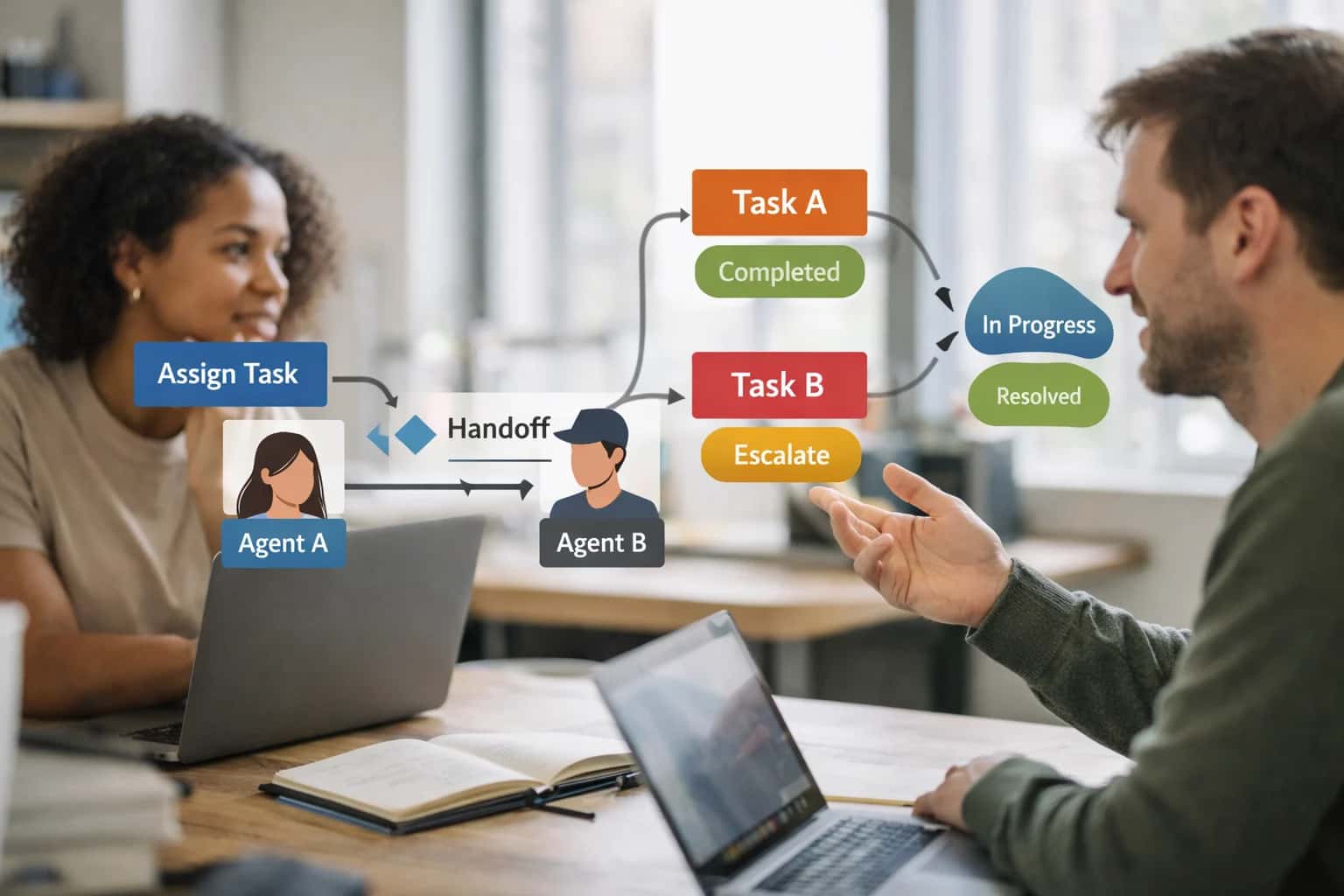
PROMPT PLAYBOOK
When to Use This Prompt
Defines the exact conditions for triggering the Tool Failure Fallback prompt and the required context it needs to succeed.
You should use this prompt only after your application-level retry logic has concluded. The required context is substantial and must be injected into the [TOOL_FAILURE_CONTEXT] placeholder: this includes the fully qualified tool name, the exact error message or stack trace, the number of retries attempted, any partial or intermediate results the tool produced before failing, and the state of the dependency chain (e.g., which upstream tools succeeded and what data they passed). Without this rich context, the model cannot produce a useful diagnostic payload. The output is not a conversational message for a user; it is a system-to-system or system-to-operator payload. Do not use this prompt for live conversational handoffs, where tone and user sentiment are critical, or for guardrail violations, which require a different evidence package focused on policy rules and violating content.
The primary constraint is that this prompt must be called with a clear [OUTPUT_SCHEMA] that your receiving system expects. A common failure mode is generating a handoff that a human can read but an API cannot parse. To prevent this, your harness should validate the generated JSON against your schema immediately and, if validation fails, use a repair prompt or a simpler, more constrained model to fix the structure. For high-risk production systems, log every generated handoff payload before it is sent to the operator queue, creating an audit trail that links the agent's execution trace to the escalation event. Next, review the 'Implementation Harness' section to see how to wire this prompt into a reliable retry-and-escalation loop.
PRACTICAL GUARDRAILS
Use Case Fit
Where the Tool Failure Fallback to Human Prompt works reliably and where it introduces operational risk.
01
Good Fit: Agentic Workflows with External Dependencies
Use when: your AI agent calls external APIs, databases, or MCP servers where tool failures are expected and must be resolved by a human operator. Guardrail: Include the full tool call signature, error stack, and retry count so the operator can reproduce or bypass the failure.
02
Bad Fit: Deterministic Retry Logic
Avoid when: the failure is a known transient error (rate limit, timeout) that should be handled by application-layer retry with exponential backoff. Guardrail: Implement a retry policy in code before invoking the handoff prompt. Only escalate when retries are exhausted or non-transient.
03
Required Input: Dependency Chain State
Risk: The operator receives a failed tool call but has no visibility into upstream steps that succeeded or downstream steps that are blocked. Guardrail: The prompt must receive and include the full task graph state—completed steps, pending dependencies, and partial results—so the operator can safely resume.
04
Required Input: Structured Error Context
Risk: A vague 'something went wrong' handoff forces the operator to replay the entire workflow to diagnose the issue. Guardrail: The prompt template requires the tool name, error type, error message, retry attempt count, and timestamp. Never hand off without structured diagnostic fields.
05
Operational Risk: Silent Tool Failures
Risk: The tool returns a success code but produces invalid or empty output that downstream steps treat as valid. Guardrail: Add output validation checks before the handoff prompt. If validation fails, treat it as a tool failure and include the invalid output in the handoff payload for operator inspection.
06
Operational Risk: Handoff Volume Overwhelm
Risk: A systemic tool outage triggers a flood of handoffs, overwhelming human operators. Guardrail: Implement circuit-breaker logic at the agent level. When failure rate exceeds a threshold, halt the agent and produce a single aggregate handoff rather than one per task.
PROMPT PLAYBOOK
Copy-Ready Prompt Template
A copy-ready prompt that generates a structured handoff payload when a tool execution fails, including diagnostic context and operator instructions.
This prompt is designed to be injected into your agent's escalation path immediately after a tool execution failure. Its job is to package the failure's full context—the tool name, error details, retry attempts, partial results, and dependency chain state—into a structured handoff for a human operator. The prompt assumes that your application harness has already captured the raw error and execution metadata; the model's role is to synthesize this into a coherent, actionable payload.
textYou are a diagnostic handoff agent for an AI operations platform. A tool execution has failed after exhausting all automated retries. Your task is to produce a structured handoff payload for a human operator. Do not attempt to re-execute the tool or guess at a resolution. ## Input Context - Failed Tool Name: [TOOL_NAME] - Tool Description: [TOOL_DESCRIPTION] - Error Message: [ERROR_MESSAGE] - Error Type: [ERROR_TYPE] - Retry Attempts: [RETRY_COUNT] - Retry Log: [RETRY_LOG] - Partial Results (if any): [PARTIAL_RESULTS] - Dependency Chain State: [DEPENDENCY_STATE] - Workflow Step: [WORKFLOW_STEP] - User Impact: [USER_IMPACT] - System State at Failure: [SYSTEM_STATE] ## Output Schema Produce a JSON object with the following structure: { "handoff_type": "TOOL_FAILURE", "severity": "critical|high|medium|low", "failed_tool": { "name": "string", "description": "string", "error_summary": "A one-sentence summary of what went wrong.", "error_detail": "A detailed explanation of the error, including the raw error message.", "error_type": "string" }, "retry_context": { "attempts_made": "number", "final_error": "string", "retry_log_summary": "A brief summary of the retry attempts and any pattern observed." }, "partial_results": { "available": "boolean", "data": "object | null", "usability_notes": "If partial results exist, describe what is usable and what is missing." }, "dependency_chain": { "blocked_steps": ["list of downstream workflow steps that are now blocked"], "completed_steps": ["list of steps that completed successfully before the failure"], "resume_point": "The exact step or state from which a human should resume." }, "operator_actions": { "immediate_actions": ["A prioritized list of 2-4 concrete actions the operator should take first."], "investigation_hints": ["Specific logs, dashboards, or systems to check."], "rollback_or_fix_options": ["If known, suggest safe remediation paths."] }, "context_for_operator": { "user_impact": "string", "system_state_at_failure": "string", "urgency_rationale": "Explain why this severity level was chosen." } } ## Constraints - Do not fabricate information not present in the input context. - If a field's value is unknown, use null or an empty array as appropriate, and note the absence in the relevant summary field. - The operator_actions must be specific and actionable, not generic advice. - Preserve any PII or sensitive data as-is; redaction is handled upstream.
To adapt this template, replace each square-bracket placeholder with runtime values from your tool execution harness. The [RETRY_LOG] should be a structured log of each attempt, including timestamps and error codes. The [DEPENDENCY_STATE] should capture the state of upstream and downstream tasks in the workflow DAG. Before deploying, test the prompt with at least three distinct failure modes (e.g., a network timeout, an authorization error, and a malformed API response) and validate that the generated JSON conforms to the schema and that the operator_actions are genuinely useful. For high-severity failures, route the output to an on-call escalation channel rather than a general queue.
IMPLEMENTATION TABLE
Prompt Variables
Inputs required to produce a reliable tool-failure handoff payload. Validate each variable before prompt assembly to prevent incomplete escalation context.
| Placeholder | Purpose | Example | Validation Notes |
|---|---|---|---|
[FAILED_TOOL_NAME] | Identifies the tool or function that failed during execution | create_jira_ticket | Must match a tool name from the agent's tool registry; reject empty or unknown tool names |
[ERROR_DETAILS] | Raw error message, stack trace, or status code returned by the tool | HTTP 503 Service Unavailable; retry-after: 30s | Must be non-empty; truncate at 2000 chars; strip PII from error bodies before insertion |
[RETRY_ATTEMPTS] | Number of times the tool was retried before escalation | 3 | Must be an integer >= 0; if null, default to 0 and log a warning |
[PARTIAL_RESULTS] | Any intermediate output or side effects produced before failure | Created draft ticket #1423 but failed to assign owner | Null allowed if no partial work occurred; if present, must include timestamp of last successful step |
[DEPENDENCY_CHAIN_STATE] | Status of upstream and downstream tool calls in the current workflow | Upstream: fetch_user_context succeeded; Downstream: notify_oncall blocked | Must list each dependency with status (succeeded, failed, pending, blocked); reject if empty when workflow has known dependencies |
[WORKFLOW_STEP_ID] | Identifier for the step in the agent's execution plan that triggered the tool | step_4_assign_owner | Must match a step ID from the agent's plan; reject if step ID is not found in the current plan |
[AGENT_SESSION_ID] | Unique session identifier for correlating logs, traces, and handoff records | sess_9a7b3f2c | Must be a non-empty string; validate format against session ID convention (UUID or prefixed short ID) |
PROMPT PLAYBOOK
Implementation Harness Notes
How to wire the tool failure fallback prompt into an agent's execution wrapper with validation, retries, and operator notification.
This prompt is designed to be the final step in a tool execution retry loop. After an agent's tool call has failed and all configured retry attempts are exhausted, the execution wrapper should call the LLM with this prompt, passing the complete failure context. The prompt's job is to produce a structured JSON handoff payload that a human operator can use to diagnose and complete the interrupted workflow. Do not call this prompt for transient errors that a retry can resolve; reserve it for persistent failures where the agent has reached its safe operating limit.
Wire the prompt into your agent's tool execution wrapper as a terminal handler. The wrapper should collect the failed tool name, the full error message, the number of retry attempts, any partial results returned before failure, and the dependency chain state (which upstream tools succeeded, which downstream tools are now blocked). Pass these as the [FAILED_TOOL], [ERROR_DETAILS], [RETRY_ATTEMPTS], [PARTIAL_RESULTS], and [DEPENDENCY_CHAIN] placeholders. After the LLM returns its response, parse the JSON and validate it against the output contract: handoff_type must equal "tool_failure", operator_actions must be a non-empty array of strings, and diagnostic_context must include the failed tool name and error summary. If validation fails, fall back to a static handoff template that includes the raw error and a generic escalation message. Log the validated handoff payload to your incident management system (e.g., PagerDuty, Opsgenie) and trigger a notification to the on-call operator with a direct link to the workflow trace and the structured payload.
After the handoff is generated and logged, the agent must stop. Do not allow it to continue executing downstream tools, retry the failed tool, or attempt a different code path. The handoff represents a hard boundary where the system has determined that autonomous recovery is not safe or possible. The operator should receive enough context to resume the workflow from the failure point without replaying the entire session. Test this harness by simulating tool failures in a staging environment and verifying that the handoff payload is valid, the notification fires, and the agent halts correctly. Common failure modes include the LLM omitting required fields, hallucinating a resolution, or producing a handoff that lacks actionable operator steps—each of which your validation layer should catch.
IMPLEMENTATION TABLE
Expected Output Contract
The Tool Failure Fallback to Human Prompt must return a valid JSON object with these fields. Use this contract to validate the model's output before routing the handoff payload to a human operator or downstream system.
| Field or Element | Type or Format | Required | Validation Rule |
|---|---|---|---|
failure_id | string (UUID v4) | Must match UUID v4 regex. Generate a new ID if null or missing. | |
failed_tool_name | string | Must be a non-empty string matching the exact tool name from the agent's tool registry. | |
error_summary | string | Must be a non-empty string under 280 characters. Must not contain raw stack traces. | |
error_code | string | null | Must be one of [TIMEOUT, PERMISSION_DENIED, INVALID_ARGUMENT, RESOURCE_EXHAUSTED, INTERNAL_ERROR, UNKNOWN] or null if unclassified. | |
retry_attempts | integer | Must be an integer >= 0. Must match the actual retry count from the execution log. | |
partial_results | object | null | Must be a valid JSON object or null. If present, must contain a 'data' key with the last successful intermediate output. | |
dependency_chain | array of strings | Must be an array of tool names called before the failure. Order must reflect execution sequence. Empty array allowed. | |
recommended_operator_action | string | Must be a non-empty string describing the first diagnostic step for the human operator. Must not suggest automated retry. |
PRACTICAL GUARDRAILS
Common Failure Modes
When tool execution fails, the handoff prompt itself can break. These are the most common failure modes in production tool-failure fallback systems and how to guard against them.
01
Empty or Missing Error Context
What to watch: The handoff payload contains a generic failure message like 'Tool failed' without the actual error code, stack trace, or tool response body. The human operator receives no diagnostic information and cannot determine root cause. Guardrail: Validate that the handoff payload includes error_code, error_message, tool_response, and retry_attempts before sending. If any field is null, re-query the tool execution log or mark the handoff as degraded with explicit missing-field notes.
02
Stale Dependency Chain State
What to watch: The handoff reports which tool failed but omits the state of upstream dependencies that may have succeeded partially. The operator inherits an incomplete picture and may re-execute steps that already completed or miss cleanup requirements. Guardrail: Include a dependency_chain array in the handoff payload with each dependency's tool name, execution status, output summary, and whether it requires rollback. Validate completeness against the workflow definition before releasing the handoff.
03
Partial Results Lost in Handoff
What to watch: The tool produced partial output before failing, but the handoff prompt discards it or truncates it. The operator restarts from zero instead of resuming from the last successful state. Guardrail: Capture partial_results as a separate field with a completeness indicator and byte count. If partial results exceed a size threshold, store them in a retrievable location and include a reference ID in the handoff rather than embedding everything inline.
04
Operator Overwhelm from Verbose Payloads
What to watch: The handoff includes every log line, every retry attempt detail, and full tool schemas. The operator cannot quickly identify what failed, why, and what to do next. Time-to-resolution increases because the signal is buried in noise. Guardrail: Structure the handoff with a summary field that states the failure in one sentence, followed by recommended_operator_actions as a prioritized list. Append full diagnostic context in a collapsible diagnostic_details section for deep-dive use only.
05
Handoff Sent Without Retry Exhaustion Check
What to watch: The system escalates after a single transient failure that would have succeeded on retry. The operator is pulled into a false alarm, eroding trust in the escalation system. Guardrail: Implement a retry_policy check before generating the handoff. Only escalate if retries are exhausted, the error is non-retryable, or a maximum time budget is exceeded. Include retry_attempts and retry_strategy_used in the payload so the operator knows escalation was justified.
06
Missing Rollback or Cleanup Instructions
What to watch: The failed tool left side effects such as partial database writes, open connections, or reserved resources. The handoff tells the operator what failed but not what needs to be undone before retrying. Guardrail: Include a cleanup_required boolean and a rollback_steps array in the handoff payload. Each step should specify the resource, the action needed, and whether it is safe to proceed without cleanup. Validate that any tool with write side effects populates this section.
IMPLEMENTATION TABLE
Evaluation Rubric
Criteria for evaluating the quality of a tool failure fallback handoff payload before it is sent to a human operator or downstream system.
| Criterion | Pass Standard | Failure Signal | Test Method |
|---|---|---|---|
Tool Failure Identification | The failed tool name, error code, and error message are explicitly stated in the payload. | The payload describes a general failure without naming the specific tool or error. | Parse the output JSON; assert that [TOOL_NAME], [ERROR_CODE], and [ERROR_MESSAGE] fields are non-null and match the injected test error. |
Retry Attempt Transparency | The exact number of retry attempts and the strategy used (e.g., exponential backoff) are documented. | The payload omits retry count or states 'multiple retries' without a specific number. | Inject a scenario with 3 simulated retries; assert the [RETRY_ATTEMPTS] field equals 3 and [RETRY_STRATEGY] is not null. |
Partial Result Preservation | Any partial data or side effects from failed tool calls are included in a structured [PARTIAL_RESULTS] block. | The payload discards intermediate results or describes them only in unstructured natural language. | Inject a tool that fails after writing 2 of 5 records; assert the [PARTIAL_RESULTS] array contains exactly 2 records with valid schemas. |
Dependency Chain Context | The payload identifies upstream and downstream dependent tasks and their states (pending, completed, blocked). | The payload only describes the failed task without mentioning what else is now blocked. | Inject a task graph; assert the [DEPENDENCY_GRAPH] object lists all blocked downstream task IDs and their previous states. |
Operator Actionability | The payload includes a prioritized list of recommended operator actions to resolve or bypass the failure. | The payload only describes the problem without suggesting concrete next steps for the human. | LLM-as-judge evaluation: a technical operator confirms the [RECOMMENDED_ACTIONS] list contains at least one executable step that does not require re-diagnosing the failure. |
Diagnostic Data Inclusion | Relevant diagnostic context (timestamps, log snippets, input parameters) is attached without exposing secrets. | The payload includes raw stack traces with potential secret leakage or omits timestamps entirely. | Schema check: assert [DIAGNOSTIC_CONTEXT] contains [TIMESTAMP] and [INPUT_PARAMS]; PII scan: assert no API keys or passwords are present in the payload. |
Schema Validity | The output strictly conforms to the defined [OUTPUT_SCHEMA] with all required fields present. | The JSON is malformed, or required fields like [HANDOFF_ID] or [SEVERITY] are missing. | Automated JSON Schema validator run against the output; assert validation passes with no errors. |
Severity Classification | The payload assigns a correct severity level (e.g., CRITICAL, HIGH, MEDIUM) based on the dependency chain impact. | The severity is always 'HIGH' regardless of context, or is missing entirely. | Inject a non-critical leaf-node failure; assert [SEVERITY] is 'LOW' or 'MEDIUM'. Inject a root-node failure; assert [SEVERITY] is 'CRITICAL'. |
Enabling Efficiency, Speed & Accuracy
Intelligent Analysis, Decision & Execution
We build AI systems for teams that need search across company data, workflow automation across tools, or AI features inside products and internal software.
Talk to Us
Search across company data
Give teams answers from docs, tickets, runbooks, and product data with sources and permissions.
Useful when people spend too long searching or get different answers from different systems.
Enterprise searchRAGPermissions
Read more
Automate internal workflows
Use AI to route work, draft outputs, trigger actions, and keep approvals and logs in place.
Useful when repetitive work moves across multiple tools and teams.
AI agentsWorkflow automationGovernance
Read more
Add AI to products and internal tools
Build assistants, guided actions, or decision support into the software your team or customers already use.
Useful when AI needs to be part of the product, not a separate tool.
AI integrationDecision supportModel routing
Read moreADAPTATION OPTIONS
Adapt This Prompt
How to adapt
Start with the base prompt and a simple JSON schema for the handoff payload. Use a single model call without retry logic. Hardcode the tool name and error message as [TOOL_NAME] and [ERROR_DETAILS] placeholders. Skip dependency chain analysis and focus on capturing the failed tool, the error, and a human-readable summary.
Watch for
- Missing schema validation on the output payload
- Overly verbose error descriptions that bury the root cause
- No distinction between transient errors (timeouts) and permanent failures (invalid arguments)

About the author
Prasad Kumkar
CEO & MD, Inference Systems
Prasad Kumkar is the CEO & MD of Inference Systems and writes about AI systems architecture, LLM infrastructure, model serving, evaluation, and production deployment. Over 5+ years, he has worked across computer vision models, L5 autonomous vehicle systems, and LLM research, with a focus on taking complex AI ideas into real-world engineering systems.
His work and writing cover AI systems, large language models, AI agents, multimodal systems, autonomous systems, inference optimization, RAG, evaluation, and production AI engineering.
LinkedIn
Limited slotsGet a Free AI Consultation
Partnered with leading AI, data, and software stack.





How We Work
Custom AI workflows for your Business
One-fit-all AI don't work for modern businesses. At Inferensys, we aim to understand your business & custom requirements; which we use to define most efficient agentic workflows, the data, and the tools for your business.
01
Review the use case
We understand the task, the users, and where AI can actually help.
Read more02
Pick the right approach
We define what needs search, automation, or product integration.
Read more03
Build the first useful version
We implement the part that proves the value first.
Read more04
Improve from there
We add the checks and visibility needed to keep it useful.
Read moreThe first call is a practical review of your use case and the right next step.
Talk to Us