This prompt is for compliance engineering teams who need to evaluate whether a proposed AI action satisfies a specific regulation before execution. The job-to-be-done is a structured, reviewable gate decision that prevents regulatory exposure while keeping compliant workflows moving. The ideal user is a developer or engineer integrating AI into a product where a compliance officer or legal team has already identified the applicable regulation and provided its text. The required context includes the full regulatory text, a clear description of the proposed AI action, and the data categories involved. Without this context, the model cannot ground its decision in the actual rule, leading to unreliable or hallucinated assessments.

Prompt
Regulatory Compliance Gate Check Prompt Template
A practical prompt playbook for using the Regulatory Compliance Gate Check Prompt Template in production AI workflows to evaluate proposed actions against specific regulations before execution.
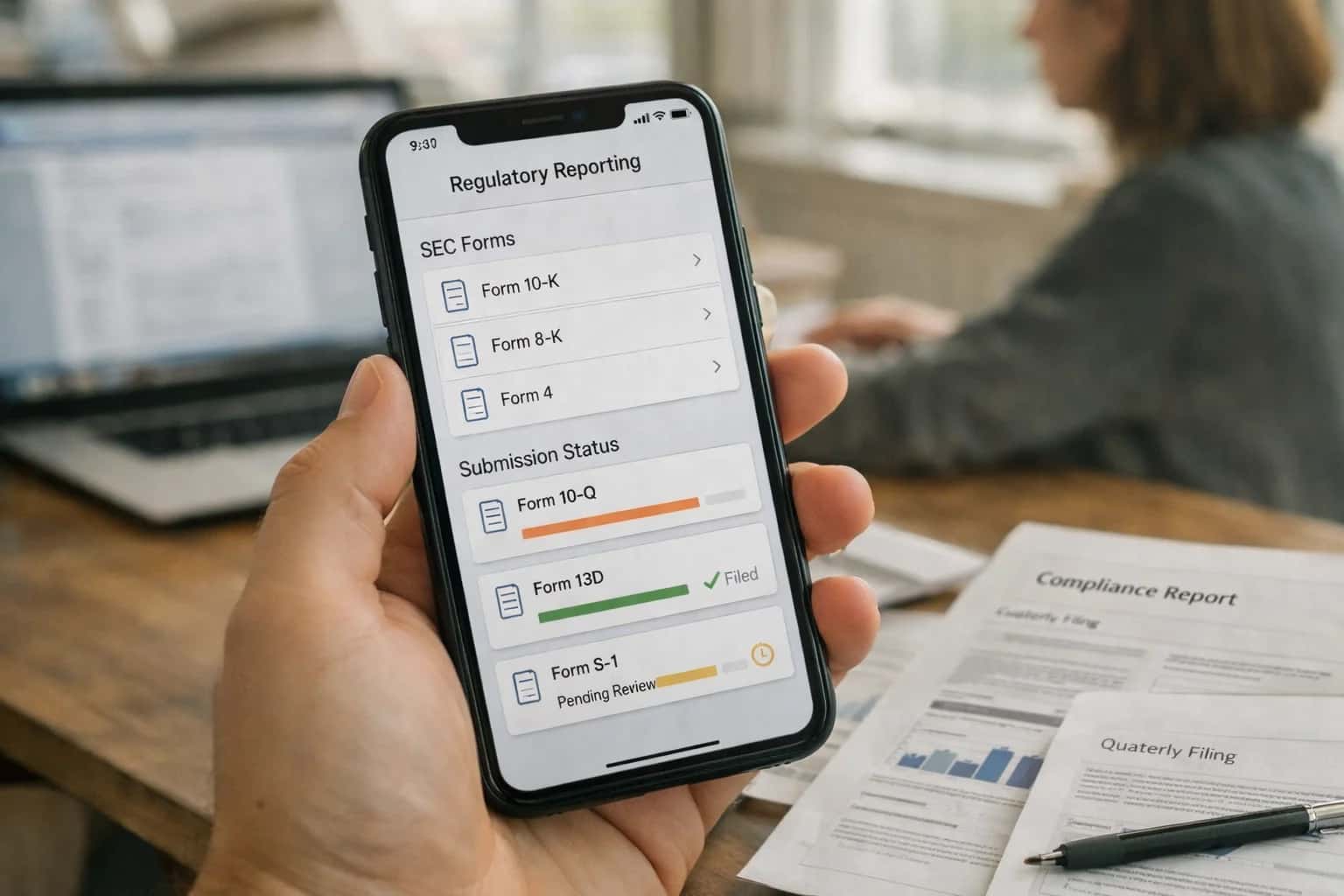
PROMPT PLAYBOOK
When to Use This Prompt
Define the job, reader, and constraints for the regulatory compliance gate check.
Use this prompt in pre-execution workflows where a blocking decision must be made before an action proceeds. For example, before an AI agent sends a user-generated message, deletes data, or shares information with a third party, this gate can determine if the action complies with GDPR, HIPAA, or an internal policy. The prompt is designed to produce a pass/fail/needs-review status, cite the specific rule references that informed the decision, and provide a blocking rationale when the action is non-compliant. This output can be logged as an audit artifact, used to halt a pipeline, or routed to a human review queue. The prompt is not a replacement for legal counsel and requires human review for any needs-review or borderline decisions.
Do not use this prompt when the regulation is not provided in the context, when the action is too vague to evaluate, or when you need a general legal opinion rather than a specific gate check. It is also inappropriate for real-time, high-throughput decisions where latency constraints prevent a thorough model evaluation. In those cases, a pre-computed policy engine or a deterministic rule-based check is more suitable. For any decision that blocks a user-facing action or involves sensitive data, always route the output through a human approval step and log the full prompt, response, and reviewer decision for auditability.
PRACTICAL GUARDRAILS
Use Case Fit
Where the Regulatory Compliance Gate Check prompt works, where it fails, and the operational preconditions required before wiring it into a production pipeline.
01
Good Fit: Structured Gate Decisions
Use when: you need a pass/fail/needs-review decision against a specific, provided regulation or policy text. The prompt excels at mapping proposed actions to rule clauses and producing a structured, auditable rationale. Guardrail: always provide the exact regulatory text as grounding context; never ask the model to recall regulations from training data.
02
Bad Fit: Legal Advice or Interpretation
Avoid when: the output will be treated as legal counsel or used to interpret ambiguous regulatory language without human review. The prompt is a compliance screening tool, not a substitute for qualified legal analysis. Guardrail: label all outputs as 'preliminary compliance screening' and require human sign-off for any 'needs-review' or borderline 'pass' decision.
03
Required Inputs: Regulation Text and Action Spec
What to watch: the prompt fails silently when given vague action descriptions or missing regulatory text. Hallucinated rule references spike when the model is forced to rely on parametric knowledge. Guardrail: enforce a strict input schema requiring both [REGULATION_TEXT] and a structured [PROPOSED_ACTION] object with fields for data types, actors, and processing purpose before the prompt executes.
04
Operational Risk: False Approvals
What to watch: the most dangerous failure mode is a false 'pass' decision that lets non-compliant actions proceed. This often occurs when the regulation text is incomplete or the action description omits material details. Guardrail: implement a secondary eval step that re-checks pass decisions against a checklist of known high-risk patterns. Route any action touching sensitive data categories to human review regardless of the model's decision.
05
Operational Risk: Over-Blocking
What to watch: an overly conservative prompt can flag compliant actions as 'needs-review' or 'fail,' creating a human review bottleneck and slowing legitimate workflows. Guardrail: track the ratio of human-override-to-approve vs. human-override-to-block. If reviewers consistently approve blocked actions, tune the prompt's risk threshold or add clarifying examples for those patterns.
06
Integration Pattern: Review Queue Handoff
What to watch: a gate check prompt without a well-designed handoff creates orphaned 'needs-review' items that no one sees. Guardrail: pair this prompt with a Human Review Queue and Triage prompt. The gate output must include a structured review packet with the original action, cited rule references, and the specific ambiguity requiring human judgment.
PROMPT PLAYBOOK
Copy-Ready Prompt Template
A reusable regulatory gate check prompt that evaluates a proposed AI action against a specific regulation and returns a structured pass/fail/needs-review decision with cited rule references.
This template is the core of the compliance gate check workflow. It instructs the model to act as a compliance analyst, evaluate a proposed action against a provided regulation, and produce a structured decision. The prompt is designed to be copied directly into your application, with each square-bracket placeholder replaced by your specific inputs at runtime. The template enforces citation discipline, requires explicit rule references, and blocks non-compliant actions with documented reasoning—preventing the model from issuing approvals based on vague or unsupported claims.
textYou are a regulatory compliance analyst. Your task is to evaluate whether a proposed AI action complies with a specific regulation. You must ground every determination in the provided regulatory text. Do not infer rules that are not explicitly stated. If the regulation is silent on a point, state that explicitly rather than assuming compliance or non-compliance. ## INPUTS **Proposed Action:** [ACTION_DESCRIPTION] **Regulation Text:** [REGULATION_TEXT] **Jurisdiction (if applicable):** [JURISDICTION] **Risk Level of Action:** [RISK_LEVEL] ## INSTRUCTIONS 1. Identify every section, clause, or requirement in the provided regulation text that applies to the proposed action. 2. For each applicable requirement, determine whether the proposed action satisfies it, violates it, or requires further clarification. 3. If the action violates any requirement, classify the violation severity as BLOCKING or WARNING. 4. If the regulation is ambiguous or silent on a material aspect of the action, flag it as NEEDS_REVIEW rather than assuming compliance. 5. Do not cite regulations, standards, or requirements that are not present in the provided regulation text. ## OUTPUT SCHEMA Return a valid JSON object with this exact structure: { "decision": "PASS" | "FAIL" | "NEEDS_REVIEW", "summary": "One-sentence summary of the determination.", "applicable_requirements": [ { "requirement_ref": "Section or clause identifier from the regulation text", "requirement_text": "Verbatim quote of the relevant regulatory language", "assessment": "COMPLIANT" | "NON-COMPLIANT" | "UNCLEAR", "rationale": "Specific explanation of why the action meets, violates, or is unclear against this requirement", "severity": "BLOCKING" | "WARNING" | null } ], "blocking_violations": [ { "requirement_ref": "Section or clause identifier", "violation_description": "What the action does that violates the requirement", "remediation_guidance": "What must change for the action to comply" } ], "needs_review_items": [ { "requirement_ref": "Section or clause identifier", "ambiguity_description": "What is unclear and why human review is needed" } ], "confidence": "HIGH" | "MEDIUM" | "LOW" } ## CONSTRAINTS - If no regulation text is provided, return decision: "NEEDS_REVIEW" with a note that no regulatory context was supplied. - If the action description is insufficient to make a determination, return decision: "NEEDS_REVIEW" with specific questions that must be answered. - For [RISK_LEVEL] of "HIGH", any UNCLEAR assessment must escalate to NEEDS_REVIEW. - Never fabricate regulation text, clause numbers, or standard references. - If you cannot determine applicability, say so rather than guessing.
Adapting the template: Replace [ACTION_DESCRIPTION] with a detailed description of what the AI system proposes to do—include the data involved, the processing step, the output, and the downstream effect. Replace [REGULATION_TEXT] with the exact regulatory text, policy document, or standard excerpt that applies. This should be retrieved from a source-of-truth system, not pasted ad hoc. [JURISDICTION] helps the model contextualize the regulation. [RISK_LEVEL] controls the strictness of the gate: set to HIGH for actions involving personal data, financial commitments, safety systems, or irreversible operations. For lower-risk actions, the model will still flag violations but may allow UNCLEAR items to pass with warnings rather than escalating to NEEDS_REVIEW. After copying the template, wire the output JSON into your application's decision router: PASS proceeds, FAIL blocks with the blocking_violations array surfaced to the user, and NEEDS_REVIEW queues the action for human evaluation with the needs_review_items context attached.
IMPLEMENTATION TABLE
Prompt Variables
Each placeholder must be populated before the prompt is sent. Missing or invalid variables will cause the gate check to fail closed (block the action) and log an input validation error.
| Placeholder | Purpose | Example | Validation Notes |
|---|---|---|---|
[PROPOSED_ACTION] | The AI action under review, described in sufficient detail for regulatory analysis | Send promotional email to 50,000 EU residents using behavioral targeting data | Must be non-empty string. Minimum 20 characters. Reject if action description is too vague to assess regulatory scope. |
[REGULATION_TEXT] | The exact regulatory text, policy clause, or standard against which the action is evaluated | GDPR Article 6(1) lawful bases for processing; Article 22 automated decision-making restrictions | Must be non-empty string. Must contain identifiable article, section, or rule references. Reject if only a regulation name without operative text is provided. |
[JURISDICTION] | The legal jurisdiction or jurisdictions applicable to this evaluation | EU/EEA; California, USA; Singapore | Must be non-empty string. Accepts comma-separated list. Validate against known jurisdiction list if available. Reject if jurisdiction is ambiguous or contradictory. |
[DATA_CATEGORIES] | The categories of data involved in the proposed action, with sensitivity classifications | Personal email addresses (PII); behavioral purchase history (profiling data); health indicators (special category) | Must be non-empty string or explicit 'NONE'. If special category or sensitive data is listed, flag for heightened scrutiny in eval checks. |
[ACTOR_ROLE] | The role of the entity performing the action under the regulation | Data Controller; Data Processor; Joint Controller | Must match one of: 'Data Controller', 'Data Processor', 'Joint Controller', 'Sub-Processor'. Reject if role is inconsistent with the proposed action context. |
[PREVIOUS_CONSENT_STATE] | Documented consent or lawful basis status before this action | Opt-in consent collected 2024-06-15 for marketing communications; consent scope includes email channel | Must be non-empty string or explicit 'NOT_APPLICABLE'. If consent is claimed, validate that scope, date, and channel are specified. Flag if consent is asserted without evidence. |
[CONTEXTUAL_EVIDENCE] | Supporting documents, prior decisions, DPIA results, or contractual terms relevant to the gate check | DPIA reference DPIA-2024-089 approved 2024-03-01; Data Processing Agreement v2.3 clause 7.2 | Optional. If provided, must be non-empty string. Use to ground citations. If absent, the prompt must not fabricate supporting evidence. Flag if the model cites evidence not present in this field. |
PROMPT PLAYBOOK
Implementation Harness Notes
How to wire the Regulatory Compliance Gate Check prompt into an application with validation, retries, logging, and human review.
Integrating this prompt into a production system requires treating it as a deterministic gate, not an advisory note. The prompt expects a specific regulation text and a proposed action description as input, and it must return a structured JSON decision. The application layer should never execute the proposed action until the gate returns a pass status. A needs_review or fail status must block execution and route the item to a human review queue. The prompt is designed for a single synchronous call before any high-risk action, such as a data export, a financial transaction, or a user-facing disclosure. Do not batch multiple actions into one prompt call; each action deserves its own isolated gate check to maintain a clean audit trail.
The implementation harness must enforce a strict contract around the model's output. Before the application reads the status field, it must validate the JSON structure against a schema that requires status (enum: pass, fail, needs_review), rule_references (array of strings), rationale (string), and blocking_conditions (array of strings). If the model returns malformed JSON, the harness should retry once with a repair prompt that includes the raw output and the schema. If the retry also fails, the system must escalate to a human reviewer with the original inputs and the failed outputs. For high-risk domains like healthcare or finance, log every gate check—including the prompt version, model, input hash, raw output, validation result, and final decision—to an append-only audit store. This log becomes the evidence package for compliance reviews.
Model choice matters. Use a model with strong instruction-following and low hallucination rates on legal and regulatory text. GPT-4o and Claude 3.5 Sonnet are suitable defaults, but you should run eval checks on your specific regulations before trusting any model. The eval suite must include test cases with known pass, fail, and edge-case actions, and it must flag any instance where the model hallucinates a regulation that wasn't in the provided context. If your regulation text exceeds the model's context window, preprocess it by chunking and retrieving only the most relevant sections using a RAG pipeline. The prompt's [REGULATION_TEXT] placeholder should receive those retrieved sections, not the entire legal corpus. Finally, never allow the model's output to directly trigger the regulated action. A human must always confirm needs_review decisions, and even pass decisions should be sampled for human audit on a regular cadence.
IMPLEMENTATION TABLE
Expected Output Contract
Every field that must be present in a valid response from the Regulatory Compliance Gate Check prompt. Use this contract to validate outputs before they enter downstream systems or human review queues.
| Field or Element | Type or Format | Required | Validation Rule |
|---|---|---|---|
gate_decision | enum: pass | fail | needs_review | Must be exactly one of the three allowed values. Reject any other string. | |
regulation_id | string | Must match a regulation identifier provided in [REGULATIONS_CONTEXT]. Reject if hallucinated or missing from input context. | |
rule_references | array of strings | Each string must be a direct quote or section number from [REGULATIONS_CONTEXT]. Array must not be empty for fail or needs_review decisions. | |
rationale | string | Must contain at least one sentence linking the proposed action to the cited rule. Reject if rationale is generic or does not reference specific rule text. | |
blocking_conditions | array of strings | Required when gate_decision is fail or needs_review. Each condition must describe a specific, verifiable state that blocks execution. Null allowed for pass decisions. | |
required_approvals | array of strings | Required when gate_decision is needs_review. Each entry must specify a role or individual from [APPROVAL_MATRIX]. Null allowed for pass or fail decisions. | |
confidence_score | number between 0.0 and 1.0 | Must be a float. Reject if missing. Flag for human review if below [CONFIDENCE_THRESHOLD] and gate_decision is pass. | |
evidence_exhausted | boolean | Must be true if the model signals it has reviewed all provided [REGULATIONS_CONTEXT] and [ACTION_DESCRIPTION]. Reject if false but no missing-context flag is raised. |
PRACTICAL GUARDRAILS
Common Failure Modes
What breaks first in production and how to guard against it. These failure modes were identified from real compliance gate deployments.
01
Hallucinated Regulations
What to watch: The model invents plausible-sounding regulation names, article numbers, or requirements that do not exist in the provided policy text. This is the most dangerous failure mode because it creates false confidence in non-compliant decisions. Guardrail: Require every cited rule to include a verbatim quote from the provided source text. Add an eval check that flags any citation without an exact string match in the grounding context.
02
False Pass Approval
What to watch: The model approves a non-compliant action by overlooking a blocking condition, misinterpreting an exception, or failing to cross-reference multiple policy sections. This is worse than a false fail because it allows violations through. Guardrail: Implement a two-pass check where a second prompt instance reviews the first decision with explicit instructions to find missed violations. Log all approvals with the specific rule sections that were checked.
03
Over-Blocking False Fails
What to watch: The model rejects compliant actions by applying rules too broadly, misreading conditional requirements as absolute, or flagging low-risk edge cases as violations. This erodes user trust and creates approval bottlenecks. Guardrail: Require the model to state the specific blocking condition and its confidence. Route all blocks with confidence below a defined threshold to human review rather than rejecting outright.
04
Context Window Truncation
What to watch: Long policy documents, multi-section contracts, or extensive regulatory text exceed the context window, causing the model to make decisions based on incomplete rules. Critical clauses at the end of the document are silently ignored. Guardrail: Chunk the policy text into logical sections and run the gate check against each relevant chunk. If the model cannot confirm it reviewed a specific section, escalate to human review with a missing-context flag.
05
Ambiguity Exploitation
What to watch: When policy language is genuinely ambiguous, the model may default to the permissive interpretation without flagging the ambiguity. This is especially dangerous in regulated domains where the conservative interpretation is legally required. Guardrail: Add an explicit instruction to flag ambiguous clauses and default to needs-review status when multiple reasonable interpretations exist. Never allow the model to resolve regulatory ambiguity autonomously.
06
Temporal Drift in Policy
What to watch: The model applies outdated policy versions, expired exceptions, or superseded requirements because the grounding context was not refreshed. Compliance gates become progressively less reliable as regulations change. Guardrail: Include a policy version timestamp and effective date in every prompt. Add a pre-check that compares the policy date against the current date and flags any policy older than a defined refresh window for human review.
IMPLEMENTATION TABLE
Evaluation Rubric
Run these checks against a golden dataset of known compliance scenarios before deploying any prompt changes. Each criterion targets a specific failure mode observed in regulatory gate prompts.
| Criterion | Pass Standard | Failure Signal | Test Method |
|---|---|---|---|
Regulation Hallucination | Every cited regulation reference matches an actual regulation in the provided [POLICY_TEXT] | Output contains a regulation name, section number, or citation not present in [POLICY_TEXT] | Parse all cited references from output; cross-reference against a pre-parsed index of [POLICY_TEXT] sections |
False Approval Rate | Zero false approvals on a golden set of 20 known non-compliant scenarios | Output returns pass or approved for a scenario pre-labeled as non-compliant | Run prompt against a curated dataset of 20 scenarios with ground-truth labels; flag any false pass |
False Block Rate | False block rate below 5% on a golden set of 20 known compliant scenarios | Output returns fail or blocked for a scenario pre-labeled as compliant | Run prompt against a curated dataset of 20 compliant scenarios; count false blocks |
Needs-Review Escalation | At least 80% of ambiguous borderline scenarios return needs-review rather than pass or fail | Output returns a definitive pass or fail on a scenario designed to be ambiguous | Use 10 borderline scenarios with split expert judgment; measure escalation rate |
Blocking Rationale Completeness | Every fail or blocked decision includes a non-empty [BLOCKING_RATIONALE] field with at least one specific clause reference | Output returns fail status with empty, generic, or clause-free rationale | Parse [BLOCKING_RATIONALE] field; assert length > 0 and contains at least one clause identifier from [POLICY_TEXT] |
Output Schema Compliance | 100% of outputs parse successfully against the defined [OUTPUT_SCHEMA] with all required fields present | Output is missing [DECISION_STATUS], [CITED_RULES], or [BLOCKING_RATIONALE] fields | Validate each output against the JSON schema; reject any output that fails structural validation |
Confidence-Outcome Alignment | Low-confidence outputs (confidence < 0.7) always map to needs-review or fail, never pass | Output returns pass with a confidence score below 0.7 | Filter outputs where [CONFIDENCE_SCORE] < 0.7; assert [DECISION_STATUS] is not pass |
Cross-Jurisdiction Consistency | When [JURISDICTION] is specified, cited rules match that jurisdiction's regulatory framework | Output cites GDPR articles when [JURISDICTION] is CCPA or vice versa | Tag golden dataset entries with expected jurisdiction; verify all cited rules belong to the correct regulatory framework |
Enabling Efficiency, Speed & Accuracy
Intelligent Analysis, Decision & Execution
We build AI systems for teams that need search across company data, workflow automation across tools, or AI features inside products and internal software.
Talk to Us
Search across company data
Give teams answers from docs, tickets, runbooks, and product data with sources and permissions.
Useful when people spend too long searching or get different answers from different systems.
Enterprise searchRAGPermissions
Read more
Automate internal workflows
Use AI to route work, draft outputs, trigger actions, and keep approvals and logs in place.
Useful when repetitive work moves across multiple tools and teams.
AI agentsWorkflow automationGovernance
Read more
Add AI to products and internal tools
Build assistants, guided actions, or decision support into the software your team or customers already use.
Useful when AI needs to be part of the product, not a separate tool.
AI integrationDecision supportModel routing
Read moreADAPTATION OPTIONS
Adapt This Prompt
How to adapt
Use the base prompt with a single regulation and a simple action description. Remove strict output schema requirements and accept a free-text gate decision. Focus on testing whether the model correctly identifies pass/fail/needs-review for obvious cases.
codeEvaluate whether [PROPOSED_ACTION] complies with [REGULATION_NAME]. Respond with PASS, FAIL, or NEEDS_REVIEW and a brief reason.
Watch for
- Hallucinated regulation citations when the regulation text is not provided
- Overly permissive decisions for borderline actions
- Missing the distinction between FAIL and NEEDS_REVIEW

About the author
Prasad Kumkar
CEO & MD, Inference Systems
Prasad Kumkar is the CEO & MD of Inference Systems and writes about AI systems architecture, LLM infrastructure, model serving, evaluation, and production deployment. Over 5+ years, he has worked across computer vision models, L5 autonomous vehicle systems, and LLM research, with a focus on taking complex AI ideas into real-world engineering systems.
His work and writing cover AI systems, large language models, AI agents, multimodal systems, autonomous systems, inference optimization, RAG, evaluation, and production AI engineering.
LinkedIn
Limited slotsGet a Free AI Consultation
Partnered with leading AI, data, and software stack.





How We Work
Custom AI workflows for your Business
One-fit-all AI don't work for modern businesses. At Inferensys, we aim to understand your business & custom requirements; which we use to define most efficient agentic workflows, the data, and the tools for your business.
01
Review the use case
We understand the task, the users, and where AI can actually help.
Read more02
Pick the right approach
We define what needs search, automation, or product integration.
Read more03
Build the first useful version
We implement the part that proves the value first.
Read more04
Improve from there
We add the checks and visibility needed to keep it useful.
Read moreThe first call is a practical review of your use case and the right next step.
Talk to Us