This prompt is built for a specific, high-stakes job: given a described business scenario or compliance obligation and a corpus of regulatory text, extract the exact passages that apply, along with their citation paths and a clear explanation of why they are relevant. The ideal user is a compliance engineer, audit system builder, or legal operations developer who needs traceable, auditable evidence—not a general summary or legal advice. The output is designed to be consumed by downstream systems (e.g., obligation registers, audit trails, control mapping tools) or by human reviewers who must verify that every extracted rule is correctly sourced and scoped.

Prompt
Regulatory Text Evidence Extraction Prompt
A practical prompt playbook for using the Regulatory Text Evidence Extraction Prompt in production AI workflows for compliance and audit systems.
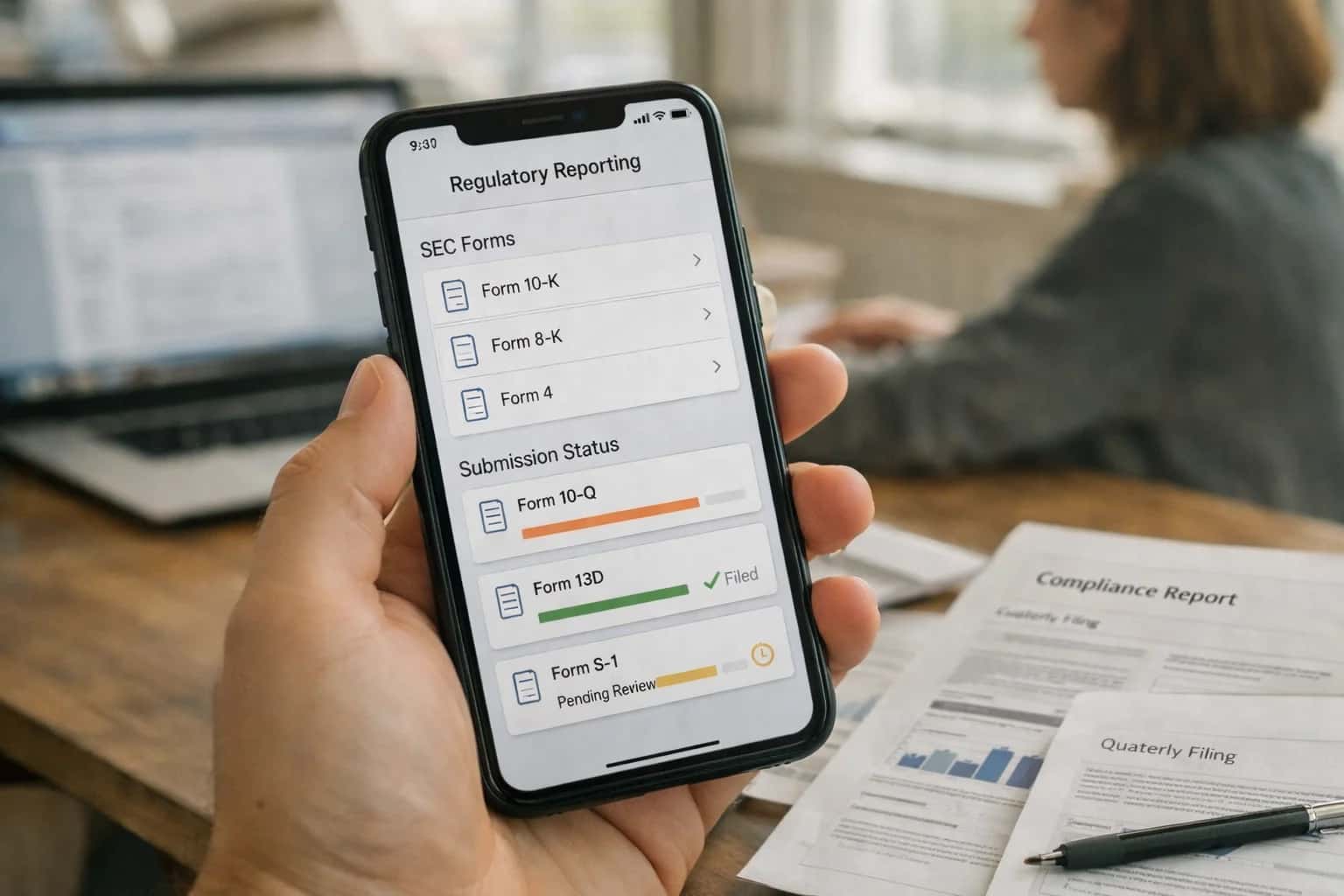
PROMPT PLAYBOOK
When to Use This Prompt
Define the job, reader, and constraints for extracting exact regulatory passages that apply to a described scenario or obligation.
Use this prompt when you have a well-defined scenario (e.g., 'We process EU customer payment data and store it in US data centers') and a bounded set of regulatory documents (e.g., GDPR articles, PCI DSS requirements, internal policies). The prompt is not a general legal research tool, a contract review assistant, or a substitute for legal counsel. It is also not designed for open-ended regulatory exploration, multi-jurisdictional surveys without a specific fact pattern, or situations where the regulatory text is ambiguous and requires interpretive legal analysis. In those cases, the prompt may over-extract or misattribute rules, creating false confidence.
Before using this prompt, ensure you have: (1) a clear, factual description of the scenario or obligation, (2) the full text of the relevant regulations with stable section identifiers, and (3) a defined output schema that your downstream system can validate. The prompt includes placeholders for [SCENARIO], [REGULATORY_TEXT], and [OUTPUT_SCHEMA] so you can adapt it to different regulatory domains. If you are operating in a regulated industry where incorrect extraction could lead to compliance failures, always pair this prompt with a human review step and an automated validation harness that checks for missing obligations, hallucinated citations, and over-extraction of irrelevant rules.
PRACTICAL GUARDRAILS
Use Case Fit
This prompt extracts precise regulatory passages for a described scenario. It is designed for compliance engineers who need exact text, citation paths, and applicability reasoning. The cards below clarify where it excels, where it fails, and what operational risks to manage before production.
01
Good Fit: Structured Regulatory Corpora
Use when: your source documents are well-structured regulations, statutes, or standards with clear section numbering and defined terms. Guardrail: The prompt's citation-path requirement assumes parseable document structure. Pre-process PDFs to extract section hierarchies before prompting.
02
Bad Fit: Ambiguous or Principle-Based Guidance
Avoid when: the regulatory text relies on reasonableness standards, materiality judgments, or principles without explicit rules. Risk: The model may over-extract tangential passages or fabricate certainty. Guardrail: Add a confidence score field and route low-confidence outputs to human review.
03
Required Inputs
Requires: a specific scenario description, the full regulatory text corpus, and a defined output schema. Risk: Vague scenarios produce broad, unusable extractions. Guardrail: Validate that the scenario input includes jurisdiction, entity type, and activity description before invoking the prompt.
04
Operational Risk: Missing Obligations
Risk: The prompt may miss obligations that apply through cross-references, incorporated standards, or interpretive guidance. Guardrail: Implement a secondary check prompt that searches for cross-referenced sections and tests whether they alter the obligation set. Log all omissions for audit.
05
Operational Risk: Over-Extraction
Risk: The model returns too many passages, including irrelevant or tangentially related rules, overwhelming reviewers. Guardrail: Add a relevance threshold in the prompt instructions and post-process outputs to rank by applicability score. Flag extractions exceeding a count limit for human triage.
06
Human-in-the-Loop Boundary
Risk: Users may treat extracted passages as complete legal advice. Guardrail: The output must include a disclaimer that the extraction is a compliance aid, not legal counsel. Route all outputs for regulated decisions through a qualified reviewer before action is taken.
PROMPT PLAYBOOK
Copy-Ready Prompt Template
A reusable prompt template for extracting regulatory text evidence with square-bracket placeholders that you can copy directly into your system prompt or user message template.
This prompt template is designed for compliance engineers who need to extract exact regulatory passages that apply to a described scenario or obligation. The template uses square-bracket placeholders that you replace with your specific inputs before sending to the model. Each placeholder represents a critical input dimension: the scenario description, the regulatory corpus to search, the expected output structure, extraction constraints, and the risk level that determines how conservative the extraction should be.
textYou are a regulatory compliance evidence extraction system. Your task is to identify and extract exact regulatory passages from the provided regulatory corpus that apply to the described scenario or obligation. ## SCENARIO [SCENARIO_DESCRIPTION] ## REGULATORY CORPUS [REGULATORY_TEXT] ## OUTPUT SCHEMA Return a JSON object with the following structure: { "extractions": [ { "regulation_id": "string (section or paragraph identifier from source)", "exact_text": "string (verbatim regulatory text)", "citation_path": "string (hierarchical reference, e.g., Title X > Part Y > Section Z)", "applicability_reasoning": "string (why this passage applies to the scenario)", "obligation_type": "string (one of: prohibition, requirement, permission, definition, exemption, reporting, recordkeeping, other)", "relevance_score": "number (0.0 to 1.0, where 1.0 means directly applicable)" } ], "coverage_assessment": { "scenario_fully_addressed": "boolean", "missing_obligation_areas": ["string (areas not covered by extracted passages)"], "overall_confidence": "number (0.0 to 1.0)" }, "extraction_metadata": { "total_passages_reviewed": "number", "passages_extracted": "number", "extraction_timestamp": "string (ISO 8601)" } } ## CONSTRAINTS [EXTRACTION_CONSTRAINTS] ## RISK LEVEL [RISK_LEVEL] ## INSTRUCTIONS 1. Extract only passages that are directly applicable to the scenario. Do not include tangentially related or background provisions. 2. Quote regulatory text exactly as it appears. Do not paraphrase, summarize, or alter wording. 3. If a passage contains defined terms, include the definition if it appears in the corpus. 4. For each extraction, explain specifically why the passage applies to the scenario. 5. If the scenario describes multiple obligations, extract passages for each distinct obligation. 6. Flag any scenario obligations that have no corresponding regulatory passage in the coverage assessment. 7. If [RISK_LEVEL] is "high", apply a stricter relevance threshold and include more detailed applicability reasoning. 8. If [RISK_LEVEL] is "high", add a "limitations_and_caveats" field to each extraction noting any interpretive uncertainty. 9. Do not fabricate regulatory text. If a passage does not exist in the corpus, do not create one. 10. If the regulatory corpus is insufficient to address the scenario, set coverage_assessment.scenario_fully_addressed to false and explain gaps.
Adaptation guidance: Replace [SCENARIO_DESCRIPTION] with a clear description of the business scenario, transaction, or compliance question. Replace [REGULATORY_TEXT] with the full text of the relevant regulatory corpus, including section numbers and hierarchical structure. Replace [EXTRACTION_CONSTRAINTS] with specific instructions such as jurisdiction filters, date ranges, or exclusion criteria. Replace [RISK_LEVEL] with low, medium, or high to control extraction conservatism. For high-risk workflows, always route outputs through human review before relying on extractions for compliance decisions. The output schema is designed to be machine-readable for downstream validation, audit logging, and integration with compliance management systems.
IMPLEMENTATION TABLE
Prompt Variables
Inputs the prompt needs to work reliably. Validate each before sending to the model.
| Placeholder | Purpose | Example | Validation Notes |
|---|---|---|---|
[REGULATORY_SCENARIO] | Describes the business activity, product, or situation to check for regulatory obligations | A fintech company launching a mobile payments app in the EU that uses biometric authentication for transactions over €50 | Must be a non-empty string with at least 50 characters describing a concrete scenario. Reject vague inputs like 'payment rules' or single-sentence queries. Check for missing jurisdiction, industry, or activity type before sending. |
[JURISDICTION] | Specifies the legal jurisdiction or regulatory regime to search within | EU GDPR, US HIPAA, California CCPA, Singapore PDPA | Must match a known jurisdiction in the source document set. Validate against an allowed-jurisdiction enum before prompt assembly. If jurisdiction is ambiguous or missing, return a clarification request to the user rather than guessing. |
[SOURCE_DOCUMENTS] | The regulatory text corpus to extract evidence from, provided as structured passages with metadata | Array of objects with fields: document_id, section_number, section_title, full_text, effective_date, regulatory_body | Each passage must have a non-null document_id and full_text field. Reject passages where full_text is under 20 characters or consists only of headings. Validate that effective_date is parseable as ISO 8601. Minimum 1 passage required; maximum set by context window budget minus prompt overhead. |
[OBLIGATION_TYPES] | Optional filter for specific obligation categories to extract | ['data protection', 'consumer disclosure', 'record keeping', 'breach notification'] | If provided, must be a non-empty array of strings drawn from a predefined taxonomy. If null or empty, extract all applicable obligations. Validate each value against the taxonomy before prompt assembly. Unknown obligation types should trigger a warning but not block execution. |
[CONFIDENCE_THRESHOLD] | Minimum confidence score for extracted evidence to be included in output | 0.7 | Must be a float between 0.0 and 1.0. Default to 0.5 if not specified. Lower thresholds increase recall but risk including irrelevant passages. Higher thresholds increase precision but risk missing applicable obligations. Log the threshold used for audit. |
[MAX_OBLIGATIONS] | Upper limit on the number of distinct obligations to extract | 10 | Must be a positive integer between 1 and 50. Prevents runaway extraction on broad scenarios. If the model identifies more obligations than the limit, it should prioritize by applicability strength and return a truncated flag in the output metadata. |
[OUTPUT_SCHEMA] | Defines the expected JSON structure for each extracted obligation | See output contract: obligation_id, regulation_text, citation_path, applicability_reasoning, confidence_score, source_document_ids | Must be a valid JSON Schema object or reference to a named schema. Validate that required fields include at minimum: regulation_text, citation_path, and source_document_ids. Reject schemas that allow ungrounded outputs without source references. |
[INCLUDE_IRRELEVANT_FLAG] | Controls whether the model should also flag regulations that were considered but determined not applicable | Must be a boolean. When true, the output includes an explicit non_applicable_regulations array with reasoning for exclusion. This is critical for audit trails and compliance reviews to show the model didn't miss obligations. Default to true for regulated use cases. |
PROMPT PLAYBOOK
Implementation Harness Notes
How to wire the Regulatory Text Evidence Extraction Prompt into a production application with validation, retries, and human review.
This prompt is designed to be a single step inside a larger compliance workflow, not a standalone chatbot. The application layer is responsible for providing the correct regulation corpus, managing the extraction request, validating the output, and deciding whether the result is reliable enough to surface to a user or feed into a downstream system. Treat the prompt as a function call: structured input in, structured output out, with strict validation before the output leaves the harness.
The implementation harness should enforce a strict JSON output schema. After the model responds, validate that every extracted passage includes a non-empty regulation_text, a complete citation_path (e.g., 12 CFR Part 1026.4(a)), and a non-empty applicability_reasoning field. Reject any output where the citation path does not match a known structure in the provided regulation corpus. If the model returns malformed JSON, use a repair prompt that provides the raw output and the expected schema, and retry once. If the repair fails, log the failure and escalate for human review. For high-risk obligations (e.g., those involving reporting deadlines, consumer disclosures, or monetary thresholds), flag the extraction for mandatory human approval before it enters any system of record.
Model choice matters. Use a model with strong instruction-following and structured output capabilities, such as gpt-4o or claude-3-5-sonnet, and set temperature to 0 or near 0 to minimize variance in regulatory text extraction. If your compliance pipeline processes large regulation corpora, pre-chunk the regulations by section or subpart and use retrieval-augmented generation (RAG) to supply only the most relevant chunks as [CONTEXT]. This reduces token cost and limits the model's ability to hallucinate regulations that are not in the provided context. Log every extraction with the full prompt, model response, validation result, and reviewer decision for audit purposes.
Common failure modes to instrument for: the model extracts a regulation that sounds relevant but does not actually apply to the described scenario (over-extraction); the model misses a critical obligation because the scenario description was ambiguous (under-extraction); the model fabricates a plausible-sounding citation that does not exist in the source corpus (hallucination). Mitigate over-extraction by adding a [CONSTRAINTS] block that instructs the model to only extract regulations where applicability is clear and direct. Mitigate under-extraction by running a second 'obligation gap check' prompt that reviews the scenario against the full regulation index and flags potentially missed sections. Mitigate hallucination by cross-referencing every extracted citation against a known list of valid regulation paths before the output is accepted.
Do not use this prompt for real-time consumer-facing applications without a human-in-the-loop review step. Regulatory extraction errors can carry legal and financial consequences. The harness should treat every extraction as a draft recommendation until a qualified reviewer confirms it. For batch compliance audits, run the prompt across all scenarios, aggregate the extractions, and present a review dashboard that highlights low-confidence extractions, missing citations, and conflicting obligations for prioritized human attention.
IMPLEMENTATION TABLE
Expected Output Contract
Define the exact fields, types, and validation rules the model must return for each extracted regulatory passage. Use this contract to build a post-processing validator that rejects malformed or incomplete outputs before they reach downstream systems.
| Field or Element | Type or Format | Required | Validation Rule |
|---|---|---|---|
regulation_text | string | Must be a verbatim quote from [SOURCE_DOCUMENT]. Validate substring match against source text with tolerance for whitespace normalization. | |
citation_path | string | Must follow pattern: [DOCUMENT_TITLE] > [SECTION_NUMBER] > [SUBSECTION] > [PARAGRAPH]. Parse check for non-empty segments separated by '>'. | |
applicability_reasoning | string | Must contain at least one explicit reference to [SCENARIO_DESCRIPTION] and one reference to the extracted regulation_text. Length >= 50 characters. | |
obligation_type | enum | Must be one of: 'requirement', 'prohibition', 'exemption', 'reporting', 'definition', 'penalty'. Reject any value outside this set. | |
confidence_score | float | Must be between 0.0 and 1.0 inclusive. Values below [CONFIDENCE_THRESHOLD] trigger human review before ingestion. | |
source_document_id | string | Must match a document_id present in [SOURCE_DOCUMENTS] input array. Null or missing values cause immediate rejection. | |
extraction_timestamp | ISO 8601 string | If present, must parse as valid ISO 8601 datetime. Null allowed when timestamp is not available from source. | |
alternative_interpretations | array of strings | If present, each element must be a non-empty string. Empty array allowed. Null allowed when no alternatives are identified. |
PRACTICAL GUARDRAILS
Common Failure Modes
Regulatory text extraction fails in predictable ways. These cards cover the most common production failure modes and the specific guardrails that catch them before they reach downstream systems or users.
01
Over-Extraction of Irrelevant Regulations
What to watch: The model returns regulations that mention keywords from the scenario but do not actually apply to the described obligation or entity. This inflates the evidence set with noise and erodes downstream trust. Guardrail: Add a post-extraction applicability check that requires the model to justify why each extracted passage applies to the specific scenario, not just to the general topic. Filter out passages where applicability reasoning is circular or keyword-only.
02
Missing Obligations Due to Synonym Gaps
What to watch: The scenario uses industry or operational language that does not match the legal terminology in the regulation. The model fails to map 'quarterly review' to 'periodic assessment' and misses a critical obligation. Guardrail: Pre-process the scenario with a terminology expansion step that maps business terms to likely regulatory synonyms before extraction. Include a coverage check that flags when zero obligations are found for a described activity.
03
Citation Path Fragmentation
What to watch: The model extracts regulation text but provides incomplete or ambiguous citation paths (e.g., missing sub-paragraph letters, incorrect section numbering). Downstream audit tools cannot verify the source. Guardrail: Enforce a strict citation schema that requires section, paragraph, sub-paragraph, and clause identifiers. Validate citation format against the known regulation structure and reject extractions with unverifiable paths.
04
Context Truncation Changing Meaning
What to watch: The model extracts a sentence that appears to impose an obligation, but the surrounding paragraph contains an exception or condition that negates it. The extracted span is technically verbatim but misleading. Guardrail: Require a minimum extraction window that includes the full paragraph or logical unit containing the target text. Add a contradiction check that scans adjacent text for exceptions, conditions, or scope limitations before finalizing the extraction.
05
Hallucinated Regulation Text Under Ambiguity
What to watch: When the scenario is ambiguous or the regulation is silent on a point, the model fabricates plausible-sounding regulatory language rather than reporting that no applicable passage was found. Guardrail: Implement a strict grounding verification step that checks every extracted passage character-by-character against the source document. Require the model to output an explicit abstention when no passage meets the relevance and fidelity threshold.
06
Temporal Version Drift
What to watch: The model extracts from an outdated version of the regulation, missing recent amendments or relying on superseded text. The extraction is faithful to the wrong source version. Guardrail: Require source metadata that includes the regulation version date or effective date in every extraction. Add a version freshness check that compares the source date against the latest known version before accepting the output.
IMPLEMENTATION TABLE
Evaluation Rubric
How to test output quality before shipping. Run these checks against a golden dataset of known scenario-regulation pairs.
| Criterion | Pass Standard | Failure Signal | Test Method |
|---|---|---|---|
Regulation Recall | All regulations from the golden set are identified in the output | Missing regulation citation or obligation text for a known applicable rule | Compare extracted regulation IDs against the golden set; compute recall@k |
Citation Path Accuracy | Every extracted regulation includes a correct, parseable citation path (title, part, section) | Malformed citation string, missing section number, or citation that does not resolve to a real regulation | Regex validation against expected citation pattern; spot-check 20% against the source document |
Applicability Reasoning Quality | Each extracted regulation includes a reasoning block that correctly connects the scenario fact to the regulation trigger | Reasoning references a fact not present in the scenario, uses circular logic, or states the regulation applies without explanation | LLM-as-judge evaluation against a rubric scoring factual grounding and logical connection |
Irrelevant Regulation Exclusion | No regulation is extracted that the golden set marks as not applicable to the scenario | Output includes a regulation that the golden set explicitly labels as irrelevant or out-of-scope | Compute precision by counting extracted regulations not in the golden set; target precision >= 0.90 |
Obligation Text Fidelity | Extracted obligation text matches the source regulation verbatim with no paraphrasing or truncation | Altered wording, missing clauses, or added interpretation not present in the source text | String similarity check (e.g., BLEU or ROUGE-L) against the golden obligation text; threshold >= 0.98 |
Output Schema Compliance | Output is valid JSON matching the [OUTPUT_SCHEMA] with all required fields present and correctly typed | Missing required field, incorrect type, or extra fields that violate the schema contract | JSON Schema validation using the published schema; reject on any validation error |
Confidence Score Calibration | Confidence scores correlate with actual correctness; high-confidence extractions are correct, low-confidence extractions indicate genuine uncertainty | High confidence assigned to an incorrect or hallucinated regulation; low confidence assigned to a correct extraction | Expected Calibration Error (ECE) computed across a held-out test set; target ECE < 0.10 |
Omission Handling | When no regulation applies, the output returns an empty list and a clear abstention message instead of guessing | Fabricated regulation or forced match when the golden set indicates no applicable regulation | Test with negative scenarios where no regulation applies; check for empty list and abstention flag |
Enabling Efficiency, Speed & Accuracy
Intelligent Analysis, Decision & Execution
We build AI systems for teams that need search across company data, workflow automation across tools, or AI features inside products and internal software.
Talk to Us
Search across company data
Give teams answers from docs, tickets, runbooks, and product data with sources and permissions.
Useful when people spend too long searching or get different answers from different systems.
Enterprise searchRAGPermissions
Read more
Automate internal workflows
Use AI to route work, draft outputs, trigger actions, and keep approvals and logs in place.
Useful when repetitive work moves across multiple tools and teams.
AI agentsWorkflow automationGovernance
Read more
Add AI to products and internal tools
Build assistants, guided actions, or decision support into the software your team or customers already use.
Useful when AI needs to be part of the product, not a separate tool.
AI integrationDecision supportModel routing
Read moreADAPTATION OPTIONS
Adapt This Prompt
How to adapt
Use the base prompt with a frontier model (GPT-4o, Claude 3.5 Sonnet) and minimal output validation. Focus on getting the extraction shape right before adding harness complexity. Replace [REGULATION_TEXT] with a single regulation section and [SCENARIO] with a short compliance question.
codeExtract the exact regulatory passages from [REGULATION_TEXT] that apply to this scenario: [SCENARIO]. Return JSON with: - applicable_passages: [{regulation_text, citation_path, applicability_reasoning}] - irrelevant_rules_skipped: [string]
Watch for
- Missing citation paths when regulations use nested numbering
- Over-extraction of tangentially related rules
- Model inventing regulation text not present in the source
- No confidence or uncertainty signal on borderline applicability

About the author
Prasad Kumkar
CEO & MD, Inference Systems
Prasad Kumkar is the CEO & MD of Inference Systems and writes about AI systems architecture, LLM infrastructure, model serving, evaluation, and production deployment. Over 5+ years, he has worked across computer vision models, L5 autonomous vehicle systems, and LLM research, with a focus on taking complex AI ideas into real-world engineering systems.
His work and writing cover AI systems, large language models, AI agents, multimodal systems, autonomous systems, inference optimization, RAG, evaluation, and production AI engineering.
LinkedIn
Limited slotsGet a Free AI Consultation
Partnered with leading AI, data, and software stack.





How We Work
Custom AI workflows for your Business
One-fit-all AI don't work for modern businesses. At Inferensys, we aim to understand your business & custom requirements; which we use to define most efficient agentic workflows, the data, and the tools for your business.
01
Review the use case
We understand the task, the users, and where AI can actually help.
Read more02
Pick the right approach
We define what needs search, automation, or product integration.
Read more03
Build the first useful version
We implement the part that proves the value first.
Read more04
Improve from there
We add the checks and visibility needed to keep it useful.
Read moreThe first call is a practical review of your use case and the right next step.
Talk to Us