This prompt is for governance and compliance teams who need to audit verification decisions made by automated fact-checking pipelines or human reviewers. It checks whether a verification outcome and its supporting process comply with organizational policies such as evidence sufficiency standards, source authority requirements, escalation rules, and handling restrictions for sensitive content. The core job-to-be-done is producing an auditable compliance assessment that references specific policy clauses, not re-verifying the claim itself. The ideal user is a compliance officer, a governance lead, or an audit team member responsible for ensuring that the verification pipeline operates within defined risk and quality boundaries before a decision is published, logged as final, or acted upon.

Prompt
Verification Policy Compliance Check Prompt
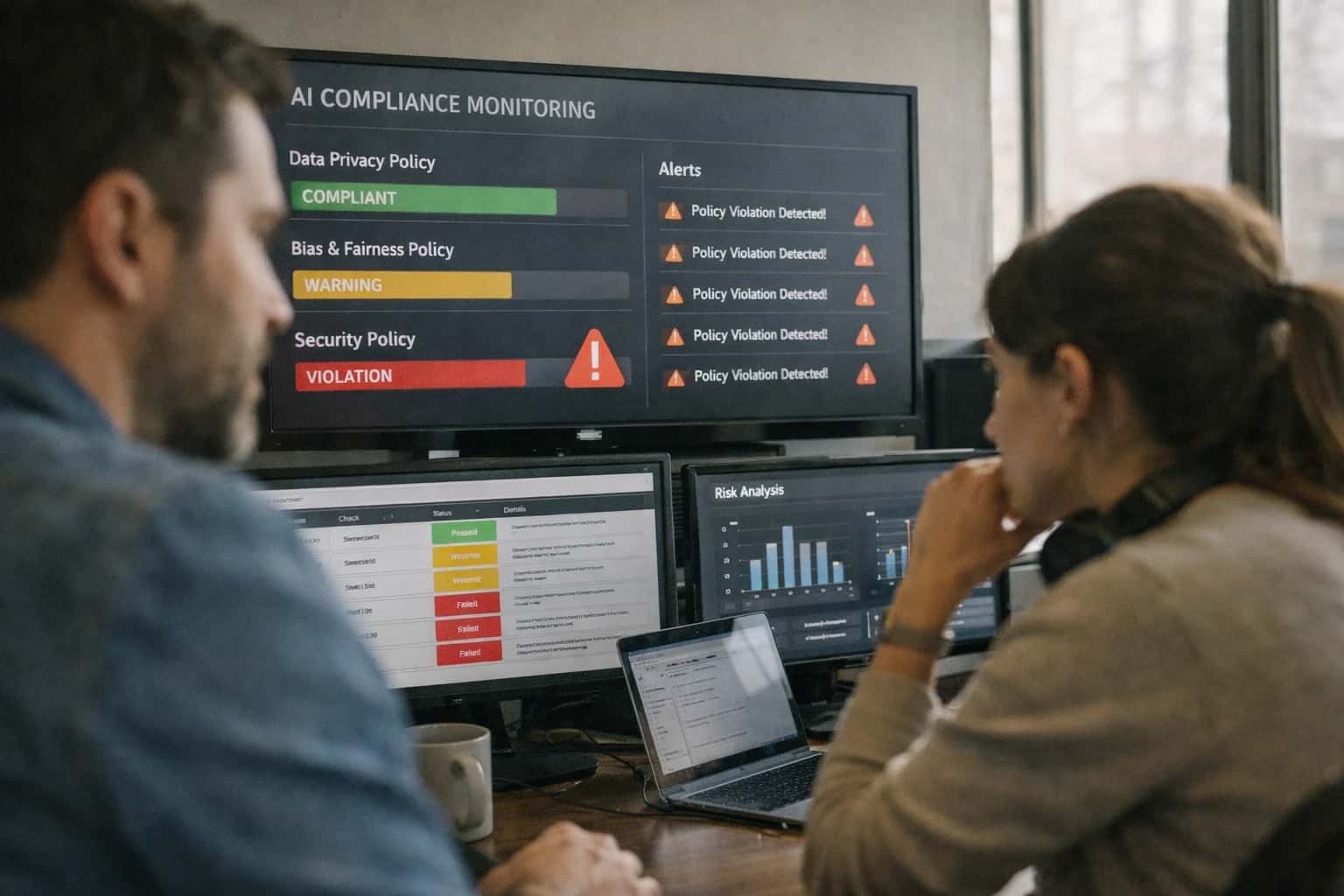
When to Use This Prompt
Defines the precise operational context for the Verification Policy Compliance Check Prompt, including the required inputs, the ideal user, and the boundaries of its application.
Use this prompt only after a verification decision has been made. It requires three concrete inputs: a defined policy document, a structured verification record, and a need for a traceable compliance report. The prompt assumes the policy document contains explicit, referenceable clauses. Do not use this prompt as a replacement for the verification decision itself, as a real-time gate on breaking news, or in any workflow where the policy is vague, unwritten, or exists only as tribal knowledge. It is also unsuitable for evaluating the factual accuracy of a claim; its sole function is to assess the process and outcome against a known governance standard. Attempting to use it without a structured policy will result in generic, unactionable output.
The output is a compliance assessment, not a binary pass/fail flag. It should flag specific violations, reference the exact policy clauses in question, and recommend remediation steps. Before integrating this prompt into a production pipeline, you must test it against a golden dataset of known policy violation patterns and edge cases, such as a decision made with insufficient sources or a high-risk claim that bypassed human review. The next step is to wire this prompt into a post-verification, pre-finalization harness that logs the compliance report alongside the verification record, creating a complete audit trail. Avoid the mistake of treating a 'compliant' result as a guarantee of correctness; it only confirms adherence to the stated process.
Use Case Fit
Where the Verification Policy Compliance Check Prompt delivers value and where it introduces unacceptable risk or latency.
Good Fit: Governance Gating Before Publication
Use when: a verification pipeline has produced a decision and the organization requires a policy compliance check before that decision is published or acted upon. Guardrail: wire this prompt as a synchronous gate after auto-verification but before human review dispatch, so policy violations block downstream actions without adding latency to the verification itself.
Good Fit: Audit-Ready Decision Logging
Use when: compliance teams need structured, policy-referenced explanations for why a verification decision was accepted, escalated, or rejected. Guardrail: store the prompt output alongside the verification record so auditors can trace each decision to a specific policy clause, not just a general 'compliant' label.
Bad Fit: Real-Time Verification Pipelines Under 500ms
Avoid when: the verification pipeline has a strict sub-500ms latency budget and the compliance check would add material delay. Guardrail: run compliance checks asynchronously post-decision for time-sensitive claims, flagging violations for retrospective remediation rather than blocking the pipeline inline.
Bad Fit: Undefined or Ambiguous Policies
Avoid when: organizational verification policies are unwritten, contradictory, or exist only as tribal knowledge. Guardrail: require a structured policy document as input to the prompt; if policies are ambiguous, route to human policy owners for clarification before attempting automated compliance checks.
Required Inputs: Policy Artifacts and Verification Context
Risk: the prompt produces unreliable compliance assessments when fed only a claim and verdict without the governing policies. Guardrail: always provide the policy document text, the verification decision payload, and any domain-specific compliance rules as explicit inputs; never rely on the model's internal knowledge of what 'compliant' means.
Operational Risk: Policy Drift and Stale Rules
Risk: policies change over time, and a compliance check against outdated rules creates a false sense of security. Guardrail: version-lock the policy document input and add a policy-version field to every compliance output; build a monitoring check that alerts when the policy version in production is older than the latest approved version.
Copy-Ready Prompt Template
A copy-ready prompt template for assessing a verification decision against your organization's compliance policies.
This prompt template is designed to be wired directly into your verification pipeline. It takes a verification decision record and a set of organizational policies, then produces a structured compliance assessment. The model is instructed to act as a compliance analyst, cross-referencing the decision's evidence, confidence, and routing against explicit policy rules. The output is a machine-readable JSON object suitable for logging, auditing, or triggering remediation workflows.
textYou are a compliance analyst for an AI-assisted verification pipeline. Your task is to audit a single verification decision against the provided organizational policies. You must be precise, evidence-based, and conservative. If a policy is unclear or the decision's details are insufficient, flag it for human review. ## INPUTS ### Verification Decision Record [DECISION_RECORD] ### Organizational Policies [POLICIES] ## INSTRUCTIONS 1. **Parse the Decision:** Identify the original claim, the verification outcome (True, False, Unverified, Disputed), the confidence score, the evidence sources used, and the routing decision (Auto-Verified, Escalated to Human). 2. **Policy Mapping:** For each relevant policy in [POLICIES], determine if the verification decision is compliant, non-compliant, or if compliance is uncertain. 3. **Violation Flagging:** For any non-compliant finding, explicitly state the policy clause violated, the specific detail from the decision record that constitutes the violation, and the severity (Critical, High, Medium, Low). 4. **Remediation:** For each violation, propose a concrete remediation step that would bring the decision into compliance. 5. **Uncertainty Handling:** If the decision record lacks the information needed to assess a policy, flag the policy as "Unable to Assess" and specify the missing information. ## CONSTRAINTS - Do not re-evaluate the factual accuracy of the claim itself. Only assess the process and decision against the policies. - If [POLICIES] is empty, flag the entire decision as "No Policies Provided" and require human review. - Base your assessment strictly on the provided text. Do not infer or assume external context. - If the confidence score is below the threshold defined in [POLICIES] for auto-verification, but the decision was auto-verified, this is a Critical violation. ## OUTPUT_SCHEMA You must respond with a single, valid JSON object conforming to this schema: { "assessment_id": "string, a unique ID for this compliance check", "decision_id": "string, the ID from the [DECISION_RECORD]", "overall_compliance": "Compliant | Non-Compliant | Unable to Assess", "findings": [ { "policy_id": "string, reference to the specific policy clause", "policy_name": "string, short name of the policy", "compliance_status": "Compliant | Non-Compliant | Unable to Assess", "rationale": "string, concise explanation of the finding", "violation_detail": "string or null, specific non-compliant detail from the decision record", "severity": "Critical | High | Medium | Low | null", "remediation": "string or null, concrete step to achieve compliance" } ], "requires_human_review": boolean, "human_review_reason": "string or null, explanation if human review is needed" }
To adapt this template, replace [DECISION_RECORD] with a JSON or structured text object from your verification system. This object should contain the claim, the verdict, the confidence score, and the routing path. Replace [POLICIES] with a structured list of your organization's rules, such as 'Auto-verification requires a confidence score > 0.95' or 'Claims about financial performance must always be reviewed by a human.' The prompt's strength lies in its explicit instruction to separate process compliance from factual re-evaluation, preventing the model from drifting into re-doing the original verification work. For high-stakes domains, always route the output where overall_compliance is "Non-Compliant" or requires_human_review is true to a human auditor before taking any automated action.
Prompt Variables
Every placeholder the Verification Policy Compliance Check Prompt expects, why it matters, and how to validate it before sending to the model.
| Placeholder | Purpose | Example | Validation Notes |
|---|---|---|---|
[VERIFICATION_DECISION] | The auto-verification output or proposed human review outcome being checked for policy compliance. | {"claim_id": "C-982", "verdict": "TRUE", "confidence": 0.94, "evidence_count": 3} | Schema check: must contain claim_id, verdict, and confidence fields. Verdict must be one of TRUE, FALSE, UNVERIFIED. Confidence must be a float between 0.0 and 1.0. |
[EVIDENCE_CHAIN] | The full set of source-attributed evidence used to reach the verification decision, including provenance metadata. | [{"source_id": "S-12", "excerpt": "...", "url": "...", "retrieved_at": "2024-01-15T10:00:00Z"}] | Array length must be >= 1. Each object must have source_id and excerpt. URL and retrieved_at are required for audit compliance. Null or empty array triggers immediate human review routing. |
[APPLICABLE_POLICIES] | The specific policy documents, rules, or standards the verification decision must comply with. | ["content-verification-policy-v2.3", "high-risk-claim-escalation-policy"] | Must be a non-empty array of policy identifiers. Each identifier must match a known policy in the policy registry. Unknown policy IDs must cause a pre-flight error, not a model hallucination. |
[CLAIM_DOMAIN] | The subject-matter domain of the claim, used to select domain-specific policy rules and evidence standards. | "financial-reporting" | Must be a string from the approved domain taxonomy. Free-text domains are rejected. Use enum validation: legal, financial, medical, scientific, technical, news, political, other. Unknown domains route to human review. |
[CLAIM_RISK_LEVEL] | The pre-assessed risk classification of the claim, driving policy stringency and escalation requirements. | "high" | Must be one of low, medium, high, critical. If null, the compliance check must assume high and flag the missing risk assessment as a process violation. Critical claims always require human approval regardless of auto-verdict. |
[REVIEWER_CONTEXT] | Optional metadata about the human reviewer if the decision has already been reviewed, used to detect policy conflicts. | {"reviewer_id": "R-45", "reviewer_role": "senior-analyst", "review_timestamp": "2024-01-15T14:00:00Z"} | Null is allowed for pre-review compliance checks. If present, reviewer_role must be in the approved role registry. Reviewer_id must not match the system's own identifier to prevent self-review violations. |
[LATENCY_BUDGET_MS] | The maximum allowed latency in milliseconds for the compliance check, used to enforce SLA-aware processing. | 500 | Must be a positive integer. If the compliance check exceeds this budget, the system must return a TIMEOUT status with a partial assessment rather than blocking the verification pipeline. Values below 100ms should trigger a warning that policy depth may be sacrificed. |
[OUTPUT_SCHEMA] | The expected JSON schema for the compliance assessment output, including violation flags and remediation actions. | {"type": "object", "properties": {"compliant": {"type": "boolean"}, "violations": {"type": "array"}, "remediation_required": {"type": "boolean"}}} | Must be a valid JSON Schema object. The prompt must be tested with schema validation before deployment. Missing required fields in the output must trigger a retry with schema error feedback, not silent acceptance. |
Implementation Harness Notes
How to wire the Verification Policy Compliance Check Prompt into an application with validation, retries, latency budgets, and audit trails.
This prompt is not a standalone chat interaction; it is a compliance gate inside a verification pipeline. The harness must treat the prompt as a deterministic check that either passes, flags violations, or escalates for human review. Because policy compliance directly affects audit readiness and regulatory posture, the implementation must prioritize explainability and false-negative prevention over raw speed. Wire the prompt after a verification decision has been proposed but before that decision is published or acted upon. The harness should never allow a verification outcome to bypass the compliance check, even under latency pressure.
Build the harness with three mandatory stages: pre-validation, model invocation with structured output parsing, and post-validation with retry logic. Pre-validation confirms that the input payload contains all required fields—[POLICY_DOCUMENT], [VERIFICATION_DECISION], [EVIDENCE_CHAIN], and [CLAIM_CONTEXT]—and rejects malformed requests before consuming model tokens. Model invocation should use a low-temperature setting (0.0–0.2) with a strict JSON schema specifying compliance_status (enum: compliant, non_compliant, uncertain), violated_policy_ids (array of strings), remediation_required (boolean), and human_review_required (boolean). Post-validation must check that non_compliant status always includes at least one violated_policy_id and that remediation_required is never false when violations exist. If parsing fails or post-validation catches a structural inconsistency, retry once with the same payload and a stronger instruction to adhere to the output schema. After a second failure, escalate to a human reviewer with the raw model output and validation error context.
Latency budgets require special attention. Compliance checks add overhead to verification pipelines, and time-sensitive verifications cannot tolerate unbounded delays. Implement a configurable timeout—start at 5 seconds for the model call—and a fast-path bypass for low-risk verification categories defined in your policy. The bypass must be an explicit policy rule, not a silent skip. Log every compliance check result, including bypass decisions, to an append-only audit store with the prompt version, model identifier, timestamp, input hash, and full output payload. This audit trail is non-negotiable for governance reviews. Avoid caching compliance results across different verification decisions, even if the policy document is identical, because the interaction between policy and specific evidence chains demands fresh evaluation each time. The next step is to build a regression test suite using known policy violation patterns and edge cases before deploying this harness to production.
Expected Output Contract
Defines the structure, types, and validation rules for the compliance assessment object. Use this contract to build a post-processing validator that rejects malformed outputs before they reach downstream systems or human reviewers.
| Field or Element | Type or Format | Required | Validation Rule |
|---|---|---|---|
compliance_status | enum: compliant | non_compliant | review_required | Must be exactly one of the three enum values. Reject any other string. | |
policy_references | array of objects | Each object must contain policy_id (string), policy_name (string), and relevant_clause (string). Array must not be empty if status is non_compliant. | |
violations | array of objects | If present, each object must contain violation_type (string), description (string), severity (enum: critical | major | minor), and remediation_required (boolean). Array must be empty if status is compliant. | |
remediation_steps | array of strings | If violations array is non-empty, this field is required and must contain at least one actionable string. Each string must be under 500 characters. | |
assessment_confidence | number | Must be a float between 0.0 and 1.0 inclusive. Reject if confidence is below 0.5 when status is compliant, requiring human review escalation. | |
evidence_summary | string | Must be a non-empty string summarizing the evidence used for the assessment. Must not exceed 2000 characters. | |
reviewer_notes | string | If status is review_required, this field must be populated with a non-empty string explaining the ambiguity or escalation reason. | |
assessment_timestamp | string (ISO 8601) | Must be a valid ISO 8601 datetime string. Reject if the timestamp is in the future or unparseable. |
Common Failure Modes
Production verification pipelines break when compliance checks are treated as a checkbox rather than a gating function. These are the most common failure patterns observed when governance teams deploy policy compliance prompts at scale—and the concrete guardrails that prevent them.
Policy Reference Hallucination
What to watch: The model invents policy section numbers, clause titles, or requirement language that doesn't exist in the actual policy document. This is especially dangerous in regulated domains where auditors will trace every reference. Guardrail: Require the prompt to quote policy text verbatim from a provided policy document rather than generating references from memory. Validate output references against a known policy schema and flag any reference not matching the source document for human review.
Latency-Induced Verification Skipping
What to watch: When compliance checks add 2-5 seconds to time-sensitive verification pipelines, operators disable the check or set overly permissive timeouts that return 'compliant' by default. This silently passes non-compliant verifications. Guardrail: Implement a hard timeout with a 'block-on-timeout' default rather than 'pass-on-timeout.' Log every timeout event as a compliance gap. For high-throughput pipelines, pre-compute policy rule embeddings and use deterministic rule matching before calling the LLM.
Vague Violation Descriptions
What to watch: The model flags a violation but describes it as 'potential policy concern' or 'may not align with Section 4' without specifying the exact clause, the violated condition, or what evidence triggered the flag. Reviewers can't act on vague flags, and audit trails become indefensible. Guardrail: Constrain the output schema to require a specific violated_clause_id, the offending_claim_text, and a violation_rationale that quotes the policy language. Add a validator that rejects any violation record missing these fields.
Context Window Truncation of Policy Rules
What to watch: Large policy documents exceed the context window, causing the model to check claims against only the first N pages of policy. Claims related to rules in the truncated portion are incorrectly marked compliant. Guardrail: Chunk the policy document by rule or section and run compliance checks in parallel per chunk. Aggregate results with a deduplication step. Alternatively, retrieve only the top-K relevant policy sections using embedding similarity before running the compliance prompt.
Over-Permissive Default Classification
What to watch: When the model is uncertain about whether a claim violates policy, it defaults to 'compliant' to avoid false positives. This systematically misses edge-case violations and trains operators to trust a broken check. Guardrail: Add an explicit 'uncertain' classification tier that routes to human review. Calibrate the prompt with few-shot examples where ambiguous cases are correctly flagged as uncertain rather than compliant. Measure the false-negative rate against a golden set of known violations.
Policy Version Drift
What to watch: The compliance prompt references an outdated policy version because the policy document was updated but the prompt template wasn't. Claims are checked against obsolete rules, creating a false sense of compliance. Guardrail: Embed the policy version hash or effective date in every compliance output. Implement a deployment gate that blocks prompt promotion if the referenced policy version doesn't match the current production version. Log a warning when a prompt references a policy older than N days.
Evaluation Rubric
Run these checks against a golden dataset of verification records with known compliance outcomes. Each row tests a distinct failure mode that must be caught before shipping.
| Criterion | Pass Standard | Failure Signal | Test Method |
|---|---|---|---|
Policy Reference Accuracy | Every cited policy section exists in [POLICY_DOCUMENT] and is quoted verbatim | Hallucinated policy section number or paraphrased policy text that doesn't match source | Schema check: extract all policy references, grep against source document, flag any missing or mismatched |
Violation Detection Recall | All known violations in golden dataset are flagged with correct severity | Golden-dataset violation missed or severity downgraded without justification | Run against 50+ labeled records with known violations; measure recall >= 0.95 and severity accuracy >= 0.90 |
False Violation Rate | No violation flagged for compliant records in golden dataset | Clean record receives violation flag or remediation requirement | Run against 30+ known-compliant records; require zero false positives |
Remediation Actionability | Every flagged violation includes a concrete, policy-referenced remediation step | Remediation field is empty, generic ('fix it'), or references wrong policy section | Parse [REMEDIATION] field; validate non-empty, contains policy reference, and is specific to violation type |
Confidence Score Calibration | High-confidence scores (>0.9) match actual compliance outcomes in >= 90% of cases | Confidence >0.9 on incorrect compliance assessment or confidence <0.5 on correct assessment | Compare [CONFIDENCE_SCORE] against ground-truth labels; compute ECE and require <0.1 |
Latency Budget Compliance | 95th percentile response time under [MAX_LATENCY_MS] for single-record checks | P95 latency exceeds budget by >20% in load test | Run 100 concurrent requests; measure P50, P95, P99; fail if P95 > [MAX_LATENCY_MS] * 1.2 |
Handling of Missing Evidence | Claims with insufficient evidence receive 'INSUFFICIENT_EVIDENCE' verdict, not silent pass or fail | Unverifiable claim marked as compliant or non-compliant without evidence qualification | Inject 10 records with deliberately insufficient evidence; require 100% 'INSUFFICIENT_EVIDENCE' verdict |
Edge Case: Policy Conflict | When two policies conflict, output flags both and escalates rather than picking one silently | Only one policy cited when golden dataset contains known policy conflict | Test with 5 known policy-conflict records; require both policies cited and escalation flag set to true |
Enabling Efficiency, Speed & Accuracy
Intelligent Analysis, Decision & Execution
We build AI systems for teams that need search across company data, workflow automation across tools, or AI features inside products and internal software.
Talk to Us
Search across company data
Give teams answers from docs, tickets, runbooks, and product data with sources and permissions.
Useful when people spend too long searching or get different answers from different systems.

Automate internal workflows
Use AI to route work, draft outputs, trigger actions, and keep approvals and logs in place.
Useful when repetitive work moves across multiple tools and teams.

Add AI to products and internal tools
Build assistants, guided actions, or decision support into the software your team or customers already use.
Useful when AI needs to be part of the product, not a separate tool.
Adapt This Prompt
How to adapt
Use the base prompt with a simplified policy document and a single-model call. Focus on extracting clear violation flags and policy references without complex schema enforcement. Accept raw text output and manually review compliance assessments.
Prompt modification
- Replace [POLICY_DOCUMENT] with a single, well-structured policy section.
- Remove [OUTPUT_SCHEMA] constraints; ask for a bulleted list of violations instead.
- Set [CONSTRAINTS] to "Flag only clear, unambiguous violations. If uncertain, note it as 'requires review'."
Watch for
- Over-flagging: the model may treat minor deviations as violations.
- Missing policy references: the model may assert non-compliance without citing the specific rule.
- Inconsistent severity classification when not enforced by schema.

About the author
Prasad Kumkar
CEO & MD, Inference Systems
Prasad Kumkar is the CEO & MD of Inference Systems and writes about AI systems architecture, LLM infrastructure, model serving, evaluation, and production deployment. Over 5+ years, he has worked across computer vision models, L5 autonomous vehicle systems, and LLM research, with a focus on taking complex AI ideas into real-world engineering systems.
His work and writing cover AI systems, large language models, AI agents, multimodal systems, autonomous systems, inference optimization, RAG, evaluation, and production AI engineering.
Partnered with leading AI, data, and software stack.





How We Work
Custom AI workflows for your Business
One-fit-all AI don't work for modern businesses. At Inferensys, we aim to understand your business & custom requirements; which we use to define most efficient agentic workflows, the data, and the tools for your business.
01
Review the use case
We understand the task, the users, and where AI can actually help.
Read more02
Pick the right approach
We define what needs search, automation, or product integration.
Read more03
Build the first useful version
We implement the part that proves the value first.
Read more04
Improve from there
We add the checks and visibility needed to keep it useful.
Read moreThe first call is a practical review of your use case and the right next step.
Talk to Us