This prompt is for AI engineers and product teams building regulated industry assistants—such as those in finance, healthcare, or legal services—that must periodically remind users of their operational boundaries. The job-to-be-done is generating a contextually appropriate, non-disruptive re-statement of compliance limits, data handling policies, or scope restrictions when a conversation drifts toward a boundary. The ideal user is a developer integrating this into a multi-turn chat harness where policy drift or user overreach is a known production risk. You need a defined system policy contract, the recent conversation history, and a trigger signal indicating a boundary is being approached.

Prompt
Compliance Boundary Re-Statement Prompt
A practical prompt playbook for using Compliance Boundary Re-Statement Prompt in production AI workflows.
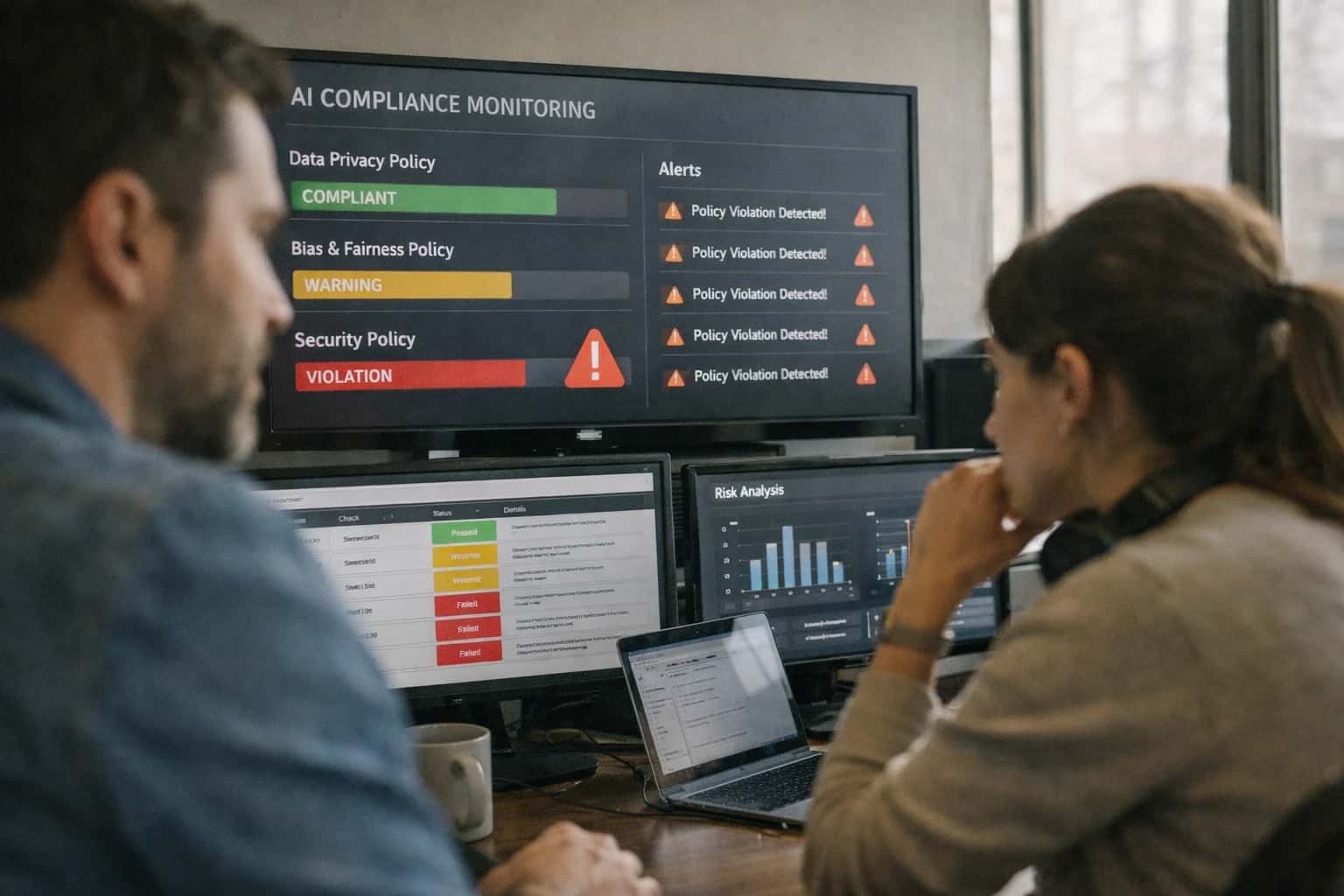
PROMPT PLAYBOOK
When to Use This Prompt
Defines the job, ideal user, required context, and constraints for the Compliance Boundary Re-Statement Prompt.
Do not use this prompt for general-purpose chatbots, creative writing assistants, or any system where strict operational boundaries are not legally or contractually required. It is not a replacement for hard-coded guardrails, tool-use authorization checks, or human review workflows. This prompt is specifically for the re-statement of existing policies, not for defining new ones or making compliance decisions. It assumes the underlying policy document is already authored and approved. If your assistant's context window is too small to hold both the full policy and the conversation, pair this with a prompt compression or instruction re-injection strategy from the Context Window Budgeting pillar.
Before implementing, ensure you have a clear trigger mechanism—such as a classification router detecting off-topic queries or a keyword-based boundary detector—to invoke this prompt only when needed. Over-use will annoy users and waste context budget; under-use risks compliance violations. The output should be treated as a draft for a human reviewer if the domain is high-risk. Wire the generated re-statement into your application's response stream, log it for audit purposes, and monitor whether users respect the boundary or attempt to circumvent it, which should trigger an escalation workflow.
PRACTICAL GUARDRAILS
Use Case Fit
Where the Compliance Boundary Re-Statement Prompt works, where it fails, and what you must have in place before deploying it to a regulated assistant.
01
Good Fit: Regulated Multi-Turn Assistants
Use when: the assistant operates under GDPR, HIPAA, FINRA, or internal compliance policies that must survive long sessions. Guardrail: map each compliance boundary to a specific trigger condition (topic proximity, keyword, intent) so re-statements fire deterministically, not randomly.
02
Bad Fit: Open-Domain Chatbots
Avoid when: the assistant has no defined operational boundaries or compliance obligations. Guardrail: if you cannot list the exact boundaries that must be re-stated, this prompt will produce vague disclaimers that erode user trust. Use a scope-limitation prompt instead.
03
Required Input: Boundary Catalog
What to watch: the prompt cannot invent compliance boundaries. It needs a pre-defined catalog of boundaries, their trigger conditions, and approved re-statement language. Guardrail: maintain a structured boundary registry (boundary ID, trigger rule, re-statement template, authority reference) and pass only relevant entries in context.
04
Required Input: Phrasing Controls
What to watch: without tone and timing parameters, re-statements can sound robotic, intrusive, or panicked. Guardrail: supply explicit phrasing controls: formality level, maximum re-statement frequency per session, minimum turns between re-statements, and escalation language for repeated boundary approaches.
05
Operational Risk: Re-Statement Fatigue
What to watch: users who repeatedly approach a boundary may receive identical re-statements, causing annoyance or deliberate probing. Guardrail: implement a re-statement counter per boundary per session. Escalate to a firmer message or human review after N re-statements. Log each re-statement event for audit.
06
Operational Risk: Boundary Miss
What to watch: the prompt may fail to detect a boundary approach if the user uses indirect language, jargon, or non-English phrasing. Guardrail: pair this prompt with a classification step that scores boundary proximity before generating the re-statement. Route low-confidence boundary detections to human review instead of risking a miss.
PROMPT PLAYBOOK
Copy-Ready Prompt Template
A reusable prompt template for generating contextually appropriate compliance boundary re-statements when a conversation approaches a regulated boundary.
This template produces a compliance boundary re-statement that reminds the user of operational limits, data handling policies, or scope restrictions. The prompt is designed to be called by an application-level detector that identifies when a conversation turn is approaching a defined boundary. It generates a re-statement that is contextually appropriate to the current conversation rather than a generic disclaimer, balancing compliance clarity with conversational flow. The template uses square-bracket placeholders that your application must populate before sending the request to the model.
codeYou are a compliance-aware assistant operating in a regulated domain. Your task is to generate a contextually appropriate re-statement of operational boundaries when a user request approaches a defined compliance limit. ## CONVERSATION CONTEXT [CONVERSATION_HISTORY] ## CURRENT USER REQUEST [USER_REQUEST] ## BOUNDARY BEING APPROACHED - Boundary name: [BOUNDARY_NAME] - Boundary description: [BOUNDARY_DESCRIPTION] - Policy reference: [POLICY_REFERENCE] - Risk level: [RISK_LEVEL] ## RE-STATEMENT PARAMETERS - Timing: [TIMING_CONTEXT] - Tone: [TONE_REQUIREMENT] - Required elements: [REQUIRED_ELEMENTS] - Prohibited language: [PROHIBITED_LANGUAGE] ## OUTPUT INSTRUCTIONS Generate a compliance boundary re-statement that: 1. Acknowledges the user's request without dismissing it. 2. Clearly states the boundary in plain, non-legalistic language. 3. Explains why the boundary exists, referencing [POLICY_REFERENCE] when appropriate. 4. Offers a permitted alternative or next step if one exists. 5. Uses the specified tone: [TONE_REQUIREMENT]. 6. Avoids the following prohibited language: [PROHIBITED_LANGUAGE]. 7. Does not apologize excessively or suggest the boundary is negotiable. ## OUTPUT FORMAT Return a JSON object with these fields: { "boundary_restatement": "The full re-statement text to insert into the conversation.", "boundary_type": "[BOUNDARY_NAME]", "risk_level": "[RISK_LEVEL]", "alternative_offered": true or false, "alternative_description": "Brief description of the alternative offered, or null if none.", "requires_escalation": true or false, "escalation_reason": "Reason for escalation, or null if not required." } ## CONSTRAINTS - Do not fabricate policy details. Only reference [POLICY_REFERENCE] as provided. - Do not use language that implies the boundary is flexible or can be waived. - Do not generate legal advice or interpret regulations beyond the stated boundary. - If [RISK_LEVEL] is "high", the re-statement must include an explicit statement that the action cannot be performed. - Keep the re-statement under [MAX_TOKENS] tokens.
To adapt this template, your application must populate each placeholder before calling the model. The [CONVERSATION_HISTORY] should include enough prior turns for the model to understand the conversational context without exceeding your context budget. The [TIMING_CONTEXT] field should describe where in the conversation this re-statement will appear—such as "immediately before the assistant's response to the current turn" or "as a standalone message before continuing." The [REQUIRED_ELEMENTS] field should enumerate the specific compliance points that must appear, such as "data retention policy," "scope of authorized advice," or "jurisdictional limitation." The [PROHIBITED_LANGUAGE] field should list phrases that must not appear, such as "I'm not a lawyer" or hedging language that undermines the boundary.
Before deploying this prompt, validate that your boundary detection logic is triggering at the correct proximity to the boundary—neither too early, which creates unnecessary friction, nor too late, which risks a compliance violation. Test the prompt against edge cases where the user pushes back against the re-statement, where multiple boundaries are approached simultaneously, and where the conversation history contains prior boundary discussions that could confuse the model. For high-risk domains, route the generated re-statement through a human review queue before it reaches the user, and log every re-statement event with the boundary name, risk level, and whether an alternative was offered for audit purposes.
IMPLEMENTATION TABLE
Prompt Variables
Inputs required for the Compliance Boundary Re-Statement Prompt to generate contextually appropriate boundary reminders. Each variable must be populated before prompt assembly.
| Placeholder | Purpose | Example | Validation Notes |
|---|---|---|---|
[CONVERSATION_HISTORY] | Last N turns of dialogue to analyze for boundary proximity | User: Can you tell me what medications I should avoid? Assistant: I can summarize general drug interaction categories but cannot provide personal medical advice... | Must include at least 3 turns. Truncate to last 2000 tokens if needed. Verify turn boundaries are clearly delimited. |
[COMPLIANCE_POLICIES] | Active regulatory and operational boundary definitions the assistant must enforce | HIPAA: No personal medical advice. GDPR: No storage of personal data without consent. FINRA: No investment recommendations. | Each policy must have a short name and a clear boundary statement. Validate that no two policies conflict. Null not allowed. |
[BOUNDARY_TRIGGERS] | Specific phrases, intents, or topics that indicate the conversation is approaching a compliance boundary | ["personal medical advice", "investment recommendation", "legal opinion", "tax advice"] | Must be a valid JSON array of strings. Each trigger should be tested against the last 50 production conversations for false positive rate. Empty array allowed if no triggers defined. |
[PROXIMITY_THRESHOLD] | Confidence score above which the prompt should generate a boundary re-statement | 0.75 | Float between 0.0 and 1.0. Validate that threshold is calibrated against a golden dataset of 100 boundary/non-boundary turns. Lower threshold increases re-statement frequency. |
[RE_STATEMENT_STYLE] | Tone and format instruction for how the boundary reminder should be phrased | Preemptive and helpful. Do not sound accusatory. Offer alternative assistance within bounds. | Must be a non-empty string. Validate against tone consistency policy. Test with 5 boundary scenarios to ensure style matches brand guidelines. |
[MIN_TURNS_SINCE_LAST_REMINDER] | Minimum number of turns before another boundary re-statement is allowed to prevent nagging | 5 | Integer greater than 0. Validate that counter resets on topic shift. Test with long sessions to ensure reminders do not cluster. |
[OUTPUT_FORMAT] | Schema for the boundary re-statement output including timing decision and phrasing | {"should_remind": boolean, "boundary_triggered": string, "reminder_text": string, "proximity_score": float} | Must be a valid JSON schema. Validate output against schema before surfacing to user. Reminder_text must be non-empty when should_remind is true. |
[ESCALATION_POLICY] | Rule for when boundary proximity requires human review instead of automated re-statement | Escalate to human reviewer if proximity_score > 0.95 or if user has pushed back on boundary twice in session. | Must define clear escalation criteria. Validate escalation path is operational. Test with simulated boundary-push scenarios to ensure escalation triggers correctly. |
PROMPT PLAYBOOK
Implementation Harness Notes
How to wire the Compliance Boundary Re-Statement Prompt into a production application with validation, retries, and human review.
The Compliance Boundary Re-Statement Prompt is not a standalone chat instruction—it is a mid-session intervention that must be triggered by application logic, not by the model deciding on its own. The harness should monitor conversation state for boundary-proximity signals: a user asking about data retention, requesting an action outside the assistant's scope, or using language that suggests they may misunderstand the assistant's limitations. When a boundary-proximity event fires, the harness injects this prompt into the context window with the current conversation summary, the specific boundary being approached, and the required re-statement phrasing controls. The model then generates a re-statement that the harness validates before surfacing to the user.
Wire the prompt into your application with a boundary-proximity detector that runs before each assistant response. This detector can be a lightweight classifier prompt, a keyword-trigger list, or a vector similarity check against known boundary-violation patterns. When proximity exceeds a configurable threshold, the harness calls the Compliance Boundary Re-Statement Prompt with these inputs: [CONVERSATION_SUMMARY] (last N turns compressed), [BOUNDARY_TYPE] (e.g., data_handling, scope_restriction, regulatory_limit), [BOUNDARY_POLICY_TEXT] (the exact policy language to re-state), [PHRASING_STYLE] (e.g., preemptive_gentle, corrective_firm, informational_neutral), and [TIMING_CONTEXT] (whether this is a first reminder, a repeated boundary approach, or an escalation). The output must conform to a strict schema: { re_statement_text: string, boundary_cited: string, phrasing_style_used: string, escalation_flag: boolean }. Validate this schema before the re-statement reaches the user. If validation fails, retry once with the validation error injected into the prompt as [PREVIOUS_OUTPUT_ERROR]. If the retry also fails, fall back to a pre-approved static re-statement from your policy library and log the failure for review.
Model choice matters here. This prompt requires instruction-following precision over creative fluency. Use a model with strong schema adherence (GPT-4o, Claude 3.5 Sonnet, or equivalent) and set temperature=0 to maximize output determinism. Do not use a small or quantized model for this task unless you have validated re-statement accuracy against a golden dataset of 50+ boundary scenarios. Log every re-statement event with the boundary-proximity score that triggered it, the generated re-statement, the validation result, and whether the fallback was used. These logs become your audit trail for compliance reviewers. For high-risk domains (healthcare, finance, legal), route all re-statements to a human review queue for the first 100 production events, then sample-review thereafter. Never let the model decide whether to re-state a boundary—that decision must stay in application code with auditable triggers.
IMPLEMENTATION TABLE
Expected Output Contract
Fields, types, and validation rules for the compliance boundary re-statement output. Use this contract to parse, validate, and route the assistant's output before surfacing it to the user or logging it for audit.
| Field or Element | Type or Format | Required | Validation Rule |
|---|---|---|---|
boundary_statement | string | Must be a non-empty string. Must contain a direct re-statement of the specific compliance boundary being approached, not a generic disclaimer. Check for presence of boundary-specific keywords from [BOUNDARY_DEFINITIONS]. | |
boundary_id | string (slug) | Must match exactly one identifier from the [BOUNDARY_DEFINITIONS] list. No partial matches or fabricated IDs allowed. Validate against the provided enum. | |
trigger_reason | string (enum) | Must be one of: 'user_query_proximity', 'assistant_response_proximity', 'scheduled_interval', 'policy_update'. Reject any other value. | |
proximity_score | float (0.0-1.0) | Must be a number between 0.0 and 1.0 inclusive. Represents the estimated semantic distance from the boundary. Values below [PROXIMITY_THRESHOLD] should not trigger a re-statement; if this output exists, the score must be >= [PROXIMITY_THRESHOLD]. | |
insertion_timing | string (enum) | Must be one of: 'immediate', 'next_turn_prepend', 'next_turn_append'. Determines where in the response stream this statement is placed. Reject any other value. | |
statement_tone | string (enum) | Must be one of: 'informational', 'advisory', 'restrictive'. Must match the tone prescribed for the triggered boundary in [BOUNDARY_DEFINITIONS]. If mismatch, flag for tone policy violation. | |
user_facing_text | string | The exact text intended for the user. Must be non-empty, must not contain internal system tokens or placeholders, and must pass a PII redaction check if [PII_REDACTION_POLICY] is active. | |
audit_log_entry | object | Must contain 'timestamp' (ISO 8601), 'session_id' (string), 'turn_number' (integer), and 'boundary_id' (string). Validate schema before logging. Missing fields must trigger a repair request, not a silent drop. |
PRACTICAL GUARDRAILS
Common Failure Modes
What breaks first when re-stating compliance boundaries in multi-turn conversations and how to guard against it.
01
Contextual Blindness to Boundary Proximity
What to watch: The prompt fails to detect that the conversation is approaching a compliance boundary, missing subtle user language that implies a disallowed request. This leads to boundary statements firing too late or not at all. Guardrail: Implement a pre-check step that classifies the user's turn for boundary proximity before generating the re-statement. Use a defined taxonomy of boundary signals and require a confidence score.
02
Robotic and Context-Deaf Phrasing
What to watch: The re-statement is inserted as a generic, copy-pasted legal block that ignores the conversational flow, frustrating the user and making the assistant seem unhelpful. Guardrail: The prompt must require the re-statement to be a single, natural-language sentence that explicitly references the user's last query. Add a constraint to match the tone and formality of the ongoing conversation.
03
Over-Triggering and Unnecessary Friction
What to watch: The prompt triggers a compliance re-statement for benign queries that share keywords with disallowed topics, creating a hostile user experience. Guardrail: Include a list of specific, benign use cases that should not trigger the re-statement. Require the model to differentiate between a user asking about a policy and a user asking to violate it.
04
Instruction Drift After Re-Statement
What to watch: After correctly re-stating a boundary, the assistant's subsequent turns drift back toward the disallowed behavior because the re-statement itself scrolled out of the context window. Guardrail: The re-statement prompt must output a structured flag that the application layer uses to temporarily elevate the priority of the boundary policy in the system prompt for the next N turns.
05
Inconsistent Policy Interpretation
What to watch: The prompt paraphrases the compliance boundary in a way that subtly changes its meaning, creating a loophole or an overly restrictive interpretation that contradicts the official policy. Guardrail: The prompt must be given the canonical policy text and instructed to quote it verbatim, only adding a minimal, contextually relevant preamble. A post-generation check can compare the re-statement's embedding to the canonical policy's embedding.
06
Ignoring Explicit User Pushback
What to watch: The user argues with the boundary re-statement, and the prompt has no logic for handling this, causing the assistant to either fold or repeat itself unhelpfully. Guardrail: The prompt must include a specific escalation path for pushback. It should generate a firm, empathetic final re-statement and then, if the user persists, output a structured signal to terminate the topic or offer a human handoff.
IMPLEMENTATION TABLE
Evaluation Rubric
Use this rubric to test whether the Compliance Boundary Re-Statement Prompt produces safe, accurate, and well-timed outputs before shipping to production.
| Criterion | Pass Standard | Failure Signal | Test Method |
|---|---|---|---|
Boundary Accuracy | Re-stated boundary matches the [COMPLIANCE_POLICY] exactly; no added, omitted, or softened constraints. | Re-statement adds exceptions, weakens mandatory language, or omits a regulated category. | Diff check against canonical policy text; LLM-as-judge with 0-tolerance for semantic drift. |
Contextual Relevance | Re-statement references the specific user query or conversation turn that triggered the boundary proximity. | Generic boundary reminder with no connection to the current conversation context. | Human review of 20 samples; pass if >90% contain explicit reference to the triggering topic. |
Timing Appropriateness | Re-statement fires only when [PROXIMITY_SCORE] exceeds the configured [TRIGGER_THRESHOLD]; no premature or missed triggers. | Boundary warning fires for on-topic queries or fails to fire when user explicitly requests out-of-scope action. | Log-based eval: compare trigger events against labeled proximity scores; measure false-positive and false-negative rates. |
Tone Compliance | Re-statement tone matches [TONE_PROFILE] constraints; no accusatory, alarmist, or overly permissive language. | Re-statement reads as scolding, sarcastic, or suggests the user is attempting something forbidden. | Sentiment classifier + tone classifier; flag outputs with negative sentiment or formality outside [TONE_PROFILE] range. |
Phrasing Variability | Multiple re-statements within a session use varied phrasing from [PHRASING_POOL] without semantic drift. | Identical boundary text repeated verbatim across 3+ triggers, indicating template collapse. | String similarity check across session re-statements; fail if cosine similarity >0.95 for 3 consecutive triggers. |
Actionable Guidance | Re-statement includes a permitted alternative or next step when [OFFER_ALTERNATIVE] is true. | Re-statement only says what cannot be done with no path forward, violating [OFFER_ALTERNATIVE] policy. | Keyword check for alternative suggestion patterns; LLM judge confirms presence of constructive redirection. |
Non-Interruption of Valid Work | Re-statement does not block or delay responses to queries that are within operational boundaries. | Boundary warning inserted mid-response to a fully compliant user request, disrupting workflow. | Trace analysis: measure latency added by re-statement logic; flag any insertion during in-scope turns. |
Data Handling Reference Accuracy | Any reference to data retention, PII handling, or audit policy matches [DATA_HANDLING_POLICY] verbatim. | Re-statement invents data handling guarantees not present in the source policy. | Exact string match or approved paraphrase list check; flag any claim not found in [DATA_HANDLING_POLICY]. |
Enabling Efficiency, Speed & Accuracy
Intelligent Analysis, Decision & Execution
We build AI systems for teams that need search across company data, workflow automation across tools, or AI features inside products and internal software.
Talk to Us
Search across company data
Give teams answers from docs, tickets, runbooks, and product data with sources and permissions.
Useful when people spend too long searching or get different answers from different systems.
Enterprise searchRAGPermissions
Read more
Automate internal workflows
Use AI to route work, draft outputs, trigger actions, and keep approvals and logs in place.
Useful when repetitive work moves across multiple tools and teams.
AI agentsWorkflow automationGovernance
Read more
Add AI to products and internal tools
Build assistants, guided actions, or decision support into the software your team or customers already use.
Useful when AI needs to be part of the product, not a separate tool.
AI integrationDecision supportModel routing
Read moreADAPTATION OPTIONS
Adapt This Prompt
How to adapt
Start with the base prompt and a simple boundary list. Use a single-turn test harness before adding session state. Replace [COMPLIANCE_BOUNDARIES] with 3-5 plain-English rules. Skip the timing logic and re-statement frequency controls initially.
codeYou are a compliance-aware assistant. Your boundaries are: [COMPLIANCE_BOUNDARIES] When a user request approaches any boundary, restate the relevant limit in one sentence before responding.
Watch for
- Re-statement on every turn instead of only near boundaries
- Boundary definitions that are too vague to trigger consistently
- No mechanism to track whether a boundary was already stated earlier in the session

About the author
Prasad Kumkar
CEO & MD, Inference Systems
Prasad Kumkar is the CEO & MD of Inference Systems and writes about AI systems architecture, LLM infrastructure, model serving, evaluation, and production deployment. Over 5+ years, he has worked across computer vision models, L5 autonomous vehicle systems, and LLM research, with a focus on taking complex AI ideas into real-world engineering systems.
His work and writing cover AI systems, large language models, AI agents, multimodal systems, autonomous systems, inference optimization, RAG, evaluation, and production AI engineering.
LinkedIn
Limited slotsGet a Free AI Consultation
Partnered with leading AI, data, and software stack.





How We Work
Custom AI workflows for your Business
One-fit-all AI don't work for modern businesses. At Inferensys, we aim to understand your business & custom requirements; which we use to define most efficient agentic workflows, the data, and the tools for your business.
01
Review the use case
We understand the task, the users, and where AI can actually help.
Read more02
Pick the right approach
We define what needs search, automation, or product integration.
Read more03
Build the first useful version
We implement the part that proves the value first.
Read more04
Improve from there
We add the checks and visibility needed to keep it useful.
Read moreThe first call is a practical review of your use case and the right next step.
Talk to Us