This prompt is designed for security operations teams who need to audit secrets management practices against a defined rotation policy. It takes a structured inventory of secrets from vault integrations (HashiCorp Vault, AWS Secrets Manager, GCP Secret Manager, Azure Key Vault), applies a configurable rotation policy, and produces a compliance report identifying stale secrets, missing rotation automation, and policy violations. Use this when you need an automated first-pass compliance assessment before a manual audit or as part of a continuous compliance pipeline. This is not a secret detection scanner; it assumes you already have a secrets inventory and need to evaluate it against lifecycle rules.

Prompt
Secrets Rotation Policy Compliance Prompt Template
A practical prompt playbook for using the Secrets Rotation Policy Compliance Prompt Template in production security operations workflows.
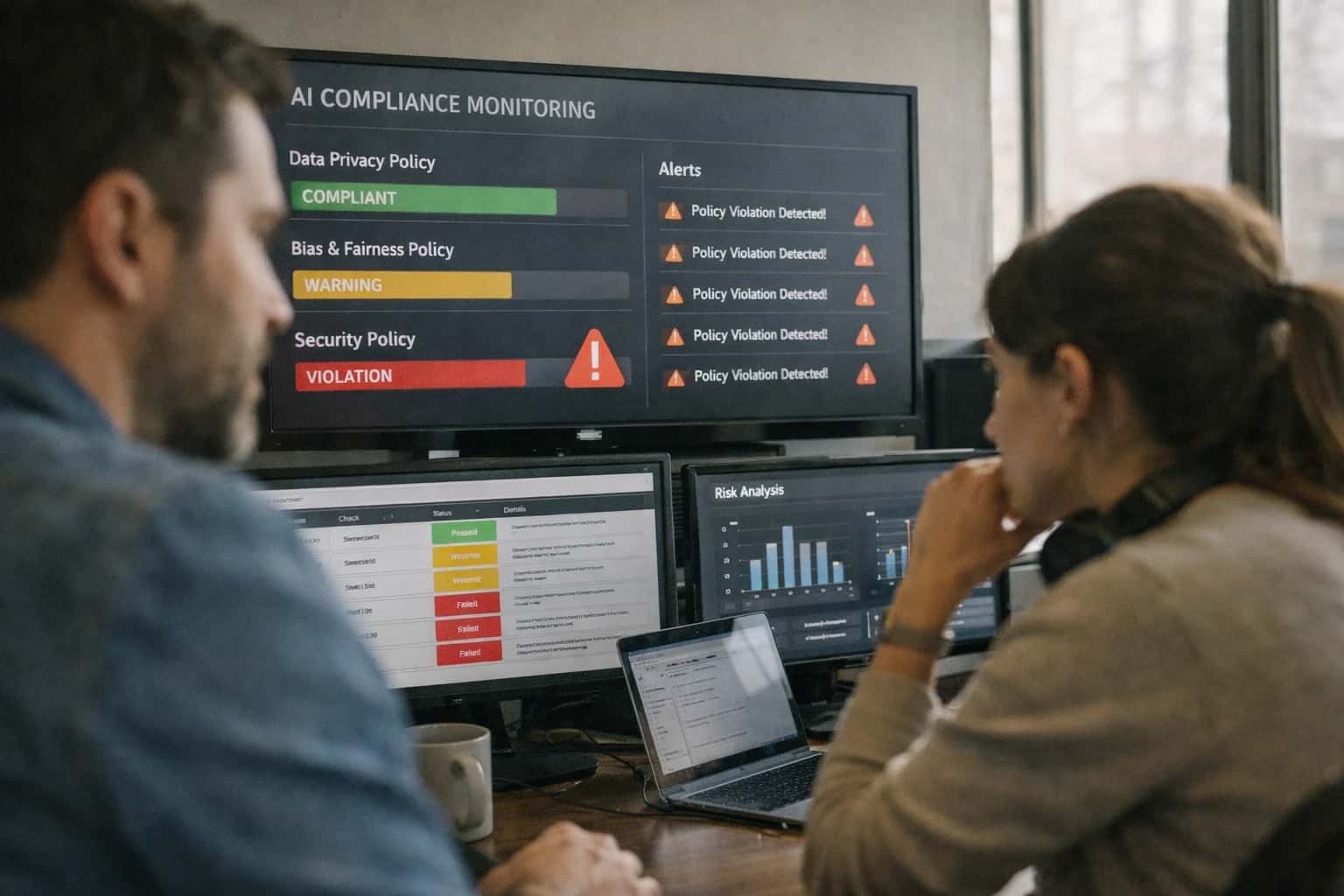
PROMPT PLAYBOOK
When to Use This Prompt
Defines the job-to-be-done, ideal user, required context, and boundaries for the secrets rotation compliance prompt.
The ideal user is a security engineer or DevSecOps practitioner who maintains a secrets inventory and needs to prove rotation compliance to auditors or enforce policy programmatically. You must provide the prompt with a structured JSON inventory containing secret identifiers, creation dates, last rotation timestamps, rotation method (automatic, manual, none), and associated service or application context. The rotation policy itself is configurable: you define maximum age thresholds by secret type (database credentials, API keys, TLS certificates, encryption keys) and any exemption rules. The prompt does not connect to vault APIs directly; you must extract and format the inventory upstream before invoking this compliance check.
Do not use this prompt for real-time secret detection in code repositories, log files, or configuration files. It is not a scanner and will not find secrets you haven't already catalogued. Do not use it as a replacement for vault-native rotation automation or policy enforcement; it is an assessment and reporting tool, not an enforcement mechanism. For high-stakes audits where regulatory findings carry legal or financial consequences, always pair the prompt's output with human review and evidence collection from the source vault systems. The prompt's value is in accelerating the compliance review cycle, not in replacing auditor judgment.
PRACTICAL GUARDRAILS
Use Case Fit
Where the Secrets Rotation Policy Compliance Prompt works well, where it fails, and what inputs and operational risks to consider before wiring it into a production audit pipeline.
01
Good Fit: Centralized Vault Audits
Use when: you have a single vault or secrets manager (HashiCorp Vault, AWS Secrets Manager, Azure Key Vault) with API access and a known rotation policy. The prompt can correlate metadata, TTLs, and rotation timestamps against your policy thresholds. Guardrail: provide the policy document as [POLICY_CONTEXT] and the vault export as structured [SECRETS_INVENTORY] to avoid the model guessing rotation rules.
02
Bad Fit: Implicit or Undocumented Rotation
Avoid when: rotation happens through side channels (manual operator scripts, CI/CD pipelines without audit logs, or vendor-managed keys with opaque rotation). The prompt cannot detect rotation events that leave no metadata trail. Guardrail: require evidence of rotation (timestamps, version history, audit logs) before running the prompt. If evidence is missing, flag the secret as 'unverifiable' rather than compliant.
03
Required Inputs
What you must provide: a structured [SECRETS_INVENTORY] with secret IDs, types, creation dates, last rotation timestamps, TTL or expiry fields, and assigned policies. A [POLICY_CONTEXT] document specifying rotation intervals per secret class. Optional [VAULT_AUDIT_LOG] for cross-verification. Guardrail: validate inventory completeness before prompting—missing fields cause the model to hallucinate rotation status.
04
Operational Risk: Stale Inventory Snapshots
Risk: running the prompt against a days-old inventory export produces a compliance report that looks authoritative but misses recent rotations or newly created secrets. Downstream consumers may act on outdated findings. Guardrail: timestamp every inventory snapshot, include the snapshot age in the prompt as [SNAPSHOT_TIMESTAMP], and make the prompt refuse to score secrets where inventory age exceeds your freshness threshold.
05
Operational Risk: Policy Ambiguity
Risk: rotation policies often contain exceptions (break-glass credentials, long-lived signing keys, bootstrap secrets) that the model may flag as violations if not explicitly scoped. False positives erode trust in automation. Guardrail: include an [EXCEPTIONS_LIST] in the policy context and instruct the model to match secrets against exception criteria before flagging. Log every exception match for auditor review.
06
Not a Replacement for Automated Enforcement
Risk: teams treat the prompt's compliance report as the control itself rather than a detective check. The prompt identifies gaps but does not rotate secrets, revoke access, or enforce policy. Guardrail: integrate the prompt output into a remediation workflow (ticketing, alerting, or auto-rotation pipeline). The prompt is a detection tool, not an enforcement mechanism. Human approval is required before any automated rotation action.
PROMPT PLAYBOOK
Copy-Ready Prompt Template
A copy-ready prompt template for auditing secrets management practices against rotation policies, producing a structured compliance report with actionable findings.
This prompt template is designed for security operations teams who need to audit secrets management practices against defined rotation policies. It accepts vault configuration data, policy documents, and an inventory of active secrets to produce a structured compliance report. The report identifies stale secrets, missing rotation automation, policy violations, and lifecycle coverage gaps across vault integrations. Use this template as the core instruction set for an AI coding agent or security review assistant operating within a repository context.
textYou are a secrets rotation policy compliance auditor. Your task is to analyze the provided secrets inventory, vault configuration, and rotation policy documents to produce a structured compliance report. ## INPUTS - Secrets Inventory: [SECRETS_INVENTORY] - Vault Configuration: [VAULT_CONFIGURATION] - Rotation Policy Document: [ROTATION_POLICY] - Rotation Automation Config: [AUTOMATION_CONFIG] - Previous Audit Report (optional): [PREVIOUS_AUDIT] ## OUTPUT SCHEMA Return a JSON object with the following structure: { "report_metadata": { "audit_timestamp": "ISO 8601 timestamp", "policy_version": "string", "vault_integrations_audited": ["list of vault names or paths"], "total_secrets_audited": "integer" }, "compliance_summary": { "compliant_count": "integer", "non_compliant_count": "integer", "exempt_count": "integer", "overall_compliance_percentage": "float", "critical_findings_count": "integer" }, "findings": [ { "finding_id": "string, unique identifier", "severity": "CRITICAL | HIGH | MEDIUM | LOW", "category": "STALE_SECRET | MISSING_AUTOMATION | POLICY_VIOLATION | LIFECYCLE_GAP | CONFIGURATION_DRIFT", "secret_identifier": "string, path or key name", "secret_type": "string, e.g., API_KEY, DATABASE_CREDENTIAL, TLS_CERT, SSH_KEY", "vault_location": "string, vault path or integration name", "current_rotation_status": { "last_rotated": "ISO 8601 timestamp or null", "rotation_interval_days": "integer or null", "expected_interval_days": "integer from policy", "days_since_rotation": "integer or null", "automation_enabled": "boolean" }, "policy_reference": "string, specific policy clause or section", "finding_description": "string, clear explanation of the violation or gap", "risk_rationale": "string, why this finding matters in security terms", "remediation_guidance": "string, actionable steps to resolve", "evidence": { "source": "string, config file, audit log, or vault record", "evidence_snippet": "string, relevant excerpt or null if not available" } } ], "lifecycle_coverage": { "secrets_with_defined_lifecycle": "integer", "secrets_without_lifecycle": "integer", "orphaned_secrets": ["list of secret identifiers with no owner or rotation policy"], "coverage_percentage": "float" }, "automation_gaps": { "secrets_requiring_manual_rotation": "integer", "automation_coverage_percentage": "float", "vaults_without_automation_support": ["list of vault names"] }, "recommendations": [ { "priority": "integer, 1 being highest", "category": "string, e.g., AUTOMATION, POLICY_UPDATE, ACCESS_REVIEW, SECRET_CLEANUP", "recommendation": "string, actionable recommendation", "affected_secrets_count": "integer", "effort_estimate": "LOW | MEDIUM | HIGH" } ] } ## CONSTRAINTS - Only report on secrets present in the provided inventory. Do not assume secrets exist. - Classify severity based on: CRITICAL if the secret is stale beyond 2x the rotation interval or has no rotation defined for production credentials; HIGH if stale beyond 1.5x the interval; MEDIUM if approaching the rotation deadline; LOW if administrative or non-sensitive. - If a secret has an approved exemption in the policy document, mark it as exempt and do not create a finding unless the exemption has expired. - For each finding, cite the specific policy clause or configuration evidence. If evidence is unavailable, note it explicitly. - Do not include actual secret values in any output. Use identifiers and paths only. - If the previous audit report is provided, highlight regressions and newly resolved findings. ## EVALUATION CRITERIA Before returning the output, verify: 1. Every non-compliant secret in the inventory has a corresponding finding. 2. Severity classifications align with the policy's defined intervals. 3. Lifecycle coverage calculation accounts for all secrets in the inventory. 4. Automation gaps are correctly identified where rotation automation config is missing or disabled. 5. No finding lacks a policy reference or explicit note that no policy clause applies. ## RISK LEVEL [HIGH] This prompt deals with security-sensitive audit data. Outputs must be reviewed by a human security engineer before being used for compliance reporting or remediation actions. Findings may trigger automated rotation workflows; validate all secret identifiers and paths before executing any rotation.
To adapt this template for your environment, replace the square-bracket placeholders with real data before execution. The [SECRETS_INVENTORY] should contain a structured list of secrets from your vault or secrets manager, including identifiers, types, last rotation timestamps, and automation status. The [VAULT_CONFIGURATION] should include vault integration details, access policies, and rotation capabilities. The [ROTATION_POLICY] is your organization's documented rotation requirements, including interval definitions per secret type and exemption criteria. The [AUTOMATION_CONFIG] should describe which vaults have automated rotation enabled and their configuration state. If you have a previous audit report, include it in [PREVIOUS_AUDIT] to enable regression detection.
Before deploying this prompt into a production workflow, wire it into an application harness that validates the output JSON against the defined schema. Implement retry logic with schema validation feedback if the model produces malformed JSON. Log every audit run with the input inventory hash and output report for traceability. For high-risk environments, route CRITICAL and HIGH severity findings to a human review queue before any automated remediation is triggered. Test the prompt against a golden dataset of known compliant and non-compliant secrets to calibrate severity classification accuracy before relying on it for compliance reporting.
IMPLEMENTATION TABLE
Prompt Variables
Placeholders required by the Secrets Rotation Policy Compliance Prompt Template. Each variable must be populated before the prompt is assembled and sent to the model. Validation notes describe how to check that the input is well-formed and safe.
| Placeholder | Purpose | Example | Validation Notes |
|---|---|---|---|
[VAULT_CONFIG] | Serialized vault integration metadata: provider type, endpoint, auth method, and accessible secret paths | {"provider": "hashicorp_vault", "endpoint": "https://vault.internal:8200", "auth_method": "kubernetes", "paths": ["secret/ci/", "secret/prod/"]} | Schema check: must include provider, endpoint, auth_method, and paths array. Reject if endpoint is a public IP or paths contain wildcards outside allowed scope. |
[ROTATION_POLICY] | Policy document defining rotation intervals, ownership, automation requirements, and lifecycle stages per secret type | {"default_rotation_days": 90, "secret_type_policies": [{"type": "database_credential", "max_age_days": 30, "auto_rotation_required": true}], "ownership_model": "team_mapped"} | Schema check: must include default_rotation_days and secret_type_policies array. Validate that max_age_days values are positive integers. Reject if auto_rotation_required is null for any type. |
[SECRET_INVENTORY] | Current state of all secrets under audit: identifiers, creation dates, last rotation dates, types, and owning teams | [{"secret_id": "sec-001", "type": "database_credential", "created_at": "2024-01-15", "last_rotated_at": "2024-06-15", "owner_team": "platform", "vault_path": "secret/prod/db/main"}] | Schema check: each record must have secret_id, type, created_at, and last_rotated_at. Parse dates as ISO 8601. Flag if last_rotated_at is before created_at. Null last_rotated_at is allowed for never-rotated secrets. |
[ROTATION_LOG] | Audit log of rotation events: timestamps, secret identifiers, rotation method, success/failure status, and operator | [{"secret_id": "sec-001", "rotated_at": "2024-06-15T10:30:00Z", "method": "automated_vault_renew", "status": "success", "operator": "vault-agent"}] | Schema check: each record must have secret_id, rotated_at, method, and status. Validate status against enum ["success", "failure", "partial"]. Parse rotated_at as ISO 8601 timestamp. Null operator is allowed for automated rotations. |
[COMPLIANCE_STANDARD] | Regulatory or internal standard against which rotation compliance is measured | {"standard": "SOC2_CC6.1", "clauses": [{"id": "CC6.1.4", "description": "Credentials are rotated upon suspected compromise and periodically"}], "evidence_required": true} | Schema check: must include standard identifier and clauses array. Validate that evidence_required is boolean. Reject if standard identifier is empty or unrecognized in allowed standards list. |
[EXEMPTION_LIST] | Pre-approved exemptions from rotation policy: secret identifiers, exemption reasons, approving authority, and expiration dates | [{"secret_id": "sec-042", "reason": "Legacy mainframe integration, migration planned Q3 2025", "approved_by": "vp-engineering", "expires_at": "2025-09-30"}] | Schema check: each exemption must have secret_id, reason, approved_by, and expires_at. Validate expires_at is a future date at time of audit. Flag if exemption has no expiration or approving authority is missing. |
[OUTPUT_SCHEMA] | Expected structure for the compliance report: findings array, summary statistics, and remediation recommendations | {"findings": [{"severity": "high", "category": "stale_secret"}], "summary": {"total_secrets": 150, "compliant": 120, "non_compliant": 30}, "remediation_plan": [{"action": "enable_auto_rotation"}]} | Schema check: must include findings array, summary object, and remediation_plan array. Validate severity against enum ["critical", "high", "medium", "low", "info"]. Reject if total_secrets does not equal compliant plus non_compliant. |
[EVIDENCE_REQUIREMENTS] | Rules for what constitutes acceptable evidence per finding type: log excerpts, configuration snippets, attestation records | {"per_finding_type": {"stale_secret": {"evidence_fields": ["secret_id", "last_rotated_at", "policy_max_age", "days_overdue"], "citation_required": true}}} | Schema check: must be a map keyed by finding category. Each category must define evidence_fields array and citation_required boolean. Reject if a finding category in the policy has no evidence requirements defined. |
PROMPT PLAYBOOK
Implementation Harness Notes
How to wire the Secrets Rotation Policy Compliance Prompt into an automated audit pipeline with validation, retries, and human review gates.
The Secrets Rotation Policy Compliance Prompt is designed to operate as a critical step within a broader security audit pipeline, not as a standalone chat interaction. Its primary function is to consume structured vault metadata and policy definitions, then produce a machine-readable compliance report. To integrate this effectively, you must treat the prompt as a deterministic function call: define a strict input schema (vault inventory, rotation policy rules, last-rotation timestamps), invoke the model, and validate the output against a known JSON schema before the results enter any compliance dashboard or ticketing system. Because the output directly informs security posture decisions, the harness must enforce evidence grounding—every finding of a stale secret must cite the specific policy clause and the vault record that triggered the violation.
The implementation should follow a validate → retry → escalate pattern. First, parse the model's JSON output and validate it against a schema that requires fields like finding_id, secret_identifier, policy_clause_reference, days_since_rotation, and remediation_priority. If validation fails or the model returns a malformed structure, initiate a single retry with a repair prompt that includes the validation error message and the original input context. If the retry also fails, log the full input/output pair and escalate to a human auditor queue rather than silently dropping the finding. For model choice, prefer a model with strong JSON mode and long-context handling (such as gpt-4o or claude-3-opus) because vault inventories can be large. Set temperature=0 to maximize deterministic reporting. If your vault metadata exceeds the context window, pre-process the input by filtering to only secrets approaching or past their rotation window, or use a RAG pattern to retrieve relevant policy sections for each secret class.
Logging and auditability are non-negotiable. Every invocation must record the prompt version, model identifier, input inventory hash, raw output, validation status, and final report payload. This trace ensures that a compliance officer can later reconstruct why a specific secret was flagged as non-compliant. Do not use the prompt to automatically trigger rotation—this is a detection and reporting tool. The output should feed into a human review queue where an operator confirms or dismisses each finding before any rotation job is initiated. Finally, build an eval harness that tests the prompt against a golden dataset of known stale and compliant secrets, measuring both rotation gap detection recall (did it catch all expired secrets?) and false positive precision (did it incorrectly flag secrets that are within policy?). Run this eval on every prompt update and whenever the underlying vault schema changes.
IMPLEMENTATION TABLE
Expected Output Contract
Fields, format, and validation rules for the compliance report produced by the Secrets Rotation Policy Compliance Prompt Template. Use this contract to parse, validate, and route the model output before it enters a downstream system or human review queue.
| Field or Element | Type or Format | Required | Validation Rule |
|---|---|---|---|
report_id | string (UUID v4) | Must parse as valid UUID v4. Generate if missing. | |
generated_at | string (ISO 8601 UTC) | Must parse to a valid UTC timestamp within the last 24 hours. | |
policy_version | string | Must match the [POLICY_DOCUMENT_VERSION] input exactly. | |
overall_compliance_status | enum: compliant | non_compliant | partial | unknown | Must be one of the four allowed values. Default to unknown if evidence is insufficient. | |
findings | array of objects | Must be a non-null array. Minimum 0 items. Each item must conform to the finding_object schema below. | |
finding_object.secret_identifier | string | Must be a non-empty string matching the naming convention from [VAULT_PROVIDER] context. | |
finding_object.rotation_status | enum: within_policy | approaching_expiry | expired | no_policy | unknown | Must be one of the five allowed values. Use unknown if rotation metadata is absent. | |
finding_object.last_rotated_at | string (ISO 8601) or null | If not null, must parse as a valid ISO 8601 timestamp. Null is permitted only when rotation_status is no_policy or unknown. |
PRACTICAL GUARDRAILS
Common Failure Modes
Secrets rotation policy compliance prompts fail in predictable ways. These cards cover the most common failure modes, why they happen, and how to guard against them before the report reaches an auditor.
01
Rotation Gap False Negatives
What to watch: The prompt misses stale secrets because it relies on explicit last_rotated timestamps without cross-referencing creation dates, usage patterns, or vault audit logs. Secrets that were never tagged for rotation appear compliant. Guardrail: Require the prompt to cross-reference secret creation date, last access time, and vault policy metadata. Add a pre-check that flags any secret missing rotation metadata as 'unknown' rather than 'compliant.'
02
Policy Version Drift
What to watch: The prompt evaluates secrets against an outdated or implicit rotation policy rather than the current committed policy document. Rotation windows change, and the model defaults to generic 90-day assumptions. Guardrail: Always inject the current rotation policy document as [POLICY_DOC] in the prompt context. Include a policy version hash in the output report so reviewers can confirm which policy was applied.
03
Vault Integration Blind Spots
What to watch: The prompt only analyzes secrets from one vault provider or API path, missing secrets managed in secondary vaults, CI/CD variables, or environment-specific stores. Partial inventory produces misleading compliance scores. Guardrail: Require the prompt to enumerate all configured vault sources from [VAULT_INVENTORY] and flag any source that returned zero results or an error. Include a coverage completeness section in the output schema.
04
Rotation Automation Misclassification
What to watch: The prompt classifies manually rotated secrets as 'automated' because a human followed a runbook on schedule. Without checking for automation evidence such as service account actions or pipeline logs, the report overstates maturity. Guardrail: Add an [AUTOMATION_EVIDENCE] input field that requires specific proof such as CI/CD job logs, vault audit entries from service accounts, or rotation script hashes. Classify secrets without automation evidence as 'manual rotation' regardless of timeliness.
05
Lifecycle Scope Truncation
What to watch: The prompt reports on active secrets but ignores revoked, expired, or orphaned secrets that still exist in vault paths. Auditors care about the full lifecycle, not just active credentials. Guardrail: Explicitly instruct the prompt to include revoked, expired, and orphaned secrets in the compliance scope. Add a lifecycle state field to the output schema and flag any secret that should have been removed but persists.
06
Output Format Inconsistency Across Vaults
What to watch: When the prompt processes multiple vault backends, it normalizes fields inconsistently. One vault's rotation_date becomes another's last_rotated, making the compliance report impossible to aggregate or diff. Guardrail: Provide an explicit [OUTPUT_SCHEMA] with canonical field names and enforce it with a post-generation validator. Reject outputs that introduce variant field names or omit required fields for any vault source.
IMPLEMENTATION TABLE
Evaluation Rubric
Criteria for testing the Secrets Rotation Policy Compliance Prompt Template before production deployment. Each criterion targets a specific failure mode in rotation gap detection, lifecycle coverage, or report actionability.
| Criterion | Pass Standard | Failure Signal | Test Method |
|---|---|---|---|
Stale Secret Detection Completeness | All secrets exceeding [ROTATION_PERIOD_DAYS] are flagged with vault path and last rotation timestamp | Report omits a known stale secret present in the input vault inventory | Golden dataset with 10 injected stale secrets across 3 vault backends; assert recall >= 0.95 |
Rotation Automation Gap Classification | Each finding includes an automation_status field with one of: automated, manual, none, unknown | Finding lacks automation_status or uses an undefined value | Schema validation against [OUTPUT_SCHEMA]; assert all findings have valid enum value |
Policy Rule Mapping Accuracy | Each violation cites the specific policy rule ID from [POLICY_DOCUMENT] that was breached | Violation references a non-existent rule ID or omits rule mapping entirely | Parse output for rule_id field; cross-reference against [POLICY_DOCUMENT] rule inventory |
Lifecycle Coverage Across Secret Types | Report covers API keys, database credentials, TLS certificates, and service account tokens if present in input | Certificate expiry findings are missing when [VAULT_INVENTORY] contains TLS entries with expiry dates | Test with inventory containing all four secret types; assert each type appears in findings when applicable |
Remediation Priority Ordering | Findings are ordered by risk_score descending, with criticality derived from secret_type and days_past_rotation | Low-risk finding appears before a critical stale production database credential | Scoring consistency test: 5 known-critical secrets must appear in top 5 positions |
False Positive Rate on Recently Rotated Secrets | Secrets rotated within [ROTATION_PERIOD_DAYS] are not flagged as violations | A secret rotated 1 day ago appears in the violations list | Boundary test with secrets rotated at [ROTATION_PERIOD_DAYS] - 1, exactly at threshold, and +1 day |
Vault Backend Source Attribution | Each finding includes source_vault field identifying which vault backend the secret originated from | Finding has null or missing source_vault when input contained multiple vault sources | Multi-vault input test; assert source_vault is populated and matches input vault identifiers |
Human-Readable Remediation Guidance | Each finding includes a remediation_summary with concrete next step, not generic advice | Remediation text is identical across different secret types or says 'rotate the secret' without specifics | Manual review of 10 sampled findings; assert unique, actionable guidance per finding |
Enabling Efficiency, Speed & Accuracy
Intelligent Analysis, Decision & Execution
We build AI systems for teams that need search across company data, workflow automation across tools, or AI features inside products and internal software.
Talk to Us
Search across company data
Give teams answers from docs, tickets, runbooks, and product data with sources and permissions.
Useful when people spend too long searching or get different answers from different systems.
Enterprise searchRAGPermissions
Read more
Automate internal workflows
Use AI to route work, draft outputs, trigger actions, and keep approvals and logs in place.
Useful when repetitive work moves across multiple tools and teams.
AI agentsWorkflow automationGovernance
Read more
Add AI to products and internal tools
Build assistants, guided actions, or decision support into the software your team or customers already use.
Useful when AI needs to be part of the product, not a separate tool.
AI integrationDecision supportModel routing
Read moreADAPTATION OPTIONS
Adapt This Prompt
How to adapt
Start with the base prompt and a single vault provider. Replace [VAULT_TYPE] with a concrete value like hashicorp_vault or aws_secrets_manager. Remove the [COMPLIANCE_FRAMEWORK] placeholder and hardcode one framework (e.g., SOC 2). Skip the structured output schema initially and ask for a markdown report instead.
Watch for
- The model may flag secrets that are intentionally long-lived (e.g., root CA keys) without understanding the exception policy
- Rotation gap calculations can be off by one interval if the prompt doesn't specify inclusive vs. exclusive windows
- Without schema enforcement, the output format will drift across runs, making diff comparisons unreliable

About the author
Prasad Kumkar
CEO & MD, Inference Systems
Prasad Kumkar is the CEO & MD of Inference Systems and writes about AI systems architecture, LLM infrastructure, model serving, evaluation, and production deployment. Over 5+ years, he has worked across computer vision models, L5 autonomous vehicle systems, and LLM research, with a focus on taking complex AI ideas into real-world engineering systems.
His work and writing cover AI systems, large language models, AI agents, multimodal systems, autonomous systems, inference optimization, RAG, evaluation, and production AI engineering.
LinkedIn
Limited slotsGet a Free AI Consultation
Partnered with leading AI, data, and software stack.





How We Work
Custom AI workflows for your Business
One-fit-all AI don't work for modern businesses. At Inferensys, we aim to understand your business & custom requirements; which we use to define most efficient agentic workflows, the data, and the tools for your business.
01
Review the use case
We understand the task, the users, and where AI can actually help.
Read more02
Pick the right approach
We define what needs search, automation, or product integration.
Read more03
Build the first useful version
We implement the part that proves the value first.
Read more04
Improve from there
We add the checks and visibility needed to keep it useful.
Read moreThe first call is a practical review of your use case and the right next step.
Talk to Us