This prompt is designed for release managers and developer relations engineers who need to convert raw git diff output into structured, user-facing release notes. The core job-to-be-done is transforming a technical, line-level code change into a clear, categorized summary that communicates value to end-users, highlights bug fixes, and explicitly calls out breaking changes. Use this prompt when you have a concrete diff from a single commit or a small, logically grouped set of commits and you need a first draft of a release note entry that is grounded in the actual code change, not in a PR description or issue tracker summary.

Prompt
Commit Diff to Release Note Prompt Template
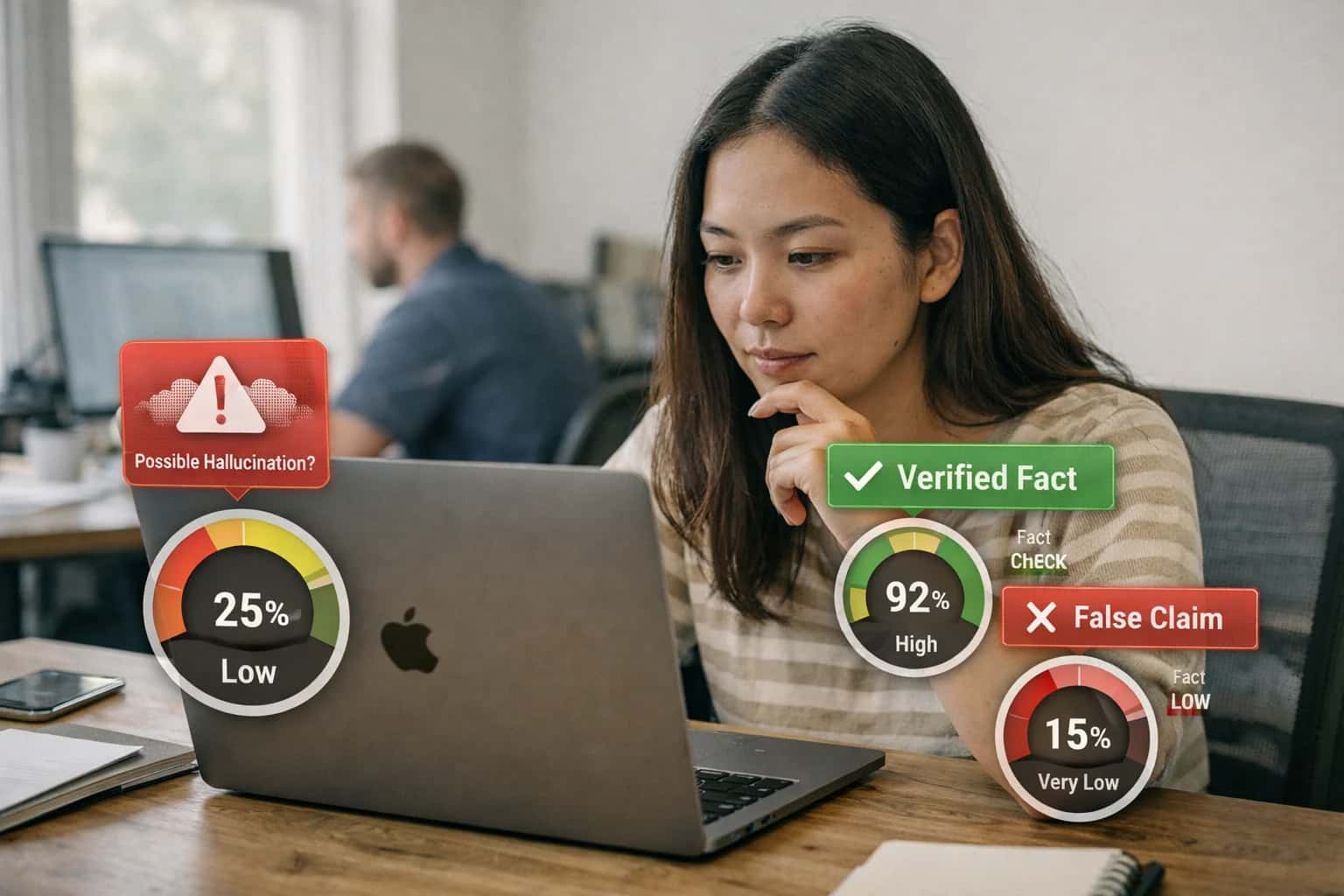
A practical prompt playbook for generating structured, user-facing release notes directly from raw commit diffs. Designed for release managers and DevRel engineers who need accurate, grounded release documentation with built-in hallucination detection.
PROMPT PLAYBOOK
When to Use This Prompt
Define the job-to-be-done, the ideal user, and the operational constraints for the Commit Diff to Release Note prompt.
The ideal user is someone who owns the release communication pipeline and is responsible for accuracy. You should not use this prompt for generating an entire version's release notes from hundreds of merged PRs; for that, use the 'Release Note Draft from Merged PRs Prompt Template'. This prompt is also unsuitable for generating changelogs from commit messages alone without the underlying diff, as it relies on code-level evidence to prevent hallucination. The required context includes the raw unified diff, the commit message for added semantic intent, and optionally a [CONSTRAINTS] block specifying the target audience's technical level and any company style guide rules. Without the diff, the model will invent features and fixes that don't exist.
Before integrating this prompt into a CI pipeline, you must implement a validation harness that checks the output against the source diff. A common failure mode is the model generating a 'feature' description for a refactoring change that has no user-facing impact. Your next step should be to pair this prompt with the 'Release Note Hallucination and Factuality Check Prompt' to create an automated accuracy gate. Always require human review for any entry flagged as a breaking change before publishing.
PRACTICAL GUARDRAILS
Use Case Fit
Where the Commit Diff to Release Note prompt works, where it fails, and the operational prerequisites for production use.
01
Good Fit: Structured, Linear Commit Histories
Use when: your team maintains a clean, linear, or squash-merged commit history with descriptive messages. The prompt excels at translating well-formed diffs into user-facing prose. Guardrail: Pre-process the git log to exclude merge commits and bot-authored noise before feeding it to the prompt.
02
Bad Fit: Unstructured or Monolithic Commits
Avoid when: the repository has large, unstructured commits like 'WIP' or 'Fix stuff' that touch dozens of files. The model will hallucinate plausible but incorrect summaries. Guardrail: Implement a pre-filtering step that rejects or flags commits with low information density before they reach the prompt.
03
Required Input: Grounded Diff Context
Risk: Without the actual code diff, the model generates release notes from commit messages alone, missing critical behavioral changes. Guardrail: The prompt must receive the unified diff as a required input. Never rely on commit messages as the sole source of truth for feature or bug-fix descriptions.
04
Operational Risk: Hallucinated Breaking Changes
Risk: The model may flag a non-breaking internal refactor as a public API break, causing unnecessary customer alarm. Guardrail: Pair this prompt with a dedicated 'Breaking Change Detection from Code Diffs' prompt. Require a human reviewer to approve any generated breaking change callout before publication.
05
Operational Risk: Security Vulnerability Disclosure
Risk: The prompt might inadvertently draft a public release note for an unpatched or embargoed security fix. Guardrail: Scan commit messages for security keywords (e.g., 'CVE', 'vulnerability') before generation. Route any security-related diff to a separate, restricted 'Security Advisory Release Note' workflow with a mandatory human-in-the-loop gate.
06
Operational Risk: Large Diff Overflow
Risk: A massive diff from a major version bump exceeds the model's context window, causing truncated or low-quality output. Guardrail: Implement a context-budgeting strategy. If the diff exceeds a token threshold, split it by file or module, generate notes per-subsystem, and use a secondary synthesis prompt to merge them into a cohesive final document.
PROMPT PLAYBOOK
Copy-Ready Prompt Template
A reusable prompt template for generating structured, user-facing release notes from raw commit diffs, with placeholders for input, output schema, and constraints.
This prompt template is designed to be copied directly into your AI harness. It accepts a raw commit diff and produces a structured release note entry that categorizes changes, highlights breaking changes, and summarizes features and fixes. The square-bracket placeholders—[INPUT_DIFF], [OUTPUT_SCHEMA], [CONSTRAINTS], and [EXAMPLES]—are the only parts you need to replace before use. The template forces the model to ground every claim in the provided diff, reducing hallucination risk.
codeYou are a release note generator. Your task is to analyze the provided commit diff and produce a structured, user-facing release note entry. ## Input Commit Diff:
[INPUT_DIFF]
code## Output Schema You must output a valid JSON object conforming to this schema: [OUTPUT_SCHEMA] ## Constraints - Ground every statement in the provided diff. Do not invent features, fixes, or impacts not present in the diff. - If a breaking change is detected, set `breaking_change` to `true` and provide a clear migration note in the `breaking_change_description` field. - Categorize each change as `feature`, `bug_fix`, `deprecation`, `security`, or `other`. - If the diff contains no user-facing changes, return `{"user_facing": false, "reason": "No user-facing changes detected."}`. - [CONSTRAINTS] ## Examples [EXAMPLES] ## Risk Level [RISK_LEVEL]
To adapt this template, replace [INPUT_DIFF] with the raw diff text from your version control system. Define [OUTPUT_SCHEMA] as a strict JSON Schema that matches your downstream consumption format—for example, requiring fields like version, date, categories, and breaking_changes. Use [CONSTRAINTS] to add team-specific rules, such as linking to an issue tracker or enforcing a specific tone. [EXAMPLES] should contain one or two few-shot examples of correct output for your schema. Set [RISK_LEVEL] to high if the release note will be published to customers without human review; this should trigger an additional validation step in your harness. After generating the output, always validate it against your schema and run a factuality check by mapping each claim back to a specific line in the diff.
IMPLEMENTATION TABLE
Prompt Variables
Required inputs for the Commit Diff to Release Note prompt. Each variable must be supplied before the prompt is assembled and sent. Missing or malformed inputs are the most common cause of hallucinated release notes.
| Placeholder | Purpose | Example | Validation Notes |
|---|---|---|---|
[COMMIT_DIFF] | Raw unified diff output from git log or diff command covering the release window | git diff v1.2.0..v1.3.0 -- . ':(exclude)*_test.go' | Must be non-empty plain text. Validate with |
[RELEASE_VERSION] | Target version string for the release note heading | v1.3.0 | Must match semver pattern or team version convention. Validate with regex |
[PREVIOUS_VERSION] | Previous release version for comparison context and upgrade path documentation | v1.2.0 | Must be a valid prior release tag. Validate against git tag list. Used to generate upgrade instructions and breaking change migration notes. |
[REPO_NAME] | Repository or project name for release note identification | payment-service | Must match the canonical project name. Validate against repository metadata or package.json name field. Used in title and cross-repo references. |
[CHANGE_CATEGORIES] | List of allowed change categories for classification | ["Features", "Bug Fixes", "Breaking Changes", "Security", "Deprecations", "Performance", "Dependencies"] | Must be a valid JSON array of strings. Validate schema before prompt assembly. Categories not in this list will cause classification failures downstream. |
[OUTPUT_FORMAT] | Target output structure specification | markdown with H2 sections per category, bullet entries per change, breaking changes first | Must be one of: markdown, json, yaml. If json, supply [OUTPUT_SCHEMA]. Validate format string against allowed enum before prompt assembly. |
[AUDIENCE] | Target reader persona for tone and technical depth calibration | developer | Must be one of: developer, end-user, executive, support-team. Controls technical detail level, jargon tolerance, and upgrade instruction verbosity. Validate against allowed enum. |
[MAX_ENTRIES_PER_CATEGORY] | Upper bound on release note entries per category to prevent bloat | 15 | Must be a positive integer. Validate as integer >= 1. Used to truncate and prioritize entries when diff is large. Null allowed if no limit desired, but not recommended for large repos. |
PROMPT PLAYBOOK
Implementation Harness Notes
How to wire the Commit Diff to Release Note prompt into a reliable CI/CD pipeline or release workflow.
The Commit Diff to Release Note prompt is designed to be a single step inside a larger release automation harness. It takes a structured diff as input and returns a structured release note entry. The harness is responsible for providing the correct input, validating the output, and deciding what happens next. Do not treat this prompt as a standalone black box that always produces correct, publication-ready text. Instead, wrap it in a pipeline that controls input assembly, output verification, retry logic, and human approval gates before the release note reaches users.
Input assembly is the first critical step. The prompt expects a [COMMIT_DIFF] placeholder containing a unified diff of changes between two release tags or commits. The harness must generate this diff using git diff <previous_tag>..<current_tag> or an equivalent API call. Do not pass raw commit messages alone; the prompt needs the actual code changes to ground its output. If the diff exceeds the model's context window, the harness must split it into logical chunks (e.g., by file, directory, or subsystem) and run the prompt once per chunk, then merge the results. Include a [RELEASE_VERSION] placeholder with the target version string and a [PREVIOUS_RELEASE_NOTES] placeholder with the prior release's notes for continuity and tone calibration. The harness should also inject a [CONSTRAINTS] block specifying the output format (e.g., JSON with features, bug_fixes, breaking_changes arrays) and any team-specific style rules.
Output validation is mandatory before the release note is published. The prompt returns structured data, so the harness must parse the JSON and run a series of checks. First, validate the schema: every entry must have the required fields, and no field should contain placeholder text or unresolved tokens. Second, run a factuality check by comparing each claim in the release note against the source diff. A secondary LLM call or a deterministic grep for mentioned function names, error messages, or API endpoints can catch hallucinations. Third, run a deduplication check to ensure the same change is not listed in multiple categories. If validation fails, the harness should retry the prompt with the validation errors appended to the [CONSTRAINTS] block, up to a maximum of three retries. After three failures, escalate to a human reviewer with the raw diff, the failed output, and the specific validation errors.
Human approval and CI integration complete the harness. The validated release note should be written to a draft file in the repository (e.g., CHANGELOG.draft.md or a structured JSON artifact) and attached to a pull request or release ticket. Configure a CODEOWNERS rule or a manual approval step that requires a release manager or DevRel engineer to review the draft before it is merged and published. For fully automated pipelines, add an evaluation gate using a set of golden diffs with known-good release notes. If the prompt's output on these golden examples drifts in quality or format, block the release pipeline and flag the prompt for review. Never auto-publish release notes without either a human approval step or a proven, monitored evaluation gate that has been calibrated against your team's accuracy requirements.
IMPLEMENTATION TABLE
Expected Output Contract
Defines the required fields, types, and validation rules for the structured release note entry generated from a commit diff. Use this contract to parse and validate the model's output before publishing.
| Field or Element | Type or Format | Required | Validation Rule |
|---|---|---|---|
release_note_entry | object | Root object must exist and be parseable JSON | |
release_note_entry.category | enum: feature, bug_fix, breaking_change, deprecation, security, dependency, other | Must match one of the allowed enum values exactly | |
release_note_entry.title | string | Length between 10 and 120 characters; must not contain unresolved diff artifacts like + or - prefixes | |
release_note_entry.description | string | Length between 20 and 500 characters; must be grounded in the provided diff context and not introduce external facts | |
release_note_entry.breaking_change_details | object or null | Required when category is breaking_change; must contain 'affected_surface' and 'migration_guidance' string fields | |
release_note_entry.related_commits | string[] | Array must contain at least one valid commit SHA matching the input diff; SHAs must be 7-40 hex characters | |
release_note_entry.confidence_score | number | Float between 0.0 and 1.0; if present, scores below 0.7 should trigger human review | |
release_note_entry.source_evidence | string[] | Array of direct quotes or line references from the diff that support the entry; each string must be traceable back to the input |
PRACTICAL GUARDRAILS
Common Failure Modes
What breaks first when generating release notes from commit diffs and how to guard against it.
01
Hallucinated Features
What to watch: The model invents features, bug fixes, or breaking changes not present in the diff. This happens when the prompt lacks strict grounding instructions or when diffs are ambiguous. Guardrail: Require every claim to cite a specific commit hash or file change. Run a post-generation factuality check that maps each release note entry back to source evidence.
02
Miscategorized Change Types
What to watch: Bug fixes labeled as features, refactors misclassified as breaking changes, or chore commits appearing in user-facing notes. Diff context alone is often insufficient for accurate categorization. Guardrail: Provide explicit category definitions with examples in the prompt. Add a classification validation step that flags entries where the commit message and assigned category conflict.
03
Omitted Breaking Changes
What to watch: The model fails to detect breaking changes in API signature modifications, schema migrations, or behavioral changes that aren't explicitly labeled in commit messages. This is the highest-risk failure mode for downstream consumers. Guardrail: Run a separate breaking change detection pass before release note generation. Cross-reference detected breaking changes against the generated notes and flag any missing entries.
04
Diff Scope Confusion
What to watch: The model includes changes from outside the intended diff range, merges unrelated commits, or misses commits at the boundaries of the specified revision range. This produces incomplete or bloated release notes. Guardrail: Explicitly bound the input with commit range start and end hashes. Validate that every cited commit falls within the specified range and that the total commit count matches expectations.
05
Tone and Audience Mismatch
What to watch: User-facing release notes contain internal jargon, implementation details, or commit-message shorthand that confuses end users. Conversely, developer-facing notes may be overly simplified and miss technical specifics. Guardrail: Define the target audience and tone explicitly in the prompt. Include before-and-after examples of appropriate tone. Run a tone audit that flags jargon, shorthand, and unexplained technical terms.
06
Duplicate and Overlapping Entries
What to watch: Multiple commits addressing the same feature or bug produce redundant release note entries. The model fails to group related changes, creating noise and inflating the perceived scope of a release. Guardrail: Instruct the model to group related commits by feature area or issue reference. Add a deduplication check that clusters entries by affected component or linked issue and flags near-duplicate descriptions.
IMPLEMENTATION TABLE
Evaluation Rubric
Use this rubric to test the quality of generated release notes before shipping. Each criterion targets a specific failure mode common in commit-diff-to-release-note generation.
| Criterion | Pass Standard | Failure Signal | Test Method |
|---|---|---|---|
Change Grounding | Every release note entry maps to at least one commit in [COMMIT_DIFF] | Entry describes a feature or fix not present in the diff | Diff-to-entry traceability check: require each entry to cite a commit SHA or file path from the input |
Hallucination Detection | No fabricated version numbers, dates, contributor names, or issue references | Release note contains a version, date, or issue link not present in [COMMIT_DIFF] or [REPOSITORY_CONTEXT] | Regex scan for version patterns, dates, and issue IDs; cross-reference against input sources |
Breaking Change Callout | All breaking changes are flagged with severity and migration guidance | A commit with 'BREAKING CHANGE' footer or type 'fix!' has no corresponding breaking-change entry | Parse conventional commit footers; verify every breaking change commit has a matching callout in output |
Category Accuracy | Each entry is assigned to the correct category (Features, Bug Fixes, Deprecations, etc.) | A commit prefixed 'fix:' appears under Features or a 'feat:' appears under Bug Fixes | Commit-prefix-to-category mapping validation; flag mismatches for manual review |
Schema Compliance | Output matches [OUTPUT_SCHEMA] with all required fields present and correctly typed | Missing required field, wrong type, or extra unexpected field in structured output | JSON Schema validation against the defined output contract; reject on validation failure |
Tone Appropriateness | Language matches the target audience specified in [AUDIENCE] (developer, end-user, executive) | Technical jargon in end-user notes or marketing fluff in developer changelogs | Audience-specific keyword and tone classifier check; flag entries that violate tone profile |
Deduplication | No duplicate entries describing the same change | Two or more entries reference the same commit SHA or describe identical functional changes | Commit SHA deduplication check; semantic similarity threshold on entry descriptions |
Completeness | All meaningful commits in [COMMIT_DIFF] have a corresponding release note entry | A non-trivial commit (not chore, style, or ci) is missing from the release note | Commit-to-entry coverage scan; flag commits with no matching entry for manual triage |
Enabling Efficiency, Speed & Accuracy
Intelligent Analysis, Decision & Execution
We build AI systems for teams that need search across company data, workflow automation across tools, or AI features inside products and internal software.
Talk to Us
Search across company data
Give teams answers from docs, tickets, runbooks, and product data with sources and permissions.
Useful when people spend too long searching or get different answers from different systems.
Enterprise searchRAGPermissions
Read more
Automate internal workflows
Use AI to route work, draft outputs, trigger actions, and keep approvals and logs in place.
Useful when repetitive work moves across multiple tools and teams.
AI agentsWorkflow automationGovernance
Read more
Add AI to products and internal tools
Build assistants, guided actions, or decision support into the software your team or customers already use.
Useful when AI needs to be part of the product, not a separate tool.
AI integrationDecision supportModel routing
Read moreADAPTATION OPTIONS
Adapt This Prompt
How to adapt
Start with the base prompt and a single git diff output. Remove strict schema validation and accept markdown output. Use a short context window model for fast iteration.
codeYou are a release note writer. Given the following git diff, produce a user-facing release note entry. Diff: [GIT_DIFF] Output a markdown section with: - Feature additions - Bug fixes - Breaking changes (if any)
Watch for
- Hallucinated features not present in the diff
- Missing breaking change callouts
- Overly technical language that won't work for end users
- No diff grounding verification step

About the author
Prasad Kumkar
CEO & MD, Inference Systems
Prasad Kumkar is the CEO & MD of Inference Systems and writes about AI systems architecture, LLM infrastructure, model serving, evaluation, and production deployment. Over 5+ years, he has worked across computer vision models, L5 autonomous vehicle systems, and LLM research, with a focus on taking complex AI ideas into real-world engineering systems.
His work and writing cover AI systems, large language models, AI agents, multimodal systems, autonomous systems, inference optimization, RAG, evaluation, and production AI engineering.
LinkedIn
Limited slotsGet a Free AI Consultation
Partnered with leading AI, data, and software stack.





How We Work
Custom AI workflows for your Business
One-fit-all AI don't work for modern businesses. At Inferensys, we aim to understand your business & custom requirements; which we use to define most efficient agentic workflows, the data, and the tools for your business.
01
Review the use case
We understand the task, the users, and where AI can actually help.
Read more02
Pick the right approach
We define what needs search, automation, or product integration.
Read more03
Build the first useful version
We implement the part that proves the value first.
Read more04
Improve from there
We add the checks and visibility needed to keep it useful.
Read moreThe first call is a practical review of your use case and the right next step.
Talk to Us