This prompt is designed for AI operations teams that have an active human-in-the-loop (HITL) review process and need to systematically close the feedback loop between automated escalations and human decisions. The core job-to-be-done is identifying systematic patterns in reviewer behavior—specifically over-escalation (the AI escalated, but the human reversed it), under-escalation (the AI did not escalate, but the human would have), and misclassification (the AI escalated for the wrong reason). The ideal user is an engineering lead or operations engineer responsible for tuning escalation thresholds, refining prompt instructions, or adjusting routing logic based on empirical evidence rather than intuition.

Prompt
Post-Escalation Feedback Loop Prompt for Continuous Improvement
A practical prompt playbook for analyzing human reviewer decisions against original escalation reasons to identify patterns of over-escalation, under-escalation, or misclassification, producing actionable prompt or threshold improvement suggestions.
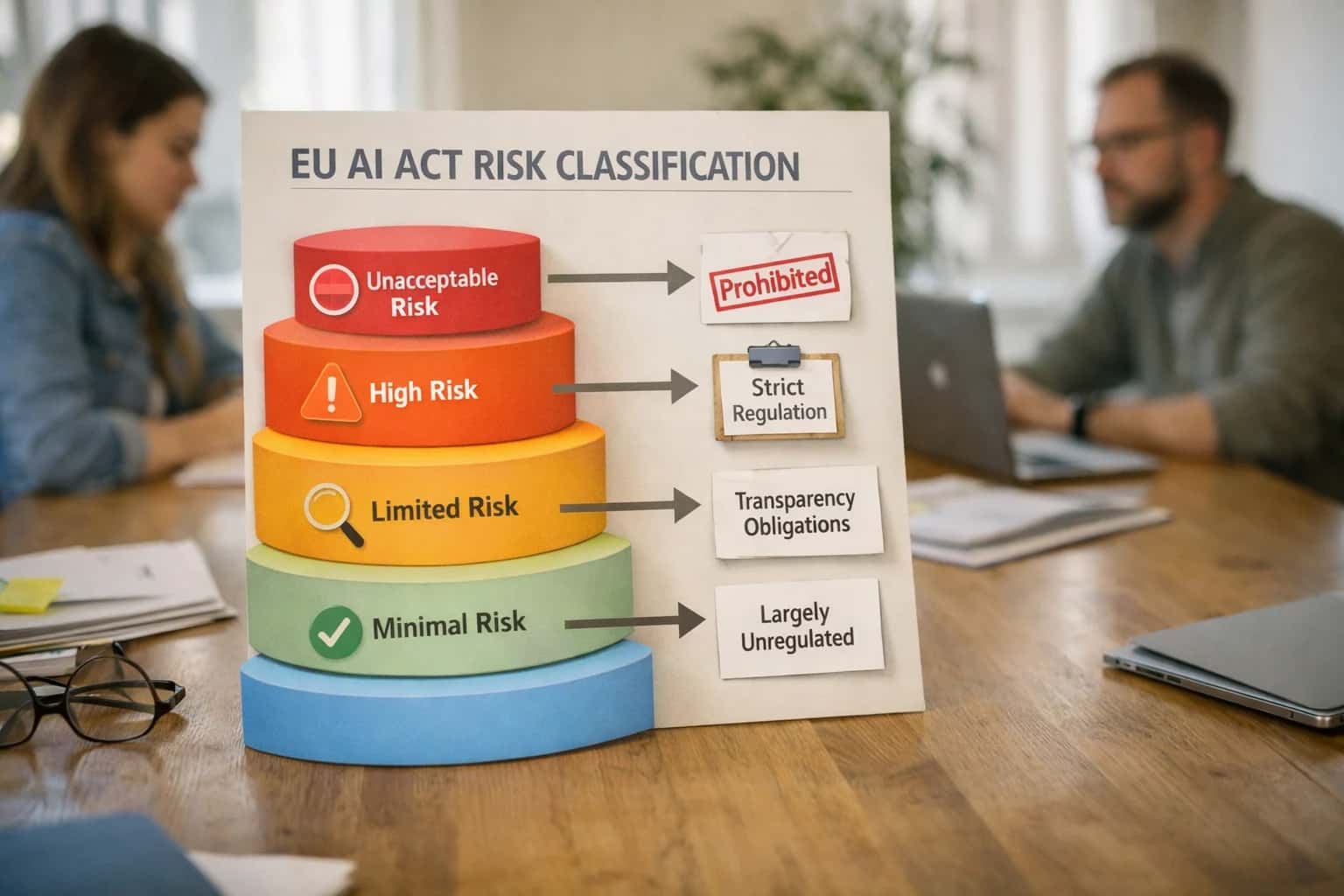
PROMPT PLAYBOOK
When to Use This Prompt
Defines the operational context, prerequisites, and boundaries for deploying the post-escalation feedback loop prompt.
To use this prompt effectively, you must have a structured dataset of at least 50 reviewed escalation records. Each record should contain the original input, the AI's escalation reason, the escalation decision, and the human reviewer's final outcome. This minimum volume is not arbitrary; it ensures statistical significance when identifying patterns. Without it, the analysis will overfit to individual cases and produce unreliable recommendations. The prompt expects these records as structured input and will refuse to generate adjustment suggestions if the sample size is insufficient, instead recommending more data collection. You should also have access to the current escalation prompt or threshold configuration so the analysis can map identified patterns back to specific instructions or parameters that need changing.
Do not use this prompt for real-time decision-making or as a substitute for human review. It is an offline analysis tool, not a runtime classifier. It is also inappropriate when review data is sparse, inconsistently labeled, or when the escalation criteria have changed significantly mid-batch, as this introduces confounding variables that the prompt cannot disentangle. After running the analysis, the next step is to take the structured output—specific threshold adjustments, prompt rewrites, or routing changes—and test them in a staging environment against a holdout set of reviewed cases before deploying to production. Avoid the temptation to apply every suggestion at once; change one variable at a time and measure the impact on escalation accuracy.
PRACTICAL GUARDRAILS
Use Case Fit
Where the Post-Escalation Feedback Loop Prompt delivers value and where it introduces risk. This prompt analyzes human reviewer decisions to improve triage rules, not to automate the review itself.
01
Good Fit: Mature Escalation Pipelines
Use when: You have a production escalation system with at least several hundred logged human review decisions and clear original escalation reasons. Guardrail: The prompt requires a minimum sample size check before recommending changes; do not run it on fewer than 50 reviewed items per escalation category.
02
Bad Fit: Real-Time Decision Making
Avoid when: You need an immediate escalation decision on a live request. This prompt is a batch analysis tool for post-hoc improvement, not a runtime classifier. Guardrail: Deploy this as a scheduled analysis job, never in the request path. Misuse as a real-time router will add latency and produce stale recommendations.
03
Required Inputs
What you must provide: A structured dataset containing original escalation reasons, human reviewer decisions, timestamps, and any confidence scores from the upstream classifier. Guardrail: If reviewer decisions are free-text rather than structured, run an extraction step first. Unstructured reviewer notes will cause the prompt to hallucinate patterns.
04
Operational Risk: Over-Correction on Small Samples
What to watch: The model may suggest threshold changes based on statistically insignificant patterns, especially for rare escalation categories. Guardrail: The prompt includes an eval check requiring confidence intervals or minimum counts before surfacing a recommendation. Always log the sample size alongside the suggestion.
05
Operational Risk: Drift Without Human Review
What to watch: Auto-applying the prompt's suggested threshold changes without human judgment can cause runaway over-escalation or under-escalation. Guardrail: Route all suggested changes through a human approval step. The prompt output is a recommendation, not a deployable config change.
06
Bad Fit: Undefined Escalation Taxonomy
Avoid when: Your escalation reasons are inconsistent, ad-hoc, or not mapped to a stable taxonomy. The prompt cannot find patterns in noise. Guardrail: Stabilize your escalation reason codes and reviewer decision categories for at least one review cycle before applying this prompt. Without a taxonomy, the output will be vague and unactionable.
PROMPT PLAYBOOK
Copy-Ready Prompt Template
A copy-ready prompt template for analyzing human reviewer decisions against original escalation reasons to identify patterns and suggest improvements.
This prompt template is designed to close the feedback loop on your escalation system. It takes a batch of human review decisions and their corresponding original escalation reasons, then analyzes them to identify systemic patterns of over-escalation, under-escalation, or misclassification. The output is a structured report with actionable suggestions for improving your prompt thresholds, routing logic, or classification criteria. Use this template as the core of a scheduled batch job or an on-demand analysis tool for your AI operations team.
textYou are an AI operations analyst reviewing the performance of an automated escalation system. Your task is to compare human reviewer decisions against the original reasons for escalation to identify patterns and suggest concrete improvements. ## INPUT DATA You will receive a JSON array of review records. Each record contains: - `review_id`: A unique identifier for the review. - `original_escalation_reason`: The structured reason the system provided for escalating this item to a human. - `human_reviewer_decision`: The final decision made by the human reviewer (e.g., 'OVERTURNED', 'UPHELD', 'RE-CLASSIFIED'). - `human_reviewer_notes`: Any notes or re-classification details provided by the reviewer. <REVIEW_DATA> [REVIEW_DATA] </REVIEW_DATA> ## ANALYSIS INSTRUCTIONS 1. **Categorize Outcomes:** For each record, classify the human decision into one of three categories: - `OVERRIDE`: The human reversed the automated decision (e.g., de-escalated an item that was escalated, or escalated an item that was not). - `CONFIRM`: The human agreed with the automated decision. - `REFINE`: The human agreed with the need for action but changed the category, priority, or routing. 2. **Identify Patterns:** Analyze the `OVERRIDE` and `REFINE` records to find recurring patterns. Group them by the original escalation reason and the human reviewer's notes. Look for: - **Over-Escalation:** Cases where the system escalated an item that a human deemed safe or routine. What signals triggered the false positive? - **Under-Escalation:** Cases where the system failed to escalate an item that a human later flagged as critical. (Note: This analysis is limited to items that *were* escalated, so look for patterns where the human upgraded the severity or added missed risk tags). - **Misclassification:** Cases where the system escalated for the wrong reason (e.g., escalated for 'PII' when the real issue was 'Abusive Content'). 3. **Suggest Improvements:** Based on the identified patterns, propose specific, actionable changes. These should be framed as modifications to the system's prompts, thresholds, or routing rules. For example: - "Increase the confidence threshold for the 'Negative Sentiment' escalation trigger from 0.7 to 0.85 to reduce false positives from sarcastic comments." - "Add a pre-check rule: Do not escalate for 'PII' if the detected entity is a publicly listed company phone number." - "Refine the prompt for 'Policy Violation' detection to better distinguish between a direct threat and a hypothetical discussion." ## OUTPUT FORMAT Return your analysis as a JSON object with the following structure. Do not include any text outside the JSON object. { "summary": { "total_reviews_analyzed": <integer>, "override_rate": <float, percentage of reviews where human decision was OVERRIDE>, "confirm_rate": <float, percentage of reviews where human decision was CONFIRM>, "refine_rate": <float, percentage of reviews where human decision was REFINE> }, "pattern_analysis": [ { "pattern_name": "A short, descriptive name for the pattern (e.g., 'Sarcasm Misclassified as Urgent Negative Sentiment').", "category": "OVER_ESCALATION | UNDER_ESCALATION | MISCLASSIFICATION", "frequency": <integer, number of times this pattern occurred>, "original_escalation_reason": "The escalation reason associated with this pattern.", "human_reviewer_feedback_summary": "A concise summary of what human reviewers consistently noted.", "suggested_improvement": { "target": "PROMPT | THRESHOLD | ROUTING_RULE | PRE_PROCESSING_STEP", "description": "A clear, actionable description of the change to implement.", "expected_impact": "A prediction of how this change will affect override and confirm rates." } } ], "overall_recommendations": [ "A high-level, prioritized list of the top 3-5 changes to make to the system." ] } ## CONSTRAINTS - Base your analysis strictly on the provided <REVIEW_DATA>. Do not infer patterns that are not supported by the data. - If the data set is too small to identify a statistically significant pattern, state this clearly in the `overall_recommendations` field and do not fabricate patterns. - Focus on actionable improvements. Avoid vague suggestions like 'improve accuracy'.
To adapt this template, replace the [REVIEW_DATA] placeholder with your actual batch of review records. The input JSON structure is critical; ensure your application layer formats the data to match the expected review_id, original_escalation_reason, human_reviewer_decision, and human_reviewer_notes fields. For high-stakes systems, implement a validation step that checks the output JSON against the defined schema before accepting the analysis. If the model returns malformed JSON, use a retry recovery prompt with the schema and the raw output to attempt a repair. Always log the full prompt and response for auditability, and consider routing recommendations that involve threshold changes to a human for final approval before they are deployed to production.
IMPLEMENTATION TABLE
Prompt Variables
Required inputs for the Post-Escalation Feedback Loop Prompt. Each variable must be populated with production data before invocation to ensure reliable pattern analysis and actionable improvement suggestions.
| Placeholder | Purpose | Example | Validation Notes |
|---|---|---|---|
[ESCALATION_LOG] | Dataset of escalation events with original reason, confidence, and reviewer outcome | JSON array of objects with fields: escalation_id, reason, confidence_score, reviewer_decision, reviewer_notes, timestamp | Schema check: must contain at least 50 records for statistical significance. Validate reviewer_decision is one of [upheld, overturned, reclassified]. Null confidence_score allowed only if original system did not produce one. |
[ESCALATION_CRITERIA] | The rules, thresholds, or policy definitions that triggered the original escalations | List of criteria objects: {criterion_id, description, threshold, category} | Schema check: each criterion must have a unique criterion_id. Validate threshold values are numeric where applicable. Missing criteria will prevent root-cause analysis of over-escalation. |
[REVIEW_WINDOW_START] | Start of the analysis period for the feedback loop | 2025-01-15T00:00:00Z | Format check: ISO 8601 datetime. Must be before REVIEW_WINDOW_END. Window should span at least 7 days to capture cyclical patterns. Null not allowed. |
[REVIEW_WINDOW_END] | End of the analysis period for the feedback loop | 2025-02-15T23:59:59Z | Format check: ISO 8601 datetime. Must be after REVIEW_WINDOW_START. Window should not exceed 90 days to avoid masking recent threshold drift. Null not allowed. |
[MIN_SAMPLE_SIZE] | Minimum number of events per criterion before a recommendation is considered statistically meaningful | 30 | Type check: positive integer. Values below 20 risk unreliable pattern detection. Values above 100 may suppress valid signals in low-volume escalation paths. Default: 30. |
[CONFIDENCE_DELTA_THRESHOLD] | Minimum difference between original confidence and reviewer agreement rate required to flag a criterion for adjustment | 0.15 | Type check: float between 0.0 and 1.0. Lower values increase sensitivity but may produce noisy recommendations. Higher values reduce false positives but may miss real drift. Default: 0.15. |
[OUTPUT_SCHEMA] | Expected structure for the analysis output including findings and recommendations | JSON schema with fields: summary, over_escalation_findings, under_escalation_findings, misclassification_findings, threshold_adjustment_recommendations, prompt_change_suggestions | Schema check: validate output conforms before returning to caller. Each finding array must include statistical_significance flag. Recommendations must include predicted_impact on false-positive and false-negative rates. |
[HISTORICAL_BASELINE] | Prior period escalation metrics for trend comparison | JSON object with fields: period_start, period_end, total_escalations, upheld_rate, overturned_rate, reclassified_rate | Schema check: optional but strongly recommended. If provided, validate period does not overlap with REVIEW_WINDOW. Null allowed if no baseline exists, but trend analysis will be skipped. Missing baseline reduces ability to detect gradual threshold drift. |
PROMPT PLAYBOOK
Implementation Harness Notes
How to wire the post-escalation feedback loop prompt into an operational AI platform for continuous improvement.
This prompt is designed to run as a periodic batch analysis job, not a real-time request. It consumes structured records of human review decisions and the original escalation reasons, then produces a structured improvement report. The implementation harness must ensure that the input data is complete, the analysis is statistically grounded, and the output recommendations are reviewed by a human before any prompt or threshold changes are deployed to production.
Input Assembly: The prompt requires a batch of review records, each containing the original escalation reason, the human reviewer's final decision, and any override notes. These records should be pulled from your review queue database or logging system. The [REVIEW_BATCH] placeholder expects a JSON array of objects with fields like review_id, escalation_reason, reviewer_decision (e.g., UPHELD, OVERTURNED, RECLASSIFIED), and reviewer_notes. Before calling the model, validate that the batch size meets a minimum threshold (e.g., 50+ records) to ensure statistical significance. The [CONFIDENCE_THRESHOLD] and [MIN_SAMPLE_SIZE] variables should be set based on your operational risk tolerance—start with 0.95 and 30 respectively.
Model Choice and Tool Use: Use a model with strong reasoning capabilities and a large context window (e.g., GPT-4o, Claude 3.5 Sonnet) to process the batch in a single call. Enable structured output mode to enforce the [OUTPUT_SCHEMA], which should define fields for pattern_summary, over_escalation_rate, under_escalation_rate, statistically_significant_findings (boolean), recommended_adjustments (array of objects with target, current_value, suggested_value, and rationale), and requires_human_approval (boolean). If the batch is too large for a single context window, split it by escalation reason category and run the prompt once per category, then merge the results.
Validation and Guardrails: After the model returns, run a post-processing validation step. Check that all recommended adjustments include a rationale field and that the statistically_significant_findings flag is consistent with the reported rates and sample sizes. If the model recommends a threshold change, verify that the suggested value is within a sensible range (e.g., a confidence threshold between 0.5 and 1.0). Log every analysis run, including the input batch ID, the model's raw output, and the validation results, to an audit table for governance and future calibration.
Human-in-the-Loop Integration: This prompt's output must never trigger an automated deployment. Route the validated report to a human review queue for an operations engineer or AI system owner. The reviewer should confirm or reject each recommended adjustment, and their decision should be logged alongside the analysis. Only after human approval should prompt templates, routing thresholds, or escalation criteria be updated in your production configuration. This closes the feedback loop while maintaining a necessary safety boundary against automated drift.
IMPLEMENTATION TABLE
Expected Output Contract
Defines the structured payload returned by the Post-Escalation Feedback Loop Prompt. Use this contract to validate the model's output before feeding it into downstream analysis or threshold adjustment systems.
| Field or Element | Type or Format | Required | Validation Rule |
|---|---|---|---|
analysis_period | Object { start: ISO 8601, end: ISO 8601 } | Schema check: start < end. Parse check: valid ISO 8601 dates. Null not allowed. | |
total_escalations_reviewed | Integer | Schema check: integer >= 0. Must equal the count of items in the input batch. Null not allowed. | |
over_escalation_rate | Number (0.0-1.0) | Schema check: float between 0.0 and 1.0. Calculated as over_escalation_count / total_escalations_reviewed. Null not allowed. | |
under_escalation_rate | Number (0.0-1.0) | Schema check: float between 0.0 and 1.0. Calculated as under_escalation_count / total_escalations_reviewed. Null not allowed. | |
statistical_significance | Object { p_value: Number, sample_size: Integer, is_significant: Boolean } | Schema check: p_value is a float between 0.0 and 1.0. is_significant is true if p_value < 0.05. Null not allowed for any sub-field. | |
pattern_analysis | Array of Objects | Schema check: array length >= 0. Each object must contain pattern_name (string), frequency (integer), and affected_escalation_reasons (array of strings). Null not allowed. | |
recommendations | Array of Objects | Schema check: array length >= 0. Each object must contain recommendation_type (enum: PROMPT_CHANGE, THRESHOLD_ADJUSTMENT, POLICY_CLARIFICATION, NO_ACTION), description (string), and predicted_impact (string). Null not allowed. | |
threshold_adjustment_suggestions | Array of Objects or null | Schema check: if not null, each object must contain parameter_name (string), current_value (number), suggested_value (number), and justification (string). Null allowed if no threshold changes are recommended. |
PRACTICAL GUARDRAILS
Common Failure Modes
Post-escalation feedback loops fail silently when statistical noise is mistaken for a pattern, when reviewer behavior drifts, or when the loop optimizes for the wrong metric. These are the most common failure modes and how to guard against them.
01
Confusing Correlation with Causation
What to watch: The prompt identifies a pattern (e.g., 'escalations spike on Tuesdays') and recommends a threshold change, but the underlying cause is a batch job or staffing shift, not a model defect. Guardrail: Require the prompt to output a 'Confounding Factor Hypothesis' section before any recommendation. If no plausible confounder is ruled out, block the change.
02
Reviewer Decision Drift
What to watch: The feedback loop treats human reviewer decisions as ground truth, but reviewers themselves become more lenient or strict over time (drift). The prompt then recommends tuning the model to match a moving, unreliable target. Guardrail: Add an eval step that measures inter-reviewer agreement and intra-reviewer consistency over time. Flag recommendations derived from periods with low agreement scores.
03
Small Sample Overfitting
What to watch: The prompt recommends a rule change (e.g., 'auto-escalate all mentions of Competitor X') based on only 3-5 recent escalations, ignoring the 10,000 cases where the rule would have been wrong. Guardrail: Hard-code a minimum sample size and a statistical significance check (e.g., chi-squared test) into the prompt's output schema. The prompt must report the p-value and sample size before the recommendation is considered actionable.
04
Optimizing for Escalation Volume Instead of Business Impact
What to watch: The prompt suggests changes that reduce the number of escalations without considering whether the remaining escalations are the right ones. This leads to under-escalation of high-risk, low-frequency events. Guardrail: Require the prompt to weight its analysis by a 'Severity x Volume' matrix. A single missed critical escalation should be weighted higher than 100 trivial over-escalations in the improvement suggestion.
05
Feedback Loop Contamination
What to watch: The act of escalating changes the outcome (e.g., a human reviewer always agrees with the AI's escalation reason to save time). The feedback loop then 'learns' that it was perfectly accurate, reinforcing a potentially flawed escalation trigger. Guardrail: The prompt must explicitly separate the 'Escalation Reason' from the 'Resolution Reason' in its analysis. If they are identical above a threshold (e.g., 90%), flag it as potential contamination and request a blind review sample.
06
Ignoring the Cost of the Fix
What to watch: The prompt recommends a complex, multi-step remediation (e.g., 'add a new retrieval step and re-rank') for a problem that could be solved with a single line of instruction, or vice versa, ignoring the engineering cost and latency impact. Guardrail: Add a constraint requiring the prompt to categorize suggestions by implementation complexity (e.g., 'Prompt-Only', 'Tool/API Change', 'Architecture Change') and estimate the latency/cost impact of each before ranking them.
IMPLEMENTATION TABLE
Evaluation Rubric
Use this rubric to evaluate the quality of the Post-Escalation Feedback Loop prompt's output before deploying or acting on its improvement suggestions. Each criterion targets a specific failure mode that can undermine continuous improvement efforts.
| Criterion | Pass Standard | Failure Signal | Test Method |
|---|---|---|---|
Statistical Significance Check | Output explicitly states whether the pattern has sufficient sample size (e.g., n > 30) to be actionable and recommends against changes if the sample is too small. | A recommendation is made without any mention of sample size, statistical power, or confidence in the observed pattern. | Run prompt on a dataset with only 5 review events. Check that output flags insufficient data and does not recommend a threshold change. |
Pattern Specificity | Identified patterns cite specific escalation reasons, decision categories, or threshold values, not vague labels like 'routing issues'. | Output contains generic findings like 'improve accuracy' or 'reduce false positives' without linking to a specific [ESCALATION_REASON] or threshold. | Parse output for actionable entities. Fail if no specific escalation reason from the input data is directly quoted or referenced in the improvement suggestion. |
Actionable Suggestion Format | Each improvement suggestion is a concrete, testable change: a modified threshold value, a new keyword for a policy, or a rephrased instruction for a [PROMPT_TEMPLATE]. | Suggestions are abstract advice like 'review the policy' or 'be more careful' without a specific, implementable change. | Check that each suggestion block contains a 'Proposed Change' field with a before/after value or a specific instruction diff that can be applied to a prompt or config. |
Over-Escalation vs. Under-Escalation Distinction | Output correctly separates patterns of over-escalation (false positives to human review) from under-escalation (false negatives that should have been escalated). | The analysis conflates the two, suggesting a change that would fix one but worsen the other without acknowledging the trade-off. | Provide a dataset with a known 20% over-escalation rate and 5% under-escalation rate. Fail if the output does not distinguish these two metrics and address them separately. |
Root Cause Hypothesis | The output proposes a plausible root cause for the identified pattern, linking the reviewer's decision back to a specific weakness in the original escalation prompt or threshold. | The output only describes the discrepancy (e.g., 'reviewers disagreed 30% of the time') without hypothesizing why the original system made the wrong call. | Check for a 'Likely Root Cause' field in the output. Fail if it's empty, 'unknown', or merely restates the finding without a causal link to a prompt instruction or threshold. |
No Hallucinated Data | All statistics, counts, and percentages in the output are derivable from the provided [REVIEW_LOG] input. | The output invents a specific number of cases, a percentage, or a quoted reviewer comment that does not exist in the input data. | Use a controlled [REVIEW_LOG] with exactly 42 events. Fail if the output states any total count other than 42 or cites a reviewer decision not present in the log. |
Improvement Suggestion Ranking | Suggestions are ranked by estimated impact (e.g., number of incorrect escalations they would fix) with a clear rationale for the order. | A long list of equal-priority suggestions is provided with no prioritization, or the top suggestion addresses a trivial edge case. | Provide a dataset where one pattern accounts for 80% of failures. Fail if the primary suggestion does not address this dominant pattern first. |
Escalation Fatigue Signal Detection | Output identifies if reviewer behavior shows signs of fatigue (e.g., increasing 'approve all' rates over time) and recommends a process change, not just a prompt change. | Reviewer behavior trends are ignored, and all recommendations are purely prompt or threshold adjustments. | Provide a [REVIEW_LOG] with a clear temporal trend where reviewer override rates increase over the batch. Fail if the output does not mention reviewer behavior or fatigue as a factor. |
Enabling Efficiency, Speed & Accuracy
Intelligent Analysis, Decision & Execution
We build AI systems for teams that need search across company data, workflow automation across tools, or AI features inside products and internal software.
Talk to Us
Search across company data
Give teams answers from docs, tickets, runbooks, and product data with sources and permissions.
Useful when people spend too long searching or get different answers from different systems.
Enterprise searchRAGPermissions
Read more
Automate internal workflows
Use AI to route work, draft outputs, trigger actions, and keep approvals and logs in place.
Useful when repetitive work moves across multiple tools and teams.
AI agentsWorkflow automationGovernance
Read more
Add AI to products and internal tools
Build assistants, guided actions, or decision support into the software your team or customers already use.
Useful when AI needs to be part of the product, not a separate tool.
AI integrationDecision supportModel routing
Read moreADAPTATION OPTIONS
Adapt This Prompt
How to adapt
Add schema validation on both input and output. Require the [HISTORICAL_ESCALATION_DATA] to include escalation_reason, reviewer_decision, review_timestamp, and case_id fields. Add a retry wrapper: if the output fails schema validation, re-prompt with the validation error included. Log every analysis run with the prompt version, input record count, and output recommendations for auditability. Wire the [OUTPUT_SCHEMA] to enforce pattern_id, pattern_type (over-escalation|under-escalation|misclassification), affected_rule, evidence_count, recommendation, and confidence fields.
Watch for
- Silent format drift when the model changes recommendation structure
- Missing human review before applying threshold changes to production routing
- Recommendations that sound plausible but lack sufficient evidence volume
- Time-period selection bias (e.g., analyzing only business hours)

About the author
Prasad Kumkar
CEO & MD, Inference Systems
Prasad Kumkar is the CEO & MD of Inference Systems and writes about AI systems architecture, LLM infrastructure, model serving, evaluation, and production deployment. Over 5+ years, he has worked across computer vision models, L5 autonomous vehicle systems, and LLM research, with a focus on taking complex AI ideas into real-world engineering systems.
His work and writing cover AI systems, large language models, AI agents, multimodal systems, autonomous systems, inference optimization, RAG, evaluation, and production AI engineering.
LinkedIn
Limited slotsGet a Free AI Consultation
Partnered with leading AI, data, and software stack.





How We Work
Custom AI workflows for your Business
One-fit-all AI don't work for modern businesses. At Inferensys, we aim to understand your business & custom requirements; which we use to define most efficient agentic workflows, the data, and the tools for your business.
01
Review the use case
We understand the task, the users, and where AI can actually help.
Read more02
Pick the right approach
We define what needs search, automation, or product integration.
Read more03
Build the first useful version
We implement the part that proves the value first.
Read more04
Improve from there
We add the checks and visibility needed to keep it useful.
Read moreThe first call is a practical review of your use case and the right next step.
Talk to Us