This prompt is designed for orchestrator systems that have already decomposed a complex objective into a structured set of subtasks with defined inputs, outputs, and dependencies. Its job is to analyze that task graph and identify safe parallel execution groups. The ideal user is an AI engineer or agent architect who needs to reduce the wall-clock time of a workflow by running independent tasks concurrently, but who must avoid the race conditions and state corruption that come from naive parallelism. You should use this prompt when you have a dependency-aware task list and need a machine-readable plan for parallel execution, or when you are validating that a manually written parallel plan does not contain hidden conflicts.

Prompt
Parallel Subtask Identification Prompt for Agent Workflows
A practical prompt playbook for using Parallel Subtask Identification Prompt for Agent Workflows in production AI workflows.
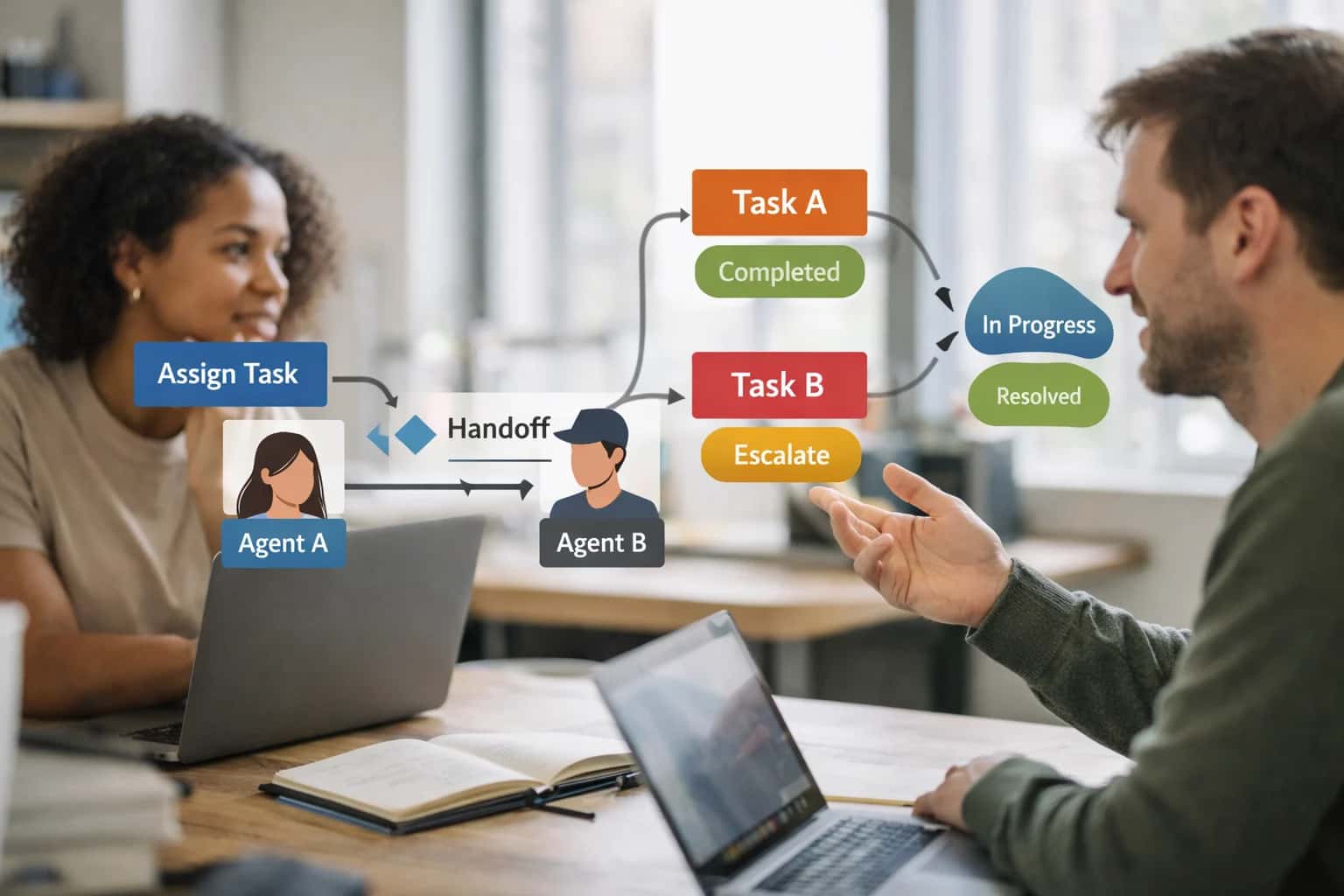
PROMPT PLAYBOOK
When to Use This Prompt
Identify which subtasks in an existing dependency graph can execute concurrently to minimize end-to-end latency in agent workflows.
The prompt requires a specific input shape: a list of subtasks where each task has a unique identifier, a description, and an explicit list of prerequisite task IDs. It outputs parallel execution groups—sets of task IDs that can run at the same time—along with safety annotations that flag shared-resource conflicts, such as two tasks writing to the same file or mutating the same database record. A concrete implementation should feed this prompt a validated task graph, parse the JSON output, and then use the groups to drive a concurrent executor. The harness must validate that no task appears in a group before its dependencies are completed in prior groups, and that tasks flagged with resource conflicts are either serialized or protected with application-level locks.
Do not use this prompt for initial task decomposition. It assumes the subtask list already exists. If you need to generate the subtask list from a high-level goal, start with the Dependency-Aware Task Decomposition Prompt in this content group. Also, avoid using this prompt for workflows where execution order is strictly linear by design, or where the overhead of managing concurrency outweighs the latency gains. For high-risk workflows—such as those mutating production infrastructure, financial ledgers, or patient records—always require a human to review the parallel execution plan before it is enacted, and ensure your harness logs the full task graph and parallel groups for auditability.
PRACTICAL GUARDRAILS
Use Case Fit
Where the Parallel Subtask Identification Prompt works, where it fails, and what you must provide before using it in an agent workflow.
01
Good Fit: I/O-Bound Agent Workflows
Use when: your agent orchestrator is waiting on multiple independent API calls, database lookups, or file reads that do not modify shared state. Guardrail: confirm each subtask declares its required inputs and produced outputs explicitly so the orchestrator can verify independence before parallel dispatch.
02
Bad Fit: Mutable Shared State
Avoid when: subtasks read and write the same database rows, files, or in-memory structures without transactional isolation. Risk: false parallelism causes race conditions, lost updates, or corrupted state that is expensive to unwind. Guardrail: require the prompt to flag shared-resource conflicts and downgrade affected tasks to sequential execution.
03
Required Inputs
Must provide: a complete, structured task list with each task's inputs, outputs, tool bindings, and estimated side effects. Why: the prompt cannot identify safe parallelism from task names alone. Guardrail: validate that the input task schema includes an outputs and side_effects field before calling the parallel identification prompt.
04
Operational Risk: Silent Dependency Miss
Risk: the model fails to detect an implicit dependency between two tasks and marks them as parallel-safe, causing a runtime failure when Task B executes before Task A produces its required input. Guardrail: implement a post-generation validator that checks every parallel group against the declared input/output contract and flags tasks whose inputs are not satisfied by prior completed outputs.
05
Operational Risk: Resource Contention
Risk: the model identifies tasks as parallel-safe based on data dependencies but misses that they compete for the same rate-limited API key, GPU, or file handle. Guardrail: supply resource constraints as part of the prompt context and require the output to annotate resource requirements per parallel group so the orchestrator can apply backpressure.
06
Not a Substitute for a Scheduler
Avoid when: you need real-time dynamic scheduling with preemption, priority inversion handling, or deadline-aware execution. Why: this prompt produces a static parallelization plan at plan time, not a runtime scheduler. Guardrail: treat the output as an advisory parallelization hint and let the agent runtime make final dispatch decisions based on current resource availability and observed latencies.
PROMPT PLAYBOOK
Copy-Ready Prompt Template
A reusable prompt template for identifying which subtasks in a plan can execute concurrently, including conflict detection and parallel-safe grouping.
This prompt template is designed for an orchestrator agent that has already decomposed a complex objective into a set of subtasks. Its job is to analyze those subtasks for parallelism opportunities, marking each task as parallel-safe or sequential, and grouping them into execution waves. The output is a structured JSON object that a workflow engine can consume directly to minimize end-to-end latency without introducing race conditions.
textYou are a task parallelism analyzer for an agent workflow engine. Your job is to examine a list of planned subtasks and determine which ones can execute concurrently without causing race conditions, data corruption, or dependency violations. ## INPUT [PLAN_OBJECTIVE] [SUBTASK_LIST] [SHARED_RESOURCES] ## INSTRUCTIONS 1. For each subtask in [SUBTASK_LIST], identify: - The resources it reads from (immutable inputs). - The resources it writes to (mutable outputs). - Any explicit dependencies declared in the task definition. 2. Two subtasks can run in parallel ONLY if: - Neither writes to a resource the other reads or writes. - They have no transitive dependency relationship. - They do not share a mutable external system (e.g., a database table, a file, an API with rate limits) unless the operations are proven idempotent or commutative. 3. Group subtasks into execution waves, where all tasks in a wave can start simultaneously. A new wave begins only after all tasks in the previous wave are guaranteed to complete. 4. For any pair of tasks that appear parallel-safe but share a resource, add a `conflict_warning` explaining the risk and recommending a mitigation (e.g., a lock, a serialization gate, or a merge strategy). ## OUTPUT_SCHEMA Return a valid JSON object with this structure: { "objective": "string summarizing the plan", "parallelism_summary": { "total_subtasks": <int>, "parallel_safe_count": <int>, "sequential_only_count": <int>, "estimated_waves": <int> }, "waves": [ { "wave_id": <int>, "subtask_ids": ["<string>", ...], "execution_strategy": "parallel" | "sequential", "depends_on_waves": [<int>, ...] } ], "conflict_warnings": [ { "subtask_a": "<string>", "subtask_b": "<string>", "shared_resource": "<string>", "risk_description": "<string>", "recommended_mitigation": "<string>" } ], "sequential_tasks": [ { "subtask_id": "<string>", "reason": "<string explaining why it cannot be parallelized>" } ] } ## CONSTRAINTS - Do not invent dependencies that are not declared in [SUBTASK_LIST]. - If a task's resource access pattern is ambiguous, mark it as sequential and add a conflict_warning. - If [SHARED_RESOURCES] specifies rate limits or mutability constraints, enforce them strictly. - Do not parallelize tasks that modify the same database table, file, or API endpoint without a proven safe concurrency model. - Prefer safety over maximum parallelism. A false parallel is worse than a missed parallel. ## EXAMPLES [EXAMPLES] ## RISK_LEVEL [RISK_LEVEL]
To adapt this template, replace the square-bracket placeholders with your specific context. [PLAN_OBJECTIVE] should be a one-line description of the overall goal. [SUBTASK_LIST] must be a structured array of task objects, each containing at minimum an id, a description, declared dependencies, and resource_access (reads/writes). [SHARED_RESOURCES] should enumerate mutable systems, rate limits, and concurrency constraints. [EXAMPLES] should include at least one correct parallel-safe grouping and one example of a false parallel that must be caught. [RISK_LEVEL] should be set to high if the workflow modifies production data, triggers financial transactions, or controls physical systems—in those cases, always route the output to a human reviewer before execution. For lower-risk workflows, you can feed the validated JSON directly into your execution engine, but ensure you have a validator that checks for cycles, missing dependencies, and conflicting resource access before any task is dispatched.
IMPLEMENTATION TABLE
Prompt Variables
Required inputs for the Parallel Subtask Identification Prompt. Each variable must be populated before the prompt is assembled and sent to the model. Validation notes describe how to programmatically verify the input before incurring inference cost.
| Placeholder | Purpose | Example | Validation Notes |
|---|---|---|---|
[TASK_LIST] | The complete set of subtasks to analyze for parallel execution opportunities. Must include task IDs, descriptions, and estimated durations. | JSON array: [{"id":"T1","desc":"Fetch user profile from DB","est_secs":0.2}, {"id":"T2","desc":"Fetch order history from DB","est_secs":0.3}] | Parse as JSON array. Reject if empty, if any task is missing an id field, or if the array contains duplicate ids. Minimum 2 tasks required for meaningful parallelism analysis. |
[DEPENDENCY_GRAPH] | A directed acyclic graph defining prerequisite relationships between tasks. Each edge means the source task must complete before the target task can start. | JSON object: {"T1":[],"T2":[],"T3":["T1","T2"],"T4":["T3"]} | Parse as adjacency list. Run cycle detection algorithm. Reject if cycles are found. Verify all task ids in edges exist in [TASK_LIST]. Warn if graph is disconnected without explicit rationale. |
[SHARED_RESOURCES] | A catalog of mutable resources that tasks may read from or write to, used to detect race conditions and unsafe parallelism. | JSON array: [{"name":"user_session_cache","type":"read_write"}, {"name":"audit_log","type":"write_only"}] | Parse as JSON array. Each resource must have a name and type field. Type must be one of: read_only, write_only, read_write. Reject if resource names are not unique. Null allowed if no shared mutable state exists. |
[RESOURCE_ACCESS_MAP] | A mapping of which tasks access which shared resources and in what mode, used to identify conflicting concurrent access. | JSON object: {"T1":[{"resource":"user_session_cache","mode":"read"}],"T2":[{"resource":"user_session_cache","mode":"write"}]} | Parse as JSON object. Every task id key must exist in [TASK_LIST]. Every resource referenced must exist in [SHARED_RESOURCES]. Mode must be read or write. Two tasks with write access to the same resource are a conflict. |
[MAX_PARALLEL_GROUPS] | An optional integer cap on the number of parallel execution groups the orchestrator can manage simultaneously, constraining the parallelism plan. | 4 | Parse as positive integer. If null or absent, assume no artificial cap. If provided and less than 1, reject. If provided and greater than the number of tasks, treat as no effective cap but log a warning. |
[OUTPUT_SCHEMA] | The expected JSON schema for the parallel groups output, defining the structure the model must conform to for downstream parsing. | JSON Schema object with parallel_groups array, each group containing task_ids, conflict_warnings, and estimated_wall_clock_secs fields. | Parse as valid JSON Schema. Reject if schema is not parseable. Verify required fields are present: parallel_groups must be an array. Each group must require task_ids. Warn if schema lacks a conflict_warnings field. |
[CONSTRAINTS] | Additional rules or policies that override default parallelism decisions, such as mandatory sequential execution for specific task pairs or resource access ordering requirements. | String: "Tasks T5 and T6 must never run in parallel due to API rate limit on payment gateway. Audit log writes must be sequential in task ID order." | Parse as string. Check for references to task ids not in [TASK_LIST]. If constraints reference resources, verify those resources exist in [SHARED_RESOURCES]. Null allowed if no special constraints apply. |
PROMPT PLAYBOOK
Implementation Harness Notes
How to wire the parallel subtask identification prompt into an agent orchestrator with validation, retries, and safe execution gating.
Integrating the parallel subtask identification prompt into an agent orchestrator requires treating the prompt output as a machine-readable plan, not just advisory text. The orchestrator should parse the JSON task groups, validate the parallel-safe markers against a known resource model, and then dispatch tasks to worker agents or tool executors. The primary integration points are: (1) a pre-execution validation step that rejects false parallelism, (2) a resource-locking mechanism that enforces the shared-resource conflict warnings the prompt produces, and (3) a monitoring layer that detects runtime race conditions the prompt may have missed. Without these harness components, a well-formed prompt output can still cause data corruption when two tasks write to the same file, database row, or API resource simultaneously.
Start by defining a resource registry that tracks mutable state your agents can access—file paths, database tables, API endpoints with side effects, in-memory caches, and configuration stores. Before dispatching any parallel group, the harness must intersect each task's declared resource access list (read/write) with every other task in the same group. If two tasks claim write access to the same resource, the harness should either serialize them, promote the conflict to a human reviewer, or reject the plan and request a revised decomposition. For high-risk workflows such as database migrations, infrastructure changes, or financial transactions, add a mandatory human approval gate that presents the parallel execution plan with resource conflict annotations before any task begins execution. Log every dispatch decision—which tasks ran in parallel, which were serialized due to conflicts, and which resource locks were acquired—so that post-execution audits can reconstruct the actual execution order.
Model choice matters here. Use a model with strong structured output support and a context window large enough to hold the full task list plus resource metadata. GPT-4o, Claude 3.5 Sonnet, and Gemini 1.5 Pro are all suitable; avoid smaller models that may drop resource annotations or produce invalid JSON under task-list pressure. Set response_format to JSON mode or use function calling with a strict schema to enforce the output structure. Implement a retry loop with a maximum of 3 attempts: if the output fails JSON schema validation, return the validator error message to the model and request a corrected decomposition. If the output passes schema validation but contains resource conflicts the harness detects, do not retry automatically—log the conflict and either serialize the affected tasks or escalate. For orchestrators using tool-calling agents, expose a submit_parallel_plan tool that accepts the task groups and resource annotations, then runs the harness-side conflict checks before acknowledging the plan. This keeps the model's output contract tight and the safety checks in application code where they belong.
Testing this harness requires both unit-level schema validation and integration-level race condition detection. Build a test suite with known conflict scenarios: two tasks writing to the same key, a read task depending on a write task's output but placed in the same parallel group, and a task that accesses a resource not declared in the resource registry. For each scenario, assert that the harness either serializes the conflicting tasks or rejects the plan. In staging, run the full orchestrator against a sandboxed environment with instrumented resource access to catch race conditions the prompt's static analysis missed. Monitor production deployments for task groups where actual execution time exceeds the predicted parallel execution time by more than 2x—this often signals hidden resource contention or a missed dependency. Wire these signals into your observability dashboard alongside prompt version, model version, and plan rejection rate so you can correlate decomposition quality changes with prompt or model updates.
IMPLEMENTATION TABLE
Expected Output Contract
Defines the structure, types, and validation rules for the parallel subtask identification output. Use this contract to build a parser, validator, and retry harness before integrating the prompt into an agent orchestrator.
| Field or Element | Type or Format | Required | Validation Rule |
|---|---|---|---|
parallel_groups | Array of objects | Must contain at least one group. Schema check: each element must have a 'group_id' and 'task_ids' field. | |
parallel_groups[].group_id | String | Must be unique across all groups. Regex: ^group_[a-z0-9_]+$. | |
parallel_groups[].task_ids | Array of strings | Each ID must reference a valid task_id from the input task list. No empty arrays allowed. Duplicate IDs across groups must be flagged as a conflict. | |
conflict_warnings | Array of objects | Can be an empty array if no conflicts exist. Each object must have 'task_a', 'task_b', and 'resource' fields. | |
conflict_warnings[].task_a | String | Must reference a valid task_id from the input task list. | |
conflict_warnings[].task_b | String | Must reference a valid task_id from the input task list and must not equal task_a. | |
conflict_warnings[].resource | String | Must describe the shared mutable resource causing the conflict. Non-empty string required. | |
unassigned_tasks | Array of strings | Must list every input task_id not present in any parallel_groups[].task_ids. An empty array indicates full coverage. |
PRACTICAL GUARDRAILS
Common Failure Modes
Parallel subtask identification is powerful but fragile. These are the most common failure modes when deploying this prompt in production agent workflows, with concrete guardrails to catch them before they cause race conditions, data corruption, or silent stalls.
01
False Parallelism on Mutable State
What to watch: The model marks two subtasks as parallel-safe when both read and write the same mutable resource (file, database row, shared variable). The prompt identifies them as independent because it analyzes task descriptions rather than actual data dependencies. Guardrail: Post-process the parallel groups against a known resource manifest. Flag any group where two tasks share a write target. Require explicit [RESOURCE_LOCKS] annotations in the output schema before execution.
02
Hidden Sequential Dependencies in Natural Language
What to watch: Subtask B's description says 'using the output from Subtask A' but the model still marks them as parallel because the dependency is implicit in the phrasing rather than declared as a formal edge. Guardrail: Run a secondary validation pass that scans subtask descriptions for dependency keywords ('using', 'from', 'based on', 'after') and cross-references against the parallel groups. Require explicit [DEPENDS_ON] fields for every subtask before accepting parallel markers.
03
Over-Parallelization Causing Resource Exhaustion
What to watch: The model correctly identifies 20 independent subtasks and marks them all parallel-safe, but the execution environment has a concurrency limit of 4. The agent spawns all 20 simultaneously, hitting rate limits, connection pools, or memory caps. Guardrail: Add a [MAX_CONCURRENCY] constraint to the prompt template. Post-process output groups to enforce a configurable parallelism cap. Queue excess tasks rather than rejecting the plan.
04
Tool Contention in Parallel Groups
What to watch: Three subtasks are correctly identified as data-independent but all require exclusive access to the same tool (e.g., a browser instance, a database transaction, a GPU). Parallel execution causes tool-state corruption or queuing deadlocks. Guardrail: Extend the output schema to include [REQUIRED_TOOL] per subtask. Validate that no parallel group contains multiple tasks requiring the same exclusive-access tool. Add a [TOOL_CONFLICT] warning field to the prompt output.
05
Race Conditions on Shared Read-Only Resources
What to watch: Two parallel subtasks both read from a file that gets modified by an external process between reads. The model correctly identifies no write-write conflict but misses external mutability. Subtask results become inconsistent because they observed different versions of the same source. Guardrail: Require [RESOURCE_VERSION] or [SNAPSHOT_ID] annotations for any shared read source. Add a post-execution consistency check that compares versions across parallel subtask outputs and flags mismatches.
06
Silent Failure Propagation in Parallel Branches
What to watch: One subtask in a parallel group fails silently (returns partial data, times out, produces valid JSON with incorrect content). Downstream sequential tasks consume the bad output without detection because the parallel group completed without explicit errors. Guardrail: Add per-subtask [SUCCESS_CRITERIA] and [OUTPUT_VALIDATION] fields to the prompt schema. Require a barrier check after each parallel group completes—all subtask outputs must pass validation before any dependent task starts.
IMPLEMENTATION TABLE
Evaluation Rubric
Criteria for testing the quality of a parallel subtask identification prompt before deploying it in an agent orchestrator. Each row defines a pass standard, a failure signal, and a test method that can be automated in an eval harness.
| Criterion | Pass Standard | Failure Signal | Test Method |
|---|---|---|---|
Parallel-safe group correctness | All subtasks within a parallel group share no mutable state dependencies and can execute concurrently without race conditions | A parallel group contains two subtasks that write to the same resource, read a resource another writes to, or depend on an uncommitted side effect from another task in the same group | Static dependency graph analysis: build a read/write set per subtask from the output schema and check for intersecting write sets or read-after-write conflicts within each parallel group |
Shared-resource conflict detection | Every shared resource (database row, file, API endpoint with rate limits, mutable config) is explicitly listed with access type per subtask, and no two parallel subtasks hold conflicting access | A shared resource appears in two parallel subtasks without an access-type annotation, or conflicting access types (write-write, read-write) appear in the same parallel group | Parse the output for a resource-access manifest; validate that for each resource, all subtasks in the same parallel group have compatible access types using a conflict matrix |
Dependency edge completeness | Every prerequisite relationship between subtasks is represented as a directed edge, and no implicit dependencies are left unstated | A subtask references an output or state change from another subtask, but no dependency edge exists between them in the task graph | Topological walk: for each subtask, extract all referenced inputs and verify that each input is either provided in the initial context or produced by a subtask with a declared dependency edge pointing to the current subtask |
Task atomicity preservation | Each subtask represents a single, well-defined unit of work that can be assigned, executed, and verified independently | A subtask contains multiple distinct operations with different tool requirements, different failure modes, or internal sequencing that should have been split into separate subtasks | LLM-as-judge check: pass each subtask description to a separate atomicity-eval prompt that scores whether the subtask contains more than one independently failable operation; flag scores above a threshold |
Coverage of original objective | The union of all subtask outputs and side effects fully satisfies the original objective with no gaps | A required deliverable, constraint, or success criterion from the original objective has no corresponding subtask that produces or verifies it | Extract all success criteria from the original objective; for each criterion, run a coverage classifier that checks whether at least one subtask output or verification step addresses it; flag any criterion with zero matches |
No hallucinated tools or capabilities | Every tool, function, or capability referenced in any subtask exists in the provided tool manifest | A subtask references a tool name, API endpoint, or capability that is not present in the input tool list | Exact string match: extract all tool references from subtask descriptions and action fields; diff against the provided tool manifest; flag any reference not found in the manifest |
Cycle-free dependency graph | The directed dependency graph across all subtasks contains zero cycles | A cycle exists where subtask A depends on B, B depends on C, and C depends on A, creating a deadlock | Run a cycle-detection algorithm (DFS with back-edge detection) on the declared dependency edges; fail if any cycle is found |
Output schema compliance | The response matches the expected JSON schema exactly, including all required fields, correct types, and valid enum values for parallel-safe markers | Missing required fields, incorrect types, invalid enum values, or extra fields that violate the schema contract | JSON Schema validation: validate the raw output against the expected schema; fail on any validation errors; also check that parallel-safe marker values are from the allowed enum set |
Enabling Efficiency, Speed & Accuracy
Intelligent Analysis, Decision & Execution
We build AI systems for teams that need search across company data, workflow automation across tools, or AI features inside products and internal software.
Talk to Us
Search across company data
Give teams answers from docs, tickets, runbooks, and product data with sources and permissions.
Useful when people spend too long searching or get different answers from different systems.
Enterprise searchRAGPermissions
Read more
Automate internal workflows
Use AI to route work, draft outputs, trigger actions, and keep approvals and logs in place.
Useful when repetitive work moves across multiple tools and teams.
AI agentsWorkflow automationGovernance
Read more
Add AI to products and internal tools
Build assistants, guided actions, or decision support into the software your team or customers already use.
Useful when AI needs to be part of the product, not a separate tool.
AI integrationDecision supportModel routing
Read moreADAPTATION OPTIONS
Adapt This Prompt
How to adapt
Use the base prompt with a frontier model and minimal output validation. Remove the shared-resource conflict analysis section to reduce complexity during early testing. Replace the strict JSON output schema with a looser structured text format to iterate faster on decomposition logic.
code[OBJECTIVE] Identify which subtasks can execute in parallel. Group them and mark each group with a `parallel_safe` boolean. Skip shared-resource conflict analysis for now.
Watch for
- Subtasks marked parallel-safe that mutate the same file, database row, or API resource
- Groups that are too coarse (entire plan in one group) or too fine (every task isolated)
- Missing dependency checks between groups that should be sequential

About the author
Prasad Kumkar
CEO & MD, Inference Systems
Prasad Kumkar is the CEO & MD of Inference Systems and writes about AI systems architecture, LLM infrastructure, model serving, evaluation, and production deployment. Over 5+ years, he has worked across computer vision models, L5 autonomous vehicle systems, and LLM research, with a focus on taking complex AI ideas into real-world engineering systems.
His work and writing cover AI systems, large language models, AI agents, multimodal systems, autonomous systems, inference optimization, RAG, evaluation, and production AI engineering.
LinkedIn
Limited slotsGet a Free AI Consultation
Partnered with leading AI, data, and software stack.





How We Work
Custom AI workflows for your Business
One-fit-all AI don't work for modern businesses. At Inferensys, we aim to understand your business & custom requirements; which we use to define most efficient agentic workflows, the data, and the tools for your business.
01
Review the use case
We understand the task, the users, and where AI can actually help.
Read more02
Pick the right approach
We define what needs search, automation, or product integration.
Read more03
Build the first useful version
We implement the part that proves the value first.
Read more04
Improve from there
We add the checks and visibility needed to keep it useful.
Read moreThe first call is a practical review of your use case and the right next step.
Talk to Us