AI-Powered Variable Rate Application (VRA) excels at input optimization and yield maximization by using machine learning models to analyze spatial data from soil sensor networks, satellite NDVI analysis, and yield maps. This creates a precise prescription map that tailors the application of fertilizer, seed, or chemicals to sub-field zones. For example, case studies from platforms like John Deere Operations Center or Trimble show VRA can reduce nitrogen usage by 15-30% while maintaining or increasing yield, directly impacting both cost and environmental footprint.

Comparison
AI-Powered Variable Rate Application (VRA) vs. Uniform Application
A technical and financial analysis comparing AI-driven, site-specific input management against traditional blanket application methods. This guide provides CTOs and farm operations managers with the metrics needed to evaluate ROI, precision, and sustainability trade-offs.
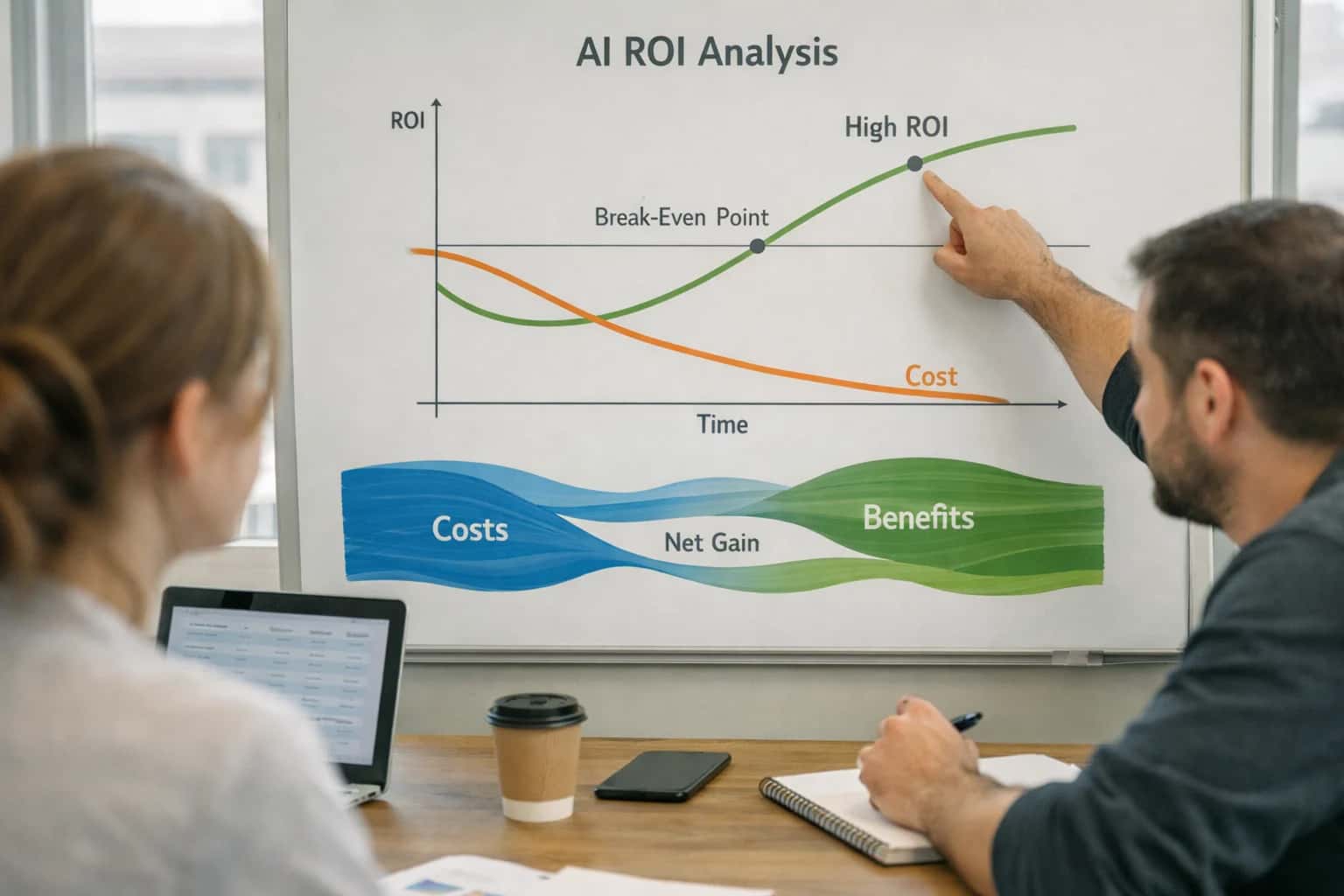
THE ANALYSIS
Introduction: The Precision vs. Simplicity Dilemma
A foundational comparison of AI-driven Variable Rate Application (VRA) and traditional Uniform Application, framing the core trade-off between resource optimization and operational simplicity.
Uniform Application takes a fundamentally different approach by applying inputs at a constant rate across an entire field. This strategy results in the trade-off of operational simplicity and lower upfront technology cost for potentially significant input waste and environmental impact. While it requires no data analysis or complex machinery setup, it ignores inherent field variability, often leading to over-application in low-yielding areas and under-application in high-potential zones, which caps both profitability and sustainability.
The key trade-off is between data-driven precision and straightforward execution. If your priority is maximizing Return on Investment (ROI) through input savings, boosting yield in variable fields, and meeting stringent sustainability goals, choose AI-powered VRA. This approach is a cornerstone of modern precision agriculture and AI resource optimization. If you prioritize minimal operational complexity, have homogeneous fields with little variability, or operate under extremely tight capital constraints for technology adoption, a uniform strategy may suffice in the short term. For a deeper dive into the data sources that power VRA, explore our analysis of Soil Sensor Networks vs. Satellite Imagery Analysis.
HEAD-TO-HEAD COMPARISON
AI-Powered VRA vs. Uniform Application
Direct comparison of key operational and financial metrics for precision agriculture input application.
| Metric | AI-Powered VRA | Uniform Application |
|---|---|---|
Avg. Fertilizer Input Reduction | 15-30% | 0% |
Yield Improvement Potential | 2-8% | 0% |
Precision Level (Spatial Resolution) | < 1 meter | Field-level |
Primary Data Inputs | Satellite, Drone, Soil Sensor | Field Average / Historical |
ROI Payback Period (Typical) | 1-3 seasons | N/A |
Environmental Impact Score | High (Reduced Runoff) | Low |
Required Tech Stack Investment | High (AI, Sensors, VRA Equipment) | None |
AI-Powered VRA vs. Uniform Application
TL;DR: Key Differentiators
The fundamental trade-offs between precision and simplicity for fertilizer and chemical application.
01
AI-Powered VRA: Maximized Input Efficiency
Specific advantage: Reduces fertilizer and chemical use by 15-40% on average by targeting only areas of need. This matters for large-scale operations where input costs are a primary profit driver, directly impacting ROI and sustainability metrics.
02
AI-Powered VRA: Optimized Yield Potential
Specific advantage: Increases yield by 2-10% by addressing intra-field variability in soil fertility and crop health. This matters for maximizing revenue per acre and improving overall farm productivity, especially in heterogeneous fields.
03
Uniform Application: Operational Simplicity
Specific advantage: Eliminates the need for data collection, prescription maps, and complex machinery setup. This matters for smaller farms, time-constrained operations, or fields with minimal variability where the cost and complexity of precision tech outweigh the benefits.
04
Uniform Application: Lower Upfront Cost & Risk
Specific advantage: Avoids capital investment in sensors, software, and variable-rate controllers, and eliminates the risk of prescription map errors. This matters for operations with tight cash flow or those new to digital agriculture, minimizing technological and financial risk.
CHOOSE YOUR PRIORITY
When to Choose: Decision Scenarios
AI-Powered VRA for Input Savings
Verdict: The definitive choice. AI-VRA systems analyze soil electroconductivity, yield maps, and satellite NDVI to create prescription maps that apply inputs only where needed. This can reduce fertilizer and chemical usage by 15-40%, directly translating to lower variable costs. The ROI is clearest for high-value row crops (corn, soy) on variable soils.
Uniform Application for Input Savings
Verdict: Not viable. Blanket application is inherently wasteful, over-applying in low-productivity zones and under-applying in high-potential areas. There is no mechanism for savings beyond buying cheaper, less effective products, which risks yield loss. For a deep dive on data sources that power these savings, see our comparison of Soil Sensor Networks vs. Satellite Imagery Analysis.
Enabling Efficiency, Speed & Accuracy
Intelligent Analysis, Decision & Execution
We build AI systems for teams that need search across company data, workflow automation across tools, or AI features inside products and internal software.
Talk to Us
Search across company data
Give teams answers from docs, tickets, runbooks, and product data with sources and permissions.
Useful when people spend too long searching or get different answers from different systems.
Enterprise searchRAGPermissions
Read more
Automate internal workflows
Use AI to route work, draft outputs, trigger actions, and keep approvals and logs in place.
Useful when repetitive work moves across multiple tools and teams.
AI agentsWorkflow automationGovernance
Read more
Add AI to products and internal tools
Build assistants, guided actions, or decision support into the software your team or customers already use.
Useful when AI needs to be part of the product, not a separate tool.
AI integrationDecision supportModel routing
Read moreTHE ANALYSIS
Final Verdict and Recommendation
A data-driven conclusion on when to adopt AI-powered Variable Rate Application (VRA) and when to stick with traditional Uniform Application.
AI-Powered Variable Rate Application (VRA) excels at input optimization and yield maximization because it uses high-resolution data from sources like soil sensor networks, drone-based crop monitoring, and satellite NDVI analysis to create a precise prescription map. For example, studies show VRA systems can reduce nitrogen fertilizer use by 15-30% while increasing yields by 5-10% in heterogeneous fields, delivering a clear ROI by targeting resources only where they are needed. This approach is foundational to modern precision agriculture and AI resource optimization.
Uniform Application takes a different approach by applying inputs at a constant rate across an entire field. This strategy results in a trade-off of operational simplicity for resource inefficiency. It eliminates the need for data collection, complex planning, and variable-rate hardware, making it a lower upfront-cost option. However, this blanket method inherently over-applies inputs in low-productivity zones and under-applies in high-potential areas, leading to wasted chemicals, unnecessary environmental runoff, and suboptimal yield potential.
The key trade-off is between precision and complexity. If your priority is maximizing input-use efficiency, boosting profitability on variable land, and meeting sustainability goals, choose AI-Powered VRA. This is especially true for large-scale, high-value row crops with significant in-field variability. If you prioritize minimizing initial technology investment, managing extremely uniform fields, or lack the infrastructure for data-driven farming, choose Uniform Application. For many operations, a hybrid strategy deploying VRA for key inputs like nitrogen while using uniform application for others can be a pragmatic middle ground.

About the author
Prasad Kumkar
CEO & MD, Inference Systems
Prasad Kumkar is the CEO & MD of Inference Systems and writes about AI systems architecture, LLM infrastructure, model serving, evaluation, and production deployment. Over 5+ years, he has worked across computer vision models, L5 autonomous vehicle systems, and LLM research, with a focus on taking complex AI ideas into real-world engineering systems.
His work and writing cover AI systems, large language models, AI agents, multimodal systems, autonomous systems, inference optimization, RAG, evaluation, and production AI engineering.
LinkedIn
Limited slotsGet a Free AI Consultation
Partnered with leading AI, data, and software stack.





How We Work
Custom AI workflows for your Business
One-fit-all AI don't work for modern businesses. At Inferensys, we aim to understand your business & custom requirements; which we use to define most efficient agentic workflows, the data, and the tools for your business.
01
Review the use case
We understand the task, the users, and where AI can actually help.
Read more02
Pick the right approach
We define what needs search, automation, or product integration.
Read more03
Build the first useful version
We implement the part that proves the value first.
Read more04
Improve from there
We add the checks and visibility needed to keep it useful.
Read moreThe first call is a practical review of your use case and the right next step.
Talk to Us