
Guides
Neuro-Symbolic AI for Legal and Medical Reasoning
Neuro-Symbolic AI for Legal and Medical Reasoning
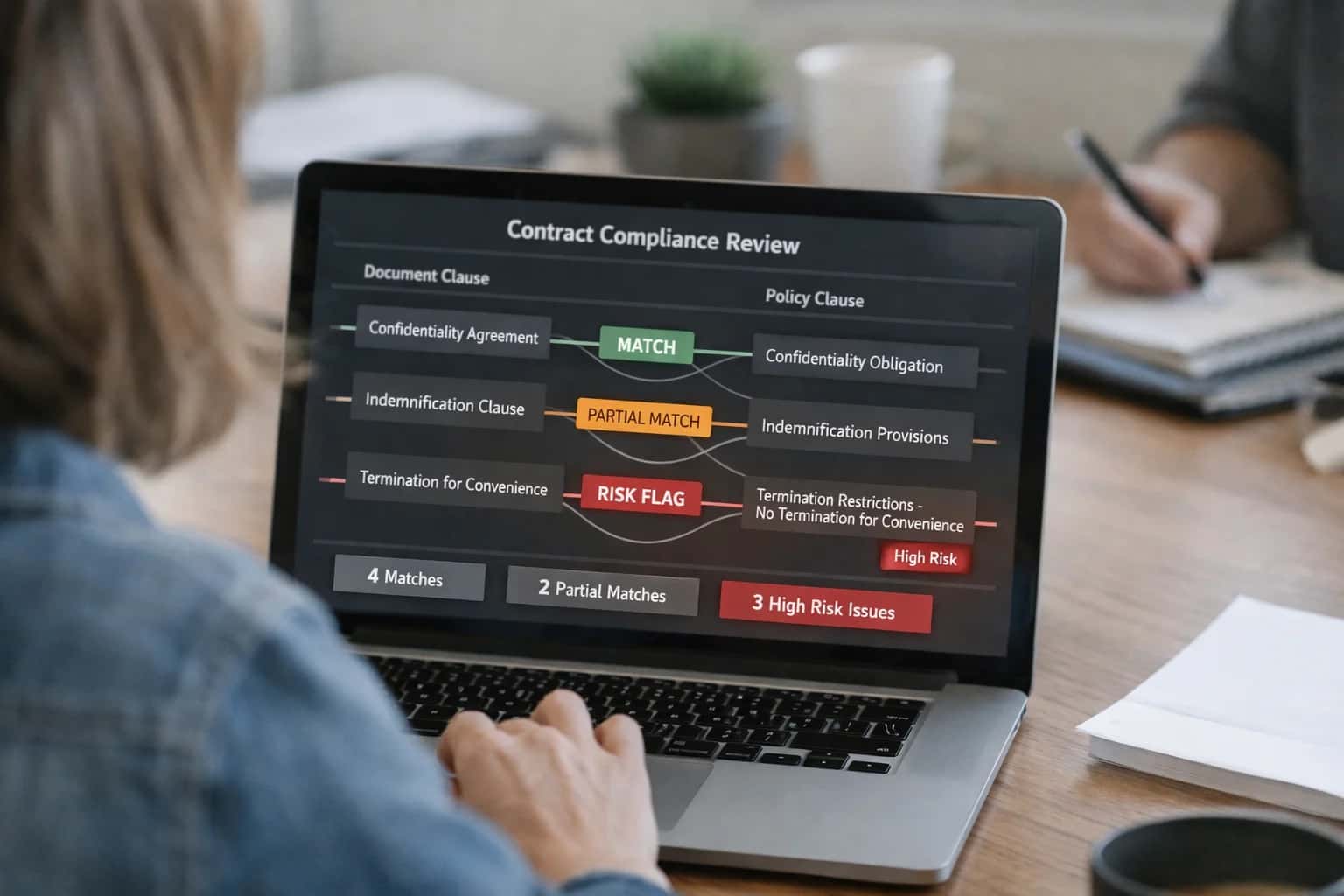
Neuro-symbolic AI combines the intuition of deep learning with the logic of symbolic reasoning, essential for high-stakes fields that require 'Strict Logic.' Guides cover 'How to build neuro-symbolic systems for legal discovery,' 'Implementing symbolic rule-checks for medical diagnosis,' and 'Building explainable AI reasoning traces for compliance' to address the 'institutional trust' gap.
How to Architect a Neuro-Symbolic System for Legal Discovery
This guide provides a step-by-step architecture for building a neuro-symbolic AI system that automates legal discovery. You will learn how to integrate a neural network for document classification and entity extraction with a symbolic reasoning engine that applies legal rules and precedents to identify relevant evidence. The guide covers designing the data pipeline, implementing the symbolic rule-checking layer with tools like Prolog or Datalog, and ensuring the system's outputs are explainable for legal review. This architecture is essential for handling the high volume and complexity of modern eDiscovery while maintaining auditability.
Setting Up a Hybrid Reasoning Engine for Medical Diagnosis
This guide explains how to build a hybrid reasoning engine that combines statistical AI with deterministic logic for medical diagnosis. You will learn to structure a pipeline where a neural model (e.g., a fine-tuned Llama model) analyzes patient data to generate hypotheses, which are then validated against a symbolic knowledge base of clinical guidelines and drug interactions. The tutorial covers integrating tools like PyKE for rule-based reasoning, designing feedback loops for continuous learning, and creating traceable diagnostic reports that clinicians can trust and verify.
How to Design a Symbolic Rule-Checking Layer for Clinical AI
This guide details the design and implementation of a symbolic rule-checking layer to enforce safety and compliance in clinical AI systems. You will learn to encode medical guidelines, contraindications, and institutional policies into a formal logic system using frameworks like CLIPS or SWI-Prolog. The guide covers integrating this layer with a neural network's outputs to validate recommendations, generate alerts for rule violations, and produce an auditable reasoning trace. This is a critical component for building AI systems that are safe for patient care and compliant with regulations like the EU AI Act.
How to Build a Verifiable Reasoning System for Medical Triage
This guide walks through constructing a neuro-symbolic system for automated medical triage that provides verifiable reasoning for each decision. You will learn to design a neural component for symptom analysis and a symbolic component that applies triage protocols (e.g., Emergency Severity Index). The guide focuses on generating a step-by-step explanation for why a patient is assigned a specific priority level, ensuring the system's logic is transparent and defensible. This approach is key to deploying autonomous triage in telemedicine and emergency departments where accountability is paramount.
Launching a Logic-Integrated AI for Regulatory Document Review
This guide provides a blueprint for launching an AI system that uses integrated logic to review complex regulatory documents. You will learn how to combine a large language model for semantic understanding with a symbolic engine that checks for compliance with specific regulatory clauses (e.g., from FDA, EMA, or GDPR). The guide covers parsing document structure, mapping regulations to logical constraints, and flagging potential non-compliance with citations to the exact rule violated. This system dramatically reduces the manual burden of compliance officers in pharmaceutical and financial sectors.
How to Implement a Neuro-Symbolic Agent for Legal Research
This guide explains how to build an autonomous neuro-symbolic agent for legal research. The agent uses a neural model to understand a legal query and retrieve relevant case law, then employs symbolic reasoning to analyze the logical relationships between precedents, statutes, and the query's facts. You will learn to structure the agent's workflow using frameworks like LangChain, integrate with legal databases, and implement a reasoning module that can construct legal arguments or identify contradictions. This creates a powerful assistant for lawyers that goes beyond simple search.
How to Design a Knowledge-Graph-Driven Diagnostic Assistant
This guide teaches you to design a diagnostic assistant centered on a biomedical knowledge graph. You will learn to construct or integrate a graph (using tools like Neo4j or Amazon Neptune) that connects diseases, symptoms, genes, and treatments. The system uses graph neural networks for pattern recognition and symbolic graph queries to traverse diagnostic pathways. The guide covers mapping patient data to the graph, running probabilistic and deductive reasoning algorithms, and presenting differential diagnoses with supporting evidence from the knowledge graph.
Setting Up a Causal Reasoning Module for Treatment Planning
This guide details how to set up a causal reasoning module to enhance AI-driven treatment planning. You will learn to move beyond correlative predictions by modeling causal relationships between treatments, patient biomarkers, and outcomes using frameworks like DoWhy or CausalNLP. The module integrates with a larger neuro-symbolic system to suggest treatment plans and explain the predicted causal effect of each option. This is crucial for personalized medicine, where understanding *why* a treatment should work is as important as the prediction itself.
How to Build a Compliance-Centric AI for Legal Operations
This guide provides a methodology for building AI systems where compliance is the core architectural principle, not an add-on. You will learn to design systems that automatically check legal operations (like contract drafting, billing, or conflict checks) against a live rule base of firm policies and external regulations. The guide covers implementing a symbolic rule engine as a central governance layer, creating immutable audit logs of all AI decisions, and designing fail-safes that route uncertain decisions to human-in-the-loop oversight. This is essential for law firms and corporate legal departments managing institutional risk.
Launching a Neuro-Symbolic Platform for Clinical Trial Protocols
This guide outlines the launch of a platform that uses neuro-symbolic AI to design and validate clinical trial protocols. You will learn to build a system where a language model interprets trial objectives and draft protocols, while a symbolic engine checks for consistency with inclusion/exclusion criteria, safety monitoring rules, and regulatory guidelines (ICH-GCP). The guide covers automating feasibility checks, identifying protocol ambiguities, and generating structured protocol documents that are both innovative and compliant, reducing costly protocol amendments.
How to Implement a Hybrid AI for Deposition Analysis
This guide shows how to implement a hybrid AI system to analyze legal deposition transcripts. The neural component performs speech-to-text, sentiment analysis, and entity recognition, while the symbolic component applies logical rules to identify inconsistencies in testimony, track statement evolution, and highlight key assertions against known evidence. You will learn to synchronize these components, visualize the analysis for legal teams, and generate concise summaries that pinpoint potential weaknesses in a witness's account.
How to Design a Symbolic Constraint Solver for Medical Billing
This guide teaches you to design a symbolic constraint solver to automate and validate complex medical billing codes. You will learn to model billing rules, payer policies, and code hierarchies (CPT, ICD-10) as a set of logical constraints. The solver takes clinical procedure and diagnosis data as input and outputs the optimal, compliant set of billing codes, while flagging any unbillable or conflicting combinations. This system reduces claim denials and ensures billing integrity, a major pain point for healthcare providers.
How to Build an Auditable Reasoning Engine for HIPAA Compliance
This guide provides a technical blueprint for building an AI reasoning engine whose every data access and decision is auditable for HIPAA compliance. You will learn to architect a system where all inferences are logged with a complete provenance trail: which data was used, which rules were applied, and who authorized the access. The guide covers integrating with attribute-based access control (ABAC) systems, using cryptographic hashing for log integrity, and generating compliance reports on demand. This is non-negotiable for any AI handling Protected Health Information (PHI).
How to Architect a Hybrid Model for Legal Precedent Analysis
This guide details the architecture for a hybrid AI model that analyzes legal precedent to predict case outcomes or find analogous cases. You will learn to combine a transformer model fine-tuned on case law for semantic similarity with a symbolic graph that models the logical structure of legal arguments (e.g., premises, conclusions, dissents). The system can trace the evolution of a legal principle through a citation graph and explain why a precedent is relevant or distinguishable. This empowers lawyers with deep, reasoning-based legal research.
Partnered with leading AI, data, and software stack.





How We Work
Custom AI workflows for your Business
One-fit-all AI don't work for modern businesses. At Inferensys, we aim to understand your business & custom requirements; which we use to define most efficient agentic workflows, the data, and the tools for your business.
01
Review the use case
We understand the task, the users, and where AI can actually help.
Read more02
Pick the right approach
We define what needs search, automation, or product integration.
Read more03
Build the first useful version
We implement the part that proves the value first.
Read more04
Improve from there
We add the checks and visibility needed to keep it useful.
Read moreThe first call is a practical review of your use case and the right next step.
Talk to Us