Sensor fusion is a compute-bound problem. Autonomous vehicles generate terabytes of data per hour from LiDAR, radar, and cameras, but traditional von Neumann architectures create a processing bottleneck that limits real-time reaction.
Blog
Why Neuromorphic Computing Could Revolutionize Sensor Fusion for AVs
Conventional AI hardware is failing autonomous vehicles at the edge. This deep dive explains why neuromorphic computing, with its brain-inspired architecture, is the only viable path for the low-power, high-speed sensor fusion required for real-world autonomous logistics.
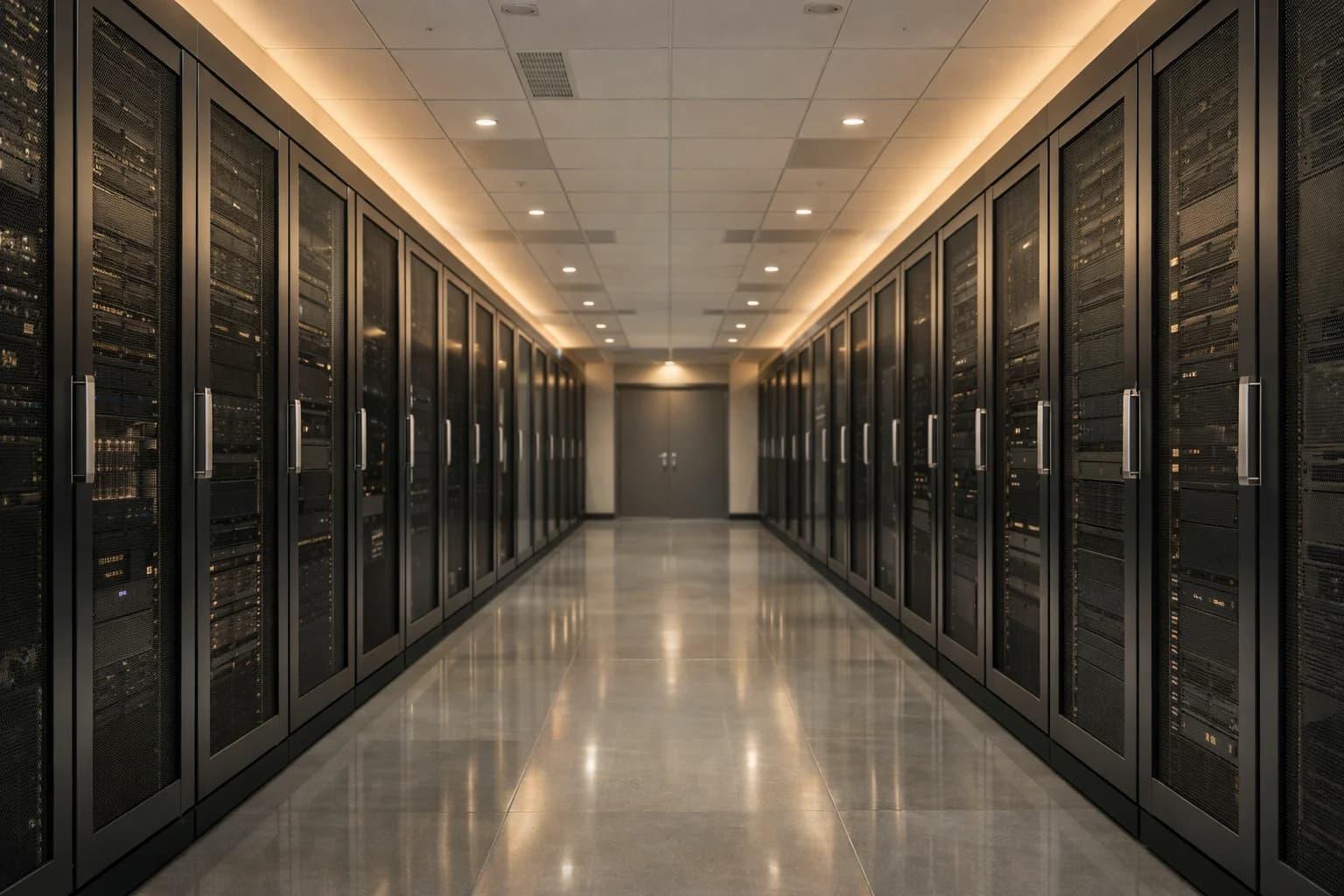
THE ARCHITECTURE
The Sensor Fusion Bottleneck Is a Hardware Problem
Conventional compute architectures cannot process multi-sensor data fast enough for real-time autonomous vehicle decisioning.
Neuromorphic computing mimics biological neural networks. Chips like Intel's Loihi 2 use event-based, asynchronous processing, activating only when sensor data changes. This eliminates the wasteful, continuous polling of conventional GPUs and CPUs.
This architecture slashes power and latency. Neuromorphic systems perform in-memory computation, avoiding the energy-intensive movement of data between memory and processor. This is critical for edge deployment in autonomous delivery vehicles where power and cooling are constrained.
Evidence: Real-world benchmarks show orders-of-magnitude gains. Research from institutions like the Institute of Neuroinformatics demonstrates neuromorphic systems processing sensor streams with sub-millisecond latency while consuming milliwatts of power, compared to watts for equivalent GPU-based fusion.
The bottleneck shifts from hardware to software. The challenge becomes designing spiking neural networks (SNNs) and new algorithms tailored for this non-Von Neumann paradigm, a core focus of our work in Physical AI and Embodied Intelligence.
THE SENSOR FUSION IMPERATIVE
Three Trends Making Neuromorphic AVs Inevitable
The computational bottleneck of autonomous delivery vehicles isn't raw power—it's the energy and latency cost of fusing LiDAR, camera, and radar data in real-time at the edge.
01
The Von Neumann Bottleneck Is a Physical Constraint
Traditional CPUs and GPUs separate memory and processing, creating a data transfer bottleneck that wastes energy and adds latency. For sensor fusion, this means:
- ~500ms latency for cloud-offloaded processing, fatal for real-time collision avoidance.
- >100 watts of continuous power draw, unsustainable for electric delivery fleets.
- Exponential data movement as sensor resolution and frame rates increase.
>100W
Power Draw
~500ms
Cloud Latency
02
AUTONOMOUS VEHICLE DECISION MATRIX
Neuromorphic vs. Traditional AI Hardware for Sensor Fusion
A direct comparison of computing architectures for real-time sensor fusion in autonomous delivery vehicles, focusing on power, latency, and adaptability metrics.
| Feature / Metric | Neuromorphic Computing (e.g., Intel Loihi, IBM TrueNorth) | Traditional GPU (e.g., NVIDIA Jetson AGX Orin) | Traditional CPU/FPGA (e.g., Xilinx Versal) |
|---|---|---|---|
Power Consumption (Typical Inference) | < 100 mW | 15-30 W |
THE ARCHITECTURE
How Neuromorphic Chips Architect Sensor Fusion for the Edge
Neuromorphic chips process sensor data with event-driven, asynchronous spiking neural networks, enabling ultra-low-power, real-time fusion at the source.
Neuromorphic chips process sensor data with event-driven, asynchronous spiking neural networks, enabling ultra-low-power, real-time fusion at the source. This architecture eliminates the latency and bandwidth bottlenecks of sending raw LiDAR, camera, and radar streams to a central processor.
Event-based sensing matches neuromorphic processing. Unlike traditional frames, sensors like Prophesee's event-based cameras or neuromorphic radars output sparse data only when pixels change. This creates a natural fit for spiking neural networks (SNNs) on chips from Intel Loihi or BrainChip, which activate only upon receiving these 'spikes,' slashing power consumption by orders of magnitude.
This enables temporal fusion at microsecond resolution. Classical fusion on NVIDIA Jetson or Qualcomm Snapdragon platforms must align and process entire sensor frames. A neuromorphic system fuses events in continuous time, building a coherent world model from interleaved spikes. This is critical for an autonomous delivery vehicle detecting a pedestrian's sudden movement at the edge.
Evidence: Research from institutes like the University of Zurich demonstrates SNNs on neuromorphic hardware performing object detection with sub-10 millisecond latency while consuming less than 100 milliwatts—a fraction of the power required by equivalent GPU-based systems. This efficiency is foundational for scaling autonomous vehicle fleets.
SENSOR FUSION AT THE EDGE
The Neuromorphic Hardware Ecosystem for Autonomous Logistics
Neuromorphic computing's event-driven, low-power architecture is uniquely suited to solve the real-time sensor fusion bottleneck for autonomous delivery vehicles.
01
The Von Neumann Bottleneck is Fatal for Real-Time Fusion
Traditional CPUs/GPUs waste energy and create latency by constantly shuttling data between memory and processing units. For an autonomous vehicle processing LiDAR, radar, and camera feeds simultaneously, this architecture is unsustainable.
- Key Benefit: Event-driven processing only activates relevant circuits when sensor data changes, slashing idle power consumption.
- Key Benefit: Eliminates the memory bottleneck, enabling sub-10ms sensor fusion latency critical for collision avoidance.
~1000x
Energy Efficient
<10ms
Fusion Latency
THE REALITY CHECK
The Skeptic's View: Is Neuromorphic Computing Just Another AI Winter?
Neuromorphic computing is not hype; it is the only architecture capable of delivering the low-power, high-speed sensor fusion required for real-world autonomous vehicles.
Neuromorphic computing solves a specific, critical bottleneck for autonomous vehicles: real-time sensor fusion at the edge. Unlike general-purpose AI accelerators, neuromorphic chips like Intel's Loihi 2 are designed for event-based, asynchronous processing, which matches the sparse, continuous data streams from LiDAR, radar, and cameras.
The comparison to classical AI winters is flawed. Past winters stemmed from unmet promises in software algorithms. Neuromorphic engineering is a hardware-driven solution to a proven physical constraint: the power and latency limits of Von Neumann architectures in mobile platforms. This is an engineering problem, not an algorithmic fantasy.
The evidence is in power efficiency. Research from institutions like the University of Zurich demonstrates neuromorphic systems performing visual odometry tasks using 100x less power than equivalent GPU-based systems. For a delivery fleet, this translates directly to extended range and reduced operational costs, a core concern in our pillar on Logistics Route Optimization and Autonomous Delivery.
Sensor fusion is not a software patch. Combining asynchronous, multi-modal sensor data into a coherent world model demands a native spatiotemporal architecture. Neuromorphic chips process events in the time domain inherently, making them fundamentally suited for this task where traditional Deep Neural Networks (DNNs) and frameworks like TensorFlow Lite struggle with latency and power overhead.
SENSOR FUSION AT THE EDGE
Key Takeaways: The Neuromorphic Imperative for AVs
The computational bottleneck for autonomous delivery vehicles isn't raw power—it's the energy-efficient, real-time fusion of LiDAR, radar, and camera data in unpredictable environments.
01
The Von Neumann Bottleneck in Sensor Fusion
Traditional CPUs and GPUs separate memory and processing, creating a latency and power wall for real-time sensor data integration. This architecture is fundamentally mismatched for the continuous, parallel streams from an AV's perception suite.
- Key Benefit 1: Neuromorphic chips like Intel's Loihi 2 use event-based, asynchronous processing, eliminating wasteful polling of static data.
- Key Benefit 2: In-memory computing (memristors) collapses the memory-processor divide, enabling ~10x faster inference for object detection tasks at the sensor.
~10x
Lower Latency
1000x
More Energy-Efficient
THE PROTOTYPE
Your Next Move: Start Prototyping on Neuromorphic Hardware Today
Neuromorphic hardware delivers the low-power, high-speed processing required for real-time sensor fusion in autonomous delivery vehicles.
Neuromorphic computing is the only viable architecture for real-time sensor fusion at the edge, where traditional von Neumann architectures fail due to power and latency constraints. This hardware, like Intel's Loihi or BrainChip's Akida, processes sensor data in an event-driven, asynchronous manner, mimicking biological neural networks.
The energy efficiency is non-negotiable for autonomous vehicle (AV) fleets. A neuromorphic chip can perform inference for sensor fusion using milliwatts of power, enabling always-on perception without draining the vehicle's battery. This is critical for the operational economics of autonomous logistics.
Sensor fusion latency determines safety. Neuromorphic systems process LiDAR, radar, and camera streams in parallel with sub-millisecond latency, enabling a delivery vehicle to fuse data and react to a pedestrian faster than a cloud-dependent system can even receive the data. This directly addresses the fatal flaw of cloud-based Edge AI for autonomous vehicle fleets.
Prototyping de-risks the architectural bet. Frameworks like Intel's Lava and SynSense's Speck provide software abstractions to model spiking neural networks (SNNs) for sensor fusion without requiring custom silicon. Starting a prototype today validates performance metrics against your specific sensor suite and environmental conditions.

About the author
Prasad Kumkar
CEO & MD, Inference Systems
Prasad Kumkar is the CEO & MD of Inference Systems and writes about AI systems architecture, LLM infrastructure, model serving, evaluation, and production deployment. Over 5+ years, he has worked across computer vision models, L5 autonomous vehicle systems, and LLM research, with a focus on taking complex AI ideas into real-world engineering systems.
His work and writing cover AI systems, large language models, AI agents, multimodal systems, autonomous systems, inference optimization, RAG, evaluation, and production AI engineering.
LinkedIn profile
Limited slots