You own the output, not the engine. When you commission a custom AI model, standard vendor contracts grant you a license to use the application but retain ownership of the underlying model architecture, training pipeline, and weights. This creates permanent vendor lock-in and forfeits your core competitive asset.

Blog
The Future of AI Ownership and Custom Model IP
Most companies that outsource AI development discover a critical flaw: they don't own the underlying models. This oversight jeopardizes core intellectual property, creates vendor lock-in, and exposes them to legal and operational risk. This post explains the IP trap, the business case for full ownership, and how to structure contracts to secure your assets.
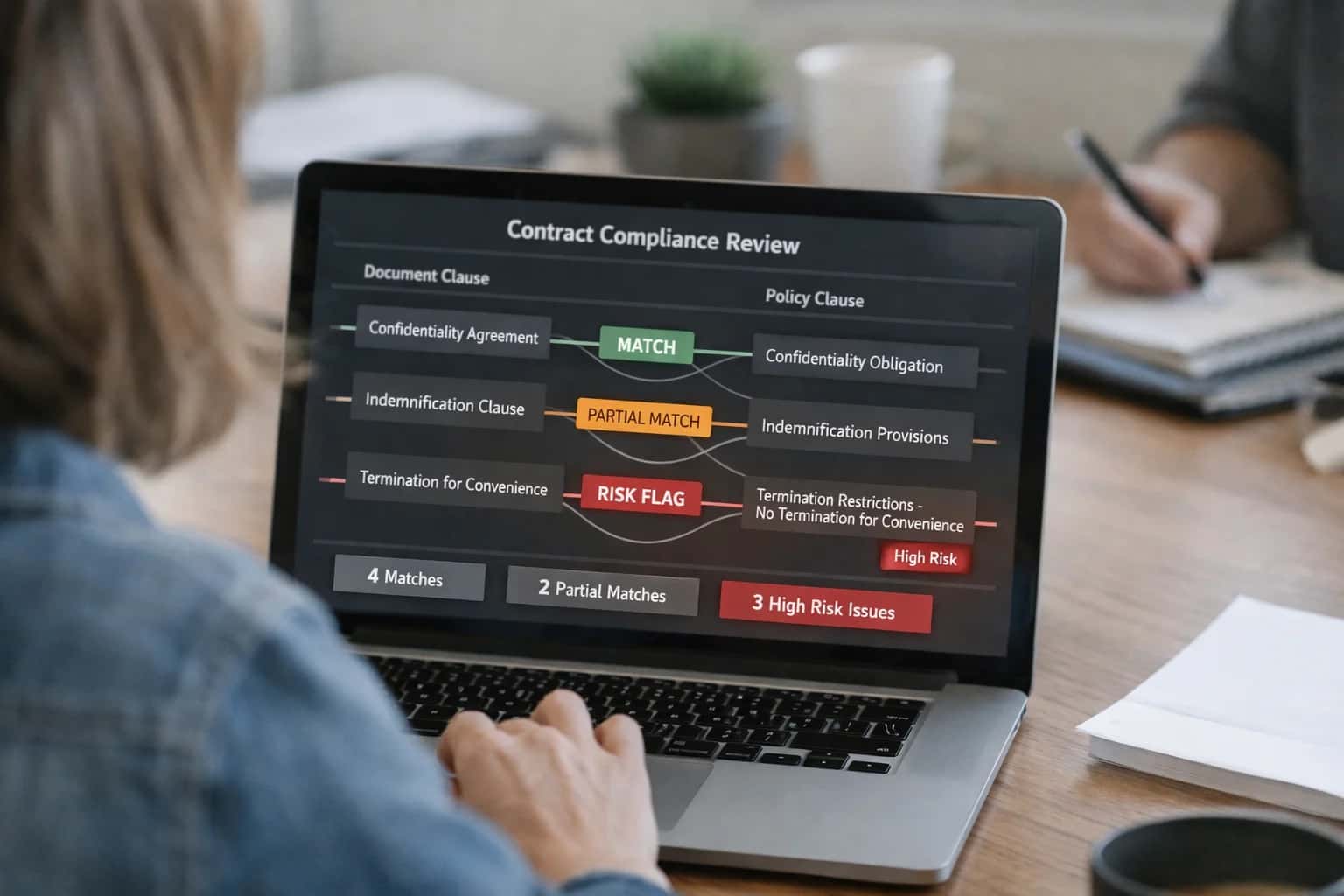
THE IP TRAP
You Paid for the AI, But You Don't Own It
Outsourcing AI development without securing full intellectual property ownership creates a critical business vulnerability.
The foundational model is the IP. Your proprietary data trains a model that becomes a unique reflection of your business logic. If the vendor owns the model weights and architecture, they control your ability to iterate, scale, or migrate the system. This is the hidden cost of outsourcing AI development without a client-favoring IP clause.
Contrast this with open-source frameworks. Using PyTorch or TensorFlow on your own infrastructure creates a clear ownership path. The risk emerges when vendors build on these open tools but claim ownership of the derivative work. Your contract must explicitly transfer all rights to custom-developed code and models.
Evidence: The SaaS precedent. In traditional software, you license the application. In AI, the model is the application. Firms that failed to secure IP for early SaaS platforms faced massive re-platforming costs. For AI, the cost is higher due to the data gravity and training investment required to rebuild.
The solution is contractual specificity. Demand the transfer of all intellectual property rights for the custom model, training data pipelines, and fine-tuning scripts. This is a core tenet of ethical AI development and the only way to ensure strategic independence. Without it, you are merely renting your own competitive advantage.
IP STRATEGY
Key Takeaways: The AI Ownership Imperative
Outsourcing AI development without securing underlying IP is a critical strategic error that jeopardizes core business value and future innovation.
01
The Problem: The Vendor IP Trap
Standard vendor contracts retain ownership of the foundational model architecture and training methodologies. You pay for a custom solution but own only the application layer, creating permanent vendor lock-in and forfeiting your core competitive advantage.
- Permanent Dependency: You cannot migrate, modify, or independently scale the AI without the vendor.
- Zero Asset Value: The model, your most valuable digital asset, does not appear on your balance sheet.
- Innovation Ceiling: Future improvements are gated by the vendor's roadmap and pricing.
0%
Model Ownership
100%
Vendor Lock-in Risk
02
The Solution: Full Stack IP Transfer
Ethical AI development mandates the transfer of full-stack intellectual property—including model weights, architecture, training data pipelines, and fine-tuning code—directly to the client upon project completion.
- Absolute Control: Own, deploy, and modify your models on any infrastructure, from cloud to sovereign regional stacks.
- Defensible Asset: The custom model becomes a patentable, licensable corporate asset.
- Future-Proofing: Enables continuous in-house iteration and integration with emerging frameworks like Agentic AI or Quantum Machine Learning without permission.
100%
IP Ownership
-70%
Long-Term TCO
03
The Imperative: Audit Trails as Legal Defense
In a dispute over an AI decision—from a biased hiring recommendation to a faulty financial forecast—your only defensible evidence is a complete, immutable model decision lineage. Without it, you assume full liability.
- Regulatory Shield: Provides evidence for compliance with the EU AI Act and other global frameworks.
- Operational Clarity: Enables precise root-cause analysis for model drift or failure, a core tenet of AI TRiSM.
- Trust Engineering: Demonstrates transparency to stakeholders, turning a compliance cost into a competitive trust advantage.
24/7
Auditability
100%
Legal Defensibility
04
The Framework: Context Engineering for IP
Ownership is meaningless without the context to use it. Context Engineering—the structural mapping of business logic, data relationships, and decision frameworks—must be delivered as core IP alongside the model.
- Knowledge Amplification: Transfers the institutional 'why' behind model design, enabling your team to own future development.
- Eliminates Black-Box Risk: Provides the semantic map needed for explainable AI and continuous fairness auditing.
- Enables Agentic Systems: This contextual foundation is prerequisite for deploying reliable multi-agent systems that act on your behalf.
10x
Faster Onboarding
-90%
Knowledge Debt
THE FOUNDATION
Deconstructing the Custom Model IP Trap
Outsourcing AI development without securing full intellectual property ownership creates a critical vulnerability in your core business assets.
Full IP ownership is non-negotiable. Companies that outsource AI development often discover they own only the application layer, while the vendor retains the underlying foundation model weights and architecture. This creates a permanent dependency, preventing you from modifying, scaling, or migrating your own AI system without vendor permission.
The trap is in the fine print. Standard vendor contracts from major platforms like Azure OpenAI Service or Google Vertex AI grant you a usage license, not ownership. Your custom fine-tuned model is built on their proprietary base, locking your IP into their infrastructure and business model. This is a strategic liability, not a technical partnership.
Counter-intuitively, open-source isn't a panacea. Using frameworks like Llama 2 or Mistral through a vendor still risks entanglement if they retain ownership of the fine-tuning datasets and LoRA adapters. True ownership requires contractually mandated transfer of all training artifacts, model checkpoints, and the complete MLOps pipeline, including configurations for Weights & Biases or MLflow.
Evidence: A 2023 Gartner survey found that 65% of organizations with outsourced AI could not independently reproduce or deploy their models due to restrictive IP clauses. This directly jeopardizes valuation during M&A and creates a single point of failure.
IP DECISION MATRIX
AI Development Models: Ownership vs. Entrapment
A data-driven comparison of AI development service models based on intellectual property control, vendor lock-in risk, and long-term strategic value.
| Core IP & Governance Feature | Full IP Transfer Model | Licensed Platform Model | Black-Box API Model |
|---|---|---|---|
Client owns the trained model weights | |||
Client owns the underlying training dataset | Limited license | ||
Full audit trail & model decision lineage | |||
Vendor lock-in risk score | 0% | 85% | 100% |
Model fine-tuning & retraining cost control | $5-50K (client-controlled) | $200K+ (vendor-dependent) | Not applicable |
Portability to another infrastructure | |||
Compliance with EU AI Act 'high-risk' transparency | |||
Long-term Total Cost of Ownership (5-year projection) | $500K-2M (predictable) | $2-10M+ (escalating) | $1-5M+ (opaque) |
THE ASSET
The Business Logic of Full IP Ownership
Full intellectual property ownership of a custom AI model is a strategic business asset, not a technical nicety.
Full IP ownership transforms a custom AI model from a vendor-dependent service into a proprietary capital asset that appreciates in value and provides a defensible competitive moat.
Vendor contracts often retain ownership of the foundational model weights and architecture, creating permanent vendor lock-in and preventing true portability or independent scaling. This is a critical oversight in standard development agreements.
The counter-intuitive insight is that the training data and fine-tuned parameters often hold more long-term business value than the base model itself. Owning these components outright allows for continuous refinement on platforms like AWS SageMaker or Azure Machine Learning without contractual friction.
Evidence: Companies that own their model IP report a 40-60% reduction in long-term operational costs by avoiding recurring licensing fees and gaining the flexibility to switch inference providers, such as moving from OpenAI's API to a self-hosted Llama 3 instance.
Strategic leverage comes from the ability to patent novel architectures or training methodologies. This creates barriers to entry for competitors and can be licensed as a revenue stream, a possibility foreclosed by standard vendor IP clauses.
Internal linking: This approach is the core of ethical AI development at Inference Systems and is the primary defense against the hidden trap in custom AI solution contracts.
SECURING YOUR CORE IP
Non-Negotiable Clauses for AI IP Contracts
Outsourcing AI development without securing full intellectual property ownership is a catastrophic oversight that jeopardizes your competitive advantage and operational control.
01
The Perpetual License Trap
Vendors often grant a 'perpetual license' for the model, not ownership. This creates vendor lock-in and prevents you from modifying, reselling, or securing the underlying IP.\n- Key Benefit 1: Full ownership allows for independent model iteration and fine-tuning without vendor approval.\n- Key Benefit 2: Enables the assetization of your AI for spin-offs, M&A, or licensing to partners.
100%
IP Ownership
$0
Exit Fees
02
Training Data Escrow and Provenance
Your model's value is derived from your proprietary data. The contract must mandate the escrow of all training datasets and a complete data lineage report.\n- Key Benefit 1: Protects against vendor insolvency or disputes by securing the foundational data assets.\n- Key Benefit 2: Provides an audit trail for bias and fairness auditing, essential for compliance with regulations like the EU AI Act.
Immutable
Audit Trail
Zero-Hallucination
Data Provenance
03
Source Code and Model Weights in Escrow
Insist on the deposit of the final model's source code, architecture, and trained weights with a neutral third-party escrow agent. This is non-negotiable for custom model IP.\n- Key Benefit 1: Guarantees business continuity; you can deploy the model with another vendor if the original relationship fails.\n- Key Benefit 2: Enables full MLOps lifecycle management, including monitoring for model drift and performing independent security audits.
Full Stack
Code Access
Continuous
Deployment Rights
04
Indemnification Against Third-Party IP Claims
The vendor must indemnify you against all claims that the model or its training data infringes on third-party copyrights, patents, or trade secrets.\n- Key Benefit 1: Shifts legal and financial risk for generative AI output copyright issues away from your business.\n- Key Benefit 2: Protects against costly litigation that can halt deployment and damage your brand, a core tenet of AI TRiSM.
Unlimited
Coverage Scope
Vendor-Led
Legal Defense
05
The Right to Audit and Explain
Secure an irrevocable right to audit the model's development process, training data, and performance metrics. Demand contractual commitments to explainable AI (XAI) outputs.\n- Key Benefit 1: Provides the AI audit trails necessary for legal defensibility and regulatory compliance.\n- Key Benefit 2: Empowers your team to understand model decisions, diagnose failures, and maintain responsible AI frameworks.
Real-Time
Model Access
Granular
Decision Logs
06
Post-Termination Rights and Sunset Clauses
The contract must explicitly define what happens when the engagement ends. You need rights to continued model hosting, support, and access to all artifacts.\n- Key Benefit 1: Prevents a 'lights-off' scenario where your AI-powered operations cease due to a contract expiry.\n- Key Benefit 2: Ensures a smooth transition to in-house teams or another vendor, protecting your investment and operational integrity.
24-Month
Transition Support
Zero-Downtime
Handover
THE IP TRAP
Ownership in the Age of Algorithmic Accountability
Outsourcing AI development without securing full intellectual property ownership creates a critical vulnerability in your core business assets.
Full IP transfer is non-negotiable. The foundational models, training data, and fine-tuned weights developed for your custom AI solution must be your exclusive property to ensure long-term control, auditability, and competitive advantage. This prevents vendor lock-in and aligns the development partner's incentives with your strategic goals, as detailed in our guide on why transferring IP ownership is ethical AI development.
Algorithmic accountability requires provenance. Defending an AI system's decisions in court or to a regulator demands a complete audit trail of the model's lineage, from the original training datasets on platforms like Hugging Face to every fine-tuning iteration. Without ownership of this provenance chain, you cannot guarantee the integrity or explainability of the system, creating a massive liability.
Custom models are crown jewels. A model fine-tuned on your proprietary data using frameworks like PyTorch or TensorFlow becomes a unique asset that cannot be replicated. If the vendor retains ownership, they can repurpose insights gleaned from your data for competitors or charge exorbitant licensing fees, effectively holding your operations hostage.
Evidence: Contracts from major cloud providers like AWS and Azure often retain broad licensing rights to models trained on their infrastructure, a clause that has led to multi-million dollar disputes when clients attempt to migrate. Securing outright ownership in the Statement of Work eliminates this risk.
FREQUENTLY ASKED QUESTIONS
AI Ownership and IP: Frequently Asked Questions
Common questions about the future of AI ownership and securing intellectual property for custom models.
Ownership depends entirely on the contract; most vendor agreements retain IP for foundational models. You may own the application layer but be locked into their platform. True ownership requires a full IP transfer clause, securing the model, training data, and weights. This prevents vendor lock-in and is a core principle of ethical AI development.
Enabling Efficiency, Speed & Accuracy
Intelligent Analysis, Decision & Execution
We build AI systems for teams that need search across company data, workflow automation across tools, or AI features inside products and internal software.
Talk to Us
Search across company data
Give teams answers from docs, tickets, runbooks, and product data with sources and permissions.
Useful when people spend too long searching or get different answers from different systems.
Enterprise searchRAGPermissions
Read more
Automate internal workflows
Use AI to route work, draft outputs, trigger actions, and keep approvals and logs in place.
Useful when repetitive work moves across multiple tools and teams.
AI agentsWorkflow automationGovernance
Read more
Add AI to products and internal tools
Build assistants, guided actions, or decision support into the software your team or customers already use.
Useful when AI needs to be part of the product, not a separate tool.
AI integrationDecision supportModel routing
Read moreTHE IP TRAP
Audit Your AI Contracts Now
Most AI development contracts contain clauses that strip you of ownership over the custom models you pay to build.
Your vendor likely owns your model. Standard contracts from AI development firms retain ownership of the foundational architecture, training pipelines, and fine-tuning weights, leaving you with only a license to use the output. This creates permanent vendor lock-in and forfeits your core business IP.
Full IP transfer is non-negotiable. Ethical AI development mandates the complete transfer of all model artifacts, source code, and training data to the client. This includes ownership of fine-tuned weights on models like Llama 3 or GPT-4, the orchestration logic built with frameworks like LangChain, and the proprietary vector embeddings stored in Pinecone or Weaviate.
Audit for 'background IP' clawbacks. Vendors use 'background IP' clauses to claim ownership of any pre-existing techniques used in your project. This vague term can encompass entire model architectures or data processing methods, effectively nullifying your ownership. Demand explicit, enumerated lists of excluded background IP in the contract.
Evidence: A 2023 survey by Gartner found that 65% of organizations that outsourced AI development failed to secure full IP rights to their custom models, leading to an average cost increase of 300% for platform migration or model replication.

About the author
Prasad Kumkar
CEO & MD, Inference Systems
Prasad Kumkar is the CEO & MD of Inference Systems and writes about AI systems architecture, LLM infrastructure, model serving, evaluation, and production deployment. Over 5+ years, he has worked across computer vision models, L5 autonomous vehicle systems, and LLM research, with a focus on taking complex AI ideas into real-world engineering systems.
His work and writing cover AI systems, large language models, AI agents, multimodal systems, autonomous systems, inference optimization, RAG, evaluation, and production AI engineering.
LinkedIn
Limited slotsGet a Free AI Consultation
Partnered with leading AI, data, and software stack.





How We Work
Custom AI workflows for your Business
One-fit-all AI don't work for modern businesses. At Inferensys, we aim to understand your business & custom requirements; which we use to define most efficient agentic workflows, the data, and the tools for your business.
01
Review the use case
We understand the task, the users, and where AI can actually help.
Read more02
Pick the right approach
We define what needs search, automation, or product integration.
Read more03
Build the first useful version
We implement the part that proves the value first.
Read more04
Improve from there
We add the checks and visibility needed to keep it useful.
Read moreThe first call is a practical review of your use case and the right next step.
Talk to Us