
Inferensys

Integration

AI Integration for Workday with RAG Platforms

A practical guide to implementing Retrieval-Augmented Generation (RAG) with Workday, grounding AI responses in your specific HR policies, benefit documents, and process guides to reduce HR case volume and improve answer accuracy.
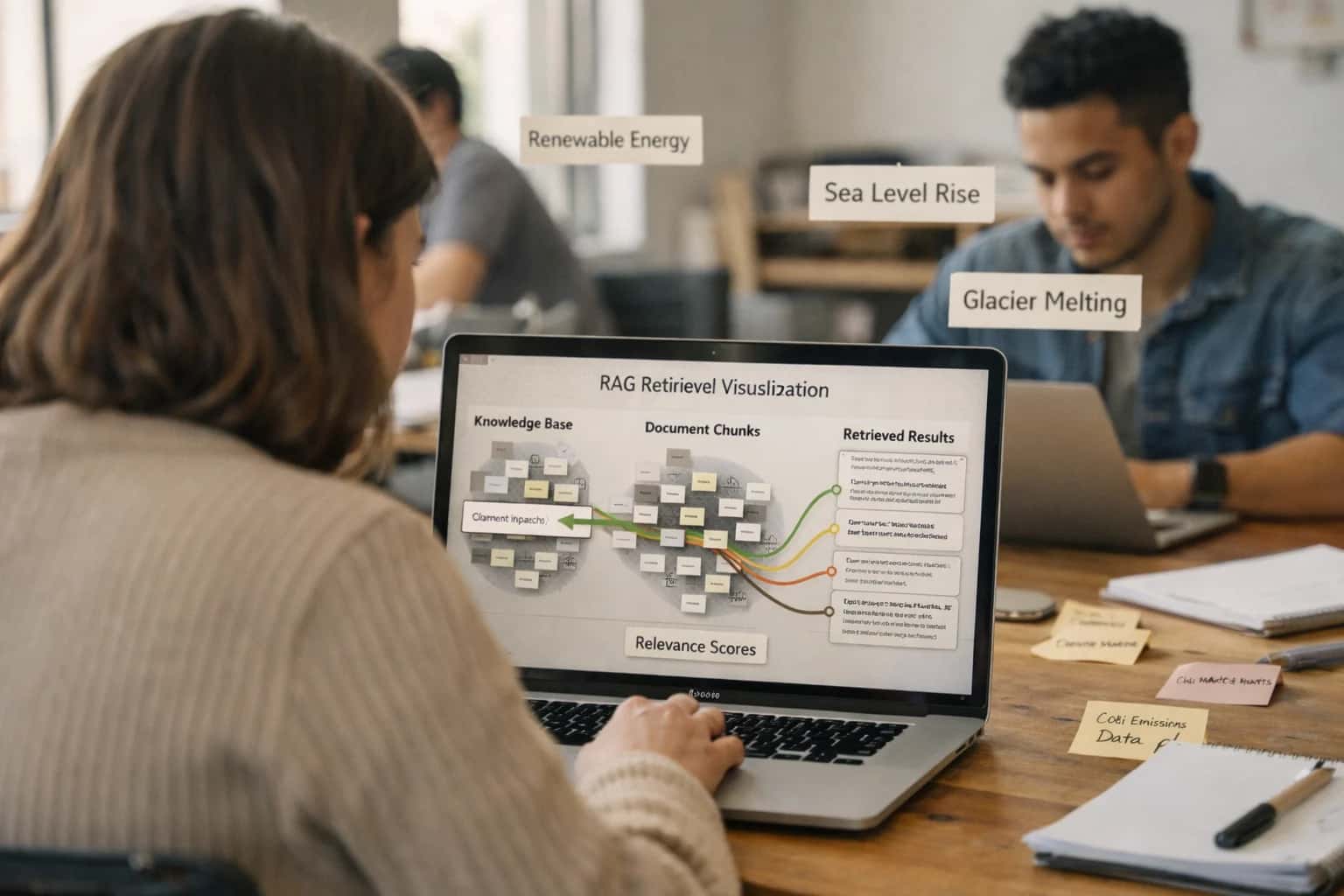
Developer working on RAG retrieval system, document chunks visible on screen, technical workspace with code editor.
ARCHITECTURE BLUEPRINT

Where RAG Fits in the Workday Stack

A practical guide to grounding Workday AI and chatbots in your company's specific HR policies, benefit guides, and process documentation using Retrieval-Augmented Generation (RAG).

A RAG platform integrates with Workday primarily through its REST APIs and Web Services Connector, acting as a secure, external knowledge layer. The integration focuses on ingesting and indexing unstructured content from sources like:

  • Workday Document Management for policy PDFs, benefit guides, and handbooks.
  • Workday Business Process Framework for official process definitions and approval workflows.
  • Workday Help articles and internal knowledge bases linked to tenant-specific configurations.
  • External sources (e.g., SharePoint, Confluence) that contain HR-related content referenced by Workday records. This content is chunked, embedded, and stored in a vector database (like Pinecone or Weaviate), creating a searchable "long-term memory" for AI that is specific to your organization's rules and language.


In practice, this retrieval layer sits between a user's natural language query and a generative AI model (like GPT-4 or a fine-tuned internal model). When an employee asks Workday's chatbot, "How do I change my 401k contribution?" or a manager queries, "What's the process for a promotion in EMEA?", the system first performs a semantic search against the vector index. It retrieves the most relevant chunks from your actual policy documents and process guides, then instructs the LLM to generate an answer grounded only in that retrieved context. This dramatically improves answer accuracy, reduces hallucinations, and ensures compliance by linking responses directly to source material. The result is an AI assistant that speaks your company's HR language, not generic public knowledge.

Rollout is typically phased, starting with a pilot on high-volume, low-risk query domains like benefits Q&A or paid time off policies. Governance is critical: you must establish RBAC to ensure sensitive documents are only retrieved for authorized users, implement audit logs for all queries and retrieved sources, and set up a human-in-the-loop review process for answers on complex or high-stakes topics like disciplinary actions. This architecture doesn't replace Workday's core transactional systems but augments them with a context-aware intelligence layer, turning static documentation into an interactive resource. For a deeper look at connecting vector databases to HRIS data models, see our guide on Qdrant Integration for HR Systems.

WHERE TO GROUND AI WITH RAG

Key Integration Surfaces in Workday

Indexing Policy and Process Documentation

Workday Knowledge is the primary repository for HR policies, benefit guides, and process documentation. Integrating a RAG platform here allows you to ground AI responses in the most current, company-specific information.

Key Integration Points:

  • Workday Web Services API: Use the Get_Knowledge_Articles operation to retrieve article content, metadata, and categories for batch ingestion into your vector database (e.g., Pinecone, Weaviate).
  • Real-time Updates: Set up webhook listeners or scheduled syncs to detect new or updated articles, ensuring the vector index remains current.
  • Chunking Strategy: Articles often contain long, structured content. Implement intelligent chunking that respects sections (e.g., "Eligibility," "Procedure," "Contact") to preserve context for retrieval.

This surface powers accurate answers for employee and manager queries on topics like leave policies, expense reporting rules, or performance review cycles, directly within chatbots or Workday's native surfaces.

IMPLEMENTATION PATTERNS

High-Value Use Cases for Workday RAG

Grounding AI in Workday's structured data and unstructured documents enables accurate, context-aware support for employees, managers, and HR operations. These patterns connect vector search to Workday's APIs and data model.

01

Employee Self-Service Agent

Deploy a chatbot that uses RAG to answer policy questions by retrieving from Workday's Company Documents, Benefit Guides, and HR Knowledge Articles. The agent grounds responses in the latest PTO, leave, and expense policies, reducing HR case volume.

Hours -> Minutes
Policy resolution
02

Manager Decision Support

Provide managers with an AI copilot that retrieves similar past compensation decisions, performance review cycles, and promotion guidelines from Workday. Helps ensure equitable, policy-compliant decisions during talent reviews and merit cycles.

1 sprint
Review cycle prep
03

Onboarding Workflow Automation

Integrate RAG into the onboarding process. New hires can ask natural language questions about I-9 verification, equipment requests, or first-week schedules. The system retrieves answers from onboarding checklists and role-specific guides stored in Workday.

Batch -> Real-time
New hire support
04

HR Case Triage & Summarization

When an HR case is created, use RAG to retrieve similar past cases and resolutions from Workday's Help module. Automatically pre-fill suggested resolutions and summarize relevant policy sections for the HR agent, cutting down investigation time.

Same day
Case assignment
05

Learning & Development Pathfinder

Power a skills-based recommendation engine. By indexing Workday Learning content, job profiles, and career framework documents, the system can semantically match employees to relevant courses, mentors, and internal mobility opportunities.

06

Global Policy Harmonization

For multinationals, use RAG to help HRBP's navigate local variations. Query for a policy (e.g., 'probation period') to retrieve and compare the country-specific policy documents from Workday, highlighting differences for Germany, Singapore, and the US.

Hours -> Minutes
Compliance review
IMPLEMENTATION PATTERNS

Example AI-Powered Workflows

These workflows illustrate how a RAG (Retrieval-Augmented Generation) layer, powered by a vector database like Pinecone or Weaviate, can be integrated with Workday to ground AI responses in your specific HR knowledge. Each pattern connects to Workday's APIs and data model to deliver accurate, context-aware support.

Trigger: An employee submits a natural language question via a chatbot embedded in the Workday homepage or a Slack/MS Teams integration (e.g., "What's the parental leave policy for adoption?").

Context/Data Pulled:

  1. The question is converted into a vector embedding using an embedding model (e.g., OpenAI's text-embedding-3-small).
  2. A vector search is performed against a pre-indexed knowledge base in Pinecone/Weaviate containing chunked HR documents: Employee Handbook, Benefits Guides, Policy PDFs, and FAQ articles synced from Workday's Document Management.
  3. The system retrieves the top 3-5 most semantically relevant document chunks.

Model/Agent Action:

  • The retrieved chunks and the original question are formatted into a prompt for an LLM (e.g., GPT-4). The prompt instructs the model to answer only using the provided context and to cite the source document.
  • Example prompt structure:
    code
    You are an HR assistant. Answer the user's question based only on the following context. If the answer is not in the context, say "I cannot find a specific policy on that. Please contact HR directly."
    Context:
    {chunk_1}
    {chunk_2}
    ...
    Question: {user_question}
    Answer:

System Update/Next Step:

  • The generated answer, along with citations (e.g., "Source: 2024 Benefits Guide, Section 4.2"), is returned to the employee via the chat interface.
  • The query and answer are logged to a separate audit table (outside the vector DB) for compliance and to identify knowledge gaps.

Human Review Point:

  • Queries marked with low confidence by the LLM (e.g., conflicting information in sources) or that receive a "thumbs down" from the user are flagged in a dashboard for HR review and potential source document update.
GROUNDING WORKDAY AI IN COMPANY-SPECIFIC KNOWLEDGE

Implementation Architecture & Data Flow

A secure, production-ready architecture for connecting a RAG platform to Workday, enabling AI agents to answer HR questions with accuracy grounded in your internal policies and documents.

The integration connects at two primary layers: the Workday Extend API for real-time data and the Workday Report-as-a-Service (RaaS) for scheduled knowledge ingestion. Core HR objects—like Worker, Position, and Benefit Plan—are pulled for contextual filtering, while unstructured documents (PDF policy manuals, SharePoint-hosted guides, past HR case resolutions) are chunked, embedded, and indexed in your chosen vector database (e.g., Pinecone, Weaviate). This creates a semantic search layer over your proprietary HR knowledge base, separate from but referenced by Workday's native AI capabilities.

In a typical workflow, an employee query in a chatbot interface triggers a retrieval call to the vector index. The system uses the employee's Workday context (e.g., country, job_family, benefit_eligibility) as metadata filters to narrow the search, ensuring retrieved policy snippets are relevant. The top-k results, along with the original query and live worker data, are sent via a secure endpoint to an LLM (like GPT-4 or Claude) for synthesis. The final answer is returned to the user interface—which could be a Workday Extend custom page, Microsoft Teams, or a standalone portal—with citations back to the source document sections for verification.

Governance and rollout require careful planning. A human-in-the-loop review stage is recommended for initial launches, where HR administrators audit AI-generated answers in a queue before they are published. All retrieval queries and synthesized responses should be logged with user IDs, timestamps, and source document pointers for audit trails. The data flow is designed to keep sensitive PII within Workday; embeddings are generated from de-identified text chunks, and the LLM receives only the minimal contextual data necessary for answer generation, aligning with data minimization principles. Start with a pilot group (e.g., managers in a single division) and a bounded document set (like the Employee Handbook and Leave Policy) to tune retrieval relevance and prompt effectiveness before scaling.

IMPLEMENTATION PATTERNS

Code & Payload Examples

Ingesting Workday Documents into a Vector Store

This pattern involves extracting, chunking, and embedding Workday documents (e.g., PDF policy guides, benefit summaries) to build a searchable knowledge base. The process typically runs on a schedule via Workday's web service APIs or file exports.

Example Python script for batch ingestion:

python
import requests
from pinecone import Pinecone
from langchain.text_splitter import RecursiveCharacterTextSplitter
from langchain_community.document_loaders import PyPDFLoader

# 1. Fetch document from Workday Web Service (pseudocode)
def fetch_workday_document(doc_id):
    # Use Workday SOAP or REST API with proper authentication
    # Returns document content or file path
    pass

# 2. Load and split the document
loader = PyPDFLoader("/path/to/workday_benefits_guide.pdf")
docs = loader.load()
text_splitter = RecursiveCharacterTextSplitter(chunk_size=1000, chunk_overlap=200)
chunks = text_splitter.split_documents(docs)

# 3. Create embeddings and upsert to Pinecone
pc = Pinecone(api_key="YOUR_API_KEY")
index = pc.Index("workday-policies")

for i, chunk in enumerate(chunks):
    # Generate embedding (e.g., using OpenAI, Cohere, or local model)
    embedding = get_embedding(chunk.page_content)
    
    # Prepare metadata
    metadata = {
        "source": "Workday_Benefits_2024",
        "doc_type": "policy",
        "workday_module": "Benefits",
        "chunk_index": i
    }
    
    # Upsert to vector database
    index.upsert(vectors=[{"id": f"doc_{i}", "values": embedding, "metadata": metadata}])
GROUNDING WORKDAY AI WITH COMPANY KNOWLEDGE

Realistic Operational Impact & Time Savings

This table shows the tangible workflow improvements from integrating a RAG platform with Workday, focusing on HR operations where accuracy and speed are critical.

HR WorkflowBefore RAG IntegrationAfter RAG IntegrationImplementation Notes

Employee Policy Query Resolution

Manual search across PDFs/SharePoint (15-30 min)

AI-assisted answer with source citations (1-2 min)

Requires chunking & indexing employee handbook, benefit guides, and compliance docs

Manager HR Case Intake

Form-based submission, generic routing

AI-powered triage & suggested resolution path

Leverages past case history and policy embeddings for routing accuracy

New Hire Onboarding FAQ

Static FAQ page, high volume of repetitive tickets

Interactive chatbot grounded in onboarding playbooks

Reduces HR support ticket volume; needs human review for complex escalations

Benefits Open Enrollment Support

Scheduled office hours, email backlog

24/7 AI agent for plan comparison & eligibility questions

Must be updated annually with new plan documents and rate sheets

HRBP Research for Employee Relations

Manual review of past similar cases (1-2 hours)

Semantic search across de-identified past cases (10-15 min)

Critical for privacy: requires strict access controls and data anonymization

Policy Update Communications Drafting

Manual drafting for each policy change

AI-assisted draft based on change summary & past comms

HR review and approval required before sending

Learning & Development Content Discovery

Keyword search in Learning catalog

Semantic search for skills-based course recommendations

Integrates with Workday Learning API; improves course completion rates

ARCHITECTING FOR ENTERPRISE HR

Governance, Security, and Phased Rollout

A secure, governed rollout is critical for AI in HR, where data sensitivity and policy compliance are paramount.

A production integration connects your RAG platform (Pinecone, Weaviate, Milvus, or Qdrant) to Workday's Web Services API and Report-as-a-Service (RaaS) endpoints. The architecture typically involves a middleware layer that: 1) ingests and chunks documents from Workday's document storage or external knowledge repositories, 2) generates embeddings and indexes them in the vector database, and 3) handles secure query routing from Workday Extend apps or chatbot interfaces. All data flows must respect Workday's tenant isolation and leverage its Security Groups and Domain Security Policies to enforce data access at the object and field level, ensuring an employee can only retrieve information relevant to their role and location.

Rollout follows a phased, use-case-driven approach. Phase 1 often targets low-risk, high-volume queries in the Workday Help portal, grounding answers in public-facing documents like the employee handbook or open enrollment guides. Phase 2 expands to manager-specific workflows, such as retrieving relevant policy excerpts for performance review guidance or leave approval procedures. Phase 3 introduces more complex, personalized Q&A for employees, like "What are my remaining FSA funds?" which requires retrieving and reasoning over individual benefit data. Each phase includes parallel human-in-the-loop review, where a sample of AI-generated responses is audited by HR operations before full automation.

Governance is built into the data pipeline and runtime. The ingestion process logs the source document, chunk, and timestamp for full auditability. At query time, the system appends the retrieved source chunks (e.g., policy document section IDs) to the AI's response, providing citable provenance for HR administrators. A feedback loop captures user "thumbs up/down" ratings and flags low-confidence responses for human review, continuously improving retrieval accuracy. This controlled approach mitigates hallucination risks and builds organizational trust, turning the RAG integration from an experiment into a reliable component of the HR service delivery model.

IMPLEMENTATION BLUEPRINT

Frequently Asked Questions

Practical questions for technical teams planning to ground Workday AI and chatbots in company-specific HR knowledge using Retrieval-Augmented Generation (RAG).

The most valuable sources are typically unstructured or semi-structured documents stored within Workday's object model. Key surfaces include:

  • Business Process Framework Documents: Policy PDFs, procedure manuals, and benefit guides attached to business process definitions or security groups.
  • Report Outputs & Documents: Compensation reports, organizational charts, and audit summaries saved as documents within Report Writer or Workday Docs.
  • Worker Documents: Onboarding packets, performance review templates, and compliance acknowledgments stored in the Worker_Document object.
  • Knowledge Articles: Internal HR help content, if managed within a custom Knowledge_Article object or an integrated solution.
  • Comments & Notes: Text from business process tasks, change job requests, or worker feedback that contains tribal knowledge.

Implementation Note: Use Workday's Web Services API (SOAP) or REST API (for newer tenants) to extract these documents. You'll need a service account with appropriate domain security permissions (Get for objects, View for documents). The extraction process should be scheduled (e.g., nightly) and include metadata like last_modified_date for incremental updates to your vector index.

Prasad Kumkar

About the author

Prasad Kumkar

CEO & MD, Inference Systems

Prasad Kumkar is the CEO & MD of Inference Systems and writes about AI systems architecture, LLM infrastructure, model serving, evaluation, and production deployment. Over 5+ years, he has worked across computer vision models, L5 autonomous vehicle systems, and LLM research, with a focus on taking complex AI ideas into real-world engineering systems.

His work and writing cover AI systems, large language models, AI agents, multimodal systems, autonomous systems, inference optimization, RAG, evaluation, and production AI engineering.


