The integration surface sits at the webhook layer between Peek Pro's booking engine and Klaviyo's customer data platform. When a booking is created, updated, or canceled in Peek Pro, a payload containing the customer, booking, and product objects is sent via webhook to a middleware service. This is where AI agents perform real-time analysis to determine the next best action, such as segmenting the customer for a "first-time adventurer" flow, calculating the likelihood of an upsell, or triggering an abandoned cart sequence if the booking is incomplete.

Integration
AI Integration with Peek Pro and Klaviyo
Engineer personalized, e-commerce style marketing automation by connecting Peek Pro booking events to Klaviyo with AI. Automate cross-sell recommendations, abandoned cart recovery, and post-trip re-engagement to increase LTV.
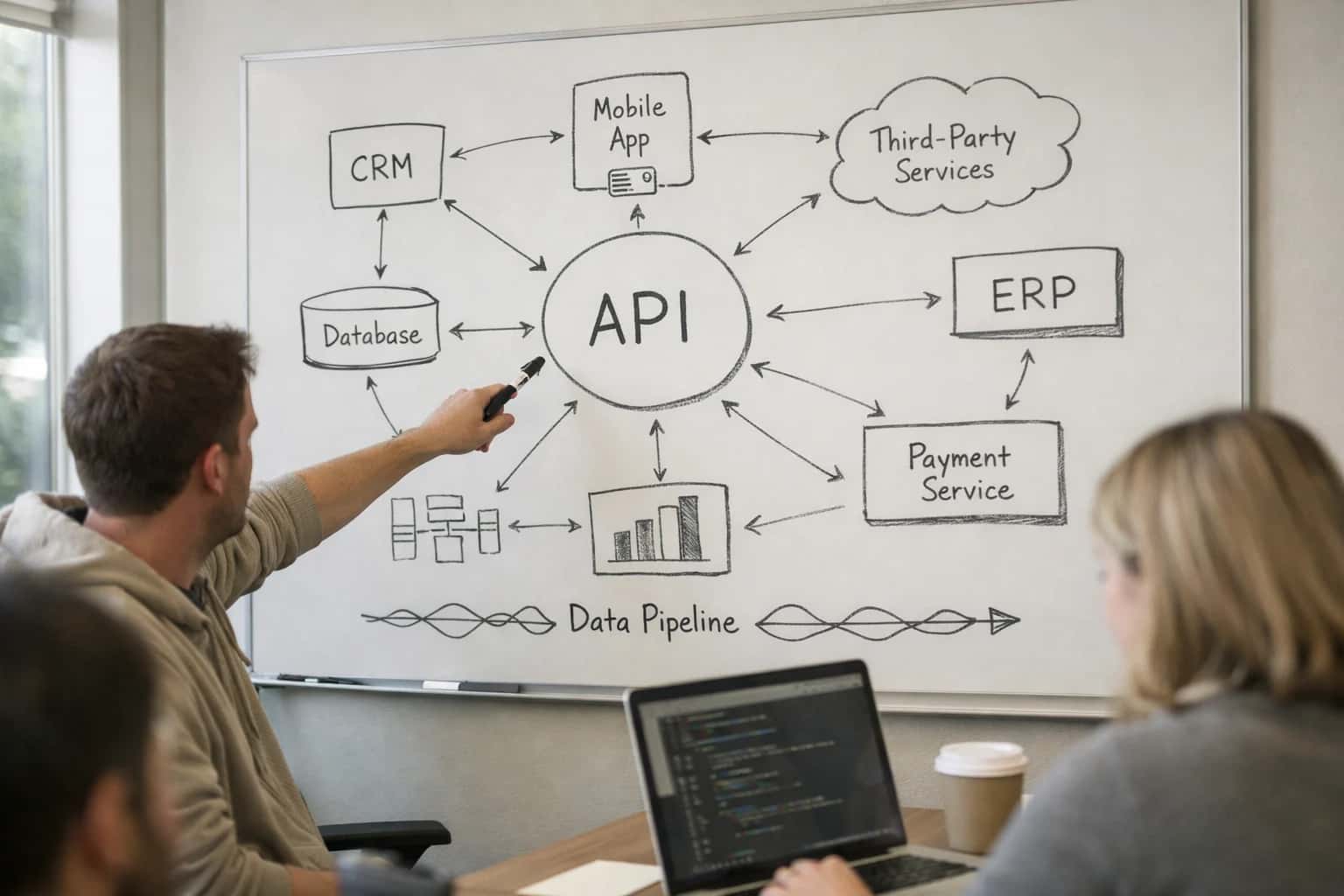
ARCHITECTING PERSONALIZED TRAVELER JOURNEYS
Where AI Fits Between Peek Pro and Klaviyo
A technical blueprint for using AI to orchestrate e-commerce style marketing flows triggered by Peek Pro booking events.
High-value workflows powered by this integration include:
- Personalized Activity Recommendations: An AI model analyzes the booked activity's metadata (e.g.,
activity_type='kayaking',location='Banff') and the customer's profile to recommend and promote related add-ons or future tours via Klaviyo email/SMS within 24 hours of booking. - Dynamic Abandoned Cart Recovery: For bookings left in
status='pending', an AI scores the abandonment reason based on session data and booking path, then triggers a tailored Klaviyo flow—offering a limited-time discount for price-sensitive leads or highlighting guide credentials for those who hesitated. - Repeat Booking Engine: Post-trip, AI evaluates the customer's satisfaction (via integrated survey scores or review sentiment) and booking history to place them in a Klaviyo segment for "likely to rebook," triggering personalized win-back campaigns with offers for their demonstrated interest areas.
A production rollout typically involves a serverless function (AWS Lambda, Google Cloud Function) acting as the orchestration layer. This function:
- Validates and enriches the Peek Pro webhook payload.
- Calls an inference endpoint (e.g., hosted LLM or custom model) to generate recommendations, scores, or content.
- Uses the Klaviyo API to create or update a profile, add to a list, and trigger a specific flow with AI-generated attributes. Governance is critical: all AI-generated content (email copy, product recommendations) should be logged with the triggering payload and subject to optional human review before sending, especially for high-value customer segments. This architecture ensures marketing personalization scales without sacrificing brand voice or compliance.
ARCHITECTING PERSONALIZED E-COMMERCE FLOWS
Key Integration Surfaces in Peek Pro and Klaviyo
The Trigger Layer
Peek Pro’s webhook and REST API surfaces are the primary triggers for Klaviyo campaigns. Key events to capture include:
- Booking Created: The foundational trigger for welcome and confirmation sequences.
- Booking Updated: Signals changes to party size, date, or add-ons for dynamic content updates.
- Booking Canceled: Initiates win-back or rebooking workflows.
- Check-in/Check-out: Enables on-tour messaging and post-experience feedback loops.
These events, sent as JSON payloads, contain the customer profile, product details, and monetary value needed to create a rich Klaviyo profile. The integration must map Peek Pro’s custom fields (like participant_count, activity_name) to Klaviyo properties for segmentation.
json// Example Peek Pro webhook payload (simplified) { "event": "booking.created", "data": { "booking_id": "BKG-78910", "customer_email": "traveler@example.com", "activity_title": "Sunset Kayak Tour", "total_amount": 245.00, "custom_fields": { "preferred_contact": "sms" } } }
PEAK PRO + KLAVIYO
High-Value AI Marketing Use Cases
Connect Peek Pro booking events to Klaviyo's e-commerce marketing engine, using AI to personalize flows, predict customer intent, and automate revenue-generating campaigns.
01
Post-Booking Upsell Sequences
Trigger Klaviyo flows when a Peek Pro booking is confirmed. Use AI to analyze the booked activity (e.g., 'sunset kayak') and customer profile to recommend and promote high-intent add-ons like photography packages, gear rentals, or dining reservations in a follow-up email series.
Batch -> Real-time
Campaign trigger
02
Abandoned Cart Recovery with Dynamic Incentives
Capture partial booking attempts from Peek Pro via webhook. An AI model scores the abandonment's recency, customer value, and activity popularity to instruct Klaviyo on which discount tier or urgency message (e.g., 'Only 2 spots left!') to use in the recovery flow.
Same day
Recovery window
03
AI-Powered Audience Segmentation
Sync Peek Pro booking history, activity categories, and spend data to Klaviyo profiles. Use clustering models to auto-create segments like 'Adventure Families', 'Solo Luxury Travelers', or 'Last-Minute Bookers' for hyper-targeted campaign orchestration.
1 sprint
Setup time
04
Personalized 'Welcome Back' Campaigns
Build Klaviyo journeys triggered by a customer's second booking in Peek Pro. An LLM reviews their past activity and new booking details to generate a personalized email suggesting complementary tours, referencing their previous guide, or offering a loyalty discount for a future booking.
Hours -> Minutes
Content generation
05
Dynamic Content for Pre-Trip Nurturing
Enrich standard Klaviyo pre-trip confirmation flows with AI. Based on the booked activity and forecasted weather pulled via API, dynamically insert personalized packing tips, local dining recommendations, or contingency plans into the email body before send.
06
Lapsed Customer Reactivation
Identify customers in Klaviyo with no Peek Pro bookings in 12+ months. Use an AI model to analyze their historical preferences and current seasonality to predict the most likely activity to re-engage them, powering a targeted 'We Miss You' offer flow.
Batch -> Real-time
Scoring
PERSONALIZED E-COMMERCE FLOWS
Example AI-Enhanced Marketing Workflows
These workflows demonstrate how to connect Peek Pro booking events to Klaviyo's marketing automation engine, using AI to personalize customer journeys, increase lifetime value, and automate post-booking engagement.
Trigger: A customer adds a tour to their cart in Peek Pro but does not complete the booking within a configured time window (e.g., 1 hour).
Context/Data Pulled: The workflow captures the Peek Pro cart event via webhook, pulling the customer's email, the specific activity ID, cart total, and any captured preferences.
Model or Agent Action: An AI model analyzes the customer's profile and the abandoned activity:
- Scores the customer's intent and likelihood to convert.
- Generates a personalized recovery message, potentially referencing similar popular tours or offering a limited-time incentive.
- Determines the optimal channel (SMS vs. Email) and send time based on historical engagement data.
System Update or Next Step: Klaviyo receives the enriched event and executes the AI-recommended flow. The customer receives a tailored reminder. If they book, a success event syncs back to Peek Pro, closing the loop.
Human Review Point: Marketing managers can review the AI-generated message variants and incentive logic in Klaviyo's flow editor before deployment, setting guardrails on discount amounts.
PEER-TO-PEER INTEGRATION PATTERN
Implementation Architecture: Data Flow & AI Layer
A practical blueprint for connecting Peek Pro's booking engine to Klaviyo's marketing automation, using AI to personalize e-commerce flows.
The integration is anchored on Peek Pro's webhook events (e.g., booking.created, booking.updated, booking.canceled) and its REST API for customer and product data. When a booking event fires, a middleware service (often a serverless function or lightweight container) captures the payload, enriches it with additional context from Peek Pro's API—such as the specific activity booked, customer's booking history, and total order value—and transforms it into a Klaviyo-compatible profile and event. This service acts as the orchestration layer, ensuring data is normalized and queued for reliable delivery to Klaviyo's Identify and Track APIs.
The AI layer is injected at two key points in this flow. First, during profile enrichment, a lightweight LLM call can analyze the booking data to generate a personalized product affinity score. For example, based on a booking for a "Sunset Kayak Tour," the AI might recommend related "Morning Snorkeling" or "Coastal Hike" activities and append these as properties to the Klaviyo profile. Second, AI determines the optimal messaging trigger and content. Using the enriched profile and event context, it can decide whether to immediately trigger an abandoned cart flow, add the customer to a "Repeat Bookers" segment for a win-back campaign in 90 days, or personalize the subject line of a confirmation email with a location-based reference.
For rollout, start with a single high-value workflow, such as abandoned cart recovery for partially completed bookings. Implement the data flow with robust error handling and logging, using a message queue (e.g., Amazon SQS, Google Pub/Sub) to guarantee event delivery. Governance is critical: establish a feedback loop where engagement metrics from Klaviyo (open rates, conversion from emails) are fed back to fine-tune the AI's recommendation logic. Ensure all AI-generated content has a human-in-the-loop review step for initial campaigns before moving to full automation. This architecture prioritizes resilience, measurable impact, and controlled scaling, turning booking data into a personalized revenue engine. For related integration patterns, see our guides on AI Integration with Peek Pro Marketing Automation and AI Integration for Tour Operator Platforms and Marketing Automation.
ENGINEERING AI-DRIVEN E-COMMERCE FLOWS
Code & Payload Examples
Ingesting Peek Pro Booking Events
When a booking is created or updated in Peek Pro, a webhook payload is sent to your AI service endpoint. This handler validates the event, extracts key customer and product data, and enqueues it for AI processing.
pythonfrom flask import Flask, request, jsonify import os import logging app = Flask(__name__) @app.route('/webhook/peekpro/booking', methods=['POST']) def handle_peekpro_webhook(): """Processes Peek Pro booking webhooks for AI-triggered flows.""" secret = request.headers.get('X-Peek-Signature') payload = request.get_json() # Validate webhook signature if not verify_signature(secret, payload): return jsonify({'error': 'Unauthorized'}), 401 event_type = payload.get('event') booking_data = payload.get('data', {}) # Enqueue for AI processing ai_payload = { "customer_email": booking_data.get('customer', {}).get('email'), "booking_id": booking_data.get('id'), "activity_name": booking_data.get('product', {}).get('name'), "booking_date": booking_data.get('date'), "participants": booking_data.get('participants'), "total_amount": booking_data.get('total_amount'), "event_type": event_type # e.g., 'booking.created', 'booking.updated' } # Send to message queue (e.g., Redis, SQS) for async AI agent processing queue_ai_task('process_booking_for_klaviyo', ai_payload) return jsonify({'status': 'queued'}), 202
This pattern ensures reliable ingestion, allowing your AI service to process events asynchronously for personalized Klaviyo campaign triggers.
AI-PERSONALIZED MARKETING FLOWS
Realistic Operational Impact & Time Savings
This table shows how AI integration between Peek Pro and Klaviyo transforms manual, reactive marketing into automated, personalized workflows, saving significant time and increasing booking value.
| Marketing Workflow | Before AI | After AI | Implementation Notes |
|---|---|---|---|
Post-booking upsell sequence | Manual email drafting, sent 1-2 days later | Automated, personalized recommendations sent within 1 hour | AI analyzes booked activity to suggest relevant add-ons; human reviews top 5% of suggestions |
Abandoned cart recovery | Generic reminder email sent next day | Dynamic, multi-channel sequence (SMS/email) triggered in 30 minutes | AI scores cart value and customer intent to personalize message and channel |
Repeat booking campaigns | Quarterly batch-and-blast to all past customers | Segmented, behavior-triggered flows for high-LTV customers | AI segments based on activity type, seasonality, and engagement score |
Lead nurturing for inquiries | Static email drip, no personalization | Itinerary-driven content based on initial interest | AI uses inquiry form data to generate personalized sample itineraries in Klaviyo |
Seasonal promotion targeting | Manual list building from past bookings | Automated audience creation based on predicted interest | AI models customer propensity for new seasonal activities |
Campaign performance analysis | Weekly manual report from disparate data | Automated dashboard with AI-driven insights and A/B test recommendations | AI correlates Klaviyo engagement metrics with Peek Pro conversion data |
Customer win-back flows | Annual generic 'we miss you' email | Personalized re-engagement offer based on past booking value and reason for lapse | AI identifies lapse reason (e.g., season, activity type) to tailor offer |
ARCHITECTING A CONTROLLED IMPLEMENTATION
Governance, Security, and Phased Rollout
A practical approach to deploying AI-driven personalization between Peek Pro and Klaviyo with security, oversight, and measurable impact.
A production integration between Peek Pro and Klaviyo requires a secure, event-driven architecture. The core pattern involves capturing booking events from Peek Pro's webhooks—such as booking.created, booking.updated, or customer.added—and routing them through a secure middleware layer. This layer enriches the payload with AI-generated recommendations (e.g., related activities based on the booked tour, customer location, or past behavior) before pushing the structured data to Klaviyo's Profiles & Events API. Key governance controls include:
- API Key Management: Using scoped API keys for Peek Pro and dedicated private API keys for Klaviyo, stored in a secrets manager like AWS Secrets Manager or Azure Key Vault.
- Data Validation: Validating all incoming webhook signatures from Peek Pro to prevent spoofing.
- Audit Logging: Logging every event processed, the AI recommendation generated, and the final API call to Klaviyo for a complete audit trail.
- PII Handling: Ensuring customer email, name, and booking details are only used within the secured pipeline and not exposed in AI model prompts unless explicitly anonymized.
Rollout should follow a phased, campaign-based approach to manage risk and prove value. Start with a single, high-impact workflow:
- Phase 1: Post-Booking Cross-Sell: Trigger an AI-recommended "You Might Also Like" email 24 hours after a Peek Pro booking is confirmed. The AI model analyzes the booked activity's attributes (e.g.,
activity_type= 'kayaking',location='Banff') and the customer's profile to suggest 1-2 complementary tours (e.g., a wildlife photography tour). Launch this to a small segment (e.g., 10% of bookings) and A/B test against a control group receiving a generic "Thanks for booking" email. - Phase 2: Abandoned Cart Recovery: Implement a workflow for Peek Pro's cart abandonment events. Use AI to personalize the recovery email's subject line and offer based on the items in the cart and time of day. Monitor key metrics like recovery rate and incremental revenue.
- Phase 3: Repeat Booking Nurture: For customers with a completed booking, use AI to score their likelihood to rebook based on engagement with past emails and post-tour survey sentiment. Create a dynamic Klaviyo segment for "High Intent to Rebook" and trigger a personalized campaign with a loyalty offer. Each phase should have clear success criteria (e.g., a 5-15% lift in click-through rate for Phase 1) and a rollback plan.
Ongoing governance is critical. Establish a lightweight review process where marketing and operations teams can audit the AI's recommendation logic via a dashboard (e.g., "Why was this activity suggested?"). Implement a feedback loop where email engagement data (opens, clicks) from Klaviyo is fed back to retrain or fine-tune the recommendation model. For compliance, ensure all AI-generated content complies with regional marketing laws (e.g., CAN-SPAM, GDPR) by having final human approval for net-new campaign templates before they are fully automated. This controlled, iterative approach de-risks the integration while building internal trust in AI-driven automation.
Enabling Efficiency, Speed & Accuracy
Intelligent Analysis, Decision & Execution
We build AI systems for teams that need search across company data, workflow automation across tools, or AI features inside products and internal software.
Talk to Us
Search across company data
Give teams answers from docs, tickets, runbooks, and product data with sources and permissions.
Useful when people spend too long searching or get different answers from different systems.
Enterprise searchRAGPermissions
Read more
Automate internal workflows
Use AI to route work, draft outputs, trigger actions, and keep approvals and logs in place.
Useful when repetitive work moves across multiple tools and teams.
AI agentsWorkflow automationGovernance
Read more
Add AI to products and internal tools
Build assistants, guided actions, or decision support into the software your team or customers already use.
Useful when AI needs to be part of the product, not a separate tool.
AI integrationDecision supportModel routing
Read moreIMPLEMENTATION AND WORKFLOW DETAILS
Frequently Asked Questions
Practical questions about engineering AI-driven e-commerce flows between Peek Pro and Klaviyo, focusing on triggers, data handling, and personalization logic.
The integration is event-driven, using Peek Pro's webhooks or API to initiate flows in Klaviyo.
Typical Implementation:
- Trigger: A
booking.createdorbooking.updatedwebhook is sent from Peek Pro to your middleware or directly to a secure endpoint. - Payload Enrichment: The webhook payload (containing booking ID, customer email, product IDs) is used to fetch additional context from the Peek Pro API, such as:
- Full customer profile
- Detailed activity information (category, location, duration)
- Booking value and party size
- AI Context Building: An AI model or agent processes this data to generate a personalization seed—a short JSON object containing recommended next activities, predicted interests, or personalized message hooks.
- Klaviyo API Call: Your system calls the Klaviyo Create Event API, pushing a custom event (e.g.,
Peek Pro Activity Booked) with the enriched data and AI seed as event properties. - Flow Activation: In Klaviyo, this custom event triggers a pre-built flow (e.g., "Post-Booking Recommendation Series").
Key Consideration: Ensure your middleware handles authentication for both systems (API keys for Peek Pro, private keys for Klaviyo) and includes error handling for webhook retries.

About the author
Prasad Kumkar
CEO & MD, Inference Systems
Prasad Kumkar is the CEO & MD of Inference Systems and writes about AI systems architecture, LLM infrastructure, model serving, evaluation, and production deployment. Over 5+ years, he has worked across computer vision models, L5 autonomous vehicle systems, and LLM research, with a focus on taking complex AI ideas into real-world engineering systems.
His work and writing cover AI systems, large language models, AI agents, multimodal systems, autonomous systems, inference optimization, RAG, evaluation, and production AI engineering.
LinkedIn
Limited slotsGet a Free AI Consultation
Partnered with leading AI, data, and software stack.





How We Work
Custom AI workflows for your Business
One-fit-all AI don't work for modern businesses. At Inferensys, we aim to understand your business & custom requirements; which we use to define most efficient agentic workflows, the data, and the tools for your business.
01
Review the use case
We understand the task, the users, and where AI can actually help.
Read more02
Pick the right approach
We define what needs search, automation, or product integration.
Read more03
Build the first useful version
We implement the part that proves the value first.
Read more04
Improve from there
We add the checks and visibility needed to keep it useful.
Read moreThe first call is a practical review of your use case and the right next step.
Talk to Us