AI integration targets the SEVIS-specific data objects and workflows within Ellucian Banner, primarily focusing on the SGBSTDN (Student General) and SORHSCH (High School/Previous Institution) tables for status tracking, and the document imaging system (BDM) for I-20/DS-2019 processing. The integration acts as a real-time monitor on key status change events—such as program of study (STVLEVL), enrollment intensity (STVESLC), and address updates—that trigger mandatory SEVIS reporting within strict federal deadlines. An AI agent layer listens for these changes via Banner's APIs or database triggers, validates the data against SEVIS business rules, and can automatically generate draft SARs (Student and Exchange Visitor Information System Alien Records) for advisor review and submission.

Integration
AI Integration with Ellucian Banner SEVIS Compliance
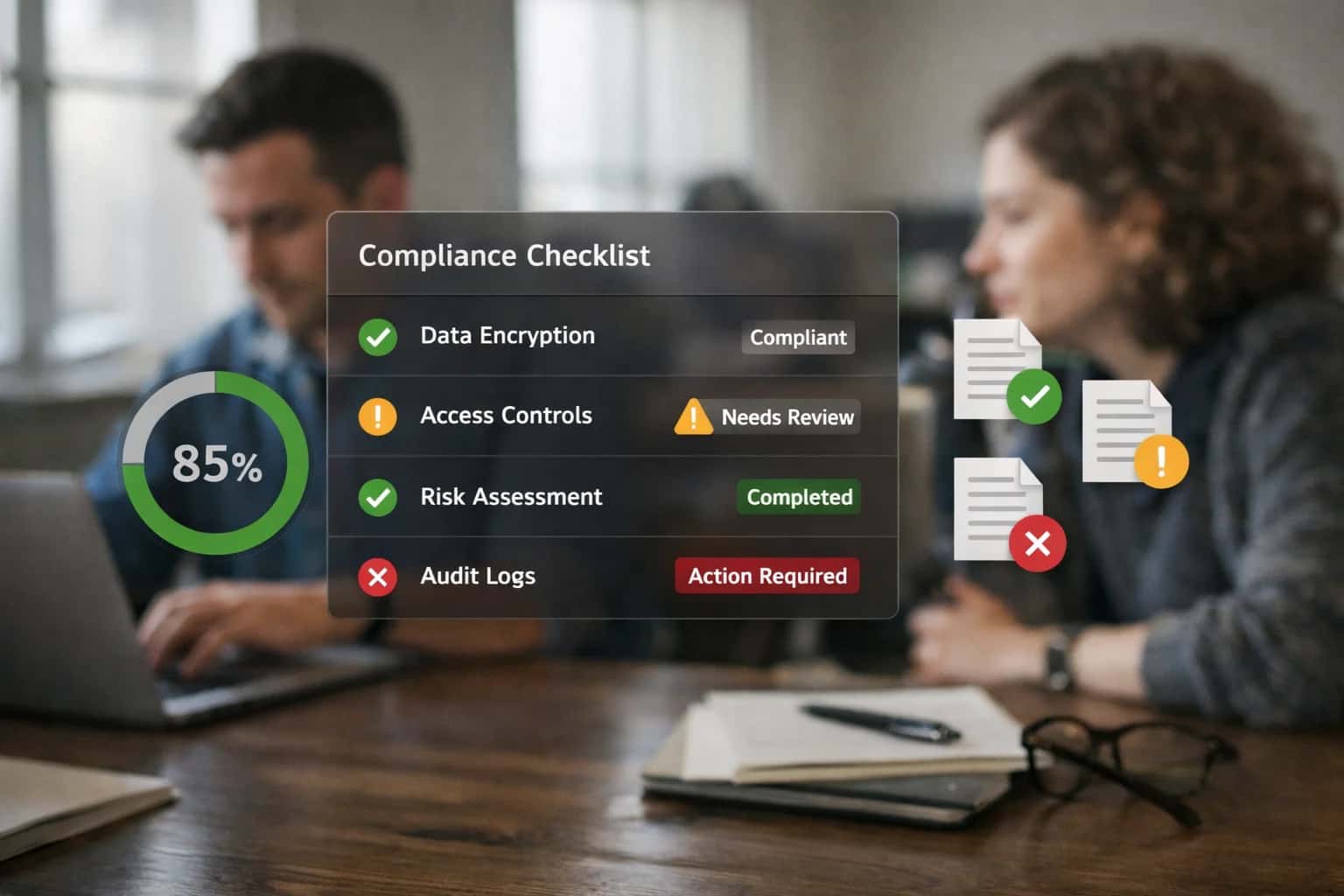
Where AI Fits into Ellucian Banner SEVIS Compliance
Integrating AI with Ellucian Banner to automate SEVIS reporting, document validation, and status monitoring for international student compliance.
The core implementation involves an AI document processing pipeline connected to Banner's imaging workflow. When a new financial document, transcript, or passport copy is uploaded for an F-1 or J-1 student, an AI service extracts and validates key fields (funding amounts, dates, passport numbers) against the student's SEVIS record in Banner. Discrepancies or missing data are flagged for the DSO (Designated School Official) in a consolidated dashboard, turning a manual, error-prone review into a prioritized exception-handling workflow. This reduces the risk of RFEs (Requests for Evidence) and helps maintain the institution's SEVIS certification by ensuring I-20 accuracy.
Rollout requires a phased approach, starting with read-only monitoring and alerting before progressing to automated draft generation. Governance is critical: a human-in-the-loop approval step for any SEVIS transaction (like a program extension or reinstatement request) must be preserved. The AI system should maintain a detailed audit log of all suggested actions and data validations, tied to the Banner user ID of the reviewing DSO. This creates a defensible compliance trail and allows the institution to tune the AI's confidence thresholds over time, balancing automation with regulatory risk management. Successful integration shifts DSO effort from manual data wrangling and deadline tracking to strategic student support and complex case resolution.
Key Integration Surfaces in Ellucian Banner
Core SEVIS Data Objects
The primary integration surface is Banner's student data tables, specifically SGBSTDN (Student General) and SGRSATT (Student Registration Status), which hold the F-1/J-1 visa status and program details. AI agents monitor these tables for status changes (e.g., Active to Terminated) that trigger mandatory SEVIS reporting within regulatory deadlines.
Key fields for AI ingestion include:
- SEVIS ID and I-20/DS-2019 program dates
- Registration status and full-time/part-time enrollment
- Major/CIP code and degree level
- On-campus employment authorization flags
AI workflows validate this data against current immigration regulations before generating update payloads for the government's SEVIS RTI (Real-Time Interaction) batch or API.
High-Value AI Use Cases for SEVIS Compliance
Automate complex, high-risk SEVIS reporting and document validation workflows within Ellucian Banner by integrating AI agents that monitor status changes, interpret regulations, and generate required government forms.
Automated I-20/DS-2019 Generation & Updates
AI agents monitor Banner's SGASTDN (student) and SGBSTDN (student status) tables for program, funding, or CPT/OPT authorization changes. The system automatically drafts updated I-20 or DS-2019 forms with accurate dates and remarks, reducing manual form prep from hours to minutes. Includes a human-in-the-loop review step before DSO signature.
Real-Time SEVIS Status Change Monitoring
AI continuously scans Banner for events that trigger SEVIS reporting obligations (e.g., enrollment below full course load, program end date changes, unauthorized withdrawals). It creates flagged tasks in the DSO's workflow queue within Banner or a connected case management system, ensuring same-day reporting instead of next-day and reducing compliance risk.
Intelligent Document Intake & Validation
AI-powered document processing for I-983 Training Plans, financial affidavits, and dependent documents. Integrated with Banner Document Management (BDM), it extracts key fields, validates amounts and dates against Banner data, and flags discrepancies for DSO review. Automates the manual data entry and error-checking bottleneck in the onboarding and OPT/STEM extension processes.
Proactive Student Communication & Deadline Management
An AI agent uses Banner communication APIs and student data (SPRIDEN, SGRADVR) to send personalized, regulation-aware reminders for OPT application windows, travel signature expirations, and program completion deadlines. It answers common student FAQs via a chatbot integrated with the student portal, deflecting routine inquiries from DSOs.
Audit Trail & Reporting Automation
AI aggregates all SEVIS-related actions—form generations, status updates, document validations—from Banner logs and agent activity into a centralized audit trail. It automates the generation of internal compliance reports and can pre-populate data for PDSO/RO review, turning a quarterly manual compilation task into an on-demand report.
CPT/OPT Workflow Orchestration
AI orchestrates the multi-step approval workflow for Curricular Practical Training (CPT) and Optional Practical Training (OPT). It routes requests from Banner self-service, checks course registration (SFAREGS) and academic standing, prompts advisor approvals, and ensures I-20 updates are sequenced correctly, providing students and DSOs with a clear, tracked status.
Example SEVIS Compliance Workflows Powered by AI
These concrete workflows show how AI agents and automation connect to Ellucian Banner's SEVIS-related data and processes to reduce manual effort, prevent reporting errors, and ensure timely compliance for international student advisors.
Trigger: A new international student record is created in Banner (SGBSTDN, SGRSUSA) with an I (International) residency status and an admission decision of AC (Accepted).
Context Pulled: AI agent queries Banner via API/webhook for:
- Student biographic data (
SPRIDEN,SPBPERS) - Program of study details (
SGBSTDN) - Financial documentation status and amounts (
SORFINA) - SEVIS ID (if pre-assigned) from
SGRSUSA - University financial guarantee or scholarship data
Agent Action:
- Validation Check: Cross-references financial documents against program cost of attendance from Banner tables. Flags discrepancies for human review.
- Form Generation: Populates the correct I-20 or DS-2019 PDF template with validated data.
- Compliance Logic: Applies rules for specific visa types (F-1, J-1) and education levels.
- Audit Trail: Logs all data sources and decisions in a linked audit record.
System Update:
- Generated document is saved to Banner Document Management (BDM) and linked to the student's record.
- Status in a custom tracking table (
GORSEVS) is updated toDOC_READY. - Task is created in the advisor's workflow queue in Banner or a connected system for final signature and mailing.
Human Review Point: Advisor reviews the AI-populated form, adds physical signature, and initiates mailing. AI agent can trigger a reminder if the task sits for >24 hours.
Implementation Architecture: Data Flow and System Design
A secure, event-driven architecture for automating SEVIS reporting and document validation by connecting AI agents directly to Ellucian Banner's core student and immigration tables.
The integration is built on an event-driven pipeline that monitors key Banner tables (SGBSTDN for student status, SORHSCH for holds, SORFACI for I-20/DS-2019 requests) for changes triggering SEVIS reporting obligations. A dedicated service listens for updates via Banner's SOAP or REST APIs or database triggers, publishing events (e.g., student.status.active_to.terminated, i20.update.requested) to a secure message queue. AI agents, governed by strict access controls, consume these events to perform specific compliance tasks: validating financial documents against I-20 requirements, drafting SEVIS update narratives, or flagging potential data inconsistencies for officer review before any government system submission.
For document validation, scanned proofs (bank statements, passport copies) from Banner Document Management (BDM) or a student portal are routed through an AI processing layer. This layer performs OCR, data extraction, and rule-based validation (e.g., "funds >= I-20 amount," "passport expiry > program end date + 6 months"). Results and confidence scores are written back to a dedicated staging table (SEVIS_DOC_VALIDATION) and linked to the student's record, triggering either an automated approval workflow in Banner or creating a task in the international office's case management system for human review. All agent actions and data accesses are logged to a separate audit trail for compliance reporting.
Rollout follows a phased, pilot-group approach. Phase 1 automates high-volume, low-risk updates like address changes and program extensions. Phase 2 introduces document validation for a single document type (e.g., financial affidavits). Each phase includes a human-in-the-loop approval step where the designated school official (DSO) reviews and authorizes the AI-generated SEVIS transaction before it's submitted via the batch processor or real-time API. Governance is managed through a configuration dashboard that allows DSOs to adjust validation rules, confidence thresholds, and approval workflows without developer intervention, ensuring the system adapts to changing SEVP policy guidance.
Code and Payload Examples
Triggering SEVIS Review on Banner Updates
When a student's I-20 status changes in Banner (e.g., program extension, CPT authorization), a Banner workflow or database trigger should POST a webhook to your AI orchestration layer. This listener validates the payload and initiates the compliance check.
python# Flask endpoint to receive Banner webhook def handle_banner_webhook(): data = request.json # Validate payload structure student_id = data.get('student_pidm') event_type = data.get('event_type') # e.g., 'MAJOR_CHANGE', 'ENROLLMENT_UPDATE' changed_fields = data.get('changed_fields', []) # Check if change triggers SEVIS reporting sevis_trigger_fields = {'CURC_CODE', 'LEVL_CODE', 'CPT_AUTH_DATE'} if sevis_trigger_fields.intersection(changed_fields): # Queue for AI agent processing queue_sevis_review_task(student_id, event_type, data['snapshot']) return jsonify({'status': 'queued'}), 202 return jsonify({'status': 'ignored'}), 200
The AI agent then retrieves the full student record from Banner's SGBSTDN and SFRSTCR tables via direct API or ODBC connection to assess the reporting requirement.
Realistic Time Savings and Operational Impact
How AI integration transforms manual, error-prone SEVIS reporting workflows into automated, auditable processes, reducing compliance risk and freeing up DSO staff for high-value student support.
| Workflow / Task | Before AI (Manual Process) | After AI (Automated Process) | Impact & Notes |
|---|---|---|---|
SEVIS Registration (I-20/DS-2019) for New Students | 30-45 minutes per student (data lookup, form fill, manual checks) | 5-10 minutes (AI pre-populates from Banner, flags discrepancies) | Reduces DSO workload by ~75%; ensures data consistency from SPAIDEN/SGASTDN. |
SEVIS Event Reporting (CPT, OPT, Reduced Course Load) | Manual monitoring of Banner status changes; 15-20 min per report + risk of missed deadlines | Real-time alerts from Banner API; AI drafts report in <2 min for DSO review | Transforms reactive, missed events to proactive compliance; ensures timeliness. |
Document Validation (Passport, I-94, Financial Docs) | Visual review & data entry; 10-15 min per document, high error potential | AI-powered OCR & data extraction; auto-matches to SEVIS record in <1 min | Eliminates manual data entry errors; creates searchable audit trail in Banner Document Management (BDM). |
Batch Reporting for Semester Compliance (Full Course of Study) | Days of manual roster reconciliation between Banner & SEVIS | Automated nightly job compares Banner enrollment (SFAREGS) to SEVIS; generates exception report | Shifts effort from reconciliation to exception handling; ensures school-wide compliance status is always known. |
Student Communication for Document Requests | Generic emails; manual follow-up tracking in spreadsheets | Personalized, triggered messages via Banner Communication Management; AI tracks responses | Improves student response rates; eliminates manual tracking, integrates comms into student record. |
Audit Preparation & Record Pulling | Days of manual file gathering and cross-referencing for a single audit | AI assembles compliant student record packets on-demand from Banner & linked documents | Reduces audit prep from days to hours; ensures complete, organized records for government review. |
Overall DSO Capacity for Student Advising | ~60-70% on transactional compliance tasks | ~80-90% on high-touch student support and complex case resolution | Shifts DSO role from data clerk to strategic advisor, improving international student experience and retention. |
Governance, Security, and Phased Rollout
Integrating AI into SEVIS workflows requires a security-first, audit-ready approach with careful change management.
Implementation begins by establishing a read-only data pipeline from Ellucian Banner's core SEVIS-related tables (e.g., SORISUS, SORFOSU) and document imaging system (BDM). AI agents are granted no write access to production SEVIS data. Instead, they generate draft reports, flag anomalies, and create validation summaries in a separate staging environment. All proposed changes—like a SEVIS Status update or a new Form I-20 draft—must route through an existing Banner workflow or a dedicated human-in-the-loop approval queue, preserving the designated school official's (DSO) final authority and audit trail.
Security is enforced through role-based access control (RBAC) synced with Banner's security classes. AI tools only process data for students and programs the authenticated DSO is authorized to view. All document processing and LLM interactions occur within a private, compliant cloud environment; no student PII or SEVIS records are sent to public AI APIs. Every AI-generated action—a status check, a document review, a communication draft—is logged with a timestamp, user ID, and the specific data points used, creating an immutable audit log for institutional and DHS review.
A phased rollout is critical. Phase 1 automates document validation—using AI to read and cross-check I-20s, passports, and financial affidavits against Banner records, flagging mismatches for DSO review. Phase 2 introduces monitoring agents that watch key Banner fields for SEVIS-reportable events (e.g., program end date change, reduced course load) and generate draft alerts. Phase 3, only after extensive validation, enables assisted form generation, where the AI pre-populates Form I-20 or DS-2019 drafts from Banner data for final DSO sign-off. This incremental approach de-risks adoption, builds trust with the PDSO office, and aligns with the strict change management protocols typical of university IT.
Enabling Efficiency, Speed & Accuracy
Intelligent Analysis, Decision & Execution
We build AI systems for teams that need search across company data, workflow automation across tools, or AI features inside products and internal software.
Talk to Us
Search across company data
Give teams answers from docs, tickets, runbooks, and product data with sources and permissions.
Useful when people spend too long searching or get different answers from different systems.

Automate internal workflows
Use AI to route work, draft outputs, trigger actions, and keep approvals and logs in place.
Useful when repetitive work moves across multiple tools and teams.

Add AI to products and internal tools
Build assistants, guided actions, or decision support into the software your team or customers already use.
Useful when AI needs to be part of the product, not a separate tool.
Frequently Asked Questions (FAQ)
Practical questions about automating SEVIS reporting and document validation in Ellucian Banner using AI agents and workflow automation.
AI agents monitor specific Banner forms and tables for changes that impact a student's F-1 or J-1 status. Key triggers include:
- SPAIDEN/SPAPERS (Demographics & Person): Changes to citizenship, visa type, or country of citizenship.
- SGASTDN (Student General): Updates to educational objective (STDN_EDUC_OBJ), level (STDN_LEVL), major (STDN_DEGC), or enrollment status (STDN_STYP).
- SFAREGS (Registration): Course registration adds/drops that affect full-time enrollment status.
- SHRTRCE (Transfer Credit): Posting of external credits that may affect program end date.
- SGBSTDN (Student Status): Changes to student status (e.g., active, withdrawn, graduated).
An AI agent listens for updates via Banner's Direct Database API, Banner 9 Extensibility hooks, or real-time SOA/ELLUCIAN Ethos Event streams. Upon detecting a relevant change, it packages the student's ID (SPRIDEN_ID) and change context for the next validation step.

About the author
Prasad Kumkar
CEO & MD, Inference Systems
Prasad Kumkar is the CEO & MD of Inference Systems and writes about AI systems architecture, LLM infrastructure, model serving, evaluation, and production deployment. Over 5+ years, he has worked across computer vision models, L5 autonomous vehicle systems, and LLM research, with a focus on taking complex AI ideas into real-world engineering systems.
His work and writing cover AI systems, large language models, AI agents, multimodal systems, autonomous systems, inference optimization, RAG, evaluation, and production AI engineering.
Partnered with leading AI, data, and software stack.





How We Work
Custom AI workflows for your Business
One-fit-all AI don't work for modern businesses. At Inferensys, we aim to understand your business & custom requirements; which we use to define most efficient agentic workflows, the data, and the tools for your business.
01
Review the use case
We understand the task, the users, and where AI can actually help.
Read more02
Pick the right approach
We define what needs search, automation, or product integration.
Read more03
Build the first useful version
We implement the part that proves the value first.
Read more04
Improve from there
We add the checks and visibility needed to keep it useful.
Read moreThe first call is a practical review of your use case and the right next step.
Talk to Us