
Inferensys

Integration

AI Integration for Automated Incident Response for Mobile Devices

Cross-platform blueprint for an AI orchestration layer that triggers MDM actions (remote lock, wipe, policy push) and creates ITSM tickets in response to security or compliance incidents detected on devices.
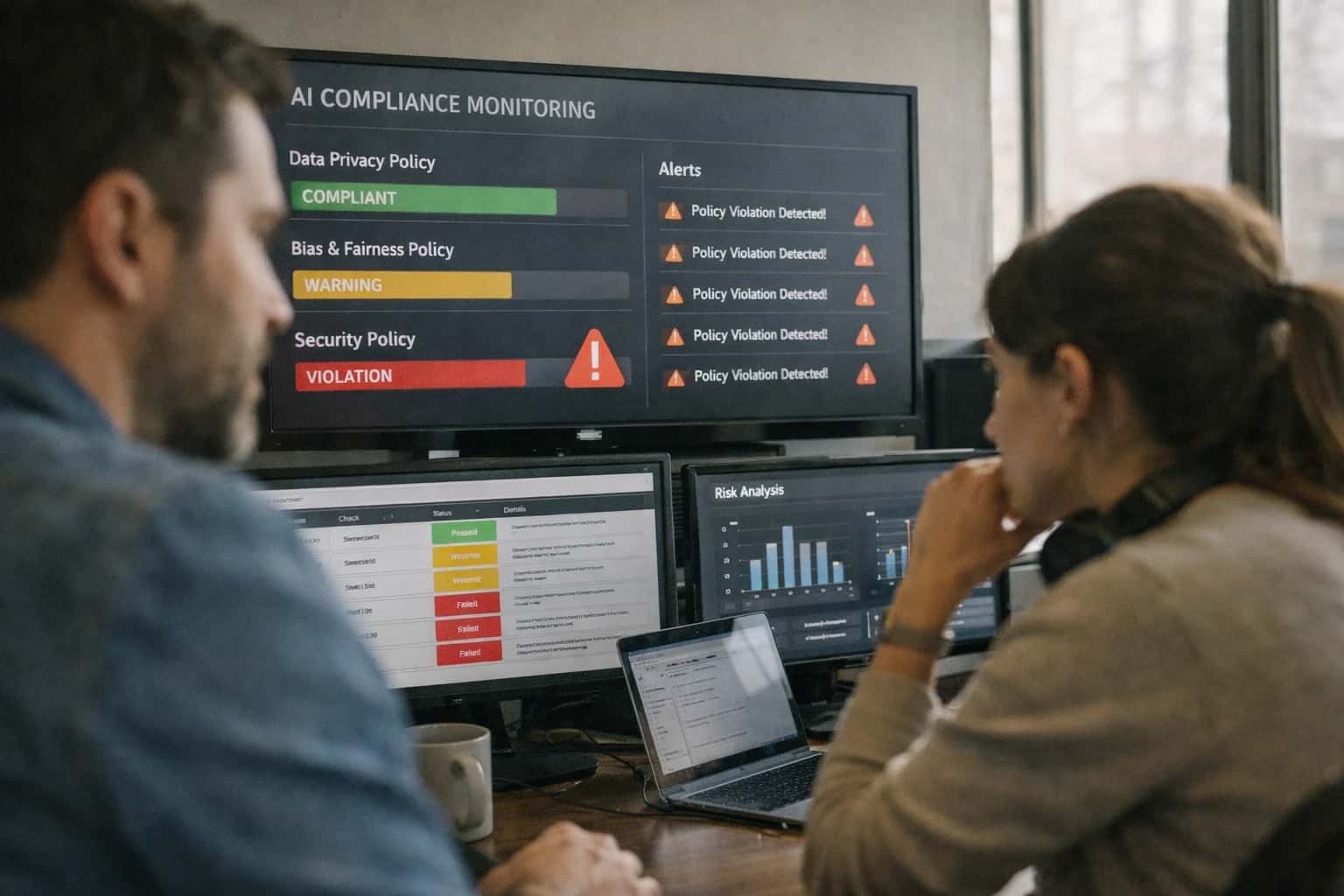
Compliance officer monitoring AI compliance agent on laptop, policy dashboards visible, modern WeWork desk setup.
ARCHITECTURE BLUEPRINT

Where AI Fits in Mobile Device Incident Response

A practical guide to building an AI orchestration layer that triggers MDM actions and ITSM tickets in response to security or compliance incidents on mobile devices.

An effective AI integration for automated incident response sits as a middleware orchestration layer between your security stack and your MDM platform's execution APIs. It consumes real-time signals from sources like your SIEM (Splunk, Sentinel), Endpoint Detection and Response (EDR) tools, or even native MDM compliance reports. When a high-confidence incident is detected—such as a device jailbreak, malware signature, or anomalous data exfiltration—the AI agent evaluates the context and executes pre-defined remediation workflows via the MDM's REST API. Core execution surfaces include:

  • Remote Lock/Wipe Commands: To immediately contain a lost or compromised device.
  • Policy Push/Update: To dynamically enforce stricter security profiles (e.g., enable mandatory VPN, disable camera).
  • Script Execution: For targeted remediation, like running a malware removal script on a managed macOS device via Jamf Pro.
  • Device Quarantine: Using network access control integrations or moving the device to a restricted MDM group.


The implementation nuance lies in the decision logic and workflow orchestration. A production system should:

  • Correlate multiple signals (e.g., EDR alert + geolocation anomaly) to reduce false positives before triggering destructive actions like a remote wipe.
  • Integrate with your ITSM (e.g., ServiceNow, Jira) to automatically create an incident ticket enriched with all device context (user, model, last compliance scan) and log the MDM action taken for audit trails.
  • Incorporate human-in-the-loop approvals for high-risk actions, using the AI to draft the justification and route the request via Slack or Microsoft Teams.
  • Maintain a stateful session to monitor the device post-remediation, automatically escalating if the issue persists. The business impact is operational: transforming a manual, hours-long investigation and response process into a same-minute containment, significantly reducing mean time to respond (MTTR) and potential data exposure.

Rollout requires a phased approach, starting with read-only monitoring and alerting, then progressing to low-risk automated actions (like policy pushes), before enabling high-stakes commands. Governance is critical: every AI-initiated action must be logged with an immutable audit trail linking back to the original alert, the AI's decision rationale, and the API call made to the MDM. Regular reviews of the AI's decision logs are necessary to tune confidence thresholds and prevent operational disruption. For teams using platforms like Microsoft Intune or VMware Workspace ONE, this pattern leverages their robust Graph API and Intelligence APIs respectively, making the MDM layer a powerful, policy-aware execution engine for your AI-driven security operations.

AUTOMATED INCIDENT RESPONSE FOR MOBILE DEVICES

MDM & ITSM Surfaces for AI Integration

MDM APIs for Automated Security Response

AI orchestration layers execute containment actions via MDM platform APIs. Key surfaces include:

  • Device Commands: Remote lock, wipe, or restart via REST endpoints (e.g., POST /api/v1/devices/{id}/wipe).
  • Policy Management: Dynamic assignment of security profiles or compliance policies to isolate non-compliant devices.
  • Script Execution: Running remediation scripts (Jamf Pro) or PowerShell remediations (Intune) to fix configuration drift.
  • Inventory & Telemetry: Real-time queries for device health, location, network info, and installed apps to assess incident context.

AI agents consume external threat intelligence or internal SIEM alerts, map them to device identifiers in the MDM, and trigger these API calls within defined security playbooks. This turns manual security operations into sub-minute automated responses.

MDM AUTOMATION

High-Value AI Incident Response Use Cases

Deploy an AI orchestration layer that consumes security and compliance signals from your MDM platform to automatically trigger containment actions, create ITSM tickets, and notify stakeholders—turning manual incident response into a closed-loop workflow.

01

Automated Remote Wipe for Lost/Stolen Devices

AI agents monitor MDM location and security events. Upon detecting a device marked lost or reporting from a high-risk geolocation, the system automatically validates the incident via secondary signals (last login, user status) and executes a remote wipe command via the MDM API, then logs the action in ITSM.

Hours -> Minutes
Containment time
02

Dynamic Policy Push for Compliance Violations

When AI analysis of Jamf extension attributes or Intune compliance reports detects a violation (e.g., encryption disabled, OS out-of-date), the system automatically pushes a targeted configuration profile or remediation script to the non-compliant device group, then creates a ticket for follow-up verification.

Batch -> Real-time
Policy enforcement
03

AI-Triggered Network Quarantine

Integrating with Cisco Meraki or network NAC, the AI layer uses MDM device health scores and threat intelligence to identify potentially compromised endpoints. It automatically triggers a network access policy change to isolate the device on a quarantine VLAN and creates a high-priority security ticket with full context.

Same day
Threat containment
04

Automated ITSM Ticket Enrichment & Routing

AI consumes raw MDM alerts (e.g., jailbreak detection, unauthorized app install) and enriches them with device inventory, user role, and past incident history. It then auto-creates a pre-categorized, prioritized ticket in ServiceNow or Jira Service Management with suggested response playbooks attached.

1 sprint
MTTR reduction
05

Predictive Incident Prevention for Device Health

ML models analyze historical MDM telemetry (battery health, storage, crash logs) to predict device failures. The system automatically generates proactive work orders in the ITSM for hardware replacement or pushes optimization scripts via the MDM before the device becomes an incident.

Hours -> Minutes
Proactive response
06

Conditional Access Automation Based on Risk

AI evaluates real-time risk signals from Intune or Workspace ONE (device compliance, user behavior). For high-risk sessions, it automatically triggers a conditional access policy change via Microsoft Graph API to require step-up authentication or block access to corporate resources, logging the justification for audit.

Batch -> Real-time
Access control
CROSS-PLATFORM BLUEPRINT

Example AI-Driven Incident Response Workflows

These workflows illustrate how an AI orchestration layer can consume security signals, evaluate context, and automatically execute MDM actions while creating structured ITSM tickets. Each flow is designed to be implemented across platforms like Jamf, Intune, or Workspace ONE via their respective APIs.

Trigger: User reports a device as lost/stolen via a self-service portal or IT help desk ticket.

AI Agent Actions:

  1. Context Enrichment: The agent immediately queries the MDM (e.g., via Jamf Pro's /mobiledevices API or Microsoft Graph's deviceManagement/managedDevices endpoint) for the device's last known location, network IP, and encryption status.
  2. Risk Assessment: A small classifier model evaluates the report's credibility based on user role, location history, and time since last check-in. It cross-references with recent geofence violations or abnormal login attempts.
  3. Orchestrated Response: If risk score exceeds threshold, the agent executes a sequenced MDM command payload:
    • Immediate: Issues a remote lock command with a custom message.
    • If Encrypted: After a configurable delay (e.g., 1 hour), issues a remote wipe command to preserve forensic chance but ensure data destruction.
    • Policy Update: Dynamically adds the device serial number to a "High-Risk" dynamic group in the MDM, triggering more restrictive network access policies.
  4. ITSM Integration: Creates a ticket in ServiceNow or Jira Service Management via webhook with all context, including the executed actions, risk score rationale, and a link to the MDM device record. The ticket is auto-assigned to the security team for investigation.

Human Review Point: The initial risk assessment score and the decision to proceed with a wipe can be configured to require manual approval for certain user roles (e.g., executives) via a Slack/Teams approval workflow before commands are sent.

CROSS-PLATFORM BLUEPRINT

Implementation Architecture: Data Flow & Guardrails

A production-ready architecture for an AI orchestration layer that connects security signals to MDM actions and ITSM workflows.

The core integration pattern involves an AI decision engine that consumes real-time alerts from security tools (EDR, SIEM, network monitoring) and correlates them with device context from your MDM platform (Jamf, Intune, Workspace ONE). The engine evaluates the incident against a configured policy matrix—considering factors like device type, user role, location, and data sensitivity—to determine the appropriate automated response. This could be a low-risk action like creating a ServiceNow ticket for investigation, or a high-severity response like triggering an MDM API call for a remote lock, selective wipe, or immediate policy push to isolate the device.

Execution flows through a centralized workflow orchestrator (like n8n or a custom service) that acts as the secure bridge. It handles authentication, queues commands, and manages retry logic. For example, upon receiving a "device compromised" signal, the orchestrator would: 1) Fetch the device's MDM record via the platform's REST API to confirm ownership and status, 2) Execute the approved MDM action (e.g., POST /api/v1/devices/{id}/remoteLock), 3) Create a fully enriched incident ticket in ServiceNow or Jira Service Management with all context attached, and 4) Log every step with user and reason to an immutable audit trail. This ensures actions are traceable and reversible if needed.

Critical guardrails are implemented at multiple layers. A human-in-the-loop approval step can be mandated for high-impact actions (like a full wipe) based on configurable rules. The system performs a pre-flight check against a device's "last known good" state and current user activity before executing disruptive commands. All automated policies are version-controlled and changes require peer review. Furthermore, the AI's decision rationale is logged as structured data, enabling post-incident reviews and continuous tuning of the response logic to reduce false positives. This controlled, audit-friendly approach is essential for regulated environments and aligns with frameworks like NIST and CIS.

Rollout follows a phased canary deployment. Initially, the system runs in "observation mode," logging the actions it would take without executing them, allowing security and IT teams to validate logic. It then progresses to automated ticket creation only, before a final phase of enabling low-risk MDM actions (like policy pushes) for a pilot group. This measured approach builds trust in the automation and surfaces any edge cases in your specific device fleet and MDM environment. For ongoing governance, we recommend a weekly review of the AI's action log and a quarterly policy review to ensure response protocols remain aligned with organizational risk tolerance.

AUTOMATED INCIDENT RESPONSE

Code & Payload Examples for Key Integration Points

Ingesting Security Events

An AI orchestration layer typically starts by consuming webhooks from security tools (EDR, MTD, SIEM) or MDM-native alerts. This JSON payload example represents a compromised device event that would trigger the automated response workflow.

json
{
  "event_id": "sec-2024-03-27-001",
  "timestamp": "2024-03-27T14:32:18Z",
  "device_identifier": "AA:BB:CC:DD:EE:FF",
  "platform": "iOS",
  "mdm_platform": "Jamf Pro",
  "mdm_device_id": "12345",
  "user_email": "[email protected]",
  "incident_severity": "critical",
  "incident_type": "malware_detected",
  "threat_indicator": "Known malicious app bundle ID: com.example.malware",
  "recommended_action": "quarantine_device"
}

The AI agent evaluates this payload against business rules (user role, device criticality) to decide on an immediate MDM action, such as remote lock or network quarantine.

AI-ORCHESTRATED INCIDENT RESPONSE

Realistic Time Savings & Operational Impact

This table compares manual vs. AI-augmented workflows for responding to security and compliance incidents on mobile devices managed by platforms like Jamf, Intune, or Workspace ONE.

MetricBefore AIAfter AINotes

Initial Incident Triage

Manual log review (30-60 mins)

AI-driven alert correlation (< 5 mins)

AI analyzes MDM logs, EDR alerts, and network telemetry to surface high-fidelity incidents.

Device Containment Action

Manual admin console login & command (15-30 mins)

Automated API call to MDM (seconds)

AI agent calls MDM API (e.g., remote lock/wipe, policy push) based on pre-defined playbooks.

ITSM Ticket Creation & Enrichment

Manual copy/paste of device details (10-15 mins)

Auto-generated ticket with full context (< 1 min)

AI creates a ticket in ServiceNow/Jira with device ID, user, risk score, and actions taken.

User & Stakeholder Communication

Manual email drafting and sending (10-20 mins)

Automated, templated notifications (seconds)

AI triggers personalized comms to user and security team via email/SMS based on incident severity.

Evidence Collection for Audit

Manual screenshot and report generation (20-40 mins)

Auto-compiled audit trail (2-3 mins)

AI aggregates MDM action logs, user acknowledgments, and timeline into a compliance-ready report.

Root Cause Analysis

Ad-hoc investigation across tools (1-2 hours)

AI-assisted correlation & hypothesis (15-20 mins)

AI suggests probable causes by linking device events with identity, app, and network data.

Policy Feedback Loop

Quarterly manual policy review

Continuous AI-driven policy optimization

AI analyzes incident patterns to recommend adjustments to MDM compliance policies or conditional access rules.

ARCHITECTING A CONTROLLED, AUDITABLE RESPONSE SYSTEM

Governance, Permissions, and Phased Rollout

An AI-driven incident response system must operate within strict security and operational guardrails, especially when it can trigger actions like a remote wipe.

The AI orchestration layer acts as a policy engine, not an autonomous actor. It consumes real-time signals from your MDM platform (like Jamf Pro, Intune, or Workspace ONE) and external threat feeds, but all critical actions—such as issuing a remoteLock, deviceWipe, or pushing a restrictive configuration profile—are executed via the MDM's API under a dedicated service account with scoped permissions. This ensures the AI cannot bypass the MDM's native security model and that all actions are logged in the MDM's audit trail. The system should be designed to propose actions for human approval for high-severity incidents (e.g., suspected executive device compromise) while auto-executing predefined, low-risk remediations for common issues (e.g., auto-revoking network access for a non-compliant device).

A phased rollout is critical for trust and tuning. Start with a monitoring-only phase where the AI analyzes incidents and generates proposed response playbooks without taking action, allowing security teams to review and calibrate its logic. Next, move to a human-in-the-loop phase for a subset of low-risk device groups (e.g., test devices, kiosks), where the AI creates tickets in your ITSM (like ServiceNow or Jira) with recommended MDM actions that require a one-click admin approval. Finally, progress to limited automation for specific, well-defined scenarios—like automatically quarantining a device detected beaconing to a known C2 server—while maintaining a real-time dashboard and rollback capabilities. This crawl-walk-run approach de-risks the integration and builds operational confidence.

Governance is enforced through a centralized policy configuration that defines incident severity thresholds, allowable automated responses per device group, and mandatory approval chains. For example, a device in the "Finance" group might trigger an automated lock for a compliance violation, but a wipe would always route to a CISO for approval. All AI decisions, the data context they were based on, and the resulting API calls to the MDM and ITSM must be written to an immutable audit log. This creates a clear chain of custody for compliance audits (e.g., HIPAA, SOX) and enables post-incident reviews to continuously refine the AI's models and rules. Consider integrating with your SIEM (like Splunk or Sentinel) to correlate these AI-driven response logs with broader security events.

AI INTEGRATION FOR AUTOMATED INCIDENT RESPONSE

FAQ: Technical and Commercial Considerations

Practical questions for architects and security leaders planning an AI orchestration layer that connects MDM actions to ITSM workflows for automated mobile device incident response.

The integration requires service accounts with granular, role-based API permissions in both the MDM and ITSM platforms.

Typical Implementation:

  1. Authentication: Use OAuth 2.0 client credentials or certificate-based authentication (for platforms like Jamf Pro) to obtain tokens for the MDM's REST API (e.g., Microsoft Graph for Intune, Jamf Pro API).
  2. Principle of Least Privilege: The service account should have scoped permissions, such as:
    • DeviceManagementManagedDevices.PrivilegedOperation.All (Intune) for remote lock/wipe.
    • DeviceManagementConfiguration.ReadWrite.All (Intune) to push configuration policies.
    • jamf-api-role with privileges for Send Mobile Device Lost Mode Command and Delete Mobile Device (Jamf).
  3. Secure Execution: The AI agent calls the MDM API via a secure, internal gateway. All actions are logged with the service principal ID for a full audit trail. Sensitive commands like remote wipe should require a secondary approval workflow or a high-confidence AI threshold before execution.

Example Payload for Intune Remote Lock:

json
POST https://graph.microsoft.com/v1.0/deviceManagement/managedDevices/{deviceId}/remoteLock
Authorization: Bearer {token}
Prasad Kumkar

About the author

Prasad Kumkar

CEO & MD, Inference Systems

Prasad Kumkar is the CEO & MD of Inference Systems and writes about AI systems architecture, LLM infrastructure, model serving, evaluation, and production deployment. Over 5+ years, he has worked across computer vision models, L5 autonomous vehicle systems, and LLM research, with a focus on taking complex AI ideas into real-world engineering systems.

His work and writing cover AI systems, large language models, AI agents, multimodal systems, autonomous systems, inference optimization, RAG, evaluation, and production AI engineering.


