The primary integration surface is Monday.com's GraphQL API, which provides full CRUD access to its core data model: Boards, Groups, Items (tasks), Columns (custom fields), and Updates (comments). AI systems typically connect here to read board state, analyze column values (like Status, Timeline, Numbers, or Text), and write back insights or trigger actions. Secondary surfaces include Webhooks for real-time event ingestion (e.g., item creation, column value change) and the Automation Center for embedding AI decisions into if/then workflows. For example, an AI agent can be triggered by a webhook when a Timeline column is updated, analyze the item's dependencies and group, and post a predictive status update or adjust a connected Number column for risk score.

Integration
AI Integration for Monday.com API
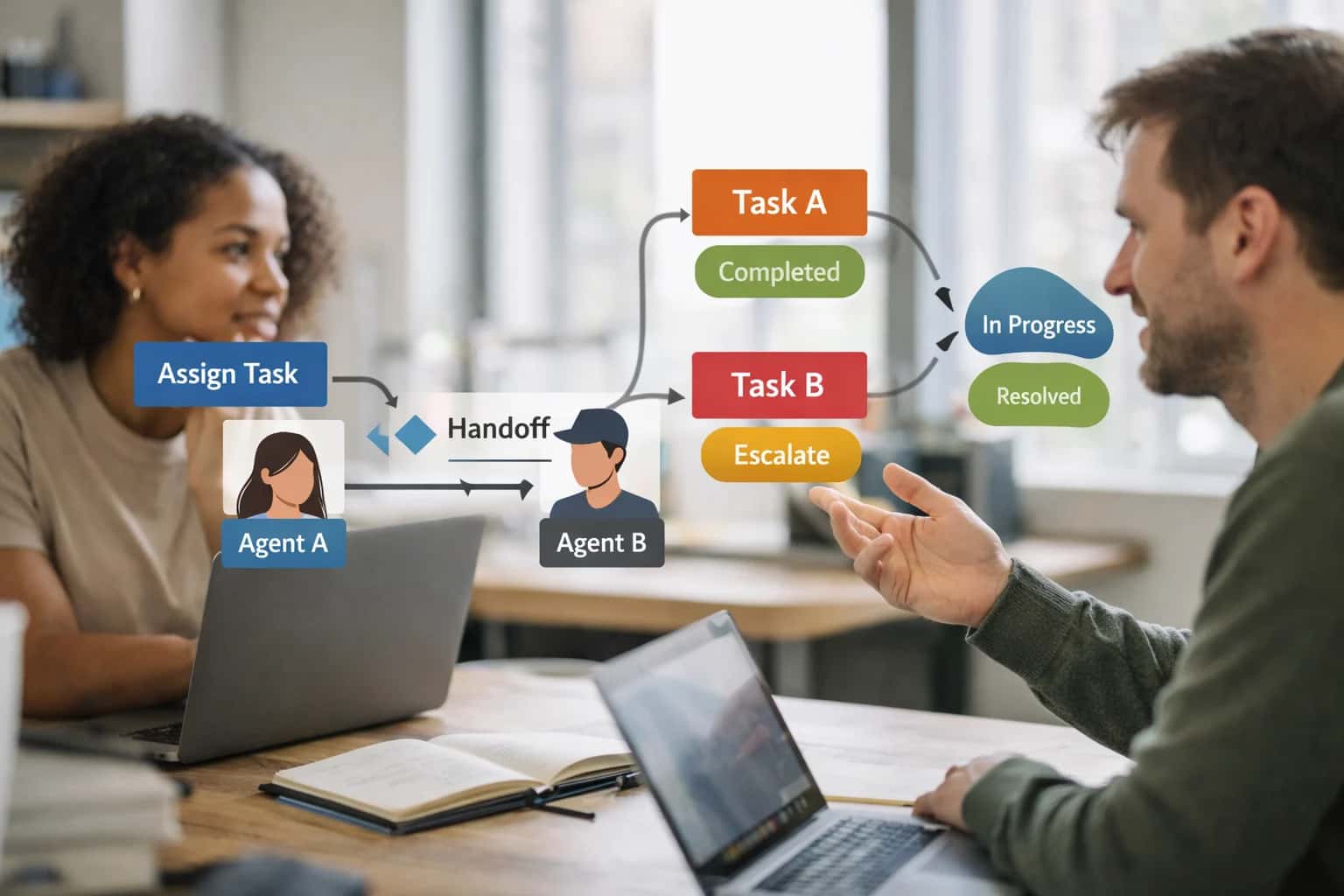
Where AI Connects to Monday.com's Data Model
A technical blueprint for integrating AI agents and workflows directly into Monday.com's core objects and automation layer.
Implementation centers on mapping AI inputs and outputs to specific column types. A Text column can store a natural-language project summary generated by an LLM, while a Status column can be updated by an AI classification model. The Formula column type is particularly powerful for creating derived fields that serve as pre-processed inputs for AI models. For instance, a formula could concatenate an item's name, its Timeline date, and linked file names into a single text block for an AI to analyze for blockers. Outputs are written back via API mutations, often updating a dedicated "AI Insights" column or creating a new Update with a summary. This keeps the AI's reasoning auditable and contained within Monday.com's native audit trail.
Rollout and governance require careful planning around API rate limits, OAuth scopes, and board permissions. A production integration should use a service account with appropriate board access and implement queuing for mutation operations to respect limits. It's also critical to design a human-in-the-loop pattern, especially for high-stakes actions like reassigning owners or changing due dates. This can be achieved by having the AI write a recommendation to a "AI Suggestion" column and using a Monday.com automation to notify a human for approval before applying the change. This approach ensures teams maintain control while gaining AI-assisted velocity, turning manual status chasing and report generation from a weekly chore into a continuous, automated intelligence layer.
Key Monday.com API Surfaces for AI Integration
The Core Data Model for AI
Boards and their items (rows) are the primary integration surface. AI models can query, analyze, and update this structured data via the GraphQL API to power intelligent workflows.
Key Integration Points:
- Querying: Fetch items, column values, updates, and subitems to feed context into an AI agent. Use complex filters to scope data by date, status, or custom fields.
- Mutation: Create, update, or archive items based on AI decisions. For example, an AI agent can automatically log a risk item in a dedicated board when it detects a schedule slip in a project board.
- Subscriptions: Use webhooks or Monday's real-time subscription API to trigger AI analysis the moment a critical field (like a timeline or status) changes, enabling proactive alerts.
AI Use Cases:
- Automated Status Reporting: AI synthesizes updates from multiple items to generate a weekly summary.
- Dynamic Prioritization: AI scores and re-orders backlog items based on custom business rules.
- Risk Detection: AI monitors timeline and dependency columns, creating flagged items in a risk register board.
High-Value AI Use Cases for Monday.com
Integrate AI directly into Monday.com's work OS to automate reporting, enhance decision-making, and orchestrate intelligent workflows. These patterns leverage the GraphQL API, webhooks, and custom columns to connect AI models to your boards, dashboards, and automations.
Automated Status Reporting & Summaries
AI agents connect to the Monday.com API to analyze updates across multiple boards, synthesize progress against timelines, and generate narrative-driven weekly status reports. Automatically posts summaries to a dedicated 'Executive Summary' board or sends via email, turning fragmented updates into coherent insights.
Intelligent Project Risk Detection
Monitor boards in real-time via webhooks. AI analyzes timeline columns, status changes, and comment sentiment to flag potential delays or budget risks. Automatically creates a 'Risk Register' item, populates custom fields with risk score and rationale, and alerts owners via update or integration like Slack.
AI-Powered Workflow Routing & Triage
Enhance Monday.com Forms and intake boards. When a new item is created, AI analyzes the submission text and attachments to classify request type, estimate effort, and auto-populate priority, assignee, and timeline columns. Triggers the correct automation recipe based on AI-determined category, ensuring requests land in the right workflow instantly.
Dynamic Capacity Planning & Forecasting
Leverage the 'People' column and timeline data. An AI model ingests resource assignments and project dates from across your workspace to forecast team capacity, identify overallocation weeks in advance, and suggest optimal task distribution. Writes recommendations back to a dedicated 'Capacity Plan' board for manager review.
Interactive Dashboard with Natural Language Q&A
Power Monday.com dashboards with a conversational AI layer. Users can ask questions in plain English (e.g., "Which projects are behind schedule this month?") and the AI queries the relevant boards via the GraphQL API, returning answers, charts, or highlighted items directly within the dashboard view, transforming static views into intelligence centers.
AI-Enhanced Collaboration & Meeting Follow-ups
Embed an AI agent into team collaboration. Connects to the updates and docs sections of a board. After a meeting, post the transcript; AI summarizes key decisions, extracts action items, and creates corresponding tasks with owners and due dates. Also scans comment threads to suggest next steps and automate follow-up reminders.
Example AI-Powered Workflows
These are production-ready patterns for integrating AI with the Monday.com GraphQL API. Each workflow details the trigger, data flow, model action, and system update, providing a blueprint for implementation.
Trigger: A Monday.com automation runs every Friday at 5 PM on the 'Sprint Board' when the 'Sprint Status' column changes to 'Complete'.
Context/Data Pulled: The AI agent queries the board for:
- All items in the 'Completed' group from the past two weeks.
- Comment threads from each item.
- Values from custom columns like 'Effort', 'Blocked?', and 'Owner'.
- Linked 'Bug Report' or 'Support Ticket' subitems.
Model or Agent Action: An LLM (e.g., GPT-4) is prompted to analyze the data and generate:
- A concise retrospective summary highlighting velocity, common blockers, and team sentiment.
- A list of 3-5 proposed action items (e.g., 'Improve QA handoff process', 'Address flaky test environment').
System Update: The agent uses a GraphQL mutation to:
- Create a new item in the 'Retrospectives' board with the summary in the 'Notes' column.
- Create linked subitems for each proposed action, assigned to relevant team leads.
- Post the summary as an update in the team's 'Announcements' group.
Human Review Point: The action items are created with a 'Proposed' status. A team lead reviews and moves them to 'Approved' before they are added to the next sprint backlog.
Implementation Architecture & Data Flow
A production-ready blueprint for wiring AI systems to the Monday.com GraphQL API to power intelligent workflows.
The core integration pattern uses the Monday.com GraphQL API as the system of record. AI agents act as middleware, subscribing to board updates via webhooks or polling specific queries to monitor changes in key columns like timeline, status, numbers, and text. When a trigger condition is met—such as a status change or a new comment—the relevant board item data (including custom fields, updates, and linked subitems) is sent to an AI processing queue. The agent analyzes the context, executes a predefined workflow (e.g., risk scoring, summarization, forecasting), and writes back results using GraphQL mutations to update columns, post insights as updates, or create new subitems.
For high-value workflows, the architecture typically includes:
- A dedicated integration board to log AI actions, prompts, and results for auditability.
- Column-based I/O: Using Monday.com columns as structured data slots—e.g., a
numbercolumn for a risk score, atextcolumn for an AI-generated summary, or astatuscolumn for a recommended action. - Automation Center as an orchestrator: Monday.com's native automations can kick off the process by sending item data to an external webhook, which routes it to the AI agent. The agent's response can then trigger a second automation to update the board, creating a closed-loop, low-code workflow.
- Real-time vs. batch processing: For immediate notifications (like deadline risks), use webhook subscriptions to the
updateevent. For daily reporting or capacity planning, schedule batch queries that pull data from multiple boards across a workspace.
Rollout should start with a single board and a non-critical workflow, such as automating weekly status summaries. Governance is managed through Monday.com's board-level permissions and by implementing API rate limiting and retry logic in the agent. A key consideration is structuring custom fields to be AI-friendly—using clear, consistent naming in text columns for analysis and discrete values in status or dropdown columns for agent actions. This approach ensures the AI integration enhances the existing workflow without disrupting the team's established Monday.com patterns.
Code & Payload Examples
Fetching Board Data for AI Analysis
To power an AI agent that summarizes project status, you first need to retrieve structured data from Monday.com. Use a GraphQL query to fetch items, their column values, and recent updates. This payload is ideal for feeding into an LLM for summarization or risk detection.
graphqlquery GetBoardForAIAnalysis($boardId: Int!) { boards(ids: [$boardId]) { name items { id name column_values { id title text value } updates(limit: 5) { body created_at } } } }
Variables: {"boardId": 123456789}
This query returns a rich context object. The column_values provide the structured state (status, timeline, assignee), while updates offer unstructured commentary. An AI model can synthesize this into a narrative status report.
Realistic Time Savings & Operational Impact
This table illustrates the tangible operational improvements when integrating AI with the Monday.com GraphQL API, focusing on high-frequency workflows for project managers, team leads, and operations.
| Workflow / Metric | Before AI Integration | After AI Integration | Implementation Notes |
|---|---|---|---|
Weekly Status Report Generation | Manual synthesis across 5-10 boards (2-3 hours) | AI aggregates updates, writes draft summary (20-30 minutes) | AI uses GraphQL to query board items, timelines, and status columns; human edits final draft. |
Project Risk Flagging | Ad-hoc review in team syncs; delays often found late | Automated daily scan of timeline, dependency, and comment columns | AI analyzes custom fields and text for schedule conflicts; creates a 'Risk' board item via mutation. |
Backlog Prioritization & Triage | Manual scoring using static rubrics (1-2 hours per sprint) | AI scores new items based on strategic goals & resource capacity | Model ingests item details and custom fields; writes priority score to a number column for sorting. |
Cross-Board Dependency Mapping | Manual tracking in spreadsheets or diagrams, often outdated | AI visualizes and alerts on critical path changes in real-time | Leverages Monday.com's dependency column via API; sends Slack alerts on detected impacts. |
Resource Capacity Forecasting | Static spreadsheets updated monthly; reactive overallocation | Dynamic weekly forecast based on timeline and workload data | AI queries timeline columns and user assignments, predicts bottlenecks, suggests adjustments. |
Stakeholder Update Automation | Manual copy-paste into email templates for different audiences | AI generates role-tailored summaries, posts to Monday.com docs | Uses board data and a stakeholder profile to vary detail level; can trigger via automation. |
Retrospective Insight Synthesis | Team votes and manual thematic analysis post-sprint | AI analyzes comment history and completion metrics for trends | Processes item updates and comments to surface recurring themes; feeds into next sprint planning. |
Governance, Security, and Phased Rollout
A practical guide to implementing AI for Monday.com with enterprise-grade controls and a risk-aware rollout strategy.
A production AI integration for Monday.com must be built on the platform's native security model. This means AI agents and workflows should operate under a dedicated service account with scoped OAuth permissions, accessing only the necessary boards, workspaces, and item types. All mutations via the GraphQL API—such as updating a status column, adding a timeline comment, or creating a subitem—must be auditable, linking changes to this system user. For sensitive data, implement a pre-processing layer that redacts or tokenizes PII, financial figures, or confidential text before sending payloads to external LLM services, ensuring Monday.com remains your system of record for raw data.
Governance is enforced through the integration architecture itself. We recommend a pattern where AI-driven updates are first written to a dedicated "AI Review" column or a separate "AI Insights" board. This creates a clear separation between human and machine-generated content, allowing for manager approval workflows before changes are committed to core project boards. For automations triggered by AI analysis, use Monday.com's native automation center with conditional logic (e.g., "if AI Confidence Score > 0.8, then update status") to maintain human oversight. All prompts, model calls, and data transformations should be logged to an external observability platform, enabling tracing from a Monday.com webhook event to the final board update.
Rollout should follow a phased, value-driven approach. Phase 1 targets a single, low-risk board to automate a high-volume, repetitive task—like categorizing incoming requests from a form or generating first-draft status summaries. Phase 2 expands to a department, connecting AI to portfolio-level dashboards for predictive timeline alerts or capacity heatmaps. Phase 3 scales cross-functional workflows, such as an AI agent that analyzes linked Salesforce opportunities and Monday.com project data to flag delivery risks for upcoming deals. Each phase includes defined success metrics (e.g., reduction in manual triage time, increase in forecast accuracy) and a rollback plan, ensuring the integration delivers tangible operational improvement without disrupting core project delivery.
Enabling Efficiency, Speed & Accuracy
Intelligent Analysis, Decision & Execution
We build AI systems for teams that need search across company data, workflow automation across tools, or AI features inside products and internal software.
Talk to Us
Search across company data
Give teams answers from docs, tickets, runbooks, and product data with sources and permissions.
Useful when people spend too long searching or get different answers from different systems.

Automate internal workflows
Use AI to route work, draft outputs, trigger actions, and keep approvals and logs in place.
Useful when repetitive work moves across multiple tools and teams.

Add AI to products and internal tools
Build assistants, guided actions, or decision support into the software your team or customers already use.
Useful when AI needs to be part of the product, not a separate tool.
Frequently Asked Questions
Practical answers for technical teams planning to embed AI agents, automation, and intelligence into their Monday.com workflows using the GraphQL API.
Authentication is managed via OAuth 2.0 or Personal Access Tokens (PATs). For production, we recommend:
- Service Account with PAT: Create a dedicated Monday.com user with a scoped PAT (e.g.,
boards:read,boards:write,updates:read). Store this secret in a vault like AWS Secrets Manager or Azure Key Vault. - API Gateway Layer: Route all AI agent calls through a lightweight API gateway (e.g., using Kong or a serverless function). This layer handles:
- Token injection and rotation
- Request logging and audit trails
- Rate limiting (Monday.com API has limits)
- Input sanitization
- Contextual Permissions: Use Monday.com's board-specific permissions. The AI service account should only have access to boards and workspaces necessary for its function, adhering to the principle of least privilege.
This pattern isolates credentials, provides a control point for governance, and ensures all AI-driven mutations are traceable.

About the author
Prasad Kumkar
CEO & MD, Inference Systems
Prasad Kumkar is the CEO & MD of Inference Systems and writes about AI systems architecture, LLM infrastructure, model serving, evaluation, and production deployment. Over 5+ years, he has worked across computer vision models, L5 autonomous vehicle systems, and LLM research, with a focus on taking complex AI ideas into real-world engineering systems.
His work and writing cover AI systems, large language models, AI agents, multimodal systems, autonomous systems, inference optimization, RAG, evaluation, and production AI engineering.
Partnered with leading AI, data, and software stack.





How We Work
Custom AI workflows for your Business
One-fit-all AI don't work for modern businesses. At Inferensys, we aim to understand your business & custom requirements; which we use to define most efficient agentic workflows, the data, and the tools for your business.
01
Review the use case
We understand the task, the users, and where AI can actually help.
Read more02
Pick the right approach
We define what needs search, automation, or product integration.
Read more03
Build the first useful version
We implement the part that proves the value first.
Read more04
Improve from there
We add the checks and visibility needed to keep it useful.
Read moreThe first call is a practical review of your use case and the right next step.
Talk to Us