AI integrates directly into the denial management workflow by connecting to your pharmacy platform's rejection reports and adjudication history. The system listens for new denial events—whether via a nightly batch file from your claims clearinghouse, a real-time API webhook from platforms like McKesson EnterpriseRx or PioneerRx, or by monitoring a designated 'denial queue' within the platform's interface. For each denied claim, the AI agent automatically extracts key data: the NDC, rejection code (e.g., NCPDP Reject Code), patient ID, payer, and the date of service. This initial data pull is the trigger for the automated appeal process.

Integration
AI Integration for Pharmacy Management Platform Denial Management
A technical blueprint for integrating AI agents to automate the analysis, categorization, and appeal of pharmacy claim denials directly within McKesson EnterpriseRx, PioneerRx, PrimeRx, and BestRx.
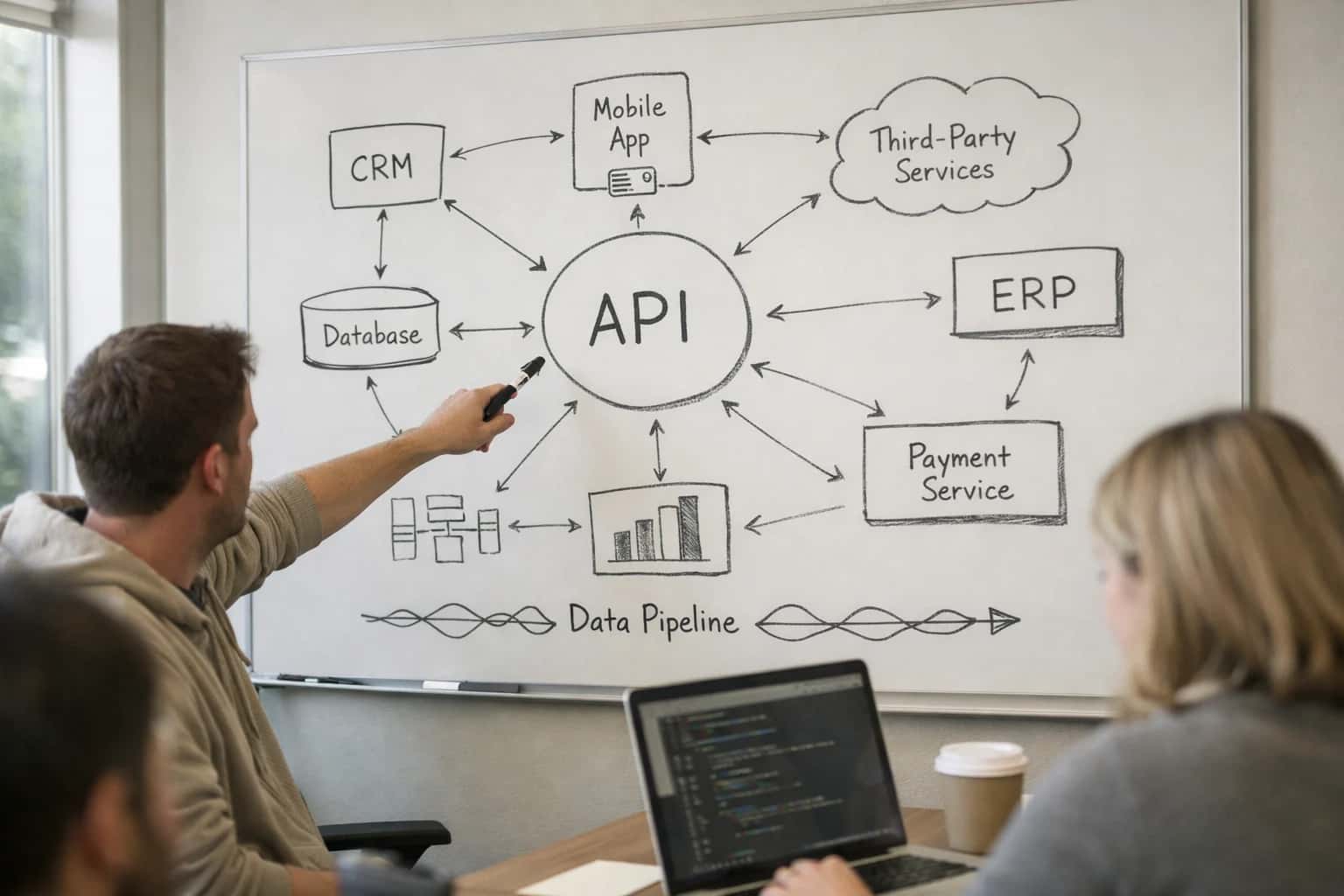
ARCHITECTURE AND ROLLOUT
Where AI Fits into Pharmacy Denial Management
A practical blueprint for integrating AI into your pharmacy platform's denial workflows to reduce manual appeal labor and accelerate cash flow.
The core AI workflow involves a two-step analysis and drafting process. First, the system categorizes the root cause by cross-referencing the rejection code with historical data and payer-specific rules—distinguishing between a simple missing prior authorization, an incorrect days' supply, a non-formulary issue, or a more complex medical necessity denial. Second, it drafts a structured appeal letter. It does this by retrieving supporting documentation: pulling the patient's medication history from the platform, referencing the original prescription details, and, if integrated with an EHR, fetching relevant diagnosis codes and clinical notes. The draft includes a clear rationale, cites relevant plan policies or clinical guidelines, and attaches the necessary evidence, all formatted to the payer's preferred submission channel (portal, fax, or mail).
Rollout is typically phased, starting with high-volume, low-complexity denials (e.g., 'refill too soon' or 'invalid member ID') to build trust and demonstrate quick ROI. Governance is critical: all AI-generated appeal drafts are routed to a pharmacist or billing specialist for review and approval within the pharmacy platform's workflow—often via a dedicated task queue or dashboard. This human-in-the-loop step ensures clinical and billing accuracy before submission. The system then logs the entire activity—trigger, analysis, draft, reviewer, and submission status—back to the patient's profile or a dedicated audit table in the platform, creating a complete audit trail for compliance and performance tracking.
DENIAL MANAGEMENT
Integration Points Across Pharmacy Platforms
Ingesting and Categorizing Platform Rejection Data
AI integration begins by connecting to the pharmacy platform's denial or rejection reporting module. This typically involves querying a dedicated database table (e.g., ClaimRejections, AdjudicationErrors) or consuming a nightly report file (CSV, HL7, EDI 835). The AI agent ingests raw rejection codes, payer messages, and associated prescription data.
Key tasks include:
- Mapping Rejection Codes: Translating platform-specific and payer-specific codes (e.g., NCPDP Reject Codes, "75" for Refill Too Soon) into standardized denial categories like Eligibility, Prior Authorization, Coding, or Clinical.
- Extracting Root Cause: Using NLP to parse free-text payer remarks ("PA required", "DUR conflict") to supplement coded reasons.
- Linking to Patient Record: Enriching the denial with data from the
Patient,Prescription, andPhysiciantables to understand context.
This structured analysis creates a searchable denial log, moving beyond simple lists to actionable intelligence for the pharmacy team.
PHARMACY MANAGEMENT PLATFORMS
High-Value AI Use Cases for Denial Management
Integrating AI directly into your pharmacy platform's denial workflows can transform a reactive, manual process into a proactive, automated revenue cycle engine. These use cases target the specific data structures and modules within McKesson EnterpriseRx, PioneerRx, PrimeRx, and BestRx to analyze, appeal, and prevent claim denials.
01
Automated Denial Root Cause Analysis
AI agents ingest daily 835/ERA files and platform rejection reports, categorize denials by payer, reason code, and prescription type. The system tags each denial with the likely root cause (e.g., Prior Authorization Required, Invalid NDC, DUR Conflict) and links it to the specific patient and prescription record in the platform.
Batch -> Real-time
Analysis speed
02
Intelligent Appeal Letter Drafting
Triggered from a categorized denial in the platform work queue, the AI drafts a customized appeal letter by pulling clinical notes, patient history, and prior authorization documentation. It structures the argument around payer-specific guidelines and suggests supporting evidence, saving pharmacists hours of manual composition.
Hours -> Minutes
Draft generation
03
Payer Portal Automation & Submission
For denials requiring portal-based appeals, AI agents securely navigate payer websites, populate web forms using extracted data from the pharmacy platform, and submit appeals. The agent logs the submission ID and tracks the response, updating the platform's denial status field automatically.
1-2 FTEs
Capacity freed
04
Proactive Denial Prevention Alerts
At the point of prescription entry or adjudication, the AI analyzes the claim against historical denial patterns for that payer/plan and drug. It flags high-risk prescriptions before submission, suggesting corrective actions like a different NDC, a required PA, or a covered alternative.
Same day
Prevention impact
05
Denial Trend Analytics & Payer Performance
AI aggregates denial data across the platform to generate actionable intelligence dashboards. It identifies top denying payers, problematic reason codes, and high-cost drug categories. Insights are fed back into platform workflows to guide staff training and payer contract negotiations.
06
Closed-Loop Workflow with Human Review
Implements a pharmacist-in-the-loop approval step for all AI-generated appeals. The drafted letter and supporting docs are presented in a custom UI within the pharmacy platform. The pharmacist reviews, edits if needed, and approves with one click, which triggers the final submission and audit trail logging.
INTEGRATION PATTERNS
Example AI-Driven Denial Workflows
These workflows illustrate how AI agents integrate directly with your pharmacy management platform's denial reports and adjudication engine to automate analysis, appeal drafting, and status tracking. Each pattern connects to platform-specific APIs, data objects, and user interfaces.
Trigger: A new claim rejection appears in the platform's daily denial report (e.g., McKesson's RejectReport table, PioneerRx's ClaimRejections queue).
Context Pulled: The AI agent is triggered via a platform webhook or scheduled batch job. It retrieves:
- The rejected claim's NCPDP transaction details.
- Patient demographics and insurance plan ID.
- The rejection reason code and free-text remark.
- Recent claim history for the same patient/drug.
Agent Action: A classification model analyzes the rejection against known patterns:
- Categorizes the denial (e.g.,
Prior Authorization Required,DUR Conflict,Billing/Code Error,Eligibility,Medical Necessity). - Extracts specific missing data points (e.g.,
Missing ICD-10 code: M54.5,PA required for quantity > 30). - Scores the appeal likelihood based on historical success rates for similar denials.
System Update: The agent writes back to the platform:
- Updates the claim record with a new
DenialCategoryandAppealPriorityfield. - Logs the root cause analysis in the claim's notes/activity log.
- Routes the claim to the appropriate internal work queue (e.g.,
PA-Team,Billing-Fixes).
Human Review Point: A pharmacist or billing staff reviews the categorization in the platform's denial dashboard before the appeal is drafted, ensuring accuracy.
BUILDING A PRODUCTION-GRADE DENIAL WORKFLOW
Implementation Architecture: Data Flow & System Design
A secure, event-driven architecture that connects AI analysis directly to your pharmacy platform's denial reports and appeal processes.
The integration is triggered by a new or batched rejection report from your pharmacy management platform (e.g., McKesson EnterpriseRx, PioneerRx). Using a secure webhook or a scheduled API poll, denial data—including NCPDP reject codes, patient IDs, prescription numbers, and payer information—is pushed to a dedicated processing queue. An AI agent retrieves the claim, cross-references it with the platform's patient profile and prescription history via a read-only API connection, and classifies the root cause using a model trained on thousands of historical denials (e.g., 79 - Prior Authorization Required, 70 - Refill Too Soon).
For each denial, the system drafts a structured appeal packet. This involves: 1) pulling supporting clinical notes or prior auth history from the patient's chart, 2) generating a tailored appeal letter that addresses the specific payer rationale, and 3) assembling required documentation (e.g., chart excerpts, diagnostic codes) into a single PDF. The draft is then routed—via the platform's tasking API or a connected workflow engine—to a designated pharmacist or billing specialist's review queue within the familiar platform interface for final approval and submission.
Governance is built into the data flow. All AI-generated drafts are logged with a unique audit trail linking back to the original claim. The system operates on a pharmacist-in-the-loop model, requiring human sign-off before any appeal is submitted to a payer portal or clearinghouse. This architecture ensures compliance, maintains pharmacist oversight, and allows for continuous model improvement based on appeal success rates, which are fed back into the system to refine future recommendations. Rollout typically begins with a single high-volume denial code (like PA requirements) before expanding to the full spectrum of rejections.
DENIAL MANAGEMENT INTEGRATION PATTERNS
Code & Payload Examples
Extracting Rejection Data from Platform Reports
AI denial management begins by programmatically accessing the pharmacy platform's rejection reports or adjudication logs. Most platforms expose this data via API endpoints or database views. The goal is to extract structured denial reasons, NCPDP rejection codes, claim amounts, and patient/prescription identifiers.
A common pattern is to schedule a daily query or listen for webhook events on new denials. The extracted payload is then enriched with patient history and prescription details from other platform tables before being sent to an AI model for root cause analysis.
python# Example: Fetching daily denial batch from a pharmacy platform API import requests def fetch_denials_from_platform(api_key, date): url = "https://api.pharmacyplatform.com/v1/denials" headers = {"Authorization": f"Bearer {api_key}"} params = {"date": date, "status": "rejected"} response = requests.get(url, headers=headers, params=params) response.raise_for_status() # Returns list of denial objects with NCPDP codes, amounts, Rx numbers return response.json()['denials'] # Sample API response structure # { # "denials": [ # { # "id": "DEN-12345", # "rx_number": "RX987654", # "rejection_code": "75", # NCPDP code for "Prior Authorization Required" # "rejection_description": "PA REQUIRED", # "claim_amount": 245.67, # "patient_id": "PT-88901", # "denial_date": "2024-05-15" # } # ] # }
AI-ASSISTED DENIAL MANAGEMENT
Realistic Time Savings & Operational Impact
This table illustrates the operational shift from manual, reactive denial handling to a proactive, AI-assisted workflow integrated directly with your pharmacy management platform's rejection reports and appeal modules.
| Workflow Stage | Before AI Integration | After AI Integration | Implementation Notes |
|---|---|---|---|
Denial Triage & Root Cause Analysis | Manual review of EOBs and platform reports; 15-30 minutes per denial | AI auto-categorizes denials by type (e.g., prior auth, coding, eligibility) in < 2 minutes | AI parses platform rejection data and payer EOBs; human review for complex outliers |
Appeal Letter Drafting | Pharmacist/tech writes custom letter, gathers supporting docs; 20-45 minutes | AI generates first draft with cited clinical guidelines and patient history in 5 minutes | Draft is populated with data from platform (Rx, patient profile) and external sources; staff edits and finalizes |
Document Compilation & Attachment | Manual search for relevant chart notes, prior auths, and lab results | AI suggests and retrieves relevant supporting documents from connected systems | Integrates with document management or EHR via platform hooks; ensures appeal packet completeness |
Appeal Submission & Tracking | Manual portal login, form entry, and status checking via phone | AI automates submission to payer portals and logs tracking number in platform | Requires secure credential management; status updates trigger platform work queue notifications |
Trend Reporting & Prevention | Monthly manual report creation to identify common denial reasons | Real-time dashboard in platform showing denial trends and predicted risk for new Rxs | AI analyzes historical denial data to flag high-risk prescriptions before submission |
Staff Capacity & Focus | Technicians spend 4-6 hours daily on denial follow-up and paperwork | Technicians shift to oversight, complex case handling, and patient communication | AI handles ~70-80% of routine denials; staff focus escalates to exceptions and value-added services |
Cash Flow Impact | Appeals filed days or weeks after denial, extending revenue cycle by 15-30 days | Appeals initiated same-day, reducing revenue cycle delay by 50-70% | Faster resubmission and higher appeal win rates directly improve days sales outstanding (DSO) |
IMPLEMENTING AI IN A REGULATED WORKFLOW
Governance, Security & Phased Rollout
A controlled, phased approach is critical for integrating AI into pharmacy denial management, ensuring accuracy, compliance, and user trust.
Integrating AI for denial management requires a governance-first architecture. This means implementing a human-in-the-loop approval step before any AI-drafted appeal letter is submitted or a platform status is automatically updated. The AI agent should operate as a copilot, analyzing the denial reason from the platform's rejection report (e.g., NCPDP Reject Code 70 for "Prior Authorization Required"), retrieving relevant patient and prescription data from the RxHistory and PatientProfile objects, and drafting a structured appeal with supporting clinical notes. All outputs should be logged to a dedicated audit table linked to the original claim ID, capturing the prompt, retrieved data, AI response, and final pharmacist action for compliance (e.g., HIPAA, state board) and model performance tracking.
Security is paramount when connecting AI to Protected Health Information (PHI). The integration should use platform-specific API service accounts with role-based access control (RBAC) scoped strictly to the denial workflow modules and necessary patient data objects. All calls to external LLMs (e.g., OpenAI, Anthropic) must be routed through a secure proxy that strips direct identifiers before sending data for processing, and all data in transit and at rest should be encrypted. The AI system should never have direct write access to core adjudication tables; instead, it should post its recommendations to a pending review queue within the pharmacy platform, where a pharmacist can approve, edit, or reject the action.
A phased rollout minimizes risk and builds confidence. Start with a pilot on a single, high-volume denial reason (e.g., "Refill Too Soon") for a limited user group. In Phase 1, the AI only categorizes denials and suggests root causes without drafting letters, allowing the team to validate its accuracy. In Phase 2, enable draft appeal generation for the pilot category, requiring pharmacist sign-off. Finally, in Phase 3, expand to complex denial categories (e.g., "Medical Necessity") and introduce conditional automation, such as auto-updating the platform's ClaimStatus to "Appeal Submitted" upon pharmacist approval, while maintaining a full audit trail. This measured approach ensures the integration delivers operational gains—reducing appeal drafting from 30 minutes to under 5—without compromising safety or regulatory standing.
Enabling Efficiency, Speed & Accuracy
Intelligent Analysis, Decision & Execution
We build AI systems for teams that need search across company data, workflow automation across tools, or AI features inside products and internal software.
Talk to Us
Search across company data
Give teams answers from docs, tickets, runbooks, and product data with sources and permissions.
Useful when people spend too long searching or get different answers from different systems.
Enterprise searchRAGPermissions
Read more
Automate internal workflows
Use AI to route work, draft outputs, trigger actions, and keep approvals and logs in place.
Useful when repetitive work moves across multiple tools and teams.
AI agentsWorkflow automationGovernance
Read more
Add AI to products and internal tools
Build assistants, guided actions, or decision support into the software your team or customers already use.
Useful when AI needs to be part of the product, not a separate tool.
AI integrationDecision supportModel routing
Read moreAI FOR DENIAL MANAGEMENT
FAQ: Technical & Commercial Questions
Practical questions about implementing AI to analyze and appeal pharmacy claim denials, integrated directly with your pharmacy management platform's rejection reports and workflow queues.
The integration uses a secure, read-only API connection or database listener to pull denial reports from your pharmacy management platform (e.g., McKesson EnterpriseRx, PioneerRx).
Typical Integration Flow:
- Trigger: A new batch of rejected claims appears in the platform's designated denial report or work queue.
- Data Extraction: Our agent polls the platform's API (e.g.,
/api/v1/denials/recent) or listens for a webhook event. The payload includes:json{ "claim_id": "RX2024-5678", "rejection_code": "70", "rejection_description": "Prior Authorization Required", "patient_id": "PT12345", "drug_ndc": "00093043301", "date_of_service": "2024-05-15", "prescriber_npi": "1234567890", "payer_id": "AETNA_COMM" } - Context Enrichment: The agent retrieves related patient history, prescription details, and past payer communications from the platform to build a complete case file.
- Processing: The enriched data is sent to the AI model for root cause analysis and appeal drafting.
The connection is configured with the principle of least privilege, accessing only the denial and related clinical data necessary for the task.

About the author
Prasad Kumkar
CEO & MD, Inference Systems
Prasad Kumkar is the CEO & MD of Inference Systems and writes about AI systems architecture, LLM infrastructure, model serving, evaluation, and production deployment. Over 5+ years, he has worked across computer vision models, L5 autonomous vehicle systems, and LLM research, with a focus on taking complex AI ideas into real-world engineering systems.
His work and writing cover AI systems, large language models, AI agents, multimodal systems, autonomous systems, inference optimization, RAG, evaluation, and production AI engineering.
LinkedIn
Limited slotsGet a Free AI Consultation
Partnered with leading AI, data, and software stack.





How We Work
Custom AI workflows for your Business
One-fit-all AI don't work for modern businesses. At Inferensys, we aim to understand your business & custom requirements; which we use to define most efficient agentic workflows, the data, and the tools for your business.
01
Review the use case
We understand the task, the users, and where AI can actually help.
Read more02
Pick the right approach
We define what needs search, automation, or product integration.
Read more03
Build the first useful version
We implement the part that proves the value first.
Read more04
Improve from there
We add the checks and visibility needed to keep it useful.
Read moreThe first call is a practical review of your use case and the right next step.
Talk to Us