
Inferensys

Integration

AI Integration with Cisco Meraki Systems Manager

Add AI decision-making to Meraki Systems Manager for network-aware device policy enforcement, automated security response, and intelligent device lifecycle management using the Meraki Dashboard API.
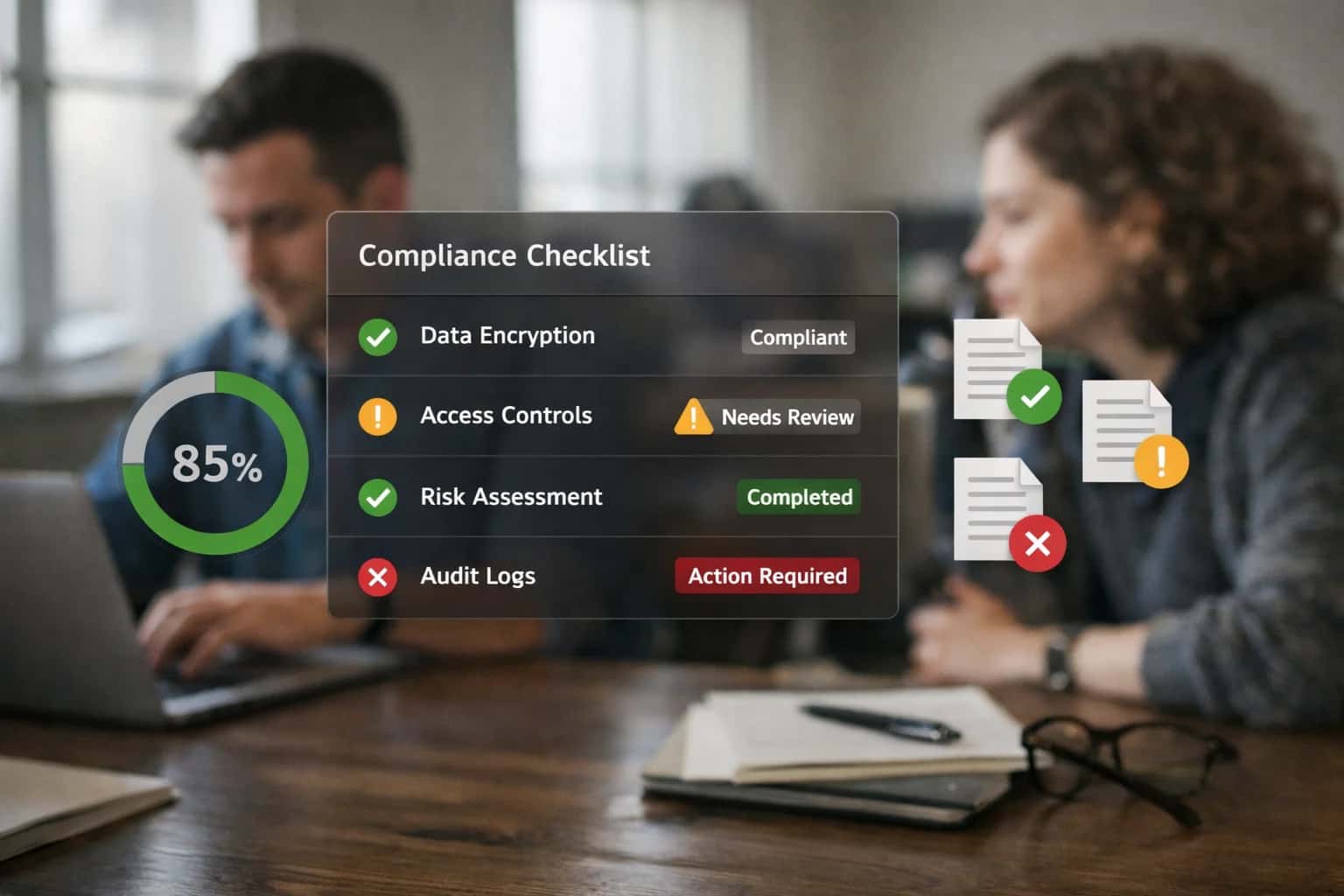
Security engineer reviewing FedRAMP compliance dashboard on ultrawide monitor, home office with city views, casual work session.
ARCHITECTURE & ROLLOUT

Where AI Fits in the Meraki Systems Manager Stack

AI integration connects to Meraki's dashboard API and telemetry streams to automate network-aware device management and security responses.

AI models integrate with Meraki Systems Manager by consuming its Dashboard API and webhook events. The primary surfaces for automation are device inventory objects, security center alerts, and location/telemetry data. This allows AI to act on real-time signals like device posture, network association, and threat detections. Key integration points include:

  • Device Groups & Tags: AI can dynamically assign devices to groups or apply tags based on behavior, enabling automated policy application.
  • Security Center: AI agents can ingest security events, correlate them with device context, and trigger automated containment workflows.
  • Network Telemetry: Data from MX security appliances and MR access points (like client connection details) provides the network context for AI-driven access decisions.


Implementation typically involves a middleware layer that subscribes to Meraki webhooks for events like device_associated, alert_triggered, or client_connected. This layer processes the event, enriches it with external context (e.g., threat intelligence, HR data), and uses an AI model to decide on an action. Approved actions are executed back via the Dashboard API, such as pushing a new SM profile to quarantine a device, updating a group policy, or triggering a remote lock/wipe. For example, an AI model could analyze a device's location, recent security events, and user role to automatically adjust its VLAN assignment or firewall rules without admin intervention.

Rollout requires careful governance. Start with read-only AI analysis and reporting to build trust in the model's recommendations. Then, move to human-in-the-loop workflows where the AI suggests actions in a ticketing system like ServiceNow for an admin to approve. Finally, implement fully automated responses only for well-defined, low-risk scenarios, such as moving a device with outdated OS to a restricted network segment. Audit trails are critical; all AI-initiated API calls should log the triggering event, model reasoning, and action taken to the Meraki event log and a separate SIEM. This ensures accountability and provides data to continuously retrain and improve the AI models.

ARCHITECTURAL SURFACES

Key Meraki Systems Manager Surfaces for AI Integration

The Core Integration Surface

Meraki's Dashboard API provides programmatic access to the entire Systems Manager (SM) data model, serving as the primary conduit for AI integration. This RESTful API allows AI agents to query real-time device inventories, push configuration changes, and retrieve historical telemetry.

Key endpoints for AI workflows include:

  • /organizations/{orgId}/sm/devices: Retrieve the full device fleet with status, last check-in, and network details.
  • /networks/{networkId}/sm/devices/fields: Access custom device fields for storing AI-generated tags or risk scores.
  • /organizations/{orgId}/sm/apnsCert: Manage Apple Push Notification service certificates critical for iOS/Mac command delivery.

Webhooks enable reactive AI workflows. Configure webhooks for events like DeviceCreated, DeviceCheckIn, or DevicePolicyUpdated. An AI orchestration layer can consume these events to trigger automated risk assessments, policy adjustments, or support ticket creation without constant polling.

NETWORK-AWARE DEVICE AUTOMATION

High-Value AI Use Cases for Meraki Systems Manager

Integrate AI with Meraki's dashboard API to move beyond static policy enforcement. These use cases leverage real-time device telemetry, location, and network context to automate security responses, optimize performance, and reduce manual IT overhead.

01

AI-Driven Network Access Control (NAC)

An AI agent analyzes real-time device posture (OS version, security apps) from Systems Manager and correlates it with threat intelligence. It then dynamically adjusts VLAN assignments or firewall rules on Meraki MX appliances, quarantining non-compliant devices before they access sensitive resources.

Batch -> Real-time
Policy enforcement
02

Predictive Bandwidth Management

AI models ingest historical traffic analytics and real-time Systems Manager device data (type, user role, location) to forecast bandwidth demand per SSID or VLAN. Automatically apply Meraki traffic shaping rules to prioritize business-critical applications and throttle non-essential traffic during peak hours.

Hours -> Minutes
Optimization cycles
03

Automated Security Incident Response

When an integrated EDR or SIEM platform flags a device compromise, an AI orchestrator triggers a pre-defined response workflow via the Meraki API. This can include pushing a restrictive Systems Manager profile, initiating a remote wipe, and updating group firewall rules to isolate the device across the network.

Same day
Containment timeline
04

Intelligent Geofencing for Policy & Apps

Go beyond simple location-based profiles. AI analyzes patterns in Systems Manager location data to predict when a user will enter a sensitive site (e.g., R&D lab). It automatically pre-deploys stricter security profiles and required applications before arrival, reverting settings upon departure.

1 sprint
Implementation time
05

Proactive IoT Device Classification & Segmentation

An AI layer monitors network traffic and device fingerprints from Meraki access points and Systems Manager. It automatically classifies unknown IoT devices (printers, sensors), assigns them to a low-trust Systems Manager group, and pushes them to a dedicated, locked-down VLAN with appropriate firewall policies.

Batch -> Real-time
Device onboarding
06

AI Copilot for Network Operations

A conversational assistant for network admins integrates with the Meraki Dashboard API. It can answer complex queries ("Show all iOS devices on the 3rd floor with low signal"), suggest configuration changes based on best practices, and execute approved tasks like restarting a specific access point.

PRACTICAL AUTOMATION PATTERNS

Example AI-Driven Workflows for Meraki

These workflows illustrate how AI agents can integrate with the Meraki Dashboard API and Systems Manager to automate network-aware device management, security response, and operational intelligence.

Trigger: A new device joins the Guest SSID and is detected by Meraki wireless access points.

Context/Data Pulled:

  • The AI agent queries the Meraki Dashboard API for the device's MAC address, manufacturer, and signal history.
  • It cross-references the MAC OUI against a threat intelligence feed (via a separate API call).
  • It checks Meraki Systems Manager to see if the device is a known, managed corporate asset.

Model or Agent Action: A small classification model (or a rules-based LLM agent) evaluates the risk:

  1. Low Risk (Known Vendor, No Threats): The agent instructs the Meraki API to place the device in a Guest-Isolated VLAN with standard internet access.
  2. High Risk (Suspicious OUI, Threat Intel Match): The agent instructs the API to place the device in a Quarantine VLAN with no external access and logs the event.

System Update or Next Step: The agent creates a ticket in the ITSM (e.g., ServiceNow) via webhook, noting the device details and action taken for security team review.

Human Review Point: All High Risk classifications and quarantine actions are flagged in a daily security digest for an analyst to confirm or release.

AI-DRIVEN NETWORK ACCESS CONTROL (NAC)

Implementation Architecture: Data Flow & System Design

A practical blueprint for integrating AI with Cisco Meraki Systems Manager to automate network security and device policy enforcement.

The integration connects to two primary Meraki surfaces: the Systems Manager (SM) API for device inventory, location, and security posture, and the Dashboard API for the MX security appliances that enforce network access. The core data flow begins with the AI agent polling the SM API for real-time device telemetry—security state, client health scores, installed applications, and geolocation. This data is enriched with external threat intelligence and user behavior patterns from your identity provider (e.g., Microsoft Entra ID). The AI model evaluates this combined dataset to generate a dynamic risk score for each managed device.

Based on the risk score and predefined policy logic, the AI system executes automated actions via API calls. For a high-risk device (e.g., detected malware, outdated OS, anomalous login location), it can: 1) Update Group Policies in Systems Manager to push restrictive configuration profiles, 2) Trigger a Network Quarantine by calling the MX API to move the device's IP to a restricted VLAN with only remediation server access, and 3) Create an Incident in your ITSM platform (like ServiceNow) with full context for the security team. For low-risk, compliant devices, it can automatically assign optimal bandwidth policies and grant access to sensitive network segments.

Rollout should follow a phased approach: start with a monitoring-only phase where the AI scores devices and generates alerts without taking action, validating accuracy against your security team's assessments. Then, implement automated policy actions in a test network segment—such as a guest or lab VLAN—using Meraki's group policy objects. Governance is critical: all AI-triggered API actions must be logged to a dedicated audit trail, and high-severity actions (like a full network block) should require a human-in-the-loop approval step via a tool like n8n or a custom workflow engine before execution. This ensures control while automating the triage and initial containment that often delays response.

AI INTEGRATION PATTERNS FOR CISCO MERAKI

Code & API Payload Examples

Automated Quarantine via Dashboard API

When an AI threat detection system identifies a compromised device, it can trigger an immediate network quarantine via Meraki's Systems Manager and MX security appliances. This workflow uses the device's MAC address to locate it on the network and apply a dynamic group policy, restricting it to an isolated VLAN.

Example Python API Call:

python
import requests

# 1. Get device details from Systems Manager
device_url = f'https://api.meraki.com/api/v1/organizations/{org_id}/sm/devices'
headers = {'X-Cisco-Meraki-API-Key': api_key}
params = {'serial': device_serial}
device_response = requests.get(device_url, headers=headers, params=params).json()

# 2. Extract MAC and apply network policy
mac = device_response['wifiMac']
policy_url = f'https://api.meraki.com/api/v1/networks/{network_id}/clients/{mac}/policy'
quarantine_payload = {
    'devicePolicy': 'Group policy',
    'groupPolicyId': 'quarantine_vlan_id',  # Pre-configured policy for isolated VLAN
    'deviceType': 'Wireless'
}
requests.put(policy_url, headers=headers, json=quarantine_payload)

This pattern enables sub-minute containment, moving from threat detection to network isolation without manual intervention.

AI-ENHANCED MERAKI SYSTEMS MANAGER WORKFLOWS

Realistic Time Savings & Operational Impact

This table illustrates the operational impact of integrating AI with Cisco Meraki Systems Manager, focusing on measurable improvements in IT efficiency, security response, and network-aware policy enforcement.

Workflow / MetricBefore AI IntegrationAfter AI IntegrationImplementation Notes

Network Access Control (NAC) Policy Updates

Manual review of threat intel & device logs; policy changes 1-2x per week

AI-driven risk scoring triggers dynamic NAC updates in near real-time

AI correlates device posture from SM with MX security events; human reviews high-severity changes

Security Incident Triage & Response

Manual investigation of alerts; containment actions in 4-8 hours

Automated triage & quarantine of high-risk devices within 15-30 minutes

AI analyzes SM telemetry and threat feeds; executes API calls to isolate devices and create ServiceNow tickets

Compliance Reporting for Audits

Manual data aggregation from dashboard; report build takes 2-3 days

AI auto-generates compliance evidence packs and dashboards in 2-4 hours

System queries SM APIs for policy states, encryption status, and location logs; formats for PCI-DSS/HIPAA

BYOD Onboarding & Profiling

Standard profile assignment; manual risk assessment for exceptions

AI-driven role & risk assessment auto-assigns tailored configuration profiles

Evaluates user role, device type, and location patterns via API; reduces misconfiguration tickets by ~40%

IoT Device Classification & Policy Assignment

Manual inventory review and static group assignment for new devices

Automated classification & policy application based on traffic and behavior analysis

AI monitors device fingerprints and network traffic from Meraki; updates SM groups and firewall rules

Proactive Device Health Remediation

Reactive support tickets for performance issues; resolution in next business day

Predictive alerts and automated scripted remediations for common issues, same-day

AI models analyze SM battery, storage, and crash reports; pushes custom scripts via API for self-healing

Guest Network Access Management

Static pre-shared keys or manual captive portal approvals

Time-bound, context-aware access policies auto-generated and revoked

AI uses SM location and sponsor data to create dynamic VLAN assignments and firewall rules on MX appliances

ARCHITECTING CONTROLLED AI FOR NETWORK-AWARE DEVICE MANAGEMENT

Governance, Security & Phased Rollout

Integrating AI with Cisco Meraki Systems Manager requires a security-first architecture that respects the platform's role as a critical control point for network and device policy.

A production-ready integration must be built on Meraki's Dashboard API and leverage webhooks for real-time event ingestion. The AI layer should act as a policy engine, consuming telemetry from Systems Manager (device posture, location, installed apps) and Meraki MX security appliances (network traffic, threat alerts) to generate dynamic policy recommendations. These recommendations are then executed as API calls back to the Meraki dashboard to adjust Group Policies, Security Center rules, or Network Access Control (NAC) settings. All AI-driven actions must be logged to a dedicated audit trail, correlating the original event, the AI's reasoning (e.g., risk score calculation), and the exact API call made to Meraki for compliance review.

Rollout should follow a phased, risk-aware model. Start with a read-only monitoring phase, where the AI analyzes data but all policy changes require manual admin approval in the Meraki dashboard. Next, move to a supervised automation phase for low-risk, high-volume tasks—like automatically tagging devices based on AI-detected patterns or creating alerts for anomalous network access. The final phase, conditional automation, can introduce closed-loop actions for predefined high-confidence scenarios, such as temporarily restricting a device's VLAN access if the AI correlates a malware alert from the endpoint with suspicious outbound traffic patterns from the MX. Each phase should have a clear rollback plan and involve key stakeholders from networking, security, and endpoint operations teams.

Governance is critical. Implement role-based access control (RBAC) so AI-triggered policy changes respect existing Meraki admin permissions. Use a human-in-the-loop approval queue for any action that could disrupt user productivity or network access. Furthermore, the AI's underlying models (e.g., for device risk scoring) should be regularly evaluated for drift and bias, ensuring decisions remain accurate and fair. This controlled approach ensures the integration enhances operational intelligence without compromising the stability and security of your Meraki-managed network and device estate.

AI INTEGRATION WITH CISCO MERAKI SYSTEMS MANAGER

Frequently Asked Questions (FAQ)

Common technical and strategic questions about adding AI-driven automation to Cisco Meraki Systems Manager for network-aware device management, dynamic policy enforcement, and automated security response.

AI integration with Cisco Meraki Systems Manager is built on its comprehensive RESTful API. The typical architecture involves:

  1. API Authentication: Using an API key with appropriate permissions (read/write for organizations, networks, and SM) for server-to-server communication.
  2. Data Ingestion Layer: An AI service polls or receives webhooks from the Meraki API to collect real-time data on:
    • Device Inventory: Device types (iOS, Android, macOS, Windows), serial numbers, models, and tags.
    • Telemetry: Client connectivity details, data usage, location (GPS, network topology).
    • Security Events: Security center alerts, firewall events, and intrusion detection logs.
    • Policy & Group Status: Current SM profiles, group memberships, and compliance states.
  3. AI Action Layer: The AI system processes this data, makes decisions (e.g., risk scoring, anomaly detection), and calls back to the Meraki API to execute actions like:
    • Moving a device to a quarantine group (PUT /organizations/{orgId}/sm/devices/move).
    • Pushing a new Systems Manager profile (POST /networks/{networkId}/sm/devices/modifyTags).
    • Locking or wiping a device (POST /devices/{serial}/smDevice/wipe).

This creates a closed-loop system where AI analyzes context and Meraki enforces the resulting policy decisions.

Prasad Kumkar

About the author

Prasad Kumkar

CEO & MD, Inference Systems

Prasad Kumkar is the CEO & MD of Inference Systems and writes about AI systems architecture, LLM infrastructure, model serving, evaluation, and production deployment. Over 5+ years, he has worked across computer vision models, L5 autonomous vehicle systems, and LLM research, with a focus on taking complex AI ideas into real-world engineering systems.

His work and writing cover AI systems, large language models, AI agents, multimodal systems, autonomous systems, inference optimization, RAG, evaluation, and production AI engineering.


