A self-healing endpoint architecture layers AI decision-making on top of your MDM's existing execution engine. The AI system acts as a central orchestrator that consumes telemetry from your MDM platform (like Jamf Pro inventory data, Intune device compliance states, or Workspace ONE operational events), analyzes it for anomalies or known failure patterns, and then triggers the appropriate remediation via the MDM's API. This keeps your core device policies and security baselines intact while adding an intelligent, proactive layer that can execute scripts, push configuration profiles, or restart services without manual intervention.

Integration
AI Integration for Self-Healing Endpoints with MDM
Architect AI-driven remediation workflows that use MDM APIs to automatically detect and fix common device configuration, performance, and security issues, reducing support tickets and manual intervention.
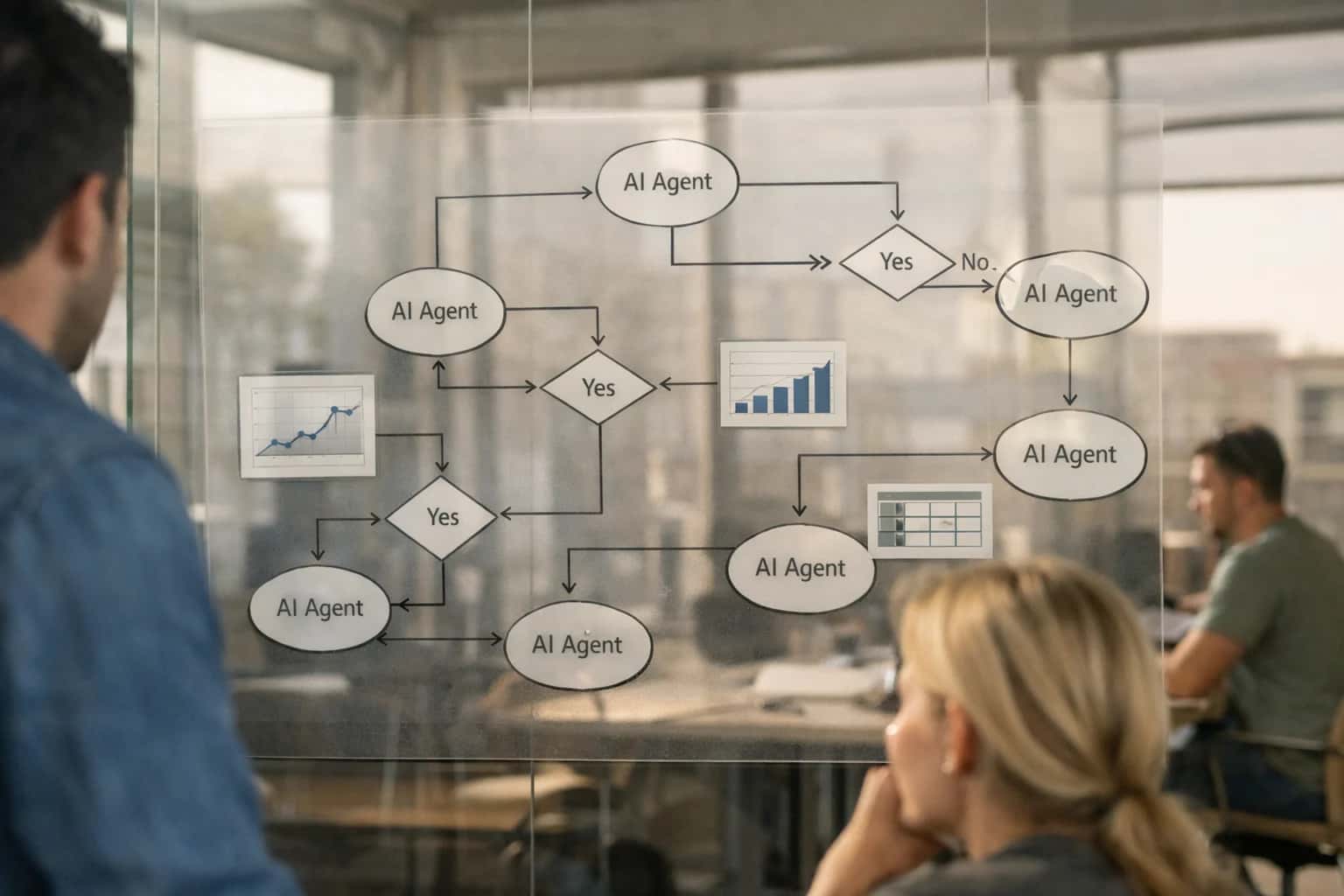
ARCHITECTURE AND ROLLOUT
Where AI Fits in Self-Healing Endpoint Management
A practical blueprint for integrating AI-driven remediation workflows with your existing MDM platform to automate endpoint fixes.
The rollout typically follows a phased, risk-managed approach:
- Phase 1: Monitoring & Alerting. Deploy AI models to analyze MDM logs and inventory, generating prioritized alerts for IT with suggested remediation scripts. No automated actions are taken.
- Phase 2: Supervised Automation. For a pilot group of low-risk devices, the system suggests and requires admin approval before executing remediations via the MDM API (e.g., running a Jamf Pro script to clear a full storage volume).
- Phase 3: Fully Automated Remediation. For a validated catalog of common, low-impact issues (like re-applying a Wi-Fi profile or restarting a hung management agent), the AI system automatically creates and executes the work order in the MDM, logging all actions to an audit trail for review. Governance is critical: every automated action must be tied to a specific policy rule, logged with a business justification, and have a defined rollback procedure (often a second, pre-tested MDM script).
This integration matters because it shifts endpoint operations from a reactive, ticket-driven model to a predictive, closed-loop system. Instead of an IT admin manually running a shell script after a user reports an issue, the AI detects the precursor signals—like a disk filling at an anomalous rate—and triggers the fix during off-hours. The business impact is measured in reduced mean-time-to-repair (MTTR), lower volume of tier-1 support tickets, and increased device uptime, allowing your IT team to focus on strategic projects rather than routine firefighting.
ARCHITECTURE PATTERNS
MDM APIs and Surfaces for AI Remediation
Core Surfaces for Automated Enforcement
MDM platforms expose compliance status and policy assignment APIs that serve as the primary trigger for AI remediation. In Jamf Pro, the computers and mobiledevices endpoints provide real-time compliance data from extension attributes and smart groups. Microsoft Intune offers the deviceManagement/managedDevices Graph API resource, which includes complianceState and a rich set of device health properties.
An AI agent consumes this data to identify non-compliant devices—such as those with outdated OS versions, missing security patches, or disabled disk encryption. The agent then calls the MDM's policy assignment APIs (e.g., PATCH /api/v1/compliance-policies/{id}/assign in Intune) to dynamically apply remediation profiles or scripts. This creates a closed-loop system where AI evaluates risk and the MDM executes the corrective configuration, moving from periodic compliance checks to continuous, automated enforcement.
AI-DRIVEN REMEDIATION WORKFLOWS
High-Value Self-Healing Use Cases
Integrate AI directly with MDM APIs (Jamf scripts, Intune remediations, Workspace ONE actions) to automatically detect and fix common device issues before users notice. These patterns move IT from reactive break-fix to predictive, autonomous operations.
01
Predictive Battery & Storage Health Remediation
AI analyzes daily inventory snapshots (battery cycles, storage capacity) from Jamf Pro or Intune to identify devices trending toward failure. Automatically triggers MDM scripts to optimize settings, notify users for service, or create a pre-emptive replacement ticket in the ITSM.
Weeks -> Days
Lead time on failures
02
Automated Compliance Drift Correction
Continuously compares device configurations (firewall settings, encryption status, approved apps) against gold-standard profiles in the MDM. Uses AI to diagnose the root cause of drift (user change, failed policy) and executes the minimal scripted remediation via the MDM API to restore compliance without a full device wipe.
Batch -> Real-time
Correction cadence
03
Intelligent Wi-Fi & VPN Connectivity Repair
AI correlates user-reported issues, MDM connectivity logs, and network health data. When a pattern indicates a misconfigured Wi-Fi or VPN payload, it automatically tests a corrected configuration on a device subset via MDM, validates success, and rolls it out to the affected user group.
1 sprint
Typical reduction in troubleshooting
04
Self-Healing Application Crashes & Hangs
Monitors application crash reports and performance metrics funneled through MDM (e.g., Jamf extension attributes). AI identifies common signatures (memory leak, corrupted preference file) and pushes a targeted remediation script—like clearing caches or reinstalling a specific app version—only to affected devices.
Hours -> Minutes
Mean time to repair (MTTR)
05
Proactive Patch Conflict Resolution
Before deploying OS or software patches via MDM, AI simulates the impact on a virtual test group based on current device inventory (OS version, installed apps). Predicts installation failures or conflicts, and automatically sequences patches or pre-installs dependencies to ensure a smooth, zero-touch rollout.
Same day
Rollback avoidance
06
Automated BYOD Profile & Container Repair
For personally-owned devices under MDM management (BYOD), AI detects when the secure work container or management profile becomes unstable. Automatically triggers a non-disruptive repair workflow via the MDM API—re-pushing certificates, refreshing policies—to restore secure access without requiring user re-enrollment.
Batch -> Real-time
Support reduction
AUTOMATED REMEDIATION PATTERNS
Example Self-Healing Workflows
These workflows illustrate how AI agents can consume MDM telemetry, diagnose common endpoint issues, and execute automated remediations via platform APIs, reducing manual support tickets and improving fleet health.
Trigger: A Jamf Pro extension attribute or Intune device property reports available storage below a defined critical threshold (e.g., < 10%).
Context Pulled: The AI agent retrieves:
- Device type and OS version.
- Inventory of installed applications and last used dates.
- List of large files in user-accessible directories (via script output).
- User's department and role (from HR system integration).
Agent Action: The model analyzes the data to recommend the safest, highest-impact cleanup actions. It prioritizes:
- Clearing system and app caches (safe for all users).
- Suggesting removal of unused, large applications (requires user approval for corporate devices).
- For kiosk/shared devices, automatically removing user-generated data per policy.
System Update: The agent uses the MDM API to execute approved actions:
- For Jamf: Pushes a pre-approved shell script to clear specific cache directories.
- For Intune: Triggers a remediation script via Proactive Remediations.
- Logs the action and new storage level in the CMDB.
Human Review Point: Any action requiring user data deletion or app removal triggers a notification to the user and IT admin for approval before execution.
BEYOND STATIC POLICIES
Implementation Architecture: The AI Orchestration Layer
A self-healing endpoint system requires an orchestration layer that sits between your MDM's command plane and the AI decision engine.
The core architecture involves a lightweight AI Orchestrator—a microservice or serverless function—that consumes real-time alerts and telemetry from your MDM platform (like Jamf Pro webhooks for ComputerCheckIn or Intune's Graph API for deviceManagement/managedDevice health states). This orchestrator evaluates the event against a knowledge base of known issues and remediation scripts. For example, it might match a pattern of high memory usage and repeated application crashes on a specific macOS version to a pre-validated Jamf Pro shell script that clears specific caches and restarts a service.
When a remediation is triggered, the orchestrator executes a secure, auditable workflow: 1) It calls the MDM API (e.g., POST /api/v1/scripts/id/execute in Jamf) to run the remediation script on the target device. 2) It logs the action, the reasoning, and the initiating event to a dedicated audit trail. 3) It monitors for a success/failure callback via the MDM or a secondary telemetry source. If the fix fails, the workflow can escalate—either by trying an alternate script, creating a ticket in your ITSM (like ServiceNow), or alerting a human technician with full context. This turns reactive, manual troubleshooting into a closed-loop system where common issues are resolved in minutes, often before the user is aware.
Rollout requires a phased, risk-managed approach. Start by deploying the AI Orchestrator in observation-only mode, where it analyzes events and suggests actions but requires manual approval. Use this phase to refine your issue-signature library and script success rates. Then, enable automated execution for low-risk, high-confidence remediations—think clearing temporary files, restarting hung processes, or toggling Wi-Fi/Bluetooth. Govern the system by maintaining a human-in-the-loop for any action that could cause data loss or significant downtime, and implement strict RBAC so only vetted scripts from a curated library can be executed. The goal is not full autonomy, but to free your team from repetitive triage and let them focus on complex, novel problems.
SELF-HEALING ENDPOINT IMPLEMENTATION
Code and Payload Patterns
Jamf Pro Script Remediation
For Apple fleets managed by Jamf Pro, self-healing workflows are typically executed via custom scripts pushed via policy. An AI agent analyzes inventory data (extension attributes) and event logs to identify issues like low storage, outdated applications, or security misconfigurations. It then selects or generates a remediation script, triggers a Jamf policy via the Classic API, and validates the outcome.
Example API Call to Trigger a Remediation Policy:
pythonimport requests import json jamf_url = "https://yourcompany.jamfcloud.com" api_user = "api_user" api_pass = "api_pass" # AI agent identifies device ID and remediation policy ID device_id = "123" policy_id = "456" # Build the command to execute the policy payload = { "command": "TriggerPolicy", "passcode": "" } # Send command to specific device response = requests.post( f"{jamf_url}/JSSResource/computercommands/command/DeviceTriggerPolicy/id/{device_id}", auth=(api_user, api_pass), data=json.dumps(payload), headers={'Content-Type': 'application/json'} ) # Log result for AI validation print(f"Policy trigger status: {response.status_code}")
The AI system would monitor the script's execution logs via subsequent API calls to confirm remediation.
SELF-HEALING ENDPOINTS
Realistic Time Savings and Operational Impact
How AI-driven remediation workflows, triggered via MDM APIs, transform common device support and compliance tasks.
| Metric | Before AI | After AI | Notes |
|---|---|---|---|
Common issue detection & triage | Manual ticket review (IT help desk) | Automated anomaly detection & alerting | AI correlates MDM telemetry (battery, storage, crashes) with known issues |
Remediation script execution | Manual script selection & push by admin | AI selects & orchestrates targeted script | Uses Jamf scripts, Intune remediations, or Workspace ONE actions |
Compliance drift remediation | Scheduled quarterly audit & manual fix | Continuous monitoring & auto-remediation | AI detects policy/config drift and applies corrective payloads |
Root cause analysis for failures | Hours of log analysis by Tier 2/3 | AI suggests probable cause in minutes | Analyzes MDM event logs, inventory history, and script outcomes |
Predictive failure intervention | Reactive replacement after device downtime | Proactive work order before critical failure | AI models predict hardware (e.g., battery) or software failures from trends |
Patch compliance enforcement | Manual review of patch reports & staged deployment | AI-prioritized, risk-based automated deployment | Considers threat intel and business context to schedule patches |
New device onboarding configuration | Manual profile & app assignment based on ticket | AI-driven dynamic provisioning based on user role/context | Integrates with HRIS to trigger zero-touch enrollment workflows |
CONTROLLED AUTOMATION FOR CRITICAL ENDPOINTS
Governance, Safety, and Phased Rollout
Implementing self-healing endpoints requires a deliberate approach to safety, oversight, and change management to prevent unintended disruption.
A production self-healing system is built on a closed-loop control plane that sits between your AI decision engine and the MDM's execution API (like Jamf's jamf-pro API or Intune's Microsoft Graph endpoints). This layer enforces critical guardrails: all proposed remediation actions—such as pushing a configuration script, forcing a reboot, or reinstalling an application—are logged to an immutable audit trail with the reasoning context (e.g., "Device XYZ123 battery health at 72%, below 75% threshold, triggering diagnostic script battery-check.sh"). Role-based access control (RBAC) ensures only approved automation service principals can execute high-impact commands, and actions can be routed through a human-in-the-loop approval queue for net-new or high-risk remediations before the MDM API call is made.
Rollout follows a phased, evidence-based cadence. Start with a monitoring-only phase where the AI system analyzes MDM telemetry (battery cycles, storage capacity, application crash reports) and generates proposed actions in a sandbox environment, allowing your team to review accuracy and false-positive rates. Next, move to a manual execution phase where the system creates tickets in your ITSM (like ServiceNow or Jira) with detailed remediation plans and one-click approval buttons that trigger the MDM API call. Finally, graduate to fully automated execution for known-low-risk workflows, such as clearing temporary files when storage exceeds 90% or restarting a hung management agent. Continuous evaluation metrics—like mean time to remediation (MTTR) reduction and the rate of rollbacks—govern the expansion of automation scope.
Safety is engineered through circuit breakers and rollback automation. Every automated configuration pushed via the MDM includes a versioned rollback payload. The control plane monitors real-time feedback from the MDM's device inventory and event logs; if a remediation triggers a spike in related support tickets or devices falling out of compliance, the system can automatically halt further executions and initiate a rollback. This is especially critical for cross-platform fleets managed by tools like VMware Workspace ONE or Microsoft Intune, where a single misapplied policy can affect thousands of Windows, macOS, and iOS devices. Integrating with existing /integrations/it-service-management-platforms/ai-integration-with-itsm-platforms-like-servicenow ensures that all autonomous actions are visible within the ITIL framework, maintaining operational oversight.
Enabling Efficiency, Speed & Accuracy
Intelligent Analysis, Decision & Execution
We build AI systems for teams that need search across company data, workflow automation across tools, or AI features inside products and internal software.
Talk to Us
Search across company data
Give teams answers from docs, tickets, runbooks, and product data with sources and permissions.
Useful when people spend too long searching or get different answers from different systems.
Enterprise searchRAGPermissions
Read more
Automate internal workflows
Use AI to route work, draft outputs, trigger actions, and keep approvals and logs in place.
Useful when repetitive work moves across multiple tools and teams.
AI agentsWorkflow automationGovernance
Read more
Add AI to products and internal tools
Build assistants, guided actions, or decision support into the software your team or customers already use.
Useful when AI needs to be part of the product, not a separate tool.
AI integrationDecision supportModel routing
Read moreIMPLEMENTATION PATTERNS
Frequently Asked Questions
Common technical questions about architecting AI-driven self-healing workflows that leverage Mobile Device Management APIs for automated remediation.
Workflows are triggered by a combination of scheduled checks and real-time events.
Common Triggers:
- Scheduled Inventory Polling: An agent periodically queries the MDM API (e.g., Jamf Pro's
/computersendpoint, Intune'sdeviceManagement/managedDevicesvia Graph) for key health attributes like battery health (batteryHealth), storage (usedStoragePercentage), or last check-in time. - Webhook Events: The MDM platform sends a webhook to your AI orchestration layer for specific events, such as:
smartgroups.membership.change(Jamf) when a device joins a "High CPU" group.deviceManagement.managedDevices.create(Microsoft Graph) for new device enrollment.- A custom event from a monitoring tool integrated with the MDM.
- User-Initiated Requests: An end-user reports an issue via a chatbot or portal, which queries the MDM for the device's current state to inform the AI's diagnosis.
The AI system evaluates the trigger context against predefined thresholds and models to decide if a remediation is warranted.

About the author
Prasad Kumkar
CEO & MD, Inference Systems
Prasad Kumkar is the CEO & MD of Inference Systems and writes about AI systems architecture, LLM infrastructure, model serving, evaluation, and production deployment. Over 5+ years, he has worked across computer vision models, L5 autonomous vehicle systems, and LLM research, with a focus on taking complex AI ideas into real-world engineering systems.
His work and writing cover AI systems, large language models, AI agents, multimodal systems, autonomous systems, inference optimization, RAG, evaluation, and production AI engineering.
LinkedIn
Limited slotsGet a Free AI Consultation
Partnered with leading AI, data, and software stack.





How We Work
Custom AI workflows for your Business
One-fit-all AI don't work for modern businesses. At Inferensys, we aim to understand your business & custom requirements; which we use to define most efficient agentic workflows, the data, and the tools for your business.
01
Review the use case
We understand the task, the users, and where AI can actually help.
Read more02
Pick the right approach
We define what needs search, automation, or product integration.
Read more03
Build the first useful version
We implement the part that proves the value first.
Read more04
Improve from there
We add the checks and visibility needed to keep it useful.
Read moreThe first call is a practical review of your use case and the right next step.
Talk to Us