Integrating AI into an enterprise imaging environment—spanning Sectra, Philips IntelliSpace, Intelerad, and GE systems—requires a federated architecture, not a point solution. The core challenge is connecting AI inference to a vendor-neutral archive (VNA) or enterprise imaging orchestration layer that can normalize DICOM and HL7 feeds from radiology, cardiology, pathology, and other specialties. This allows AI models for study triage, report support, and anomaly detection to operate on a unified data plane, triggering prioritized worklists in each department's native PACS viewer via DICOMweb or REST APIs.

Integration
AI Integration for Enterprise Imaging AI
A strategic and technical blueprint for CTOs and imaging directors to deploy, govern, and scale AI across a multi-departmental, multi-vendor enterprise imaging ecosystem.
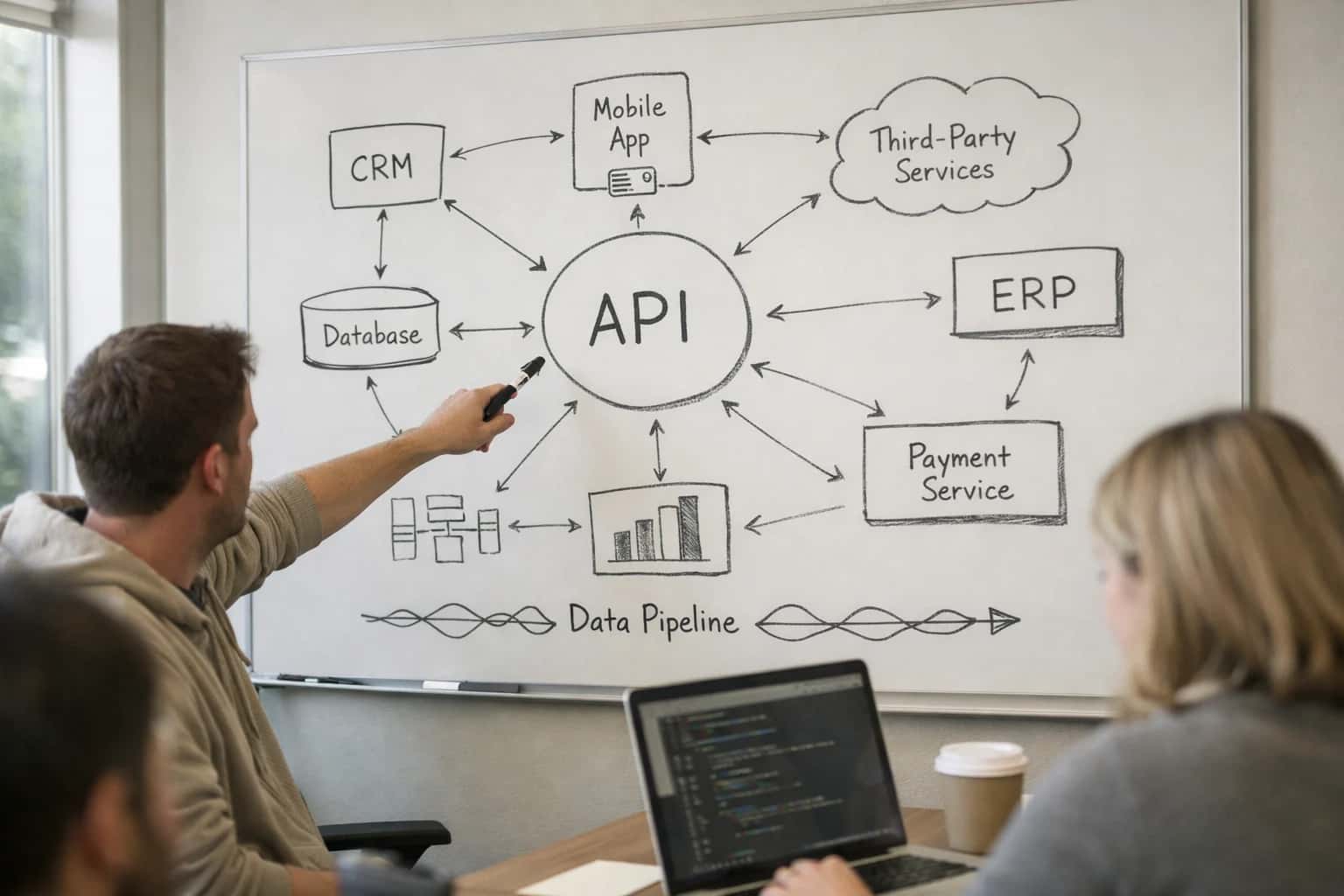
ARCHITECTURE AND GOVERNANCE
Enterprise Imaging AI: A Strategic Integration Challenge
A practical guide to deploying AI across multi-departmental, multi-vendor enterprise imaging strategies, focusing on governance, platform selection, and integration patterns.
A production rollout follows a phased, specialty-specific approach. Start with a high-volume, high-impact workflow like non-contrast head CT triage for stroke in the emergency radiology queue, using the AI's SOP Instance UID and Series Description to route results back to the PACS as a DICOM Structured Report (SR) or a HL7 ORU message to the RIS. Governance is critical: establish a model registry, define RBAC for AI result visibility (e.g., residents see full AI findings, attendings see only alerts), and implement audit logs tracking AI inference, radiologist interaction, and any overrides. This creates a feedback loop for model retraining and compliance reporting.
The strategic value lies in operationalizing AI not as a standalone tool but as a workflow layer. For example, an AI detecting a pulmonary nodule on a chest CT can automatically retrieve prior studies from the VNA, populate a comparison macro in the reporting module, and flag the case for a lung cancer screening program coordinator in the EHR. This cross-platform orchestration—connecting PACS, VNA, reporting, and population health systems—turns discrete AI outputs into coordinated clinical and administrative action, reducing manual handoffs and standardizing care pathways across the enterprise.
ARCHITECTURE BLUEPRINT
Key Integration Surfaces Across the Enterprise Imaging Stack
Core Workflow Integration
The PACS and Vendor Neutral Archive (VNA) are the central nervous system for imaging AI. Integration here focuses on orchestrating AI analysis as studies arrive, before they hit the radiologist's worklist.
Key Integration Points:
- DICOM Modality Worklist & Storage Commitment: Trigger AI inference on study receipt via DICOM C-STORE or HL7 ORM messages.
- VNA Event Hooks: Use the archive's event-driven architecture (e.g., Sectra VNA's subscription model) to run AI on historical studies for retrospective analysis or model validation.
- Worklist Prioritization Engines: Inject AI-derived priority scores (e.g., "critical," "follow-up," "routine") into the PACS worklist via HL7 ORU messages or direct API calls to reorder cases based on findings like intracranial hemorrhage or large pulmonary embolism.
This layer ensures AI is a seamless, automated part of the imaging pipeline, not a manual afterthought.
ENTERPRISE IMAGING AI
High-Value Enterprise AI Use Cases by Specialty
AI integration for enterprise imaging is not a single project but a portfolio of initiatives across clinical specialties. Each requires a distinct integration pattern, data pipeline, and workflow change. Below are the highest-impact opportunities for multi-departmental AI deployment.
01
Enterprise Study Triage & Prioritization
Integrate AI across radiology, cardiology, and neurology PACS worklists to automatically flag and prioritize studies with critical findings (e.g., large vessel occlusion, pneumothorax, pulmonary embolism). Uses DICOM and HL7 to push high-priority cases to the top of the list, reducing time-to-diagnosis for acute conditions.
Minutes Saved
Per critical case
02
Cross-Specialty Correlation & Context
Deploy AI to link findings across radiology, pathology, and cardiology archives within the VNA. For a lung nodule on CT, the system automatically retrieves prior biopsies from pathology and old echocardiograms, presenting a unified patient timeline to the reading physician, reducing manual search time.
1 Sprint
For initial linkage
03
Automated Report Drafting & Structuring
Integrate AI with the speech recognition and reporting modules of Sectra, Philips, or Intelerad. AI listens to the dictation, suggests structured report templates (e.g., LI-RADS, PI-RADS), auto-populates measurements from prior AI analysis, and generates a preliminary draft, cutting dictation and editing time.
Report Time -30%
Typical reduction
04
Multi-Modality AI for Surgical Planning
Connect AI segmentation tools to advanced visualization and 3D platforms (e.g., IntelliSpace Portal, Sectra 3D). For tumor resection planning, AI automatically segments the lesion and critical adjacent structures from pre-op MRI and CT, generating 3D models and measurements directly in the surgeon's planning workspace.
Hours -> Minutes
For model generation
05
Population Health & Screening Management
Use AI to analyze imaging archives across the enterprise to identify cohorts for screening programs (e.g., lung cancer, AAA). Integrates with the EHR and patient outreach systems via FHIR to flag eligible patients, track compliance, and prioritize AI-reviewed screening exams for radiologist sign-off.
Batch -> Programmatic
Cohort management
06
Enterprise-Wide AI Governance & Drift Monitoring
Implement a central LLMOps and model governance layer that monitors the performance of all deployed AI algorithms across specialties. Tracks inference latency, checks for data drift against the VNA, and manages model versioning and approvals, ensuring consistent, auditable AI operations. Learn about our approach to AI Governance.
Centralized Control
For all AI models
ENTERPRISE IMAGING ARCHITECTURE
Example Enterprise AI Workflows: From Trigger to Clinical Action
These workflows illustrate how AI agents and automations connect to core imaging systems, from the initial study arrival to a final, actionable clinical update. Each pattern is designed for multi-vendor, multi-departmental environments like Sectra, Philips, Intelerad, and GE.
Trigger: A non-contrast head CT study is completed in the ED and sent to the PACS.
Context Pulled: The AI orchestration layer queries the PACS (via DICOMweb) and the RIS (via HL7) for patient context: age, clinical indication (e.g., 'headache, rule out ICH'), and prior studies for comparison.
AI Agent Action: A containerized hemorrhage detection algorithm runs on the study. If positive with high confidence, the agent:
- Generates a DICOM Structured Report (SR) with lesion location and volume.
- Creates an HL7 ORU message with a critical finding alert.
- Updates the worklist priority score in the PACS (e.g., via Sectra's or Intelerad's API) to move the case to the top of the neuroradiologist's list.
System Update: The critical alert is pushed to the radiologist's mobile viewer and the ED's communication system. The prioritized study appears first on the reading worklist with an AI flag.
Human Review Point: The radiologist reviews the AI findings overlay on the PACS viewer, verifies the detection, and dictates the final report, which may incorporate the AI-generated measurements. The radiologist's verification is logged back to the AI governance platform for model performance tracking.
ENTERPRISE INTEGRATION PATTERN
Core Architecture: Building a Unified AI Layer for Multi-Vendor PACS
A practical technical blueprint for deploying a centralized AI orchestration layer across a heterogeneous PACS environment.
The core challenge in an enterprise imaging strategy is connecting multiple, often siloed, PACS platforms—like Sectra, Philips IntelliSpace, Intelerad, and GE—to a growing portfolio of AI models without creating point-to-point integration spaghetti. The solution is a unified AI layer that acts as a middleware broker. This layer ingests studies via DICOMweb or HL7 from each PACS's worklist or vendor-neutral archive (VNA), normalizes the data, routes it to the appropriate AI inference service (e.g., triage, detection, quantification), and returns structured results—DICOM Structured Reports (SR) or HL7 FHIR observations—back to the originating system for display and workflow action. This decouples AI model lifecycle management from PACS vendor roadmaps.
Implementation requires mapping the functional surface areas of each PACS for AI integration. For Sectra, this means leveraging its Enterprise Imaging SDK and workflow orchestrator APIs. For Philips, integration targets the AI Orchestrator and Universal Data Manager. Intelerad connects via its PowerReader API and workflow manager, while GE systems use the Edison AI platform APIs and Centricity interfaces. The unified layer must handle protocol translation, credential management, and result routing specific to each system's capabilities, whether it's overlaying findings on a viewer, reprioritizing a worklist, or populating a report draft.
Governance and rollout are critical. A phased deployment starts with a single high-impact use case—like stroke triage on head CTs—across one PACS. The architecture must include audit logs for every AI inference, RBAC to control which AI results are visible to which roles, and a human-in-the-loop review queue for uncertain findings. Performance hinges on GPU-accelerated inference pipelines and intelligent prefetching to minimize latency. This approach allows the enterprise to scale AI adoption specialty-by-specialty—from radiology to cardiology to pathology—without re-architecting for each new model or PACS upgrade.
This pattern, executed by Inference Systems, transforms AI from a collection of point solutions into a managed enterprise capability. It provides a single pane for model performance monitoring, cost allocation, and compliance reporting across all imaging AI, future-proofing the investment against vendor lock-in and accelerating the path to AI-driven operational gains like reduced time-to-diagnosis and more consistent reporting. For a deeper dive into platform-specific integration, see our guides for AI Integration for Sectra PACS and AI Integration for Philips IntelliSpace PACS.
ENTERPRISE AI ARCHITECTURE
Integration Code & Payload Examples
Core Imaging Data Pipeline
Enterprise AI requires a robust pipeline to ingest DICOM studies and associated HL7 messages. The orchestration layer listens for new studies, triggers AI inference, and routes results back to the PACS and EHR.
Example Python service listening for HL7 ADT/ORM messages and triggering a DICOM retrieval:
python# Pseudo-code for an HL7 listener triggering AI workflow from hl7 import parse import requests def on_hl7_message_received(raw_message): msg = parse(raw_message) if msg['MSH']['message_type'] == 'ORM^O01': # Order message accession_number = msg['OBR']['filler_order_number'] patient_id = msg['PID']['patient_id'] # Query PACS for study via DICOMweb study_uid = query_pacs_for_study(accession_number, patient_id) if study_uid: # Place study in processing queue for AI triage queue_ai_job({ 'study_uid': study_uid, 'priority': determine_priority(msg), 'ai_models': ['ct_head_bleed', 'chest_xray_covid'] })
This service acts as the central nervous system, connecting orders to imaging data and initiating the appropriate AI analysis based on clinical context.
ENTERPRISE IMAGING AI
Realistic Operational Impact & Time Savings
This table illustrates the tangible workflow improvements and time savings achievable by integrating AI across a multi-vendor, multi-specialty enterprise imaging strategy. Metrics are based on typical operational baselines and directional improvements from AI-assisted workflows.
| Workflow / Metric | Before AI Integration | After AI Integration | Implementation Notes |
|---|---|---|---|
Critical Finding Triage (e.g., ICH, PE) | Manual review in worklist order; critical cases may wait hours | AI prioritization flags critical studies in <5 minutes | Requires DICOM/HL7 integration with PACS worklist orchestrator; human verification remains essential |
Report Draft Generation for Routine Studies | Radiologist dictates all findings from scratch | AI suggests draft findings and measurements; radiologist edits | Integrated with speech recognition and reporting module; reduces dictation time by 30-50% |
Cross-Specialty Prior Comparison | Manual search across PACS and VNA for relevant priors | AI automatically retrieves and aligns relevant prior studies | Leverages VNA and patient context; setup requires mapping clinical indications |
Quality Assurance (Protocol Compliance) | Periodic manual audits by technologists/physicists | AI continuously monitors dose and protocol adherence; generates exception reports | Integrated with dose monitoring platforms; alerts for corrective action |
Screening Program Management (e.g., Lung, Breast) | Manual tracking of recalls, follow-ups, and result letters | AI automates cohort identification, result flagging, and patient communication workflows | Connects to imaging analytics and patient outreach systems; requires governance for false positives |
Advanced Visualization (3D Segmentation) | Manual or semi-automated segmentation taking 15-45 minutes per case | AI provides one-click organ/tumor segmentation in 2-3 minutes | Embedded within 3D advanced visualization platform; output validated by user |
Operational Workflow (Study Routing) | Manual assignment based on radiologist availability/subspecialty | AI-assisted routing based on study complexity, subspecialty, and radiologist workload | Integrated with RIS and reading worklist; improves subspecialty match and load balancing |
ENTERPRISE-SCALE AI DEPLOYMENT
Governance, Security, and Phased Rollout Strategy
Deploying AI across a multi-vendor, multi-specialty imaging enterprise requires a structured approach to security, governance, and change management.
A production AI integration must be governed by the same principles as your core imaging systems. This means implementing role-based access control (RBAC) for AI tools, maintaining a full audit trail of AI inferences and user interactions, and ensuring all AI-generated data (like DICOM Structured Reports or annotations) is stored within the Vendor Neutral Archive (VNA) alongside the original study. Security is non-negotiable; AI models and inference pipelines should operate within your health system's secure enclave, with data encrypted in transit and at rest, and all external AI services accessed via API gateways with strict rate limiting and monitoring.
A successful rollout follows a phased, specialty-by-specialty approach. We recommend starting with a non-critical, high-volume workflow—such as chest X-ray triage for pneumonia or follow-up lung nodule tracking—within a single department. This initial phase focuses on integrating AI results as a soft finding overlay in the PACS viewer, allowing radiologists to provide feedback without disrupting their primary dictation workflow. Success metrics here are user adoption and feedback quality, not diagnostic throughput.
Subsequent phases expand AI to more complex workflows and specialties. Phase two might introduce AI-driven worklist prioritization for stroke CTs in the emergency radiology workflow, requiring tight integration with HL7 ADT messages and critical result notification systems. Phase three could deploy cross-modality AI correlation in oncology, linking findings from CT, PET, and MRI. Each phase incorporates lessons from the prior one, refining the integration patterns, prompt engineering for report drafting, and the human-in-the-loop review protocols necessary for high-stakes decisions.
Ultimately, governance ensures AI is a reliable tool, not a black box. This involves establishing a multi-disciplinary AI oversight committee (radiology, IT, compliance, clinical engineering) to review model performance, monitor for drift, and approve new AI applications. A clear rollback plan for any AI module is essential. By treating AI as a governed, phased capability—integrated into your existing imaging architecture and workflows—you achieve scalable impact without introducing unmanageable risk. For related technical patterns, see our guides on AI Integration for Vendor Neutral Archives (VNA) and AI Integration for Imaging Workflow Automation.
Enabling Efficiency, Speed & Accuracy
Intelligent Analysis, Decision & Execution
We build AI systems for teams that need search across company data, workflow automation across tools, or AI features inside products and internal software.
Talk to Us
Search across company data
Give teams answers from docs, tickets, runbooks, and product data with sources and permissions.
Useful when people spend too long searching or get different answers from different systems.
Enterprise searchRAGPermissions
Read more
Automate internal workflows
Use AI to route work, draft outputs, trigger actions, and keep approvals and logs in place.
Useful when repetitive work moves across multiple tools and teams.
AI agentsWorkflow automationGovernance
Read more
Add AI to products and internal tools
Build assistants, guided actions, or decision support into the software your team or customers already use.
Useful when AI needs to be part of the product, not a separate tool.
AI integrationDecision supportModel routing
Read moreARCHITECTURE AND IMPLEMENTATION
Enterprise Imaging AI Integration: FAQs
Practical answers to the most common technical and operational questions about deploying AI across a multi-vendor, multi-specialty enterprise imaging strategy.
A phased, risk-managed approach is critical for enterprise success. We recommend the following sequence:
- Start with a single high-impact, low-risk workflow in one department (e.g., chest X-ray triage for pneumothorax in the Emergency Department). This proves value and establishes your integration pattern.
- Standardize the integration framework. Use the lessons from the first project to create a reusable blueprint for connecting to your PACS (Sectra, Philips, Intelerad, GE) via DICOM, HL7, and their specific APIs.
- Expand horizontally within the same specialty. Add new AI models for the same modality and user group (e.g., add ICH detection to the ED CT workflow). This builds radiologist familiarity.
- Expand vertically to new specialties. Apply the framework to a new department (e.g., cardiology for automated ejection fraction), adapting to their specific workflow and reporting tools.
- Implement cross-specialty orchestration. Finally, deploy AI that requires data from multiple sources (e.g., a patient dashboard that correlates brain MRI AI findings with cardiology AI outputs), leveraging your Vendor Neutral Archive (VNA) or enterprise imaging platform.
Key tools for managing this sequence are a centralized AI Model Registry and a Workflow Orchestrator that can route studies based on modality, body part, and priority across your different PACS environments.

About the author
Prasad Kumkar
CEO & MD, Inference Systems
Prasad Kumkar is the CEO & MD of Inference Systems and writes about AI systems architecture, LLM infrastructure, model serving, evaluation, and production deployment. Over 5+ years, he has worked across computer vision models, L5 autonomous vehicle systems, and LLM research, with a focus on taking complex AI ideas into real-world engineering systems.
His work and writing cover AI systems, large language models, AI agents, multimodal systems, autonomous systems, inference optimization, RAG, evaluation, and production AI engineering.
LinkedIn
Limited slotsGet a Free AI Consultation
Partnered with leading AI, data, and software stack.





How We Work
Custom AI workflows for your Business
One-fit-all AI don't work for modern businesses. At Inferensys, we aim to understand your business & custom requirements; which we use to define most efficient agentic workflows, the data, and the tools for your business.
01
Review the use case
We understand the task, the users, and where AI can actually help.
Read more02
Pick the right approach
We define what needs search, automation, or product integration.
Read more03
Build the first useful version
We implement the part that proves the value first.
Read more04
Improve from there
We add the checks and visibility needed to keep it useful.
Read moreThe first call is a practical review of your use case and the right next step.
Talk to Us