Integrating AI into HubSpot Marketing Hub means connecting to its core data objects and automation surfaces. The primary touchpoints are the Contact, Company, Deal, and Engagement objects via the HubSpot API. AI can act on this data to generate personalized landing page copy, email variants, and blog post ideas, triggered by workflow enrollments or scheduled batch jobs. For lead scoring, AI models consume behavioral events (email opens, page views, form submissions) and firmographic data to calculate a predictive Marketing Qualified Lead (MQL) score, which can be written back to a custom contact property to trigger list segmentation or Sales Hub notifications.

Integration
AI Integration for HubSpot Marketing Hub
A practical guide to embedding AI into HubSpot Marketing Hub workflows for automated content creation, intelligent lead scoring, and personalized campaign orchestration.
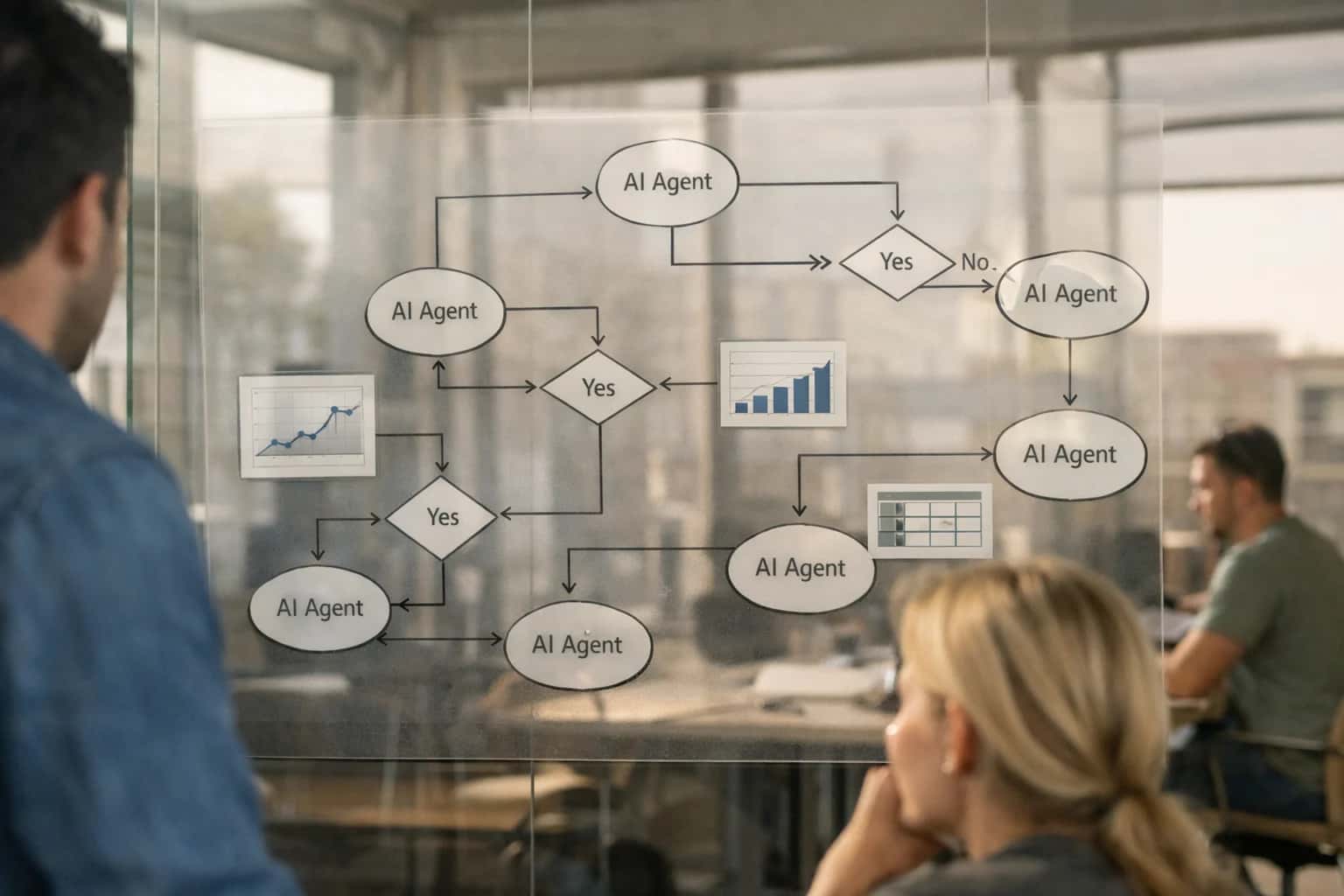
ARCHITECTURE & ROLLOUT
Where AI Fits into HubSpot Marketing Hub
A technical blueprint for connecting AI models to HubSpot's marketing surfaces to automate content creation, lead scoring, and campaign optimization.
A production implementation typically involves a middleware service or agent that polls HubSpot's webhooks or uses the Events API. For example, a contact submitting a high-intent form can trigger a workflow that calls an external AI service via a webhook step. The service, using a model like GPT-4 or Claude, generates a personalized follow-up email draft and posts it back to the contact's timeline or updates a workflow property for review. For content generation, an AI agent can be scheduled to analyze top-performing blog topics and draft outlines, posting them as tasks in HubSpot Tasks for editor review. Governance is critical: all AI-generated content should be flagged in a custom property and, for customer-facing communications, routed through an approval workflow or human-in-the-loop step before sending.
Rollout should start with a single, high-impact workflow. A common pilot is AI-powered lead scoring, where a model is trained on historical MQL conversion data. The score is calculated nightly via a batch job and written to a contact property, allowing marketers to compare its performance against the native HubSpot lead scoring system. Another low-risk starting point is using AI for A/B test variant ideation, where the AI suggests email subject line or CTA variations based on past performance data. This builds internal trust before moving to dynamic, real-time content generation. The key is to use HubSpot's existing audit trails and property history to track AI's contributions and measure impact on conversion rates and operational speed.
PLATFORM SURFACES
HubSpot Marketing Hub Surfaces for AI Integration
Content & Asset Generation
AI can integrate directly into HubSpot's content creation workflows to accelerate production and improve relevance. Key surfaces include:
- Blog Post & Landing Page Tools: Use the HubSpot API to inject AI-generated copy, meta descriptions, and headline variations directly into the editor. Models can draft content based on target keywords, persona data from CRM records, and top-performing historical assets.
- Email & Ad Copy: Connect to the Email and Ads tools to generate personalized subject lines, body copy, and call-to-action variations. AI can A/B test language at scale and suggest optimizations based on engagement data pulled from HubSpot reports.
- Social Media Publishing: Automate post ideation and drafting for the Social Publishing calendar. AI can repurpose blog content into thread formats, generate platform-specific captions, and recommend optimal posting times.
Implementation typically involves a middleware service that calls an LLM API (like OpenAI or Anthropic), uses prompt templates enriched with HubSpot list and contact properties, and posts the generated content back via the POST /cms/v3/blogs/posts or POST /marketing/v3/emails endpoints.
INTEGRATION PATTERNS
High-Value AI Use Cases for Marketing Hub
Connect generative AI and predictive models directly to HubSpot Marketing Hub workflows to automate content creation, refine audience targeting, and accelerate lead qualification—without replacing your existing tech stack.
01
AI-Powered Landing Page & Ad Copy Generation
Use the HubSpot API to trigger AI copy generation for landing pages, Google Ads, and social posts based on campaign briefs stored in HubSpot. Automatically populate HubSpot Landing Pages and Ads modules with variations for A/B testing, reducing creative production from days to hours.
Days -> Hours
Content cycle time
02
Intent-Based Lead Scoring & MQL Routing
Augment HubSpot's native lead scoring by feeding form submissions, email engagement, and page view data into an AI model. Score leads on purchase intent and topic interest, then use HubSpot Workflows to automatically update Lifecycle Stage and route high-potential MQLs to sales with enriched context.
Batch -> Real-time
Scoring cadence
03
Blog & Content Ideation at Scale
Integrate AI with the HubSpot Blog and Content Strategy tools to analyze top-performing topics, generate quarterly editorial calendars, and draft full post outlines. Use Contact List engagement data to tailor topics to specific audience segments, keeping the content pipeline full.
04
Personalized Email Workflow Triggers
Move beyond static nurture streams. Use AI to analyze a contact's recent website activity and email opens to dynamically select the most relevant email variant from a library or generate personalized paragraphs on-the-fly within HubSpot Marketing Email workflows.
1 sprint
Implementation timeline
05
Campaign Performance Analysis & Summaries
Automate weekly reporting by connecting AI to the HubSpot Reporting API. Ingest metrics across channels, generate plain-language summaries of what's working, and post insights directly to a HubSpot Dashboard or Slack channel for the marketing team.
06
SEO & Topic Cluster Optimization
Connect AI to HubSpot's SEO Recommendations and Website Pages data. Analyze search performance, suggest new pillar page topics based on keyword gaps, and generate meta descriptions or title tag optimizations that can be applied directly via the API.
IMPLEMENTATION PATTERNS
Example AI-Augmented Marketing Workflows
These workflows illustrate how to connect AI models to HubSpot Marketing Hub's core surfaces—forms, workflows, emails, and landing pages—to automate high-effort tasks and personalize at scale. Each pattern includes the technical trigger, data flow, AI action, and system update.
Trigger: A marketing manager creates a new landing page campaign in HubSpot for a specific product, persona, or offer.
Context/Data Pulled: The HubSpot workflow or custom-coded integration pulls:
- Campaign goal and target audience from a custom property.
- Key product features and benefits from a connected product information management (PIM) system or a knowledge base.
- Brand voice guidelines and tone examples from a central repository.
Model or Agent Action: An AI agent (e.g., using GPT-4 or Claude 3) is called via API with a structured prompt:
json{ "task": "generate_landing_page_copy", "product": "Project Management Software for Agencies", "primary_audience": "Agency Operations Directors", "key_benefits": ["centralized client visibility", "automated time tracking", "real-time profitability dashboards"], "tone": "professional yet approachable", "word_limit": 1200 }
The model returns a complete copy draft including a headline, sub-headline, hero section, 3-4 benefit blocks, social proof placeholder, and a call-to-action.
System Update or Next Step: The generated copy is posted back to the HubSpot page editor via the HubSpot Content API as a draft. The marketer receives a notification to review, edit, and publish.
Human Review Point: The copy is always created as a draft. The marketer must review for brand alignment, accuracy, and compliance before publishing. The system can log all prompts and outputs for governance.
CONNECTING AI TO HUBSPOT'S MARKETING ENGINE
Implementation Architecture & Data Flow
A practical blueprint for wiring AI models into HubSpot Marketing Hub's core workflows and data objects.
A production-ready integration typically connects via the HubSpot API and Webhooks to inject AI into three key surfaces: the Content Creation Engine, the Contact Database, and the Workflow Automation layer. For content, AI agents are triggered within blog, landing page, or email modules to generate and A/B test copy variations, pulling context from campaign briefs stored in custom objects. For lead scoring, a separate service consumes contact engagement data (email opens, page views, form submissions) and firmographic properties to calculate a dynamic Marketing Qualified Lead (MQL) Score, writing results back to a custom contact property like ai_mql_score. This enables real-time list segmentation and trigger-based workflows.
The data flow is event-driven. For example, a contact.propertyChange webhook for a high-intent page view can fire a serverless function that calls an LLM (like GPT-4 or Claude) to analyze the contact's journey and immediately update their lead score. For batch operations, like generating a quarter's blog calendar, a scheduled job can fetch topic clusters from the Campaigns object, use an AI model to brainstorm headlines and outlines, and create draft posts in the Blog Posts module via the API. All generated content and scores should be logged with audit trails linking back to the source contact, campaign, and model version for governance.
Rollout should be phased, starting with a single high-impact workflow—such as AI-powered Ad Copy Variants for a specific product line—before scaling to site-wide landing page generation. Governance is critical: implement a human-in-the-loop approval step in relevant HubSpot workflows for all AI-generated customer-facing copy, and establish a feedback loop where performance data (click-through rates, conversion rates) is used to fine-tune prompts and models. For teams using HubSpot Operations Hub, consider using the Data Quality Automation features to cleanse and structure the input data feeding your AI models, ensuring higher-quality outputs. For a deeper look at orchestrating these multi-step AI agents, see our guide on AI Agent Builder Platforms.
HUBSPOT MARKETING HUB
Code & Payload Examples
Trigger AI Copy Generation via Workflow
A common pattern is to trigger AI-powered copy generation when a new landing page is created in HubSpot. Use a workflow webhook to call your AI service, passing the page topic, primary offer, and target keywords.
Example Webhook Payload (JSON):
json{ "objectId": 123456, "objectType": "LANDING_PAGE", "properties": { "topic": "Enterprise AI Integration Services", "primary_offer": "Free Architecture Review", "target_keywords": ["CRM AI", "Salesforce AI", "HubSpot AI"], "brand_voice": "professional, technical, consultative" } }
Your AI service returns structured copy blocks (headline, subheadline, body, CTA) which a custom-coded workflow action then writes back to the page's html_title, meta_description, and a custom ai_generated_copy property for review.
HUBSPOT MARKETING HUB
Realistic Time Savings & Operational Impact
This table shows the typical operational impact when integrating AI into core HubSpot Marketing Hub workflows, focusing on time savings, quality improvements, and workflow acceleration.
| Workflow / Task | Before AI | After AI | Implementation Notes |
|---|---|---|---|
Landing Page Copy Drafting | Writer research + 2-4 hour draft cycles | First draft in <5 minutes, human refinement | AI generates 3-5 variants from campaign brief; human edits for brand voice. |
Blog Topic & Outline Generation | Weekly team brainstorming, 1-2 hours | 20-30 ranked ideas in minutes, outlines auto-generated | AI analyzes SERP data & past performance; human selects and finalizes. |
Ad Copy & Headline Variations | Manual A/B test creation, 1-2 hours per set | 50+ on-brand variations in <10 minutes | AI trained on brand guidelines & past winners; human approves final set. |
MQL Scoring & Routing | Point-based rules, manual list reviews | Predictive scoring with intent signals, auto-list assignment | AI model ingests content engagement, form data, and external intent; sales ops reviews thresholds. |
Email Personalization at Scale | Manual merge tags, limited segmentation | Dynamic, context-aware paragraphs per segment | AI pulls from contact activity, company news; human reviews before major sends. |
Campaign Performance Summary | Manual data pull & slide creation, 3-4 hours | Automated narrative report in <15 minutes | AI analyzes HubSpot campaign data, highlights anomalies, suggests next steps. |
Content Tagging & Categorization | Manual tagging by marketing ops | Bulk auto-tagging of assets & blog posts | AI reads content, applies taxonomy; human spot-checks for accuracy. |
ARCHITECTING FOR SCALE AND CONTROL
Governance, Security, and Phased Rollout
A practical approach to deploying AI in HubSpot Marketing Hub with built-in governance and measurable impact.
A production-grade integration requires a clear data and access model. We typically connect to HubSpot via its REST API using a dedicated service account with scoped permissions—often limiting access to specific objects like Contacts, Companies, Deals, Marketing Events, and Email send/read scopes. All AI-generated content is logged with metadata (model version, prompt, source data IDs) in a separate audit system, not just HubSpot's activity log. This creates a lineage trail for compliance reviews and model performance tracking. For data leaving HubSpot for processing (e.g., sending contact properties to an external model for MQL scoring), we enforce encryption in transit and avoid sending full PII payloads by using hashed identifiers where possible.
A phased rollout minimizes risk and maximizes adoption. Phase 1 often starts with a non-customer-facing, ops-focused use case: using AI to generate multiple variants of landing page or blog post ideas (not final copy) within a private campaign draft folder, requiring marketer review and edit. Phase 2 introduces semi-automation, such as an AI-powered MQL scoring model that runs nightly, appending a confidence score to a custom Contact property and triggering a HubSpot workflow to list high-probability leads in a static list for sales review. Phase 3 moves to light automation, like using AI to draft personalized email follow-up copy within a one-to-one sales sequence, where the rep must approve each send. This crawl-walk-run approach builds trust in the system's outputs.
Governance is operationalized through a combination of tooling and process. We implement a human-in-the-loop checkpoint for any AI-generated content destined for public channels (ads, published blogs, mass emails). This can be a mandatory approval step in the HubSpot workflow or a separate review queue in a companion dashboard. For scoring models, we establish a regular business review (e.g., weekly) where marketing ops compares AI-scored MQLs against actual conversion rates, using the feedback to retune prompts or model parameters. Finally, we ensure all AI-triggered actions, like adding a contact to a list or updating a deal stage, are reversible and include clear "source: AI agent" notes in the HubSpot activity log for traceability.
Enabling Efficiency, Speed & Accuracy
Intelligent Analysis, Decision & Execution
We build AI systems for teams that need search across company data, workflow automation across tools, or AI features inside products and internal software.
Talk to Us
Search across company data
Give teams answers from docs, tickets, runbooks, and product data with sources and permissions.
Useful when people spend too long searching or get different answers from different systems.
Enterprise searchRAGPermissions
Read more
Automate internal workflows
Use AI to route work, draft outputs, trigger actions, and keep approvals and logs in place.
Useful when repetitive work moves across multiple tools and teams.
AI agentsWorkflow automationGovernance
Read more
Add AI to products and internal tools
Build assistants, guided actions, or decision support into the software your team or customers already use.
Useful when AI needs to be part of the product, not a separate tool.
AI integrationDecision supportModel routing
Read moreHUBSPOT MARKETING HUB
Frequently Asked Questions
Practical questions for technical teams planning to integrate AI models like OpenAI or Claude into HubSpot Marketing Hub for content generation, lead scoring, and workflow automation.
A secure integration typically uses a middleware layer (like a secure cloud function or container) to broker calls between HubSpot and your AI provider.
Standard Architecture:
- Authentication: Your middleware uses a HubSpot Private App access token (scoped to necessary permissions like
contacts.read,contacts.write,marketing-automation.write) or an OAuth 2.0 flow for user-level actions. - Data Flow:
- A workflow trigger (e.g., form submission, page view) fires in HubSpot.
- A webhook posts the contact ID and context to your secure endpoint.
- Your service fetches the full contact record and associated engagement data via the HubSpot API.
- It calls your AI model (OpenAI, Anthropic, or a fine-tuned model) with a structured prompt and the fetched data.
- The AI response is processed, and your service updates the HubSpot record via API (e.g., sets a custom property like
ai_generated_ad_copyor adds a contact to a static list for MQLs).
- Security & Governance:
- API keys and tokens are managed in a secrets manager (AWS Secrets Manager, GCP Secret Manager).
- All calls are logged for audit trails.
- Implement rate limiting and retry logic for both HubSpot and AI provider APIs.
Example Payload to Middleware:
json{ "event": "form_submission", "objectId": 12345, "contactId": 98765, "formId": "guid-here", "occurredAt": 1712000000000 }

About the author
Prasad Kumkar
CEO & MD, Inference Systems
Prasad Kumkar is the CEO & MD of Inference Systems and writes about AI systems architecture, LLM infrastructure, model serving, evaluation, and production deployment. Over 5+ years, he has worked across computer vision models, L5 autonomous vehicle systems, and LLM research, with a focus on taking complex AI ideas into real-world engineering systems.
His work and writing cover AI systems, large language models, AI agents, multimodal systems, autonomous systems, inference optimization, RAG, evaluation, and production AI engineering.
LinkedIn
Limited slotsGet a Free AI Consultation
Partnered with leading AI, data, and software stack.





How We Work
Custom AI workflows for your Business
One-fit-all AI don't work for modern businesses. At Inferensys, we aim to understand your business & custom requirements; which we use to define most efficient agentic workflows, the data, and the tools for your business.
01
Review the use case
We understand the task, the users, and where AI can actually help.
Read more02
Pick the right approach
We define what needs search, automation, or product integration.
Read more03
Build the first useful version
We implement the part that proves the value first.
Read more04
Improve from there
We add the checks and visibility needed to keep it useful.
Read moreThe first call is a practical review of your use case and the right next step.
Talk to Us