In a regulated MES like Siemens Opcenter, AI integration targets specific, high-friction surfaces within the electronic batch record (EBR) lifecycle. This includes the Batch Record Review module, where AI agents can pre-screen completed records for data completeness, parameter adherence, and missing signatures before a QA specialist's final review. It also connects to the Deviation Management workflow, analyzing free-text descriptions in deviation reports (DEVs) to automatically suggest product impact assessments and potential root cause codes from historical data. For continuous process verification, AI models can monitor real-time data streams from Opcenter's Process Execution layer, flagging subtle parameter drifts that may indicate a future out-of-spec event, long before a batch is completed.

Integration
AI Integration with Siemens Opcenter for Pharmaceutical Manufacturing
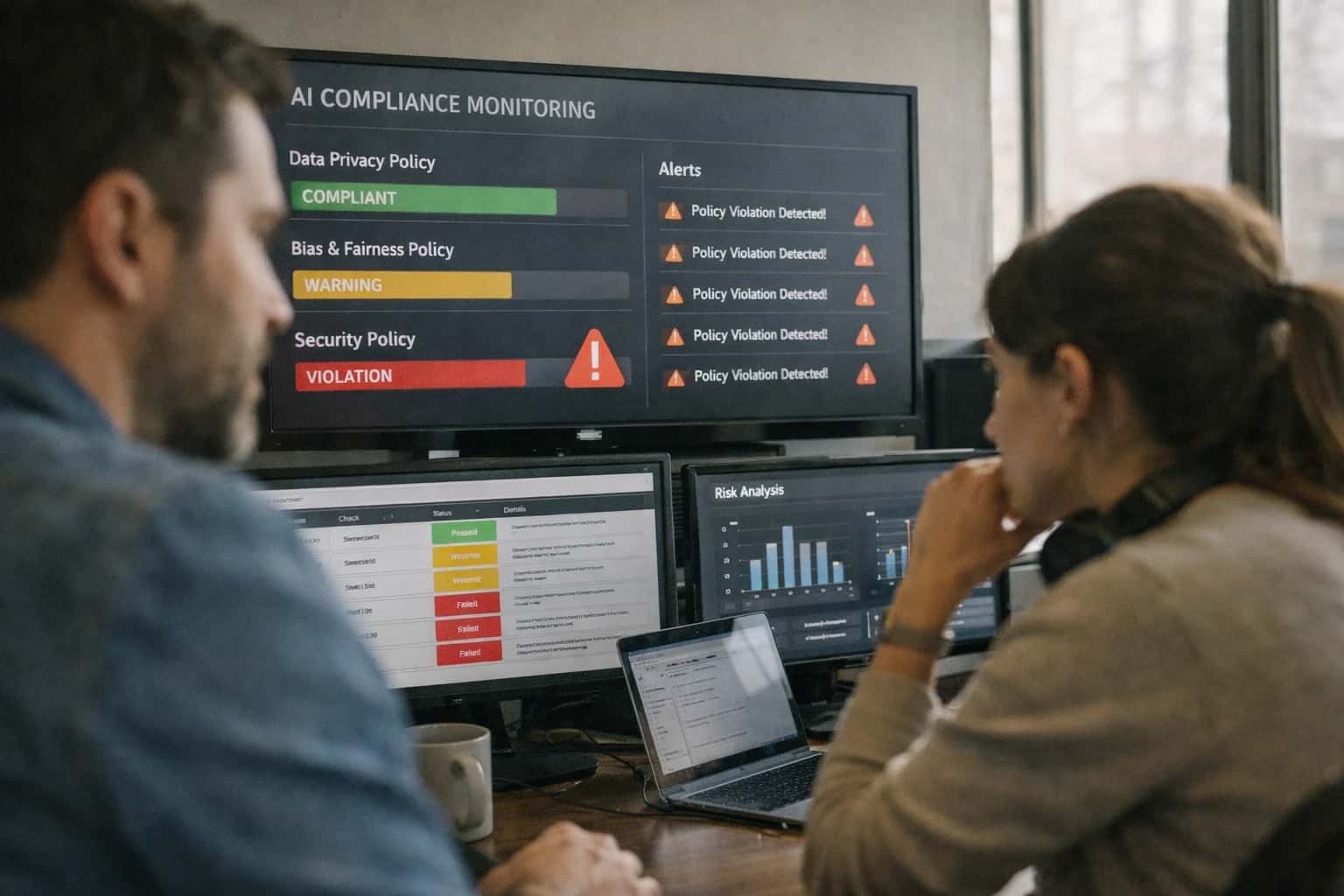
Where AI Fits in Pharma MES: Accelerating Compliance, Not Replacing It
Integrating AI with Siemens Opcenter in pharmaceutical manufacturing focuses on augmenting human oversight to accelerate GMP workflows while strengthening the audit trail.
The implementation architecture is additive. AI agents act as a parallel review layer, accessing Opcenter via its OData APIs and Siemens' Open Integration Platform. For batch record analysis, an agent retrieves the EBR JSON, checks values against the master recipe and material lots, and generates a summary with flagged exceptions—all logged as a system annotation in the audit trail. For deviation trend analysis, a separate agent periodically queries closed DEVs, clusters them using NLP on the description fields, and surfaces recurring themes to the quality team via a custom dashboard or automated report. This keeps the core, validated Opcenter workflow intact while injecting intelligence at key decision gates.
Rollout and governance are critical. A pilot typically starts with a single product line and a "human-in-the-loop" design, where AI suggestions require QA approval before any system state change. Model outputs must be explainable and tied directly to source data (e.g., "Parameter X exceeded limit Y at timestamp Z"). All AI inferences and prompts are written to a separate, immutable log that references Opcenter's native transaction IDs, creating a defensible chain of custody for auditors. The goal isn't autonomous decision-making; it's reducing manual review time from hours to minutes and ensuring no critical deviation pattern goes unnoticed between quarterly quality reviews. For teams managing Opcenter, this means the same rigorous change control and 21 CFR Part 11 compliance, applied to a new class of software agents.
This approach directly supports pharma's core mandate: ensuring product quality and patient safety. By integrating AI as a compliance accelerator within Opcenter, manufacturers gain earlier detection of process issues, more consistent application of quality rules, and a richer data foundation for continuous improvement—all while operating within the validated boundaries of their primary MES. For a deeper look at orchestrating these multi-step AI workflows within a regulated environment, see our guide on AI Agent Builder and Workflow Platforms.
Key Opcenter Modules and Data Surfaces for AI Integration
The Core Batch Record Engine
This module manages the electronic batch record (EBR), the system of record for pharmaceutical production. AI integration focuses on automating the review and release process.
Key Data Surfaces:
- Batch Records: Structured data (materials, parameters, equipment, personnel) and unstructured operator notes.
- Execution Events: Timestamps for each process step (weighing, dispensing, charging, mixing).
- Equipment Usage Logs: Links between batches and specific tanks, lines, or reactors.
AI Integration Points:
- Automated Batch Record Review: Use LLMs to scan completed EBRs against the master batch record (MBR), flagging discrepancies in parameters, materials, or sequence.
- Anomaly Detection in Event Logs: Apply time-series analysis to identify atypical delays or out-of-sequence steps that may indicate procedural deviations.
- Predictive Hold Time Analysis: Model the impact of execution delays on intermediate product quality to recommend hold time extensions or reprocessing.
High-Value AI Use Cases for Pharmaceutical Opcenter
For regulated pharmaceutical production, Siemens Opcenter provides the core execution and quality backbone. Integrating AI directly into its modules enables automated compliance, accelerates batch release, and surfaces hidden risks within the manufacturing data model.
Automated Electronic Batch Record Review
AI agents review completed electronic batch records (EBRs) within Opcenter Execution, cross-referencing process parameters, material lots, and operator signatures against the master batch record. Flags deviations, missing data, or out-of-trend conditions for QA review, compressing a multi-hour manual check into minutes.
Deviation Trend Analysis & CAPA Prioritization
Connects to the Opcenter Quality module to analyze deviation reports, non-conformances, and corrective actions. Uses NLP to cluster similar issues across batches and sites, identifying systemic root causes. Ranks CAPAs by potential impact on product quality and regulatory risk, focusing investigator effort.
Audit Trail Anomaly Detection
Continuously monitors Opcenter's electronic audit trails for atypical user actions, data modifications, or access patterns that may indicate procedural drift or compliance risk. Alerts quality assurance of potential data integrity issues before an external audit, enabling proactive remediation.
Real-Time In-Process Control (IPC) Alerting
Integrates with Opcenter Intelligence analytics and real-time data feeds. AI models analyze in-process control data (e.g., blend uniformity, compression force) against historical golden batch profiles, predicting out-of-spec results before lab confirmation. Triggers immediate alerts in Opcenter for operator intervention.
Cleaning Validation & Changeover Optimization
Uses AI to analyze equipment usage history, residue data, and cleaning cycle parameters from Opcenter Execution. Predicts cleaning effectiveness, recommends optimal changeover sequences to minimize downtime, and automates the generation of supporting documentation for validation protocols.
Stability Study Forecasting & Sample Scheduling
Connects to Opcenter's quality and lab data to analyze historical stability results. AI models forecast shelf-life and predict out-of-spec trends, enabling smarter pull dates for ongoing stability studies. Optimizes sample scheduling within Opcenter to maximize resource utilization and compliance coverage.
Example AI-Augmented Workflows in Opcenter
For pharmaceutical manufacturers, Siemens Opcenter provides the foundational system of record for production and quality. These workflows illustrate how AI agents can be integrated to automate compliance-heavy tasks, accelerate batch release, and detect subtle process deviations that impact product quality and patient safety.
Trigger: A batch production order reaches a Completed status in Opcenter Execution.
Context Pulled: The AI agent retrieves the complete EBR data set via Opcenter's API, including:
- Process parameter logs (temperatures, pressures, mixing times)
- Material consumption records (lot numbers, quantities, expiry dates)
- Equipment usage and cleaning records (CIP logs)
- Operator electronic signatures and checkpoints
- In-process quality test results from integrated LIMS
Agent Action: A governed LLM agent, grounded in SOPs and regulatory guidelines (e.g., 21 CFR Part 211), performs a multi-step review:
- Completeness Check: Validates all required data fields and signatures are present.
- Parameter Compliance: Compares every logged parameter against the approved master batch record, flagging any excursions outside validated ranges.
- Anomaly Detection: Uses a time-series model to identify subtle, non-obvious deviations in parameter trends that might indicate a process drift.
- Narrative Generation: Drafts a concise summary of the batch, highlighting any exceptions and their justification codes.
System Update: The agent posts its review findings as a structured JSON payload to an Opcenter workflow. The payload includes:
- A
review_status(Ready for QA,Hold for Investigation) - A list of flagged exceptions with references to specific records
- The generated batch summary narrative
Human Review Point: The flagged batch and AI summary are routed to a QA specialist in Opcenter Quality for final disposition. The specialist reviews the exceptions, confirms the AI's reasoning, and approves the batch for release or initiates a formal deviation.
Implementation Architecture: Secure, Governed, and Validatable
A reference architecture for embedding AI into Siemens Opcenter while maintaining strict compliance, data integrity, and audit readiness for pharmaceutical manufacturing.
The integration connects to Opcenter's core modules—Opcenter Execution, Opcenter Quality, and Opcenter Intelligence—via its RESTful and OData APIs. AI agents are deployed as containerized microservices in a secure, segregated network zone, accessing Opcenter data through a dedicated service account with role-based access control (RBAC) scoped to specific objects like Batch Records, Deviations, Samples, and AuditTrail logs. This ensures the AI operates within the same governance perimeter as human users, with all data access and model inferences logged to Opcenter's native audit trail for complete traceability.
For high-value use cases like automated batch record review, the workflow is designed for validation: 1) An AI service subscribes to Opcenter events signaling a Batch Record status change to Pending Review. 2) It retrieves the structured record data and associated unstructured documents (e.g., PDF attachments). 3) A multi-step LLM agent validates entries against the master batch record, flags discrepancies (e.g., parameter out-of-range, missing signatures), and generates a summary with confidence scores. 4) This output is posted back to Opcenter as a Review Note linked to the original record, triggering a standard electronic signature workflow for a qualified human's final approval. The AI acts as a copilot, accelerating triage but never auto-closing a record, preserving the required human-in-the-loop for GMP.
Rollout follows a phased, risk-based validation approach. We begin with a non-GxP pilot in a development Opcenter instance, focusing on deviation trend analysis. AI models analyze historical Deviation records to cluster root causes and predict recurrence risks, outputting findings to a dedicated Opcenter dashboard. This allows for model performance benchmarking and tuning without impacting production. Upon successful IQ/OQ, the solution is deployed to a validated production environment, with ongoing performance monitoring via Opcenter's KPI framework. Change control is managed through Opcenter's document control module, ensuring prompt versions, model weights, and integration code are governed as validated software assets.
Code and Payload Examples
Automated Electronic Batch Record (EBR) Analysis
AI models can be integrated via Opcenter's API to review completed EBRs for deviations, missing signatures, or parameter excursions against the master batch record. The workflow typically involves:
- Trigger: A batch status changes to 'Under Review' in Opcenter Execution.
- Action: An external service fetches the EBR data (parameters, events, operator entries) via the Opcenter REST API.
- Processing: An LLM or rules-based AI analyzes the data, comparing actuals against allowed ranges and checking for procedural completeness.
- Result: A summary payload is posted back to Opcenter, creating a Quality Notification or annotating the record for human review.
Example Payload (POST to Opcenter API for Notification Creation):
json{ "notificationType": "Q3", "shortText": "AI Review: Minor Parameter Drift Detected", "longText": "Batch BATCH-12345-001 showed a 2.3°C average temperature drift in Phase 2. All other parameters and signatures are complete. Review recommended for trend analysis.", "material": "MAT-987", "batch": "BATCH-12345-001", "plant": "PH01", "priority": "Medium", "codeGroup": "PARAM_DRIFT" }
This enables QA reviewers to focus on substantive issues flagged by the AI, rather than manual line-by-line checks.
Realistic Time Savings and Operational Impact
This table illustrates the tangible impact of integrating AI agents into Siemens Opcenter for pharmaceutical manufacturing, focusing on compliance-heavy workflows where manual review and traceability are paramount.
| Workflow / Metric | Before AI | After AI | Notes |
|---|---|---|---|
Electronic Batch Record (EBR) Review | 4-8 hours manual QA review per batch | 30-60 minutes assisted review with anomaly flagging | AI pre-scans for data completeness, deviations, and signature gaps; QA focuses on flagged exceptions. |
Deviation Trend Analysis | Monthly manual report compilation (2-3 days) | Continuous monitoring with weekly summary reports (2-3 hours) | AI continuously analyzes deviation codes, root causes, and recurrence patterns across sites. |
Audit Trail Anomaly Detection | Sampled review during periodic audits | Continuous, automated monitoring with daily alerts | AI models baseline user/system behavior and flag unauthorized access, data deletions, or irregular sequences for investigation. |
Corrective and Preventive Action (CAPA) Drafting | 1-2 days to research, draft, and route | 4-8 hours with AI-suggested content and similar past CAPAs | AI retrieves relevant SOPs, past incidents, and suggested actions based on deviation text; human finalizes and approves. |
Material Genealogy & Traceability Queries | Manual SQL queries or spreadsheet tracing (1-2 hours) | Natural language query via copilot (seconds to minutes) | Operators and QA can ask complex 'where-used' or recall simulation questions conversationally against Opcenter data. |
Annual Product Quality Review (APQR) Data Aggregation | Weeks of manual data extraction and consolidation | Days with automated data pulls and narrative drafting | AI agents extract key parameters, OOS results, and deviations from Opcenter, drafting sections for reviewer approval. |
Change Control Impact Assessment | Manual cross-reference of affected documents and batches (1-3 days) | Automated impact report generation (2-4 hours) | AI analyzes the change against BOMs, recipes, and open orders in Opcenter to list all potentially impacted items. |
Governance, Validation, and Phased Rollout
A controlled, phased approach is essential for integrating AI into Siemens Opcenter within the stringent compliance framework of pharmaceutical manufacturing.
For pharmaceutical operations, the integration architecture must enforce strict data governance and auditability. AI models should interact with Opcenter's Electronic Batch Record (EBR) and deviation management modules through a secure, logged API layer. All AI-generated outputs—such as suggested root causes for a quality event or automated batch record annotations—must be written back to Opcenter as draft records, tagged with the model version and inference context, and routed through existing electronic signature workflows for review and approval by a Qualified Person (QP) or quality reviewer before becoming part of the official GxP record.
Validation follows a risk-based approach, aligned with GAMP 5 principles. Initial pilots focus on low-risk, high-volume tasks like automated batch record review for completeness or trending of minor deviations. For each use case, we define the AI's functional and data requirements within Opcenter's object model (e.g., BatchRecord, Nonconformance), establish performance benchmarks for accuracy and recall, and document the change control process. The AI system is treated as a computerized system; its prompts, training data sources, and decision logic are version-controlled, and its outputs are continuously monitored for drift against a validated golden dataset.
Rollout is phased by production line, product family, or Opcenter module. Phase 1 might deploy an AI agent as a read-only copilot for quality engineers, suggesting correlations in deviation data without taking action. Phase 2 introduces semi-automated workflows, where the agent drafts CAPA descriptions or flags high-risk batches for expedited review, requiring human approval within Opcenter. Only after sustained performance and operational comfort is Phase 3 considered, enabling closed-loop actions like auto-populating certain EBR fields or triggering predefined hold events—always with a human-in-the-loop override and comprehensive audit trail. This measured pace builds trust, manages regulatory risk, and ensures the AI augments—rather than disrupts—validated pharmaceutical manufacturing processes.
Enabling Efficiency, Speed & Accuracy
Intelligent Analysis, Decision & Execution
We build AI systems for teams that need search across company data, workflow automation across tools, or AI features inside products and internal software.
Talk to Us
Search across company data
Give teams answers from docs, tickets, runbooks, and product data with sources and permissions.
Useful when people spend too long searching or get different answers from different systems.

Automate internal workflows
Use AI to route work, draft outputs, trigger actions, and keep approvals and logs in place.
Useful when repetitive work moves across multiple tools and teams.

Add AI to products and internal tools
Build assistants, guided actions, or decision support into the software your team or customers already use.
Useful when AI needs to be part of the product, not a separate tool.
Frequently Asked Questions for Pharma AI Integration
Practical answers for integrating AI into Siemens Opcenter within regulated pharmaceutical manufacturing, covering security, rollout, and workflow specifics.
AI integration in pharma must be built on a compliant data foundation. Our approach includes:
- Secure Data Access: AI agents use dedicated service accounts with role-based permissions, accessing Opcenter data via its official REST/SOAP APIs. All access is logged for audit trails.
- Auditable Inference: Every AI-generated insight, review, or recommendation is stored as a discrete record in Opcenter or a linked audit database, with timestamps, user/service context, and the source data IDs used for the inference.
- Electronic Signatures: For workflows requiring approval (e.g., batch record review), AI outputs are presented in a controlled UI that enforces electronic signature workflows before any system of record is updated.
- Validation Documentation: We provide a validation support package (VSR, IQ/OQ templates) that documents the AI integration's data flow, error handling, and security controls for your CSV team.
- Model Governance: AI models are versioned and deployed in a controlled environment. Prompts and model configurations are managed as controlled documents, with change control procedures.

About the author
Prasad Kumkar
CEO & MD, Inference Systems
Prasad Kumkar is the CEO & MD of Inference Systems and writes about AI systems architecture, LLM infrastructure, model serving, evaluation, and production deployment. Over 5+ years, he has worked across computer vision models, L5 autonomous vehicle systems, and LLM research, with a focus on taking complex AI ideas into real-world engineering systems.
His work and writing cover AI systems, large language models, AI agents, multimodal systems, autonomous systems, inference optimization, RAG, evaluation, and production AI engineering.
Partnered with leading AI, data, and software stack.





How We Work
Custom AI workflows for your Business
One-fit-all AI don't work for modern businesses. At Inferensys, we aim to understand your business & custom requirements; which we use to define most efficient agentic workflows, the data, and the tools for your business.
01
Review the use case
We understand the task, the users, and where AI can actually help.
Read more02
Pick the right approach
We define what needs search, automation, or product integration.
Read more03
Build the first useful version
We implement the part that proves the value first.
Read more04
Improve from there
We add the checks and visibility needed to keep it useful.
Read moreThe first call is a practical review of your use case and the right next step.
Talk to Us