Infor OS provides the foundational middleware—Mingle for event-driven workflows, ION for data integration, and Security for role-based access—to serve as a secure orchestration layer for AI. Instead of connecting AI models directly to sensitive production databases in Infor CloudSuite Public Sector or Lawson, you deploy AI microservices as managed endpoints within the OS environment. This allows AI agents to interact with core financials, supply chain, and asset management modules via sanctioned APIs and event queues, maintaining the existing data governance, audit trails, and approval workflows that are critical for government compliance.

Integration
AI Integration with Infor OS for Government
Architect AI agents and microservices using Infor OS as the secure orchestration layer for Infor CloudSuite Public Sector, Lawson, and other government suites. Automate constituent service, document review, and back-office workflows.
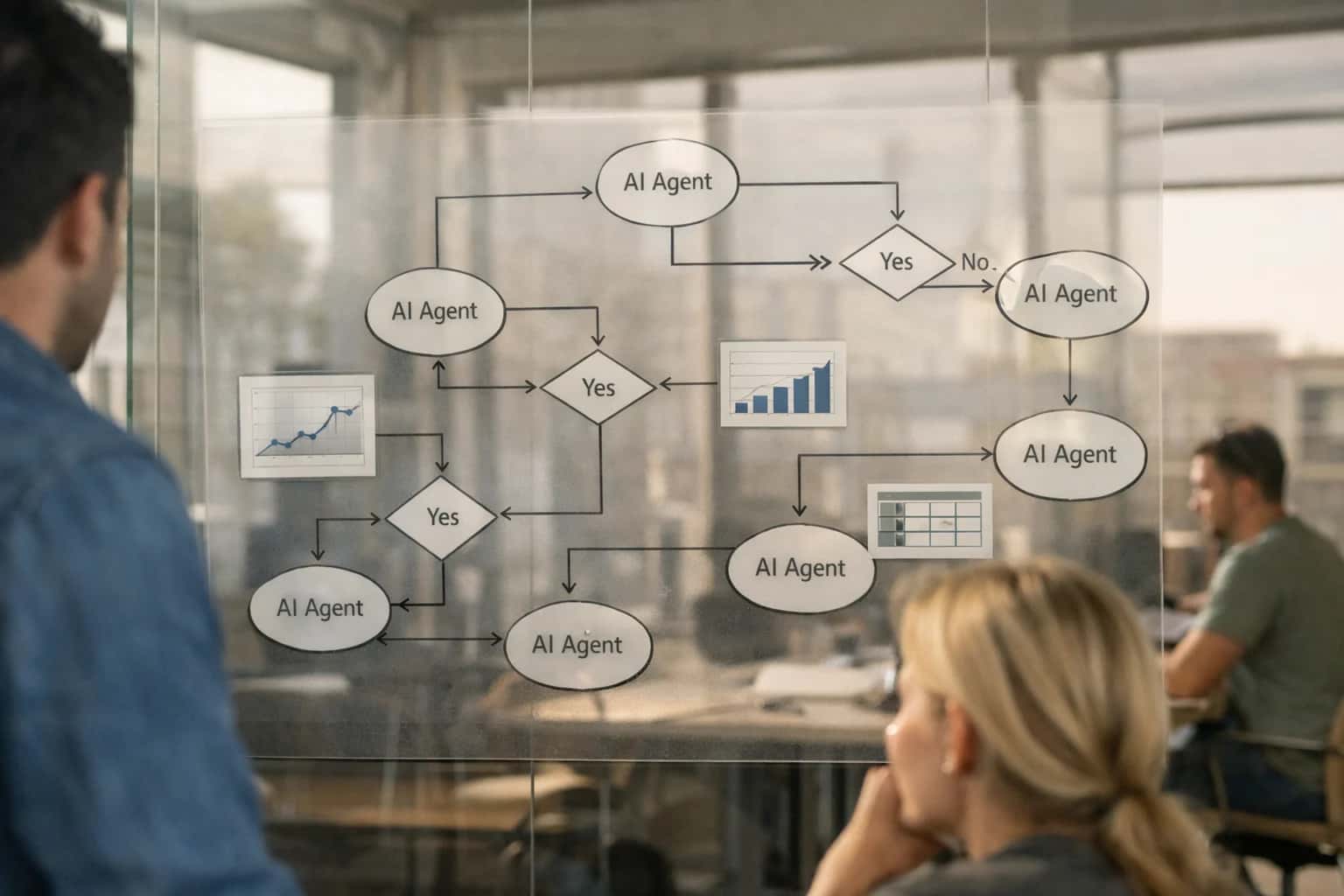
ARCHITECTURE & GOVERNANCE
Using Infor OS as Your AI Orchestration Hub
A practical guide to deploying secure, governed AI agents and microservices on Infor OS for public sector operations.
For a typical workflow, such as automating citizen service request triage, you would: 1) Configure an Infor Mingle listener on the CRM case object, 2) On case creation, route the payload to an AI classification service hosted within your OS tenant, 3) Use the AI's output (e.g., priority, suggested department) to update the case and trigger a Mingle workflow for assignment, and 4) Log the AI's decision and confidence score back to the case record for human review. This pattern keeps AI actions traceable and reversible, using Infor OS as the control plane.
Rollout and governance are managed through Infor OS's native tools. You can use Infor OS Security to define which AI services each department or role can call, audit all AI-initiated transactions, and implement phased rollouts by controlling event subscriptions. This centralized approach prevents AI sprawl, ensures all AI interactions comply with public sector data policies, and allows IT to monitor performance and cost at the orchestration layer—not across dozens of point-to-point integrations.
ARCHITECTURAL BLUEPRINTS FOR PUBLIC SECTOR AI
Key Infor OS Surfaces for AI Integration
The Native AI & Integration Layer
Infor OS provides two primary surfaces for embedding intelligence: Coleman AI and the ION integration framework. Coleman AI offers pre-built conversational interfaces and machine learning services that can be trained on your public sector data. ION serves as the event-driven middleware, allowing you to orchestrate AI microservices that react to changes in Infor CloudSuite Public Sector, Lawson, or other connected systems.
For government use, this means you can deploy an AI agent via Coleman to answer citizen questions about permit status, while using ION to trigger an automated document review workflow in the background whenever a new application is submitted to Infor EAM. The key is to treat Coleman as the user-facing copilot and ION as the workflow automation backbone, ensuring AI actions are logged, auditable, and integrated into existing approval chains.
INTEGRATION PATTERNS
High-Value AI Use Cases for Infor Government Suites
Infor OS provides the secure orchestration layer to deploy AI agents and microservices that interact directly with Infor CloudSuite Public Sector, EAM, and CRM modules. These patterns deliver operational efficiency and improved citizen service while respecting government data governance.
01
Constituent Service Agent
Deploy a secure AI chatbot or voice agent integrated with Infor CRM and case management modules. It handles 24/7 citizen inquiries on tax bills, permit status, and service requests, using live API calls to pull case data and update records, reducing call center volume.
First-call resolution
Typical outcome
02
Automated Document Processing for Permits
Connect an AI document pipeline to Infor OS workflows. Submitted PDFs (site plans, applications) are automatically classified, key data (parcel ID, applicant info) is extracted via OCR/NLP, and a draft record is created in the relevant permitting module, cutting manual data entry.
Hours -> Minutes
Intake time
03
Predictive Public Works Maintenance
Integrate AI models with Infor EAM asset registers and work order history. Analyze sensor data (from SCADA/IoT), weather, and past failure rates to predict infrastructure issues (water main breaks, pavement failure) and automatically generate prioritized preventive work orders.
Reactive -> Proactive
Maintenance shift
04
Grant Compliance Monitor
Build an AI agent that monitors Infor CloudSuite Financials transactions against grant award terms. It flags potential non-compliance (unallowable costs, spending pace deviations) in real-time and creates review tasks for grant managers within Infor OS, reducing audit risk.
Continuous monitoring
Compliance model
05
Intelligent Procurement Support
Add an AI copilot to the procurement workflow within Infor Supply Chain Management. It analyzes RFP requirements to suggest vendor shortlists from past performance data, reviews submitted bids for responsiveness, and drafts contract summaries for officer review.
1 sprint
Evaluation time saved
06
Financial Anomaly Detection
Implement real-time AI monitoring on the Infor Financials data stream. Models detect unusual patterns in vendor payments, payroll, and revenue collections, automatically creating high-priority investigation cases in the integrated case management system for auditors.
Batch -> Real-time
Detection speed
PRACTICAL IMPLEMENTATION PATTERNS
Example AI-Powered Workflows for Infor Government
These workflows illustrate how AI agents and microservices, orchestrated through Infor OS, can automate high-volume tasks, enhance constituent service, and improve operational intelligence within Infor CloudSuite Public Sector and related applications.
Trigger: A citizen submits a request via a web form, mobile app, or interactive voice response (IVR) system.
Context/Data Pulled: The AI agent receives the unstructured request text or audio transcript. It queries Infor OS for:
- Citizen profile from Infor CRM (if authenticated)
- Location data (address, parcel ID)
- Recent related service requests from the case management module
Model/Agent Action: A classification model determines the primary intent (e.g., 'Pothole Report', 'Graffiti Removal', 'Streetlight Outage'). An extraction model pulls key entities: location, severity, optional contact info. The agent assesses priority based on rules (e.g., safety hazard = high) and checks for duplicate open requests.
System Update/Next Step: The agent creates a new, fully populated work order in Infor EAM or service case in Infor CRM, pre-assigning it to the correct department and priority queue. It sends an automated acknowledgment to the citizen with a tracking number and estimated timeline.
Human Review Point: Requests flagged as high-risk, ambiguous, or containing sensitive complaints (e.g., code enforcement against a neighbor) are routed to a human agent dashboard in Infor OS for review before system creation.
THE INTEGRATION HUB FOR PUBLIC SECTOR AI
Architecture: Connecting AI Models to Infor OS
Infor OS provides the secure, governed platform layer to deploy AI agents and microservices that interact with Infor's public sector suites.
The integration architecture treats Infor OS as the central orchestration hub. AI models—whether for document intelligence, predictive analytics, or conversational agents—are deployed as containerized microservices within the Infor OS Ming.le environment or as external services accessed via secure APIs. These services connect to core public sector data through Infor OS's ION data pipelines and Data Lake, ensuring AI has access to real-time, governed financial, asset, and constituent data from Infor CloudSuite Public Sector, Infor EAM, and Infor CRM without direct database access. This layer manages authentication, data mapping, and event routing, allowing AI outputs to trigger workflows in Infor Process Automation or write back summarized insights to relevant records.
Implementation focuses on three key surfaces: 1) The user interface, where AI copilots are embedded as Ming.le widgets within role-based homepages for finance clerks or public works supervisors. 2) The automation layer, where AI services are invoked by ION events—like a new permit application PDF uploaded—to perform classification, extract data, and push results to the relevant CloudSuite module. 3) The analytics layer, where AI models process batches of data from the Data Lake for predictive maintenance forecasts or budget variance analysis, with results surfaced in Infor Birst dashboards. Each integration point requires defining clear payload schemas, setting up Infor OS Security policies for AI service access, and establishing audit trails in Infor Document Management.
Rollout and governance are critical. A phased approach typically starts with a single, high-impact workflow—such as AI-assisted vendor invoice coding in CloudSuite Financials—deployed to a pilot group. Infor OS's built-in RBAC and approval workflows control who can trigger AI actions and review outputs. We establish a human-in-the-loop pattern for high-stakes decisions, where AI recommendations are presented in a Ming.le task for officer approval before any system-of-record update. This architecture ensures compliance with public sector data sovereignty and records retention policies, as all AI inputs, prompts, and outputs can be logged to the Infor Document Management system for auditability. For ongoing management, Infor OS's monitoring tools track AI service performance, while drift detection can be configured to alert administrators if model behavior deviates from expected patterns in production data.
GOVERNMENT AI WORKFLOWS
Code & Payload Examples for Infor OS Integration
Agent for Infor CRM & ION
Integrate an AI agent with Infor CRM (Epicor) via Infor OS ION APIs to handle citizen inquiries, triage cases, and pull relevant data from connected systems like Tyler Munis for billing or EnerGov for permits.
Typical Workflow:
- Citizen query arrives via web portal, chat, or voice.
- Agent uses ION to query Infor CRM for contact & case history.
- For billing questions, agent calls a separate API to Tyler Munis (via ION bridge) to fetch balance.
- Agent formulates a response, logs the interaction in CRM, and can create a follow-up task if needed.
Example Python Payload for ION API Call:
pythonimport requests # Authenticate via Infor OS OAuth2 headers = { 'Authorization': 'Bearer <ION_API_TOKEN>', 'Content-Type': 'application/json' } # Query CRM for citizen case history payload = { "resource": "InforCRM/cases", "filter": "contactEmail eq '[email protected]' and status eq 'Open'", "select": "caseNumber,subject,createdDate" } response = requests.post('https://<tenant>.mingle.infor.com/ionapi/query', json=payload, headers=headers) cases = response.json().get('items', [])
INFOR OS AS THE AI ORCHESTRATION HUB
Realistic Operational Impact of AI Integration
How AI agents and microservices deployed via Infor OS impact core public sector workflows, balancing automation with governance.
| Operational Workflow | Before AI Integration | After AI Integration | Implementation Notes |
|---|---|---|---|
Constituent Service Request Triage | Manual categorization by staff based on email/phone intake | AI-powered intent classification & auto-routing to correct department/queue | Integrates with Infor CRM/Customer Experience; human review for complex/escalated cases |
Permit Application Completeness Review | Planner manually checks uploaded documents against checklist | AI agent reviews attachments, flags missing items, suggests corrections | Leverages Infor OS document service; triggers automated notifications via Infor ION |
Asset Maintenance Work Order Prioritization | Reactive scheduling based on failure or fixed intervals | Predictive prioritization using asset health scores from sensor & historical data | Feeds prioritized list into Infor EAM; final dispatch decision remains with supervisor |
Grant Financial Compliance Monitoring | Manual sample-based review of expenditures against grant terms | Continuous AI monitoring of all transactions, flagging high-risk items for officer review | Connects to Infor CloudSuite Financials; audit trail maintained in Infor OS |
Public Meeting Minute Generation | Staff listens to recording and manually transcribes key actions | AI drafts summary from audio, extracts motions, votes, and action items | Human editor refines draft; final document stored in Infor Content Management |
Vendor Invoice Processing | Manual data entry from PDF into ERP, followed by 3-way matching | AI extracts line items, matches to PO & receipt, flags exceptions for AP staff | Processes via Infor OS workflow; exceptions routed for human resolution |
Internal Policy & Procedure Queries | Employees search static intranet or email help desk | AI copilot provides instant, sourced answers from policy documents and HR guides | Built on Infor Coleman AI platform; cites sources and escalates unresolved queries |
ARCHITECTING FOR PUBLIC SECTOR COMPLIANCE
Governance, Security & Phased Rollout
A secure, governed approach to deploying AI within Infor OS for public sector operations.
Integrating AI with Infor OS for government requires a security-first architecture that respects data sovereignty and role-based access. We design solutions where AI agents and microservices operate as Infor OS tenants, leveraging its built-in IAM, SSO, and audit logging to maintain a unified security perimeter. AI interactions with Infor CloudSuite Public Sector, EAM, or CRM data are routed through Infor OS APIs and ION, ensuring all data access is logged, permissioned, and never exfiltrated to unapproved environments. This model keeps sensitive citizen, financial, and asset data within the trusted Infor ecosystem while enabling intelligent automation.
A phased rollout mitigates risk and builds organizational trust. A typical implementation starts with a low-risk, high-volume workflow, such as using an AI agent to triage and categorize incoming citizen service requests in Infor CRM or automatically extracting data from uploaded permit documents in Infor Document Management. This initial phase operates in a human-in-the-loop mode, where AI suggestions are reviewed by staff before system updates, allowing for prompt tuning and validation. Success metrics are established around reduction in manual data entry and improved first-response times.
Subsequent phases expand AI's role into more complex processes, such as predictive maintenance recommendations in Infor EAM or anomaly detection in Infor CloudSuite Financials. Each phase introduces new AI capabilities as governed microservices within Infor OS, with clear change management and training for the civil servants who will use them. This controlled approach ensures AI augments existing workflows—like those in Infor Ming.le for collaboration or Infor Birst for analytics—without disrupting critical public sector operations, ultimately delivering incremental value while maintaining strict compliance with government IT policies.
Enabling Efficiency, Speed & Accuracy
Intelligent Analysis, Decision & Execution
We build AI systems for teams that need search across company data, workflow automation across tools, or AI features inside products and internal software.
Talk to Us
Search across company data
Give teams answers from docs, tickets, runbooks, and product data with sources and permissions.
Useful when people spend too long searching or get different answers from different systems.
Enterprise searchRAGPermissions
Read more
Automate internal workflows
Use AI to route work, draft outputs, trigger actions, and keep approvals and logs in place.
Useful when repetitive work moves across multiple tools and teams.
AI agentsWorkflow automationGovernance
Read more
Add AI to products and internal tools
Build assistants, guided actions, or decision support into the software your team or customers already use.
Useful when AI needs to be part of the product, not a separate tool.
AI integrationDecision supportModel routing
Read moreIMPLEMENTATION AND GOVERNANCE
FAQs: AI Integration with Infor OS for Government
Common questions from public sector IT leaders and architects planning AI integration with Infor OS, focusing on security, rollout, and operational patterns.
AI agents and services integrate with Infor OS's existing security model, leveraging its Identity and Access Management (IAM) and Birst analytics security.
Key Integration Points:
- Service Account Authentication: AI microservices authenticate to Infor OS via OAuth 2.0 service accounts with scoped permissions, never using end-user credentials directly.
- Row-Level Security (RLS): Queries executed by AI agents automatically inherit the RLS policies defined in Infor ION or Birst. An agent querying citizen service requests will only see records the integrated service account is authorized to view.
- Audit Trail Integration: All AI-generated actions (e.g., updating a work order, creating a case note) are logged through Infor OS's standard audit framework, capturing the AI service as the actor for traceability.
- Data Residency: For cloud deployments, AI model calls and vector data processing can be configured to remain within your specified Infor CloudSuite region.
Governance Rule: AI should act as a privileged, audited service user, not bypass the permission layer.

About the author
Prasad Kumkar
CEO & MD, Inference Systems
Prasad Kumkar is the CEO & MD of Inference Systems and writes about AI systems architecture, LLM infrastructure, model serving, evaluation, and production deployment. Over 5+ years, he has worked across computer vision models, L5 autonomous vehicle systems, and LLM research, with a focus on taking complex AI ideas into real-world engineering systems.
His work and writing cover AI systems, large language models, AI agents, multimodal systems, autonomous systems, inference optimization, RAG, evaluation, and production AI engineering.
LinkedIn
Limited slotsGet a Free AI Consultation
Partnered with leading AI, data, and software stack.





How We Work
Custom AI workflows for your Business
One-fit-all AI don't work for modern businesses. At Inferensys, we aim to understand your business & custom requirements; which we use to define most efficient agentic workflows, the data, and the tools for your business.
01
Review the use case
We understand the task, the users, and where AI can actually help.
Read more02
Pick the right approach
We define what needs search, automation, or product integration.
Read more03
Build the first useful version
We implement the part that proves the value first.
Read more04
Improve from there
We add the checks and visibility needed to keep it useful.
Read moreThe first call is a practical review of your use case and the right next step.
Talk to Us