Regulatory reporting for FDA FSMA 204, USDA FSIS, or CFIA Safe Food for Canadians is a high-stakes, manual bottleneck. Teams in FoodLogiQ, TraceGains, Safefood 360, or Icicle spend days each month aggregating Key Data Elements (KDEs) from lot records, supplier documents, and audit trails, then manually formatting them into agency-specific templates. An AI integration connects directly to the platform's APIs—pulling from objects like Lot, SupplierDocument, NonConformance, and Shipment—to assemble the required data context automatically. This transforms a multi-day, error-prone process into a workflow where a compliance officer triggers a report draft in minutes, with all traceability data pre-populated and linked.

Integration
AI Integration for Food Traceability Platform Regulatory Reporting
A technical guide for compliance officers and IT leaders on automating FDA, USDA, and CFIA report generation using AI agents that extract and format data from FoodLogiQ, TraceGains, Safefood 360, and Icicle.
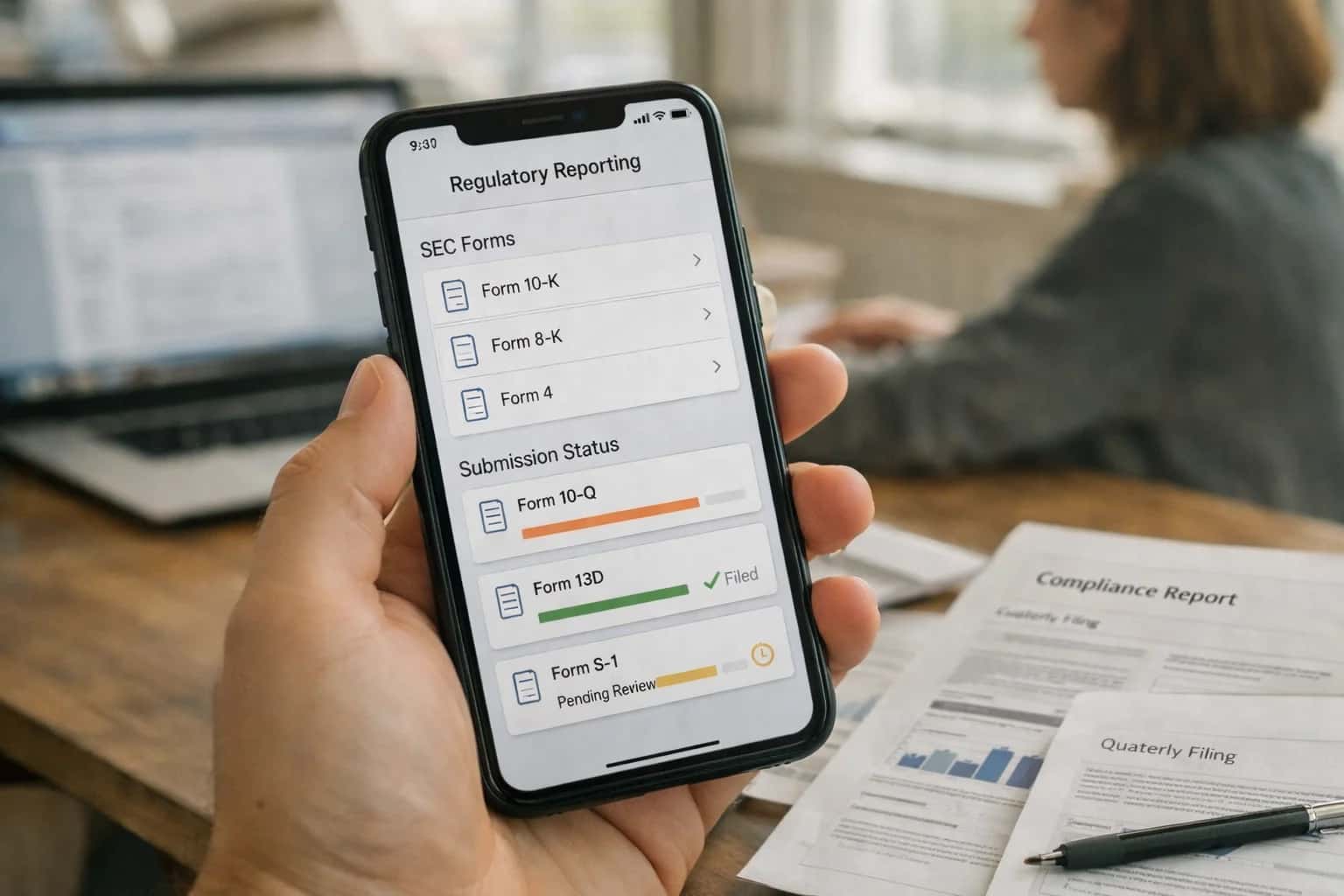
FOOD TRACEABILITY PLATFORM INTEGRATION
Automating Regulatory Reporting with AI
A technical blueprint for using AI to auto-generate FDA, USDA, and CFIA reports directly from traceability platform data.
The implementation centers on a reporting agent that orchestrates three steps: 1) Data Retrieval via the platform's REST API or webhook-triggered queries to gather KDEs for the specified lot(s) and time period; 2) Context Assembly & Validation where the agent checks for missing required fields (e.g., traceability lot code, shipping dates) and flags gaps for manual entry; and 3) Template Generation using a governed LLM call that structures the validated data into the exact format required by the regulatory body (e.g., FDA's Reportable Food Registry form, CFIA's traceability summary). The output is a draft report—PDF or structured data—ready for a final human review and submission, with a full audit trail of the source data and generation steps logged back to the platform.
Rollout requires a phased approach, starting with a single report type (e.g., FSMA 204 Lot Tracing) for a pilot product line. Governance is critical: all AI-generated reports must undergo a human-in-the-loop review and approval workflow within the traceability platform before submission. The integration should also handle version control for regulatory templates and maintain RBAC so only authorized quality or regulatory affairs personnel can generate final reports. This architecture turns the traceability platform from a system of record into an active compliance engine, reducing reporting cycle time from days to hours and ensuring format accuracy for every submission.
REGULATORY REPORTING SURFACES
Where AI Connects to Your Traceability Platform
Centralized Data Aggregation Points
Regulatory reporting requires pulling data from disparate modules into a single, auditable record. AI systems connect to these central hubs to access the complete compliance picture.
Key surfaces include:
- Incident & Non-Conformance Logs: AI reviews logged events (e.g., failed lab tests, customer complaints) to determine reportability under FDA RFR, USDA directives, or CFIA guidelines.
- Lot Traceability Records: AI queries the platform's trace graph to map all affected lots upstream (suppliers) and downstream (customers) for scope definition.
- Supplier Documentation Vaults: AI retrieves relevant Certificates of Analysis (COAs), audit reports, and spec sheets linked to implicated ingredients to assess root cause and regulatory liability.
AI agents use platform APIs to query these hubs, assemble a "case file," and initiate the reporting workflow, ensuring no critical data is missed.
FOOD TRACEABILITY PLATFORMS
High-Value AI Use Cases for Regulatory Reporting
For compliance officers managing FDA, USDA, and CFIA submissions, AI integration transforms manual, error-prone reporting into an automated, auditable workflow. These use cases detail how to connect AI systems to platforms like FoodLogiQ, TraceGains, and Safefood 360 to extract, validate, and format data for regulatory consumption.
01
Automated FSMA 204 Key Data Element (KDE) Aggregation
AI agents query platform APIs for lot, shipping, and receiving events across the supply chain, automatically compiling the required KDEs (e.g., Traceability Lot Code, Ship To/From) into a structured, linkable dataset. This eliminates manual spreadsheet compilation and ensures data is audit-ready for the one-up, one-down traceability rule.
Days -> Hours
Report assembly time
02
Regulatory Form Drafting & Format Compliance
For incidents requiring formal submission (e.g., FDA Reportable Food Registry), AI pulls validated incident data from the traceability platform and drafts the initial regulatory form. It ensures field formatting, unit conversions, and mandatory sections comply with agency-specific templates, with a human reviewer providing final sign-off before submission.
First Draft in <1 Hour
Typical output
03
Cross-Platform Audit Evidence Package Generation
When preparing for GFSI (SQF, BRC) or regulatory audits, AI systems query multiple platforms (e.g., FoodLogiQ for HACCP, TraceGains for supplier docs) to assemble evidence against specific audit clauses. It generates a indexed package with relevant records, monitoring logs, and corrective actions, drastically reducing pre-audit preparation scramble.
80% Reduction
In manual evidence gathering
04
Document Intelligence for Supplier Certificate Validation
AI parses incoming supplier documents (COAs, spec sheets, audit reports) attached in platforms like TraceGains. It extracts test results, dates, and lot numbers, validates them against product specifications, and flags discrepancies for quality review. Approved data auto-populates platform fields, creating a clean data foundation for reports.
Batch -> Real-time
Document processing
05
Automated Monthly/Quarterly Compliance Dashboards
Instead of manual report building, an AI workflow runs on a schedule to aggregate KPIs from traceability platforms: hold rates, non-conformance trends, supplier on-time documentation. It generates executive dashboards and narrative summaries, highlighting areas requiring management review for continuous improvement programs.
Same Day
Report availability
06
Recall Impact Report Automation
During a recall event, AI uses Icicle or similar platform APIs to dynamically calculate affected customers, jurisdictions, and product volumes. It generates jurisdiction-specific regulatory impact reports and drafts customer notification lists, enabling the recall team to focus on execution rather than data compilation.
Critical Path
Minutes saved matter
CROSS-PLATFORM IMPLEMENTATION PATTERNS
Example AI-Powered Regulatory Reporting Workflows
These workflows illustrate how AI agents can be integrated with platforms like FoodLogiQ, TraceGains, Safefood 360, and Icicle to automate the generation and submission of reports for FDA, USDA, and CFIA. Each pattern connects to specific platform APIs, data objects, and compliance modules.
Trigger: A quality hold is placed on a lot in the traceability platform (e.g., a positive pathogen test in FoodLogiQ's lab module).
Workflow:
- An AI agent monitors the platform's event log via webhook for new
QualityHoldevents. - The agent retrieves the full incident context: lot numbers, affected products, manufacturing dates, distribution records, and any initial root cause analysis.
- Using a structured prompt and the incident data, an LLM drafts the RFR submission, ensuring all required Key Data Elements (KDEs) per FSMA 204 are populated.
- The draft is routed via the platform's task system to the designated Qualified Individual for review and electronic signature.
- Upon approval, the agent calls the FDA's ESG gateway API to submit the report and logs the submission ID and timestamp back to the original incident record in the traceability platform.
Human Review Point: The drafted RFR report is always presented for final review and sign-off before submission.
FROM PLATFORM DATA TO REGULATORY SUBMISSION
Implementation Architecture: Data Flow & System Design
A practical blueprint for connecting AI to your traceability platform to automate FDA, USDA, and CFIA report generation.
The integration connects at the incident management and lot traceability modules of your platform (e.g., FoodLogiQ's Corrective Action or Icicle's Recall Management). An AI agent, triggered by a platform webhook for a new quality hold or non-conformance, first pulls the structured incident data—lot numbers, affected products, dates, and root cause codes. It then executes a semantic search via a RAG pipeline against a vector store containing past reports, regulatory guidance (FDA's RFR instructions, CFIA templates), and internal SOPs. This grounds the generation in compliant formats and required data elements.
The core workflow is a multi-step orchestration: 1) The agent calls the platform's Trace API to retrieve the full one-up/one-down trace for all affected lots, assembling a supply chain map. 2) It cross-references this with supplier documentation from integrated systems like TraceGains to validate COAs and spec sheets. 3) Using a governed LLM with strict output schemas, it drafts the regulatory report, populating fields like Product Description, Reason for Report, and Distribution Pattern. The draft, along with all source data references (platform record IDs, trace links), is posted back to the platform as a draft document attachment for review in the existing audit trail.
Rollout follows a phased governance model. Start in a parallel-run mode: the AI generates draft reports for internal review alongside manual submissions, allowing compliance officers to refine prompts and validation rules. Critical is implementing a human-in-the-loop approval step within the platform's existing workflow engine before any external submission. The final architecture includes logging all AI actions, source data, and model versions to the platform's audit log, ensuring full transparency for regulatory inquiries. This design shifts report preparation from a multi-day, manual data compilation task to a same-day, evidence-backed draft process.
REGULATORY REPORTING INTEGRATION PATTERNS
Code & Payload Examples
Pulling Traceability Data for Report Assembly
Regulatory reports require data from multiple platform surfaces: lot events, supplier certificates, and corrective actions. Use the platform's REST API to query these objects within a defined date range and jurisdiction filter.
Example Python call to retrieve lot traceability events for a specific product code and date range, a common requirement for FSMA 204 reports.
pythonimport requests # Example for a generic traceability platform API api_base = "https://api.traceplatform.com/v1" headers = {"Authorization": "Bearer YOUR_API_KEY"} # Query parameters for a specific lot and timeframe params = { "product_code": "PC-12345", "start_date": "2024-01-01", "end_date": "2024-03-31", "event_types": "receiving,processing,shipping", "expand": "supplier,location" } response = requests.get(f"{api_base}/lots/events", headers=headers, params=params) events_data = response.json() # The response contains the KDEs (Key Data Elements) needed for the report # such as lot numbers, dates, business names, and locations. print(f"Retrieved {len(events_data['events'])} traceability events.")
This data forms the core factual timeline for regulatory submissions like the FDA's Reportable Food Registry (RFR).
AI-Powered Regulatory Reporting
Realistic Time Savings & Operational Impact
This table shows the typical impact of integrating AI document intelligence and workflow automation with your food traceability platform for FDA, USDA, and CFIA reporting.
| Regulatory Workflow | Before AI | After AI | Notes |
|---|---|---|---|
Data Aggregation for Report | Manual search across platform modules, spreadsheets, and emails (2-4 hours) | AI queries platform APIs and ingested documents, auto-assembles data (15-30 minutes) | AI maps to Key Data Elements (KDEs) required by FSMA 204, GFSI |
Initial Report Drafting | Copy-paste data into template, manual formatting (1-2 hours) | AI populates correct regulatory template, generates narrative summary (5-10 minutes) | Human reviewer validates data accuracy and narrative tone |
Supporting Document Attachment & Validation | Manual verification of COA dates, lot numbers, and spec matches (1-3 hours) | AI cross-references attached documents against platform records, flags discrepancies (10-20 minutes) | Focus shifts to exception handling; 80% of documents auto-validated |
Internal Review & Sign-off Workflow | Email chains and manual task assignments (Next day) | Automated routing within platform with AI-highlighted changes (Same day) | Review cycle time cut by 50-70%; audit trail maintained in platform |
Regulatory Submission & Acknowledgement Tracking | Manual portal upload and calendar reminders for follow-up (30-60 minutes) | AI-assisted submission via platform integration, auto-logs confirmation (5 minutes) | Reduces risk of missed deadlines; status visible in compliance dashboard |
Post-Submission Query Response | Re-aggregate data and draft response from scratch (2-4 hours) | AI retrieves original report context and suggests response drafts (20-40 minutes) | Enables faster response to agency requests, improving compliance rating |
Audit Evidence Package Generation | Manual compilation of related records, screenshots, and logs (4-8 hours) | AI assembles linked records, audit trails, and documents into a single package (1-2 hours) | Critical for unannounced audits; ensures evidence is complete and organized |
ENSURING CONTROLLED, AUDITABLE AI FOR REGULATORY REPORTING
Governance, Security & Phased Rollout
A secure, phased implementation strategy is critical for AI systems that generate regulatory reports, where data integrity and auditability are non-negotiable.
Start with a sandbox environment and a pilot data stream. The initial integration should connect to a non-production instance of your traceability platform (FoodLogiQ, TraceGains, etc.) and process a single, high-volume report type, such as routine FDA facility registration updates or CFIA license renewals. This phase focuses on validating the AI's data extraction accuracy from platform objects like Supplier Records, Certificate of Analysis, and Lot Trace Events, and its ability to format outputs to exact agency specifications. All AI-generated drafts must be routed through an existing human-in-the-loop approval workflow within the platform before any submission, creating an immutable audit trail that links the AI's source data, the draft report, and the final approved version.
Governance is built on data lineage and role-based access. In production, the AI agent should operate under a dedicated service account with scoped API permissions, only able to read from specific modules and write to designated Draft Report objects. Every report generation event must log: the triggering user or alert, the timestamp, the specific lot/supplier records queried, the LLM prompt version used, and the resulting draft. This lineage is essential for regulatory inquiries. For security, sensitive data (e.g., supplier financials, proprietary formulations) should be masked or excluded from the context sent to external LLMs, using on-premise or VPC-deployed models for highly confidential workflows.
A phased rollout mitigates risk and proves value. After the pilot, expand to more complex reports like FDA Reportable Food Registry (RFR) submissions or USDA sanitary performance reports. Each new report type should have its own validation checklist and designated quality approver. Finally, integrate predictive alerts, where the AI monitors platform data for trigger events (e.g., a pathogen-positive test result) and automatically initiates the report drafting workflow, notifying the compliance officer. This controlled, audit-first approach ensures the AI integration enhances compliance velocity without introducing new regulatory risk. For related architectural patterns, see our guide on AI Integration for Food Traceability Platform FSMA 204 Compliance.
Enabling Efficiency, Speed & Accuracy
Intelligent Analysis, Decision & Execution
We build AI systems for teams that need search across company data, workflow automation across tools, or AI features inside products and internal software.
Talk to Us
Search across company data
Give teams answers from docs, tickets, runbooks, and product data with sources and permissions.
Useful when people spend too long searching or get different answers from different systems.
Enterprise searchRAGPermissions
Read more
Automate internal workflows
Use AI to route work, draft outputs, trigger actions, and keep approvals and logs in place.
Useful when repetitive work moves across multiple tools and teams.
AI agentsWorkflow automationGovernance
Read more
Add AI to products and internal tools
Build assistants, guided actions, or decision support into the software your team or customers already use.
Useful when AI needs to be part of the product, not a separate tool.
AI integrationDecision supportModel routing
Read moreAI FOR REGULATORY REPORTING
FAQ: Technical & Commercial Questions
Practical answers for compliance officers and technical leads evaluating AI to automate FDA, USDA, and CFIA report generation from traceability platforms.
The integration is API-first, connecting to the platform's event logs, lot records, and document repositories.
Typical Data Sources:
- Event APIs: Pull non-conformance incidents, quality holds, and corrective actions.
- Object APIs: Query specific lot, batch, or supplier records by date range or status.
- Document APIs: Access attached COAs, audit reports, and lab results.
- Webhook Listeners: Subscribe to real-time triggers for new incidents or status changes.
Implementation Pattern:
- An agent is triggered by a platform webhook or a scheduled job.
- It calls the platform's REST APIs to gather all relevant context for a reporting period.
- The data is structured and sent to an LLM with a prompt template for the specific regulatory form (e.g., FDA RFR).
- The draft report is returned, validated against platform data for accuracy, and queued for human review before submission.
This approach keeps your data within the platform's security perimeter, using secure service accounts with role-based API permissions.

About the author
Prasad Kumkar
CEO & MD, Inference Systems
Prasad Kumkar is the CEO & MD of Inference Systems and writes about AI systems architecture, LLM infrastructure, model serving, evaluation, and production deployment. Over 5+ years, he has worked across computer vision models, L5 autonomous vehicle systems, and LLM research, with a focus on taking complex AI ideas into real-world engineering systems.
His work and writing cover AI systems, large language models, AI agents, multimodal systems, autonomous systems, inference optimization, RAG, evaluation, and production AI engineering.
LinkedIn
Limited slotsGet a Free AI Consultation
Partnered with leading AI, data, and software stack.





How We Work
Custom AI workflows for your Business
One-fit-all AI don't work for modern businesses. At Inferensys, we aim to understand your business & custom requirements; which we use to define most efficient agentic workflows, the data, and the tools for your business.
01
Review the use case
We understand the task, the users, and where AI can actually help.
Read more02
Pick the right approach
We define what needs search, automation, or product integration.
Read more03
Build the first useful version
We implement the part that proves the value first.
Read more04
Improve from there
We add the checks and visibility needed to keep it useful.
Read moreThe first call is a practical review of your use case and the right next step.
Talk to Us