
Inferensys

Integration

AI Integration for Samsara

A practical guide for CTOs and fleet operations leaders on embedding AI agents into the Samsara Connected Operations Cloud to automate telematics analysis, driver coaching, dispatch support, and compliance workflows.
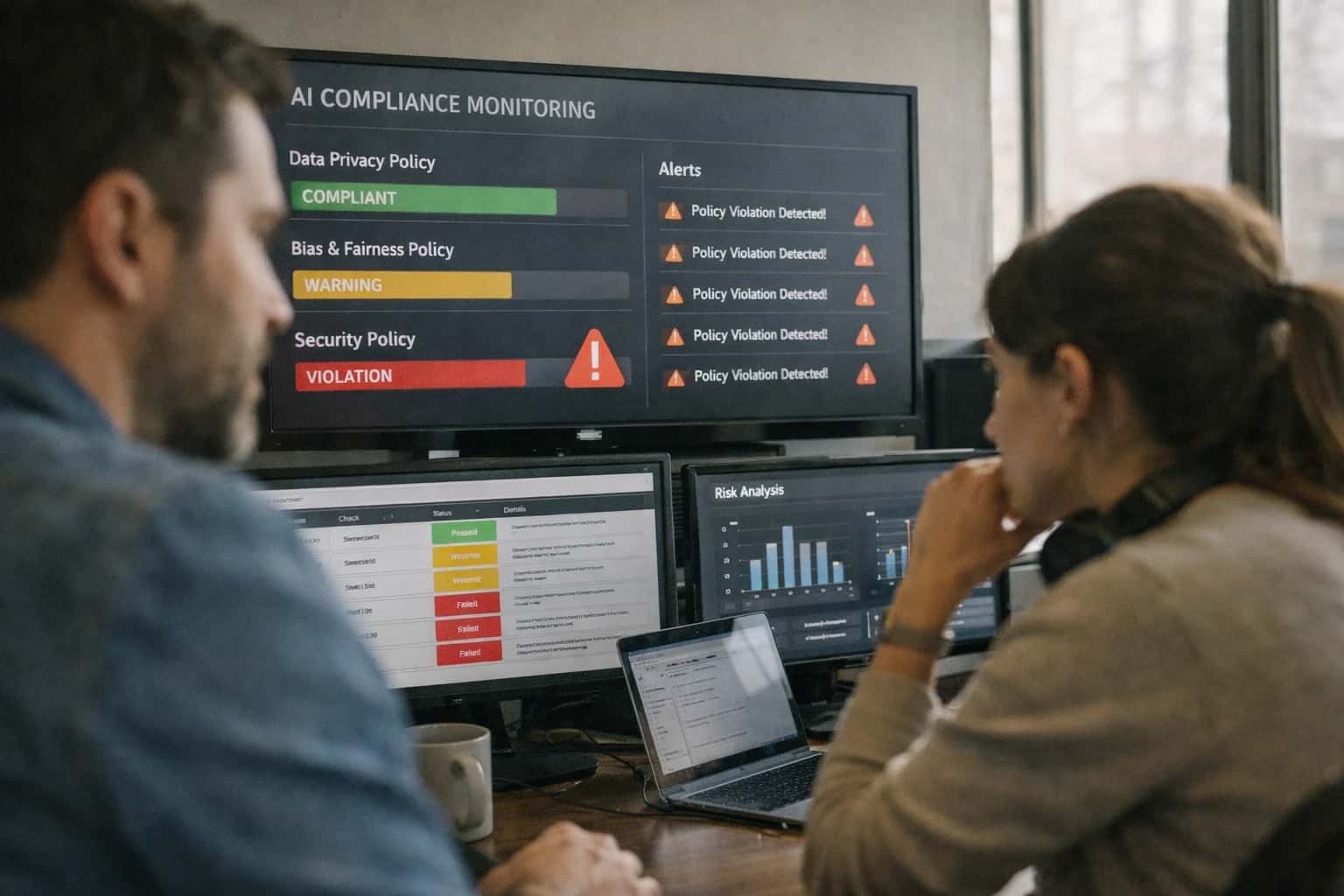
Compliance officer monitoring AI compliance agent on laptop, policy dashboards visible, modern WeWork desk setup.
ARCHITECTURE BLUEPRINT

Where AI Fits into the Samsara Stack

A practical guide to embedding AI agents and workflows into the Samsara Connected Operations Cloud, focusing on telematics data, driver safety, and dispatch operations.

AI integrates with Samsara by connecting to its core data surfaces and automation triggers. The primary integration points are:

  • Samsara Data Platform API: For real-time and historical access to vehicle GPS, engine fault codes (DTCs), fuel usage, and sensor data (e.g., door sensors, temperature).
  • Samsara Video API: To securely stream and analyze AI Dash Cam footage for safety events and documentation.
  • Samsara Webhooks & Alerts: To trigger AI workflows based on real-time events like geofence exits, speeding, harsh braking, or custom rule violations.
  • Samsara Driver App & Workflows: To push AI-generated insights (coaching tips, route updates) directly to drivers and automate DVIR or inspection tasks.


Implementation typically involves an AI middleware layer that subscribes to Samsara webhooks, processes data through LLMs and computer vision models, and executes actions via Samsara's APIs. For example, an AI agent listening for a harsh_braking alert can:

  1. Pull the associated 10-second video clip via the Video API.
  2. Analyze the clip for context (e.g., pedestrian present, wet road).
  3. Query the vehicle's speed and location history for the preceding minute.
  4. Generate a contextualized coaching note and automatically assign it to the driver's profile in Samsara. This creates a closed-loop system where AI adds intelligence to existing alerts without replacing Samsara's native rules engine.

Rollout requires careful governance, starting with a pilot vehicle group or safety rule. Key considerations include:

  • Data Privacy: Ensuring video and location data processing complies with company policy and regional regulations.
  • Human-in-the-Loop: Configuring approval steps for high-risk AI actions, like automatically escalating a driver for review.
  • Audit Trails: Logging all AI-generated insights and actions back to Samsara's audit logs or a separate system for traceability.
  • Change Management: Training dispatchers and safety managers on how to interpret and act on AI-enhanced insights within their familiar Samsara dashboards. The goal is to augment, not overhaul, existing Samsara-powered workflows, making AI a seamless layer of intelligence on top of proven telematics operations.
ARCHITECTURAL SURFACES

Key Samsara Modules and Surfaces for AI Integration

AI Integration Points for Safety Workflows

The AI Dash Cam and Driver Safety modules provide the richest data streams for AI-powered safety and compliance automation.

Key Surfaces:

  • AI Dash Cam Video Feeds: Process uploaded or real-time video clips for automated incident detection, near-miss analysis, and coaching moment identification using computer vision.
  • Safety Events & Coaching Reports: Ingest and enrich events like harsh braking, speeding, or collisions. AI can generate contextual narratives, suggest corrective actions, and auto-assign coaching.
  • Driver Scorecards: Use AI to move beyond basic scores. Generate personalized, contextual feedback that considers route difficulty, traffic, and weather conditions ingested from other Samsara data streams.

Implementation Pattern: AI agents subscribe to Samsara's webhooks for new safety events or uploaded videos. They process the data, call LLMs or vision models, and write enriched insights back to the Driver Safety Scorecard or create follow-up tasks in connected systems like a CRM or CMMS.

PRODUCTION INTEGRATION PATTERNS

High-Value AI Use Cases for Samsara

Embedding AI into the Samsara Connected Operations Cloud moves beyond dashboards to create autonomous workflows. These are practical, API-first integration patterns for operations, safety, and maintenance teams.

01

Automated Driver Coaching & Scorecards

AI agents analyze Samsara AI Dash Cam footage, harsh event triggers, and telematics data to generate personalized, contextual coaching recommendations. Instead of generic scores, the system considers route difficulty, traffic, and weather to deliver fair, actionable feedback directly to drivers via the Samsara Driver App.

Batch -> Real-time
Coaching cadence
02

Predictive Maintenance Workflows

Integrate AI models with Samsara's engine fault codes (DTCs), mileage, and temperature sensor data to predict component failures (e.g., alternator, battery). Automatically create and prioritize work orders in your CMMS (like MaintainX or UpKeep) and schedule repairs based on vehicle location and shop capacity via Samsara's API.

1 sprint
POC timeline
03

Intelligent Dispatch & Exception Triage

An AI dispatch copilot consumes real-time Samsara GPS, geofence exits, and delay data. It prioritizes and contextualizes alerts, suggests reroutes for weather/traffic, and automatically generates customer ETA updates via SMS or email—reducing radio traffic and manual check-calls for dispatchers.

Hours -> Minutes
Response time
04

Automated Compliance & Audit Prep

AI workflows continuously audit Samsara HOS logs, DVIRs, and maintenance records for DOT compliance gaps. The system flags potential violations, generates corrective action plans, and auto-compiles formatted documentation packets (logs, reports, certificates) for auditors, saving days of manual prep.

Same day
Audit readiness
05

Natural Language Fleet Analytics

Deploy a RAG-powered query layer over Samsara's data warehouse. Operations managers can ask questions like 'Show idling costs for my California fleet last quarter' or 'Which vehicles are due for brake service?' and receive synthesized answers with cited data points, eliminating complex report building.

06

AI-Powered Incident Reconstruction

When a harsh event or collision is triggered, an AI agent automatically synthesizes dash cam video, G-force/speed telematics, and map data to generate a preliminary incident report. This includes a timeline summary, likely contributing factors, and tagged video clips, accelerating claims and safety reviews.

Batch -> Real-time
Report generation
PRODUCTION ARCHITECTURE PATTERNS

Example AI-Powered Workflows for Samsara

These are concrete, multi-step automation flows that connect Samsara's APIs and webhooks to AI models and agents. Each pattern is designed to be implemented, governed, and scaled within the Samsara Connected Operations Cloud.

Trigger: A Samsara vehicle trip is completed and data is finalized.

Data Pulled: Via Samsara API, the agent retrieves the trip's safety events (harsh braking/acceleration/cornering), speeding instances, idling duration, and any associated AI Dash Cam video clip IDs.

AI Agent Action:

  1. An LLM (e.g., GPT-4) analyzes the event data, contextualizing severity (e.g., harsh braking in a school zone vs. highway).
  2. For video clips, a vision model or Samsara's own AI Dash Cam detection API provides a summary of observed risks (e.g., 'following distance', 'distracted driving').
  3. The LLM synthesizes the telematics and video data into a personalized, narrative coaching note and calculates a contextualized score for that trip.

System Update:

  • The agent uses the Samsara API to post the generated note and score to the driver's profile under a custom "AI Coaching" field.
  • If the trip score falls below a threshold, the agent automatically creates a task in the Samsara Driver App for the driver to acknowledge the feedback.
  • A summary is added to a Samsara custom report for the safety manager.

Human Review Point: The safety manager reviews the weekly AI-generated coaching summary report in Samsara before conducting one-on-one conversations, using the AI notes as a discussion primer.

PRODUCTION-READY AI INTEGRATION

Implementation Architecture: Data Flow and Guardrails

A practical blueprint for connecting AI agents to Samsara's APIs and data streams, focusing on secure, governed workflows that augment existing operations.

A production AI integration for Samsara is built on a secure middleware layer that orchestrates data flow between the Samsara Cloud API, your AI models, and downstream systems. The core pattern involves subscribing to Samsara's webhooks for real-time events (e.g., harsh_event.created, vehicle.obd_fault_code) and using the REST API to fetch historical telematics, driver, and safety data. This data is processed, often enriched with contextual business rules, and routed to purpose-built AI agents—such as a safety coaching agent that analyzes trip summaries and dash cam metadata or a predictive maintenance agent that correlates engine fault codes with maintenance history. The results, like a prioritized coaching recommendation or a draft work order, are then written back to Samsara's Driver Messages or Custom Reports, or pushed to connected systems like a CMMS (e.g., MaintainX) via their APIs.

Governance is critical. Implement role-based access control (RBAC) to ensure AI agents only access the vehicle groups, drivers, or data tags they are authorized for. All AI-generated outputs—such as automated DVIR defect flags or dispatch suggestions—should be logged with a full audit trail linking the Samsara source data, the AI prompt/context, and the final action. For high-stakes workflows (e.g., potential HOS violations), design a human-in-the-loop approval step where recommendations are presented in a Samsara-linked dashboard for a safety manager's review before any official record is created. Use prompt grounding techniques to ensure agents cite specific Samsara data points (e.g., vehicle_id: 12345, timestamp: 2024-05-01T14:30:00Z) in their outputs to maintain verifiability.

Rollout should be phased. Start with a read-only analysis phase, where AI agents generate insights and reports without taking autonomous actions. For example, deploy a natural language query agent against your Samsara data warehouse that allows managers to ask, "Show me the top 3 drivers by idling cost last week." Once trust is established, progress to assistive automation, such as an agent that drafts nightly safety summaries for dispatchers. Finally, implement closed-loop actions for well-defined, low-risk workflows, like automatically categorizing and routing dash cam footage based on AI-detected event severity. This phased approach, coupled with the guardrails above, ensures the integration delivers operational lift—turning data into actionable intelligence—without introducing unmanaged risk into your fleet operations.

SAMSARA API INTEGRATION PATTERNS

Code and Payload Examples

Real-Time Telematics Ingestion

Use Samsara's /fleet/vehicles/stats and /fleet/drivers endpoints to feed AI models with live operational data. This powers real-time dashboards, driver coaching triggers, and predictive maintenance alerts.

Example Python call to fetch vehicle location and fault codes:

python
import requests

headers = {
    'Authorization': 'Bearer YOUR_SAMSARA_API_TOKEN'
}

# Fetch vehicle stats including location, odometer, and diagnostic trouble codes (DTCs)
response = requests.get(
    'https://api.samsara.com/fleet/vehicles/stats',
    headers=headers,
    params={
        'types': 'gps,obdEngineSeconds,obdDiagnosticTroubleCodes',
        'vehicleIds': '123456'
    }
)

vehicle_data = response.json()
# Feed this structured JSON to an LLM for anomaly analysis or summary generation

This payload provides the foundational location and health data needed for AI-driven route optimization and early fault detection.

AI INTEGRATION FOR SAMSARA

Realistic Time Savings and Operational Impact

A comparison of manual processes versus AI-augmented workflows within the Samsara Connected Operations Cloud, based on typical fleet operations.

Workflow / TaskBefore AI IntegrationAfter AI IntegrationImplementation Notes

Driver Coaching Report Generation

Manual review of 10+ hours of video per safety event

Automated clip identification & contextual summary in <5 minutes

Safety manager reviews AI-generated clips & narrative; final approval required

Daily Pre-Trip DVIR Review

Supervisor manually checks 50+ inspection reports for defects

AI flags critical defects & routes to maintenance; 95% of reports auto-filed

AI reads dash cam images and sensor data; human reviews exceptions only

ELD/HOS Log Auditing for Compliance

Compliance officer samples 5% of logs weekly; full audit takes 3-5 days

AI audits 100% of logs daily; violation report generated in 1 hour

Integrates with Samsara's HOS data; flags patterns for corrective action

Dispatch Exception Triage

Dispatchers monitor 100+ real-time alerts for geofence exits, speeding

AI prioritizes top 10 critical alerts with context; others logged

Reduces alert fatigue; routes severe alerts via SMS/Teams to dispatcher

Monthly Fleet Performance Reporting

Analyst spends 2-3 days compiling data from multiple Samsara dashboards

Generative AI drafts report with insights & charts in 2 hours

Manager reviews and edits AI-generated narrative; uses natural language queries

Post-Incident Documentation

Safety team spends 4-6 hours compiling video, telematics, and driver statement

AI auto-generates preliminary report with synced data in 30 minutes

Accelerates insurance claim filing; human finalizes narrative for legal

Predictive Maintenance Alerting

Reactive work orders after breakdowns or scheduled mileage intervals

AI predicts failures 7-14 days out using fault codes & sensor trends

Creates work orders in CMMS; prioritizes based on vehicle location & severity

Fuel Spend Anomaly Detection

Monthly review of fuel card reports; anomalies found 2-3 weeks later

AI detects irregular fueling patterns or MPG drops within 24 hours

Integrates Samsara fuel data with card transactions; alerts fleet manager

PRODUCTION ARCHITECTURE

Governance, Security, and Phased Rollout

A practical guide to deploying AI in Samsara with enterprise-grade controls and a low-risk adoption path.

A production AI integration for Samsara is built on its API-first architecture and webhook ecosystem. Core data flows are secured via OAuth 2.0 service accounts with scoped permissions, ensuring AI agents only access the necessary endpoints—such as vehicles, driver/coaching-events, safety/events, or external/route-logs. AI-generated actions, like creating a coaching assignment or a maintenance work order, are executed through idempotent API calls and logged to Samsara's audit trail. For real-time workflows, webhooks for speeding, harsh_braking, or geofence_exit events are consumed by a secure middleware layer that applies AI triage before triggering any downstream automation or human review.

Governance is enforced through a policy layer that sits between the AI and Samsara. This layer validates all AI-suggested actions against configurable business rules—for example, blocking automated coaching assignments for drivers above a certain tenure or requiring manager approval for work orders exceeding a cost threshold. All AI interactions are logged with a full chain of custody: the original Samsara data point (e.g., a specific harsh event ID), the AI prompt and context, the generated output, and the final action taken. This traceability is critical for compliance, especially for safety-related decisions and DOT audit readiness.

We recommend a three-phase rollout to de-risk adoption and demonstrate value incrementally. Phase 1 (Read-Only Analysis) focuses on AI-powered reporting and insight generation, such as using an LLM to summarize weekly safety trends or generate natural-language answers from telematics data—no writes back to Samsara. Phase 2 (Assisted Workflows) introduces AI co-pilots for human operators, like an agent that drafts personalized driver coaching notes for safety managers to review and approve before publishing to Samsara. Phase 3 (Conditional Automation) enables fully automated, policy-governed actions for high-confidence, low-risk use cases, such as auto-creating a maintenance defect in Samsara when AI analysis of engine fault codes and mileage predicts an imminent failure.

Security extends to data residency and model choice. Sensitive data like driver names or vehicle VINs can be pseudonymized before processing by external LLMs. For highly regulated fleets, the architecture can leverage on-premise or VPC-deployed open-source models. The integration should be designed to fail gracefully—if the AI service is unavailable, the core Samsara platform and its native automations continue to operate unaffected. This approach ensures AI enhances, rather than jeopardizes, mission-critical fleet operations.

IMPLEMENTATION BLUEPRINT

Frequently Asked Questions

Practical questions and workflow walkthroughs for technical teams planning an AI integration with the Samsara Connected Operations Cloud.

Secure integration requires a dedicated service account with scoped API permissions, not individual user credentials.

Typical Setup:

  1. Create a Samsara API Application: In your Samsara organization settings, create a new application. Generate a long-lived API token.
  2. Scope Permissions: Assign the token only the necessary permissions (e.g., vehicles:read, safety:read, industrial:read, drivers:read, tags:write). Follow the principle of least privilege.
  3. Secure Token Storage: Store the token in a cloud secrets manager (AWS Secrets Manager, Azure Key Vault, GCP Secret Manager). Your AI agent runtime retrieves it at execution time.
  4. API Gateway & Rate Limiting: Route calls through a lightweight API gateway (e.g., Kong, AWS API Gateway) to enforce rate limits, log requests, and add an additional security layer.
  5. Webhook Endpoint Security: For real-time triggers, configure Samsara webhooks to POST to a secure, authenticated endpoint. Validate the X-Samsara-Signature header on incoming webhooks.

Example Payload for a Driver Fetch:

json
GET /fleet/drivers
Authorization: Bearer samsara_api_token_here
Prasad Kumkar

About the author

Prasad Kumkar

CEO & MD, Inference Systems

Prasad Kumkar is the CEO & MD of Inference Systems and writes about AI systems architecture, LLM infrastructure, model serving, evaluation, and production deployment. Over 5+ years, he has worked across computer vision models, L5 autonomous vehicle systems, and LLM research, with a focus on taking complex AI ideas into real-world engineering systems.

His work and writing cover AI systems, large language models, AI agents, multimodal systems, autonomous systems, inference optimization, RAG, evaluation, and production AI engineering.


