AI integration for Zuper targets three high-friction surfaces: the customer portal, the dispatcher console, and the technician mobile app. For portal intake, AI can transform unstructured customer submissions (via web form, email, or transcribed call) into a structured work order by extracting key details like service type, asset ID, and urgency. This auto-populates Zuper's Work Order object, reducing back-office data entry from hours to minutes. For the dispatcher, an AI agent can analyze the new work order against real-time signals—technician skill tags, live location from the mobile app, parts inventory on the truck, and scheduled drive time—to recommend the optimal assignment on the dispatch board, moving from manual matching to assisted decision-making.

Integration
AI Integration for Zuper Work Order Automation
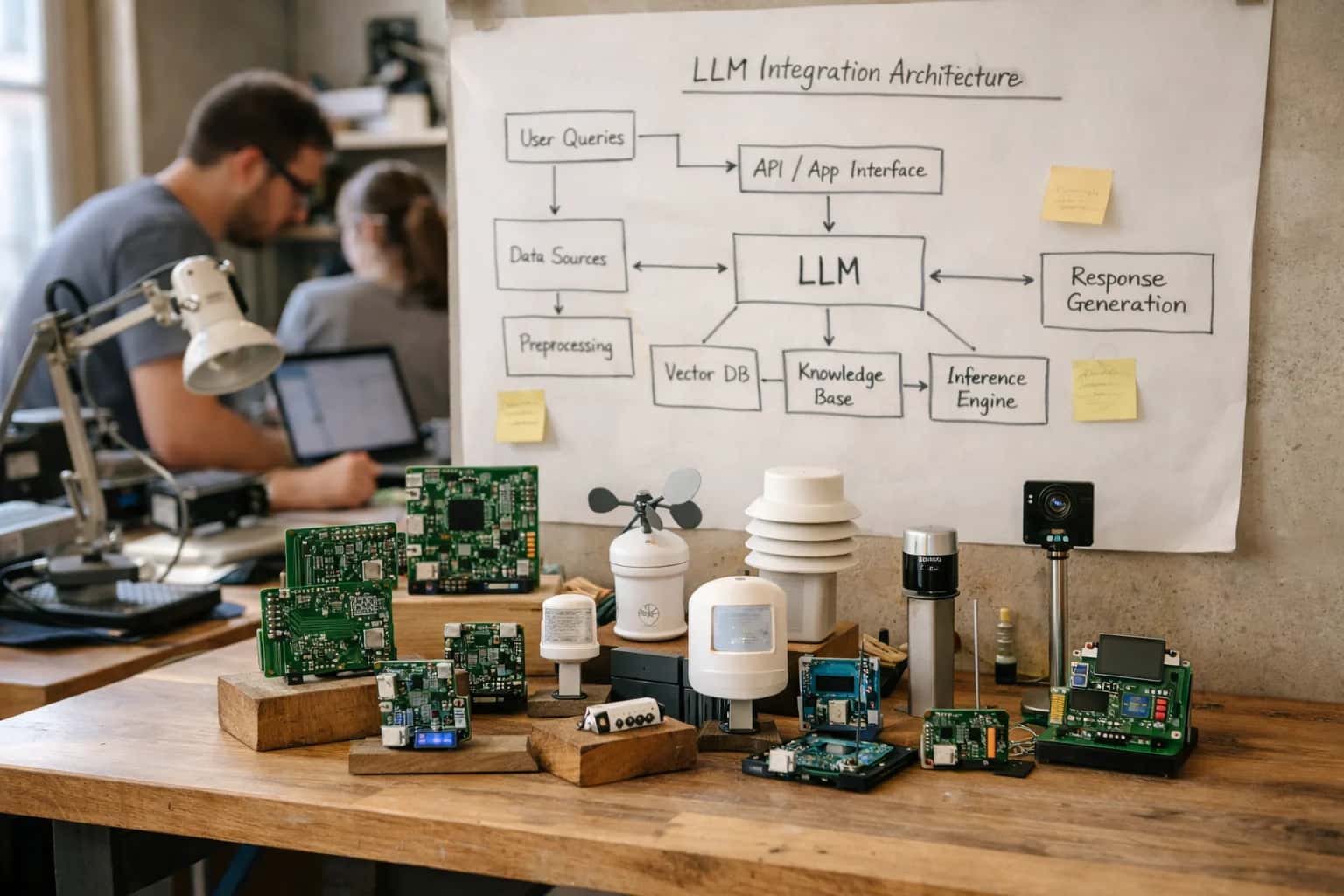
Where AI Fits in Zuper's Work Order Lifecycle
A practical blueprint for embedding AI agents into Zuper's core modules to automate manual steps from initial request to final invoice.
In the field, the integration focuses on the Zuper mobile app's workflow. An offline-capable AI copilot can guide technicians through complex repairs using a RAG system on your company's knowledge base (e.g., manuals, SOPs). It can also automate field reporting: using voice-to-text, it drafts Service Notes; using photo analysis, it suggests Parts Used from inventory; and by validating captured data against the work order's Required Fields, it ensures completeness before status update. This closes the loop, turning field activity into structured data that automatically triggers the next step, like generating an Invoice in Zuper or syncing to /integrations/field-service-management-platforms/ai-integration-for-zuper-invoicing.
Rollout should be phased, starting with AI-assisted portal intake to build trust in data quality before moving to dispatch recommendations. Governance is critical: implement a human-in-the-loop approval step for AI-created work orders and dispatches during the pilot. Use Zuper's existing Audit Logs to trace AI actions, and establish a feedback loop where dispatcher overrides train the recommendation model. This approach de-risks the integration, focusing AI on augmenting human operators rather than full automation, and delivers compounding efficiency as the system learns from your specific service history and operational patterns.
Key Zuper APIs and Objects for AI Integration
The Core Automation Surface
The Work Orders API (/api/v1/workorders) is the primary surface for AI-driven automation. It allows you to programmatically create, update, and query the lifecycle of service jobs. This is essential for building triggers from external systems.
Key Objects & Fields for AI:
WorkOrder: Containsstatus,priority,scheduled_date,estimated_duration.JobType&ProblemCode: Critical for AI to classify incoming service requests (e.g., from customer emails or IoT alerts) and auto-select the correct template.Customer&Asset: Links the job to the customer record and specific equipment, providing context for AI to pull service history.
AI Integration Pattern: An AI agent listening to a customer portal submission or an IoT webhook can use this API to instantiate a work order, pre-populating fields like description (from transcribed call audio) and required_skills (predicted from the problem).
High-Value AI Use Cases for Zuper Work Orders
Integrate AI directly into Zuper's work order lifecycle to reduce manual data entry, accelerate scheduling, and improve first-time fix rates. These patterns connect to Zuper's customer portal, dispatch APIs, and mobile app to create a self-driving service operation.
Automated Work Order Creation from Customer Portal
Deploy an AI agent on Zuper's customer portal to interpret free-text service requests. The agent classifies the issue, asks clarifying questions, and auto-populates a structured work order with service type, priority, and suggested parts before a human reviews it.
Intelligent Dispatch & Technician Matching
Connect AI to Zuper's dispatch APIs to analyze new work orders against real-time technician data—location, skill certifications, current workload, and parts on truck. The system recommends the optimal assignee, considering travel time and likelihood of first-time fix.
Voice-to-Work Order for Field Technicians
Integrate a voice-enabled AI copilot into the Zuper mobile app. Technicians dictate notes, parts used, and job status hands-free. AI transcribes, extracts key data (like part SKUs from speech), and updates the work order in real-time, reducing post-job admin by 80%.
Automated Follow-Up & Invoice Drafting
Trigger an AI workflow when a Zuper work order status changes to 'Completed'. The agent reviews technician notes and photos, generates a customer-friendly summary, drafts a detailed invoice with line items, and sends it via the customer portal—all before the truck leaves the property.
Predictive Parts & Inventory Pre-staging
Use AI to analyze historical Zuper work order data and predict parts needed for upcoming jobs. The system integrates with Zuper's inventory module to automatically generate pick lists for the warehouse or suggest what to load on specific technician vans, reducing return trips for parts.
IoT Alert to Preventive Work Order
Connect IoT sensor platforms (for HVAC, refrigeration, etc.) to Zuper via webhook. AI monitors incoming alerts, triages urgency, correlates with asset history in Zuper, and automatically creates a preventive maintenance work order with the correct severity and suggested checklist before failure occurs.
Example AI Automation Workflows
These concrete workflows illustrate how AI agents can be embedded into Zuper's platform to automate manual data entry, reduce back-office workload, and accelerate service delivery. Each flow connects to specific Zuper APIs, objects, and user surfaces.
Trigger: An IoT sensor (e.g., HVAC pressure, industrial equipment vibration) sends an alert via webhook to a middleware service.
AI Agent Action:
- The middleware service calls an AI agent, passing the raw sensor payload (device ID, alert code, timestamp, location).
- The agent uses a Retrieval-Augmented Generation (RAG) system over historical Zuper work orders and equipment manuals to:
- Interpret the alert severity and likely root cause.
- Determine the required service type (e.g., "Preventive Maintenance," "Emergency Repair").
- Predict the probable parts needed (e.g., filter, pressure sensor) and estimated labor duration.
System Update:
- The agent formats the enriched data into a Zuper API payload, creating a new
Work Orderobject. - It auto-populates critical fields:
title: "High Vibration Alert - Compressor Unit C-12"priority: Set based on predicted severity.description: AI-generated summary of the likely issue.required_skills: Tags like "HVAC Certified."suggested_parts: A list of part SKUs for review.
- The work order is automatically assigned to the appropriate
Service Locationand flagged for dispatcher review in the Zuper console.
Human Review Point: A dispatcher reviews the AI-created work order, adjusts priority or parts if needed, and uses Zuper's scheduling engine to assign a technician.
Implementation Architecture: Data Flow and Guardrails
A practical blueprint for connecting AI agents to Zuper's platform to automate work order creation and reduce manual data entry.
The core integration pattern connects AI agents to Zuper's REST API and webhook endpoints. The primary flow begins with an intake event—such as a customer submission via the Zuper portal, an inbound service email, or an IoT sensor alert. This raw data is routed to an AI orchestration layer (e.g., using a platform like n8n or CrewAI) which performs three key tasks: 1) Classification & Triage, using an LLM to categorize the request (e.g., 'AC repair', 'plumbing leak'), 2) Entity Extraction, pulling out critical details like customer address, reported issue, and asset ID, and 3) Work Order Drafting, structuring the extracted data into the required JSON payload for Zuper's workorders endpoint, pre-populating fields like title, description, priority, and customerId.
For production reliability, this flow is wrapped in guardrails. A validation queue checks the AI-generated work order draft against business rules (e.g., required fields, valid service codes) before the API call is made. Failed validations are routed to a human-in-the-loop dashboard for review. Once created in Zuper, the work order's lifecycle is managed through status-triggered automations. For instance, when a job is marked 'In Progress', an AI agent can automatically fetch relevant manuals or past service history from a connected vector database and push them to the technician's Zuper mobile app. Upon completion, another agent can draft the service summary from the technician's notes and photos, ready for manager approval and invoicing.
Rollout should be phased, starting with a single, high-volume intake channel like the customer portal. Implement audit logging for every AI action and a feedback loop where dispatchers can correct AI-generated fields, which is used to fine-tune extraction prompts. This architecture reduces back-office data entry from hours to minutes per job while keeping human oversight for complex cases. For a deeper look at building the technician-facing side of this system, see our guide on AI Integration for Zuper Technician Copilots.
Code and Payload Examples
Automating Intake from Customer Emails
A common integration point is Zuper's API for creating work orders from unstructured email intake. An AI agent can parse customer emails, extract key details, and format a structured payload for Zuper.
Example Payload for POST /api/v1/workorders
json{ "workorder": { "customer_id": "cust_abc123", "title": "AC Unit Not Cooling - Kitchen", "description": "Customer reported AC unit in kitchen is blowing warm air. Unit model is XYZ-2020, installed approx. 3 years ago. Customer notes a humming noise before it stopped cooling.", "priority": "High", "job_type": "Repair", "scheduled_date": "2024-06-15", "custom_fields": { "suspected_issue": "Compressor or refrigerant leak", "urgency_score": 0.85 } } }
The AI's role is to populate fields like priority, job_type, and suspected_issue by analyzing the email's text and context, reducing manual data entry for coordinators.
Realistic Time Savings and Operational Impact
This table illustrates the tangible operational improvements when integrating AI with Zuper's work order lifecycle, focusing on reducing manual overhead for back-office coordinators and dispatchers.
| Workflow Stage | Before AI | After AI | Implementation Notes |
|---|---|---|---|
Work Order Creation from Email | Manual review and data entry (15-30 min/job) | AI extracts details, suggests template (2-5 min/job) | Human reviews and confirms AI-generated draft; integrates with Zuper's Email-to-Job API. |
Customer Portal Intake Triage | Coordinator categorizes and prioritizes submissions | AI scores urgency and routes to correct queue | Uses NLP on customer description; routes to 'Emergency', 'Routine', or 'Quote' boards in Zuper. |
IoT Sensor Alert Processing | Manual monitoring and call creation for alerts | AI correlates sensor data, auto-creates preventive work orders | Triggers via webhook; AI assesses severity and checks asset warranty/service contract in Zuper. |
Parts & Labor Estimation | Manual lookup in catalogs and past similar jobs | AI suggests line items and hours from historical data | Copilot feature within Zuper's estimate module; final approval required from manager. |
Technician Dispatch Assignment | Dispatcher matches jobs based on gut feel and location | AI recommends optimal technician based on skill, location, and parts on truck | Integrates with Zuper's dispatch board API; dispatcher makes final assignment with AI guidance. |
Field Note & Photo Processing | Back-office admin transcribes notes and tags photos | AI generates draft service summary and categorizes images | Runs on technician-submitted data via mobile app; output populates Zuper work order notes field. |
Invoice Draft Generation | Admin compiles job details, parts, and labor into invoice | AI auto-populates invoice from completed work order data | Triggered on job completion; flags discrepancies for human review before syncing to QuickBooks. |
Governance, Security, and Phased Rollout
A practical framework for implementing AI in Zuper with security, oversight, and incremental value delivery.
A production AI integration for Zuper must respect the platform's data model and user permissions. This means architecting around core objects like Work Orders, Customers, Assets, and Technicians. AI agents should interact via Zuper's REST APIs or webhooks, never storing sensitive customer or job data in external vector stores without explicit encryption and access controls. Key governance steps include:
- Role-Based Access Control (RBAC): Ensure AI-triggered actions (e.g., creating a work order, updating a status) respect Zuper's existing user roles and field-level security.
- Audit Trails: Log all AI-generated suggestions and automated actions (like auto-populating a
parts_usedfield) back to a dedicatedAI_Audit_Log__ccustom object or an external system, linking to the source work order and the prompting data. - Data Residency: Process customer PII and job details within your secure cloud environment, using Zuper APIs for read/write operations, to maintain compliance with regional data protection laws.
Start with a controlled pilot focused on a single, high-volume workflow to validate impact and refine prompts. A recommended first phase is AI-Powered Work Order Intake, where the system listens to Zuper webhooks for new submissions from the customer portal or integrated email. Using a retrieval-augmented generation (RAG) pipeline on your historical work orders and parts catalogs, the AI can:
- Classify & Route: Determine the
job_type(e.g., 'AC Repair', 'Plumbing Leak') and suggest the correctskill_required. - Auto-Populate: Suggest initial
estimated_duration,required_tools, and commonpartsbased on the problem description. - Flag Exceptions: Identify submissions missing critical info (like asset serial number) and trigger an automated SMS or email back to the customer via Zuper's communication APIs. This phase delivers immediate value by reducing manual data entry for coordinators while operating in a human-in-the-loop mode where all AI suggestions require dispatcher approval before the work order is finalized.
For broader rollout, implement a multi-stage approval workflow within your AI orchestration layer (e.g., using tools like n8n or a custom service). Before any AI action auto-updates a Zuper record, it can be routed based on risk:
- Low-Risk: Auto-apply AI-suggested tags or priority scores.
- Medium-Risk: Send AI-generated work order drafts to a dispatcher's 'Review Queue' in Zuper for one-click approval.
- High-Risk: Require manager approval for AI-suggested schedule changes or large parts orders. Concurrently, establish a feedback loop by capturing dispatcher overrides and corrections; this data continuously fine-tunes your models. Finally, integrate monitoring dashboards that track key metrics like 'AI Suggestion Acceptance Rate' and 'Time Saved per Work Order' directly into Zuper's reporting module or a connected BI tool like Power BI, ensuring the integration's ROI is measurable and governance is transparent.
Enabling Efficiency, Speed & Accuracy
Intelligent Analysis, Decision & Execution
We build AI systems for teams that need search across company data, workflow automation across tools, or AI features inside products and internal software.
Talk to Us
Search across company data
Give teams answers from docs, tickets, runbooks, and product data with sources and permissions.
Useful when people spend too long searching or get different answers from different systems.

Automate internal workflows
Use AI to route work, draft outputs, trigger actions, and keep approvals and logs in place.
Useful when repetitive work moves across multiple tools and teams.

Add AI to products and internal tools
Build assistants, guided actions, or decision support into the software your team or customers already use.
Useful when AI needs to be part of the product, not a separate tool.
Frequently Asked Questions
Practical questions about connecting AI agents and automation to Zuper's work order lifecycle, from intake to completion.
This workflow uses an AI agent to parse incoming customer support emails, extract key details, and create a structured work order in Zuper via its REST API.
Typical Flow:
- Trigger: A new email arrives in a dedicated support inbox (e.g., [email protected]).
- Context Pulled: The full email body and subject are sent to an LLM (like GPT-4) via a secure API call.
- AI Agent Action: The LLM, guided by a system prompt, extracts:
- Customer name and contact info
- Service address
- Reported issue (e.g., "AC not cooling")
- Urgency indicators
- Preferred service time (if mentioned)
- System Update: The extracted data is formatted into a JSON payload and POSTed to Zuper's
workordersendpoint. - Human Review Point: For low-confidence extractions or high-value customers, the system can create a draft work order flagged for dispatcher review before assignment.
Example Payload to Zuper API:
json{ "customer_name": "Jane Smith", "customer_phone": "+15551234567", "service_address": "123 Main St, Anytown, USA", "problem_description": "Customer reports central air conditioner blowing warm air. Unit is approximately 5 years old. First noticed issue yesterday evening.", "priority": "Medium", "category": "HVAC Repair" }
This reduces manual data entry from 5-10 minutes per request to near-zero for clear, well-written emails.

About the author
Prasad Kumkar
CEO & MD, Inference Systems
Prasad Kumkar is the CEO & MD of Inference Systems and writes about AI systems architecture, LLM infrastructure, model serving, evaluation, and production deployment. Over 5+ years, he has worked across computer vision models, L5 autonomous vehicle systems, and LLM research, with a focus on taking complex AI ideas into real-world engineering systems.
His work and writing cover AI systems, large language models, AI agents, multimodal systems, autonomous systems, inference optimization, RAG, evaluation, and production AI engineering.
Partnered with leading AI, data, and software stack.





How We Work
Custom AI workflows for your Business
One-fit-all AI don't work for modern businesses. At Inferensys, we aim to understand your business & custom requirements; which we use to define most efficient agentic workflows, the data, and the tools for your business.
01
Review the use case
We understand the task, the users, and where AI can actually help.
Read more02
Pick the right approach
We define what needs search, automation, or product integration.
Read more03
Build the first useful version
We implement the part that proves the value first.
Read more04
Improve from there
We add the checks and visibility needed to keep it useful.
Read moreThe first call is a practical review of your use case and the right next step.
Talk to Us