AI integration for EcoOnline connects at three primary layers: data ingestion, workflow automation, and analytical insight. At the data layer, AI agents can ingest and structure unstructured inputs—such as PDF permits, monitoring spreadsheets, and regulatory text—directly into EcoOnline's Environmental Compliance, Permit Management, and Monitoring modules. This automates the manual entry for air/water quality data, permit conditions, and regulatory updates, ensuring the system-of-record is current. For workflow automation, AI can be embedded into approval queues and task assignments, such as triggering a review when a predictive model forecasts an emissions exceedance or auto-drafting a deviation report for a missed monitoring parameter.

Integration
AI Integration for EcoOnline Environmental Compliance
A practical guide for EHS teams and technical leaders on integrating AI with EcoOnline to automate compliance workflows, create real-time status dashboards, and reduce manual reporting from weeks to hours.
ARCHITECTURE BLUEPRINT
Where AI Fits into EcoOnline's Environmental Compliance Stack
A practical guide to wiring AI into EcoOnline's core modules for automated compliance monitoring, reporting, and risk management.
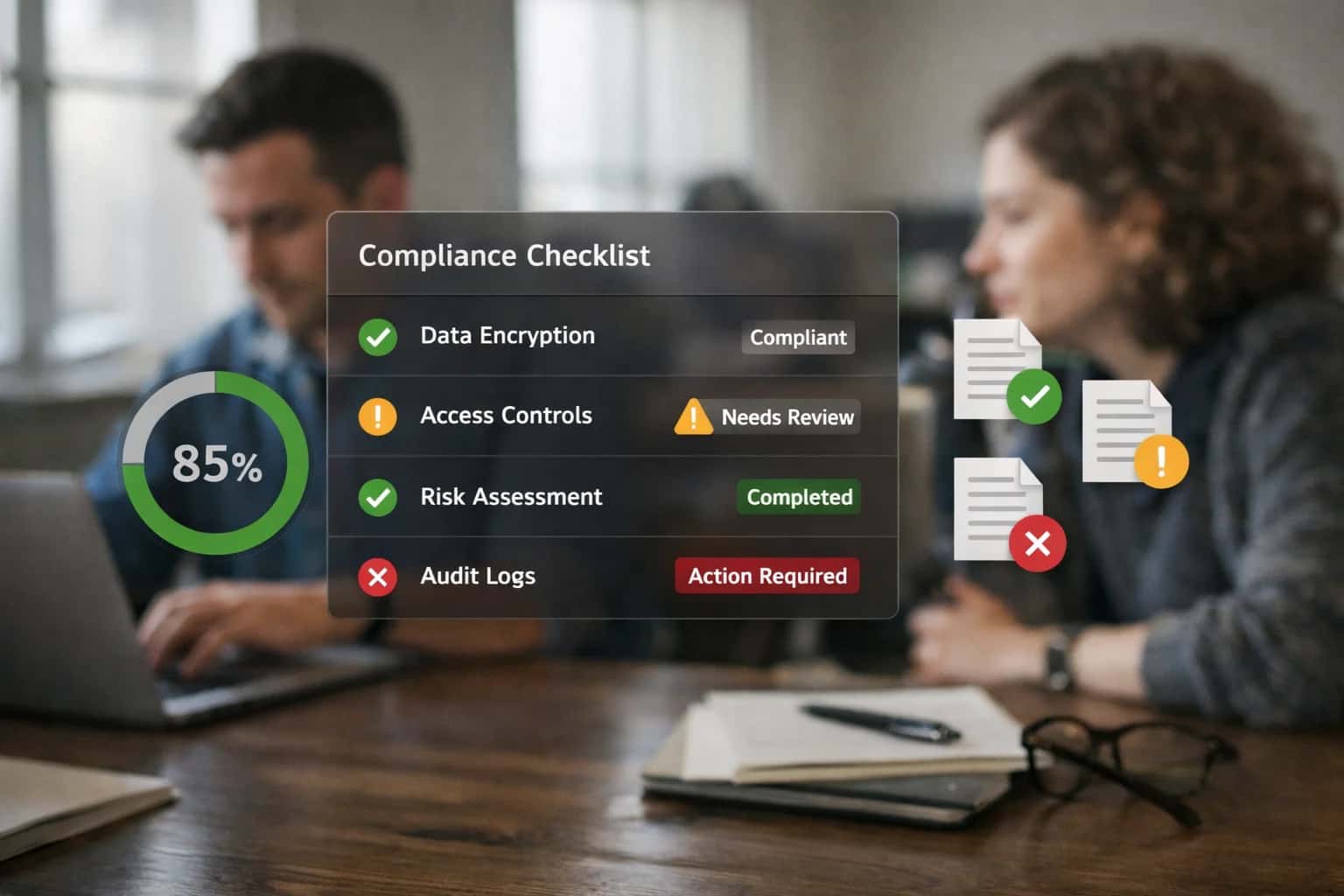
The high-value implementation pattern is an AI Copilot for Compliance Officers, built as a secure layer that calls EcoOnline's APIs. This agent can: - Continuously cross-reference live monitoring data against permit limits to generate real-time compliance status dashboards. - Parse new regulatory publications (e.g., from the EPA or local agencies) and map requirements to existing controls in EcoOnline, flagging gaps. - Automate the first draft of mandatory reports like Discharge Monitoring Reports (DMRs) or Greenhouse Gas (GHG) inventories by pulling validated data from across modules. This turns reactive compliance tracking into a proactive, intelligence-driven operation, reducing the risk of missed deadlines and non-compliance events.
Rollout requires a phased approach, starting with a single high-volume workflow—such as automated emissions inventory calculations—to demonstrate ROI and refine the governance model. A critical technical consideration is maintaining a full audit trail; all AI-generated suggestions or drafts should be logged as system activities with clear attribution, requiring human review and approval before final submission. This ensures accountability and aligns with stringent environmental regulatory requirements. For teams managing complex portfolios, this architecture shifts compliance from a periodic administrative burden to a continuous, managed process with predictive guardrails.
PLATFORM SURFACES
Key EcoOnline Modules and APIs for AI Integration
Core Data Objects and Workflows
AI integration focuses on the Permit Management and Regulatory Tracking modules, which manage complex matrices of permit conditions, monitoring parameters, and reporting deadlines. Key surfaces include the Permit object API for fetching active permits and their conditions, and the Compliance Calendar API for deadline-driven tasks.
High-value AI use cases involve:
- Automated Data Validation: Ingesting air/water monitoring data from IoT feeds or lab reports via the
MonitoringDataAPI and using AI to flag anomalies or potential exceedances against permit limits. - Intelligent Report Drafting: Pulling validated data and historical context to auto-generate draft Discharge Monitoring Reports (DMRs) or regulatory submissions, reducing manual compilation from days to hours.
- Obligation Mapping: Using NLP to parse new regulatory text and automatically map requirements to existing permits and control measures in the system, updating the compliance register.
Implementation typically involves a service that listens for new monitoring data webhooks, processes it against stored permit logic, and creates draft findings or report records via EcoOnline's REST API.
ECOONLINE INTEGRATION PATTERNS
High-Value AI Use Cases for Environmental Compliance
Integrating AI into EcoOnline transforms static compliance data into a dynamic, predictive, and automated system. These patterns show where generative AI and agents connect to monitoring, permits, and reporting workflows to reduce manual effort and prevent violations.
01
Automated Regulatory Report Drafting
AI agents ingest monitoring data (air, water, emissions) from EcoOnline, validate against permit limits, and auto-generate first drafts of mandatory reports like DMRs, TRI, or GHG inventories. Workflow: Scheduled data pull → LLM validation & anomaly flagging → template population → human review queue in EcoOnline.
Days -> Hours
Report preparation
02
Predictive Exceedance & Alerting
Machine learning models analyze historical monitoring data and real-time sensor feeds within EcoOnline to predict potential permit limit exceedances before they occur. Integration: AI service calls EcoOnline's API for trend data, runs forecasts, and creates proactive corrective action tasks in the platform's action tracking module.
Reactive -> Proactive
Compliance posture
03
Intelligent Permit Condition Tracking
An AI agent parses complex permit documents (PDFs) to extract conditions, deadlines, and monitoring requirements, then creates and manages corresponding tracking items in EcoOnline's compliance calendar. Value: Eliminates manual entry errors and ensures no condition is missed, with automated reminders and status dashboards.
100% Coverage
Condition tracking
04
Unified Compliance Status Dashboard
A generative AI layer synthesizes data from across EcoOnline modules (permits, monitoring, incidents, audits) to provide a plain-English, real-time compliance status summary. Architecture: RAG pipeline over EcoOnline data + regulatory libraries provides grounded answers to questions like "Are we in compliance at Site X?"
Single Pane
For EHS leadership
05
AI-Assisted Regulatory Change Impact
When new regulations are published, an AI service compares the text against a company's registered activities, chemicals, and permits in EcoOnline to assess applicability and generate a tailored impact analysis and action plan for the compliance team.
Hours -> Minutes
Impact assessment
06
Automated Data Validation & Gap Filling
AI agents monitor incoming environmental data streams (e.g., from IoT sensors, lab reports) into EcoOnline, flag outliers, infer missing values using statistical models, and request clarifications—ensuring a clean, audit-ready dataset for reporting.
Batch -> Real-time
Data quality
ENVIRONMENTAL COMPLIANCE
Example AI-Automated Workflows in EcoOnline
These workflows illustrate how AI agents can be integrated into EcoOnline's environmental modules to automate data analysis, generate compliance insights, and orchestrate follow-up actions, moving from reactive monitoring to proactive management.
Trigger: A scheduled task runs monthly/quarterly based on the compliance calendar for reports like Discharge Monitoring Reports (DMRs), Emissions Inventories, or Tier II submissions.
Context/Data Pulled: The AI agent queries EcoOnline's API for:
- Relevant monitoring data from connected sensors or manually entered lab results for the reporting period.
- Facility and permit information (limits, monitoring locations, parameters).
- Historical submission data and agency contact details.
Model/Agent Action:
- Validates & Calculates: Checks data completeness, flags anomalies or missing values, and performs required calculations (e.g., monthly averages, totals).
- Drafts Report: Uses a structured prompt to generate the narrative summary and populate a pre-formatted report template, highlighting any exceedances or notable trends.
- Routes for Review: Creates a task in EcoOnline for the Environmental Manager, attaching the draft report and a summary of data points used.
System Update/Next Step: Upon human approval in EcoOnline, the agent can:
- Update the compliance calendar task status to "Ready for Submission."
- Log the draft as a version-controlled document in EcoOnline's document management module.
- Optionally, trigger a webhook to an e-signature or agency portal system for the next step.
Human Review Point: Mandatory. The Environmental Manager must review the draft, especially any flagged anomalies or exceedances, before submission. The agent provides an audit trail of all source data used.
ARCHITECTING A REAL-TIME COMPLIANCE DASHBOARD
Implementation Architecture: Data Flow, APIs, and Guardrails
A production-ready AI integration for EcoOnline connects monitoring data, permit libraries, and regulatory feeds to a central intelligence layer, delivering a dynamic compliance status dashboard.
The integration architecture is built around EcoOnline's core data objects and APIs. The primary flow ingests structured data from environmental monitoring modules (air, water, emissions), permit management records, and regulatory reporting schedules. Unstructured data—such as PDF permits, regulatory text updates, and internal procedure documents—is processed through a document intelligence pipeline. This data is synchronized via EcoOnline's REST APIs or, for high-volume IoT sensor data, streamed into a dedicated data lake. The AI layer then performs three core functions: 1) Real-time compliance checking by comparing live monitoring values against permit limits stored in a vector database, 2) Automated gap analysis by mapping internal controls to regulatory requirements, and 3) Predictive alerting using historical trends to forecast potential exceedances before they occur.
Key technical guardrails ensure reliability and auditability. All AI-generated insights—like a flagged potential exceedance or a recommended corrective action—are written back to EcoOnline as annotated records with a full audit trail, linking to the source data and the specific AI logic applied. A human-in-the-loop approval step is configured for critical actions, such as drafting a regulatory report or initiating a Management of Change (MOC) workflow. The system uses role-based access control (RBAC) inherited from EcoOnline to govern who sees which AI insights. For example, a site manager receives alerts specific to their facility's permits, while a corporate environmental director sees a rolled-up dashboard of enterprise-wide compliance risk.
Rollout follows a phased, risk-based approach. We typically start with a single, high-impact permit type (e.g., air emissions) at a pilot facility. This allows the validation of data pipelines, the tuning of AI models for specific monitoring parameters, and the socialization of the new dashboard with end-users. Success is measured by the reduction in manual data consolidation time and the increase in proactive versus reactive compliance actions. For ongoing governance, we establish a prompt management and evaluation framework to ensure the AI's reasoning remains aligned with evolving regulations and internal policies. This architecture, grounded in EcoOnline's extensible platform, transforms static compliance data into a dynamic, actionable intelligence system. For related implementation patterns, see our guides on AI Integration for EcoOnline Environmental Monitoring and AI Integration for Intelex Environmental Compliance.
AI INTEGRATION PATTERNS FOR ECOONLINE
Code and Payload Examples
Ingesting IoT Sensor Data
Integrate AI with EcoOnline's environmental monitoring modules by processing real-time data streams. A common pattern is to set up a webhook listener that receives JSON payloads from IoT gateways, validates the data, and triggers AI analysis for anomaly detection or predictive alerts before writing to EcoOnline's MonitoringData object.
python# Example: Webhook endpoint to process sensor data from flask import Flask, request import requests app = Flask(__name__) ECOONLINE_API_BASE = "https://api.ecoonline.com/v1" @app.route('/webhook/sensor-ingest', methods=['POST']) def sensor_webhook(): payload = request.json # Example payload structure # { # "site_id": "FACILITY-A", # "parameter": "PM2.5", # "value": 45.2, # "unit": "µg/m³", # "timestamp": "2024-05-15T10:30:00Z" # } # Call AI service for anomaly detection ai_result = call_ai_anomaly_detection(payload) if ai_result.get('is_anomaly'): # Create an alert record in EcoOnline alert_payload = { "alert": { "title": f"Anomaly detected for {payload['parameter']}", "description": ai_result['reason'], "priority": "High", "related_site": payload['site_id'] } } requests.post(f"{ECOONLINE_API_BASE}/alerts", json=alert_payload, headers=auth_headers) # Write the validated data point to EcoOnline's monitoring log requests.post(f"{ECOONLINE_API_BASE}/monitoring-data", json=payload, headers=auth_headers) return {"status": "processed"}
This pattern enables immediate AI-driven insight generation at the point of data ingestion, ensuring the compliance dashboard reflects intelligent, real-time status.
ECOONLINE ENVIRONMENTAL COMPLIANCE
Realistic Time Savings and Operational Impact
How AI integration transforms manual, reactive compliance tasks into automated, proactive workflows, freeing up specialists for higher-value analysis.
| Metric | Before AI | After AI | Notes |
|---|---|---|---|
Regulatory Change Impact Analysis | 2-3 days manual review per update | 1-2 hours with AI-assisted summarization | AI screens 100s of regulatory updates, flags only relevant changes to your facilities and permits. |
Emissions Inventory Report Drafting | 1-2 weeks of data consolidation and calculation | Same-day automated draft generation | AI pulls from monitoring systems, validates data, applies correct emission factors, and populates report templates. |
Permit Condition Tracking & Deadline Management | Manual calendar updates, high risk of missed dates | Automated deadline extraction and task assignment | AI parses permit documents to create a dynamic compliance calendar with automated reminders. |
Environmental Data Validation (Air/Water) | Daily manual spot-checks for anomalies | Continuous, automated anomaly detection and alerts | AI models baseline patterns and flags outliers in real-time for investigation, improving data quality. |
Compliance Status Dashboard Updates | Monthly manual refresh, often outdated | Real-time, AI-powered status with trend explanations | Dashboard explains 'why' metrics changed (e.g., 'NOx increased due to Unit 3 startup'), enabling proactive management. |
Spill Response Plan Activation | 15-30 minutes to locate and review plan | <5 minutes with AI-generated scenario-specific checklist | AI cross-references chemical inventory and location data to instantly produce tailored response steps and contacts. |
Sustainability/ESG Data Aggregation | Quarterly, multi-department data calls taking weeks | Ongoing automated ingestion and gap identification | AI connects to source systems (ERP, utility meters), validates figures, and highlights inconsistencies for review. |
ARCHITECTURE FOR REGULATED ENVIRONMENTS
Governance, Security, and Phased Rollout
A production-ready AI integration for EcoOnline requires a secure, auditable architecture and a phased rollout that builds trust and demonstrates value.
Our integration architecture for EcoOnline is designed to operate within your existing security perimeter. AI agents and workflows interact with EcoOnline's APIs—such as those for Environmental Monitoring Data, Permit Records, and Compliance Calendar—using service accounts with role-based access controls (RBAC). All AI-generated outputs, like compliance gap analyses or report drafts, are written back to designated Compliance Objects or Document Management modules as draft records, requiring a human-in-the-loop review and approval before finalization. This ensures data integrity and maintains a clear audit trail of AI-assisted activities within EcoOnline's native logging.
A phased rollout mitigates risk and aligns investment with value. We typically recommend starting with a single, high-impact workflow, such as automated regulatory change impact analysis. In this phase, an AI agent monitors subscribed regulatory feeds, ingests new rule text, and cross-references it against your facility profiles and permit conditions stored in EcoOnline. It generates a preliminary impact assessment, tagging relevant Compliance Obligations and flagging potential gaps. This controlled pilot validates the technology, refines prompts, and establishes governance procedures before expanding to more complex use cases like predictive emissions modeling or automated Discharge Monitoring Report (DMR) drafting.
Governance is embedded in the workflow design. Each AI-assisted task includes configurable confidence scoring and source citation. For instance, if an AI suggests a new monitoring requirement based on a permit review, it will cite the specific permit condition text and the relevant regulatory citation. This allows your environmental compliance specialists to efficiently validate the AI's work. Furthermore, all AI model interactions are logged externally for performance monitoring, drift detection, and cost management, ensuring the system remains accurate, cost-effective, and under your operational control.
Enabling Efficiency, Speed & Accuracy
Intelligent Analysis, Decision & Execution
We build AI systems for teams that need search across company data, workflow automation across tools, or AI features inside products and internal software.
Talk to Us
Search across company data
Give teams answers from docs, tickets, runbooks, and product data with sources and permissions.
Useful when people spend too long searching or get different answers from different systems.
Enterprise searchRAGPermissions
Read more
Automate internal workflows
Use AI to route work, draft outputs, trigger actions, and keep approvals and logs in place.
Useful when repetitive work moves across multiple tools and teams.
AI agentsWorkflow automationGovernance
Read more
Add AI to products and internal tools
Build assistants, guided actions, or decision support into the software your team or customers already use.
Useful when AI needs to be part of the product, not a separate tool.
AI integrationDecision supportModel routing
Read moreIMPLEMENTATION QUESTIONS
Frequently Asked Questions (FAQ)
Common technical and operational questions about integrating AI agents and automation into EcoOnline's environmental compliance workflows.
Integration typically occurs through a combination of EcoOnline's REST API and direct database connections (where permitted and secured).
Primary Touchpoints:
- Compliance Obligations API: To read permit conditions, regulatory lists, and deadlines.
- Environmental Data API: To ingest and query monitoring data (air, water, waste, emissions).
- Document Management API: To retrieve and store reports, permits, and audit evidence.
- Workflow Engine: To trigger tasks, update statuses, and assign actions based on AI analysis.
Architecture Pattern: An external AI service layer acts as a middleware, subscribing to webhooks (e.g., new monitoring result, upcoming deadline) and calling back into EcoOnline via API to create records, update dashboards, or assign tasks. This keeps the core platform stable while adding intelligent automation.

About the author
Prasad Kumkar
CEO & MD, Inference Systems
Prasad Kumkar is the CEO & MD of Inference Systems and writes about AI systems architecture, LLM infrastructure, model serving, evaluation, and production deployment. Over 5+ years, he has worked across computer vision models, L5 autonomous vehicle systems, and LLM research, with a focus on taking complex AI ideas into real-world engineering systems.
His work and writing cover AI systems, large language models, AI agents, multimodal systems, autonomous systems, inference optimization, RAG, evaluation, and production AI engineering.
LinkedIn
Limited slotsGet a Free AI Consultation
Partnered with leading AI, data, and software stack.





How We Work
Custom AI workflows for your Business
One-fit-all AI don't work for modern businesses. At Inferensys, we aim to understand your business & custom requirements; which we use to define most efficient agentic workflows, the data, and the tools for your business.
01
Review the use case
We understand the task, the users, and where AI can actually help.
Read more02
Pick the right approach
We define what needs search, automation, or product integration.
Read more03
Build the first useful version
We implement the part that proves the value first.
Read more04
Improve from there
We add the checks and visibility needed to keep it useful.
Read moreThe first call is a practical review of your use case and the right next step.
Talk to Us